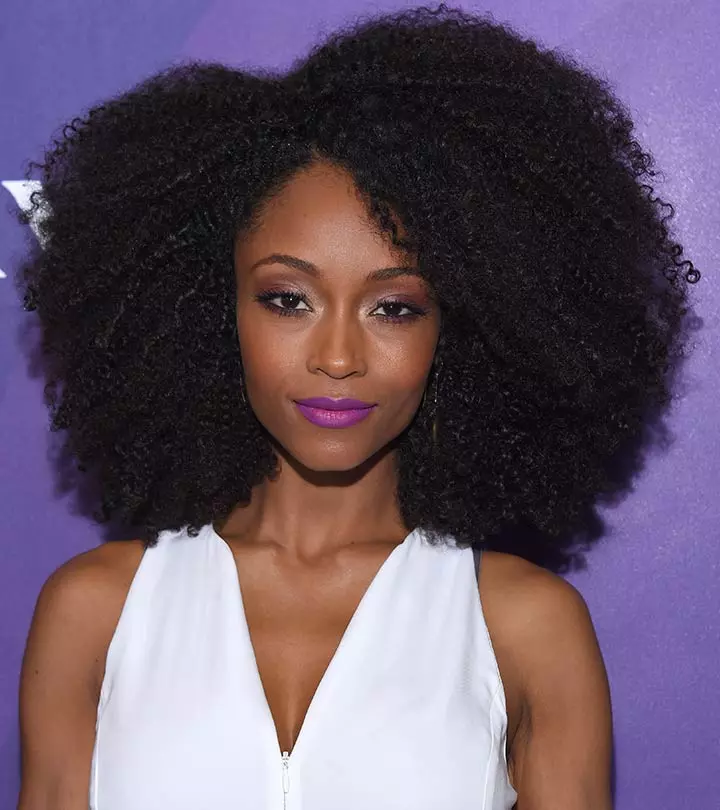
4b hair is a kinky-coily hair type characterized by a distinct "Z" shape pattern rather than a round curl. It is known for its high level of shrinkage—often up to 75%—and a soft, cotton-like texture. Because the sharp angles in the hair shaft make it difficult for natural scalp oils to travel down the strand, 4b hair requires a moisture-intensive care routine and gentle handling to prevent breakage and maintain health.
Understanding the Anatomy of 4b Hair
To effectively manage 4b hair, one must first understand its structural composition. Within the Andre Walker Hair Typing System, Type 4 represents "kinky" or "coily" hair, and the "b" subcategory denotes a specific geometry. While 4a hair follows a defined "S" pattern and 4c hair consists of very tight, less defined coils, 4b hair is unique because of its sharp, angular bends.
The "Z" pattern means the hair strands don't coil; they zig-zag. From a distance, 4b hair may look like a soft cloud of volume, but a close inspection of a single strand reveals these acute angles. These angles are the hair's greatest vulnerability. Each bend in the "Z" represents a point of mechanical weakness where the cuticle is slightly more raised or stressed. Consequently, 4b hair is significantly more fragile than Type 1 or Type 2 hair, despite its often dense and robust appearance.
Another defining factor of 4b hair is its texture. It can range from fine and thin to wiry and coarse. However, regardless of the individual strand thickness, 4b hair almost always possesses high density. This density, combined with the zig-zag pattern, leads to significant shrinkage. In 2026, hair specialists continue to emphasize that shrinkage is a sign of healthy, elastic hair, even though it can make the hair appear much shorter than its actual length.
The Comparison: 4a vs. 4b vs. 4c
Discerning your exact hair type is essential for choosing the right products. Many individuals possess a "multi-textured" head of hair, with 4b patterns often residing at the crown while 4a or 4c patterns appear at the nape or temples.
| Feature | Type 4a Hair | Type 4b Hair | Type 4c Hair |
|---|---|---|---|
| Pattern | Defined "S" shape coils | Sharp "Z" shape zig-zags | Tight, often undefined coils |
| Texture | Soft, prone to frizz | Cottony, wiry, or soft | Very dense, tightly packed |
| Shrinkage | 50% to 60% | 70% to 75% | 75% to 85% |
| Moisture Retention | Moderate | Low (Requires heavy sealing) | Very Low (Prone to dryness) |
| Clumping | Clumps easily with gel | Moderate clumping ability | Hard to clump without heavy product |
The Essential Care Routine for 4b Hair
Managing 4b hair in 2026 focuses heavily on "moisture cycling"—the process of deeply hydrating the hair and then sealing that hydration in to prevent evaporation. Because the scalp's sebum (natural oil) cannot easily navigate the "Z" bends, the hair is perpetually at risk of becoming brittle.
1. The Pre-Poop Treatment
Before the actual wash, applying a "pre-poo" (pre-shampoo) treatment is vital. Using a penetrating oil like coconut oil or a specialized detangling butter helps to soften the hair and provides a protective barrier against "hygral fatigue." This is the stress placed on the hair fiber as it expands and contracts when absorbing water. For 4b hair, this step also allows for "finger detangling" while the hair is still dry or damp, reducing the risk of breakage during the shampoo phase.
2. Strategic Cleansing
Sulfate-heavy shampoos are generally avoided for 4b hair as they strip away the limited moisture available. In 2026, the standard remains the use of moisturizing, sulfate-free cleansers or "co-washes" (cleansing conditioners). Focus the cleanser on the scalp to remove buildup, allowing the suds to gently rinse through the lengths of the hair without aggressive scrubbing, which can lead to matting.
3. Deep Conditioning and Elasticity
Deep conditioning is a non-negotiable weekly or bi-weekly task. A high-quality deep conditioner for 4b hair should contain both humectants (like glycerin or honey) to attract water and emollients (like shea butter) to soften the strands. Using a heat cap or a steamer during this process helps the hair cuticle lift slightly, allowing the nutrients to penetrate the cortex. This improves the hair's elasticity, making it less likely to snap during styling.
4. The L.O.C. or L.C.O. Method
To keep 4b hair hydrated between washes, the layering of products is essential.
- L (Liquid/Leave-in): Water or a water-based leave-in conditioner provides the primary hydration.
- O (Oil): An oil (like jojoba, avocado, or argan) acts as a sealant or a lubricant.
- C (Cream): A thick cream or butter (like shea or cocoa butter) provides the final seal and helps define the pattern. Most 4b textures respond best to the L.C.O. method, where the cream is applied before the oil to ensure the moisture is fully "locked" under the oil barrier.
Challenges Unique to the 4b Texture
While beautiful, the 4b pattern presents specific hurdles that require targeted solutions.
Single-Strand Knots (Fairy Knots)
Because of the tight zig-zag pattern, 4b hair strands often loop around themselves, creating tiny, permanent knots known as "fairy knots." These cannot be untied and must be trimmed away with sharp hair shears. To minimize these, many stylists recommend keeping the hair in stretched styles (like twists or braids) rather than "wash and goes," as stretching prevents the ends from curling back onto themselves.
Extreme Shrinkage and Tangling
The 4b pattern is highly prone to "inter-locking," where adjacent strands wrap around each other. If left in its natural shrunken state for too long, 4b hair can begin to felt or mat. Regular detangling—ideally with fingers or a very wide-tooth comb while the hair is saturated with conditioner—is necessary to maintain manageable hair.
The Porosity Factor
It is important to determine if your 4b hair is high or low porosity. High porosity 4b hair has gaps in the cuticle that let moisture in easily but lose it just as fast. Low porosity 4b hair has tightly closed cuticles that resist water. For low porosity, use warm water and lighter oils; for high porosity, use cooler water for the final rinse and heavier butters to plug the gaps in the cuticle.
Styling Options and Length Retention
For 4b hair, "length retention" is often the goal rather than "growth," as the hair grows at an average rate but breaks off just as quickly due to dryness. The American Academy of Dermatology notes that African-textured hair is particularly prone to breakage, making protective styling a key component of hair health.
Protective Styling
Styles like box braids, senegalese twists, and bantu knots are excellent for 4b hair because they tuck the ends away. The ends are the oldest and most fragile parts of the hair. However, it is crucial not to leave these styles in for more than 6 to 8 weeks, as the hair can begin to mat at the roots.
Low-Manipulation Styles
If you prefer to wear your natural hair out, low-manipulation styles like "twist-outs" or "braid-outs" are ideal. By braiding or twisting the hair while wet and letting it dry, you "set" the hair into a more elongated and defined pattern. This reduces the number of times you need to comb or brush the hair during the week, which directly translates to less breakage.
Nighttime Protection
Friction is the enemy of 4b hair. Sleeping on a cotton pillowcase can suck the moisture out of the hair and cause tangles. Using a satin or silk bonnet or a silk pillowcase allows the hair to glide smoothly without snagging.
Common Mistakes to Avoid
- Detangling Dry Hair: Never use a comb or brush on dry 4b hair. This will almost certainly lead to immediate breakage due to the lack of "slip."
- Over-Using Heat: While 4b hair can be straightened, frequent use of high-heat tools can permanently damage the protein structure of the "Z" pattern, leading to "heat damage" where the hair loses its elasticity.
- Ignoring the Scalp: Many people focus so much on the hair strands that they neglect the scalp. A healthy scalp environment—free of excessive oil buildup and flakes—is required for optimal hair growth.
- Using Small-Tooth Combs: These tools are too aggressive for the tight angles of 4b hair. Stick to wide-tooth combs or your fingers.
Frequently Asked Questions
How often should I wash 4b hair?
Most people with 4b hair find that washing once a week or once every two weeks is ideal. Over-washing can lead to excessive dryness, while waiting too long can cause product buildup and scalp irritation. If you exercise frequently, consider a mid-week co-wash to refresh the scalp without stripping the hair.
Can 4b hair grow to waist length?
Yes, 4b hair is capable of reaching great lengths. The key is length retention. Because 4b hair is prone to breakage, you must ensure that your ends are consistently moisturized and protected. Many people in the natural hair community find that keeping their hair in stretched styles 80% of the time is the secret to seeing significant length.
How do I know if I have 4b or 4c hair?
Look at the pattern when the hair is wet and product-free. If you see sharp zig-zags and some visible texture but very little "curl" definition, it is likely 4b. 4c hair generally has no visible curl pattern unless styled with specific products and has a much higher density with even more shrinkage.
What are the best oils for 4b hair?
Heavy sealants like castor oil and shea butter are excellent for 4b hair because they provide a sturdy barrier. For penetration, coconut oil, olive oil, and avocado oil are superior as they can actually enter the hair shaft to strengthen it from within.
How can I reduce shrinkage in 4b hair?
While you cannot change your natural pattern, you can use techniques like "banding" (using hair ties to stretch the hair while it dries), threading, or blow-drying on a cool setting with the tension method. These methods elongate the "Z" pattern, making the true length of the hair more visible.
Moving Forward with Your 4b Hair Journey
Embracing 4b hair in 2026 is about understanding that this hair type thrives on moisture, patience, and minimal interference. Rather than fighting the shrinkage or the "Z" pattern, successful care involves working with these traits. By implementing a consistent L.C.O. moisturizing routine and prioritizing protective styles that safeguard your ends, you can maintain a head of hair that is both voluminous and healthy. Your next step should be to conduct a strand test to determine your porosity, which will allow you to select the specific oils and creams that will most effectively penetrate and seal your unique 4b crown.