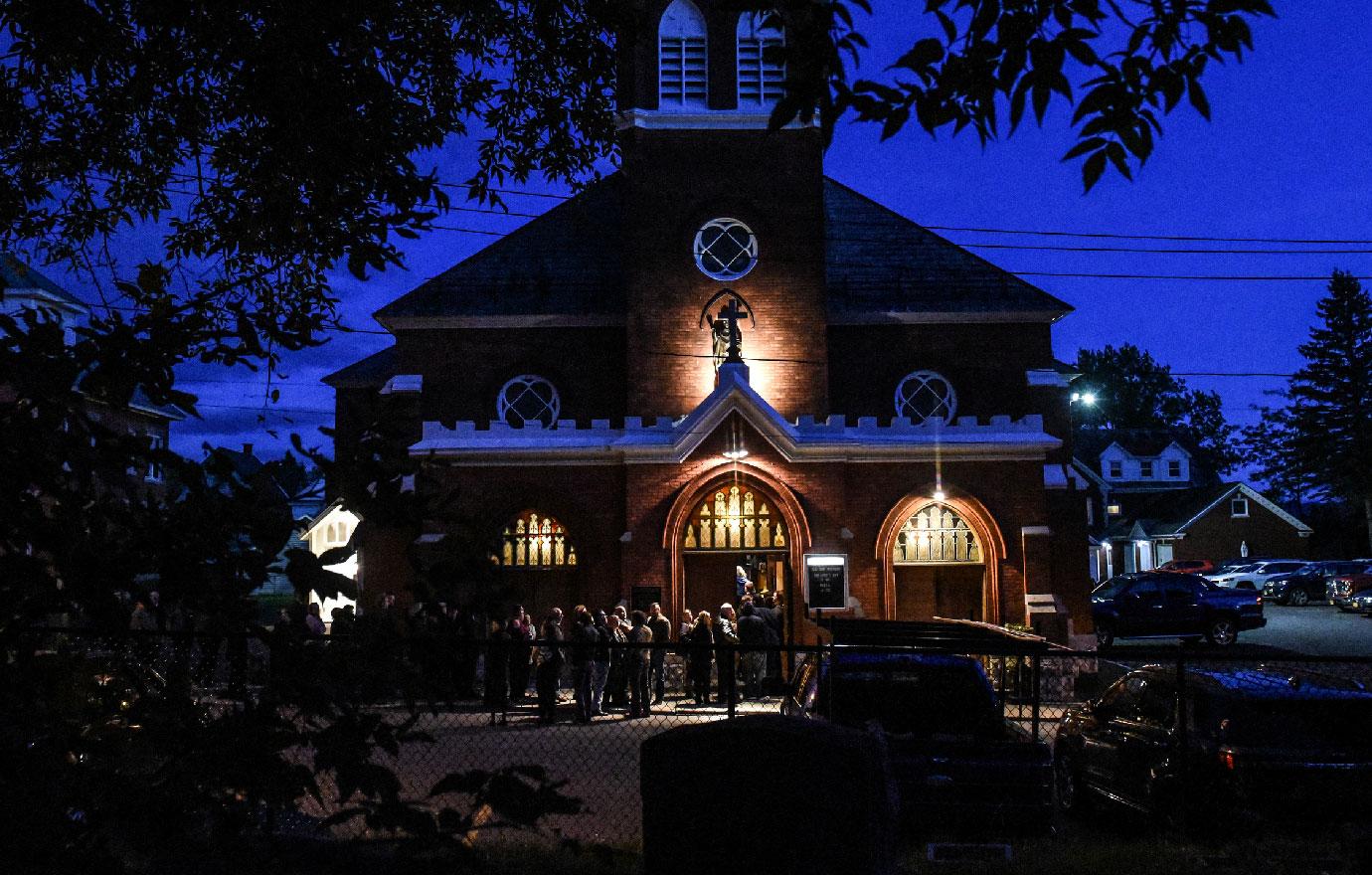
The tragic limo accident involving four sisters occurred on October 6, 2018, in Schoharie, New York, not on I-95 as sometimes misattributed. All four sisters—Amy Steenburg, Abigail Jackson, Mary Dyson, and Allison King—were killed alongside 16 others when a stretch limousine suffered catastrophic brake failure. As of 2026, this event remains the deadliest U.S. transportation accident in over a decade, driving significant federal and state limousine safety reforms.
The Timeline of the October 2018 Schoharie Collision
The events of October 6, 2018, began as a celebration for Amy Steenburg’s 30th birthday. The group, consisting of the four sisters, their husbands, and close friends, had rented a 2001 Ford Excursion stretch limousine to travel to a brewery in Cooperstown, New York. The choice of a limousine was intended to ensure safety and allow the group to stay together while celebrating.
As the vehicle traveled down a steep section of New York State Route 30, it reached speeds exceeding 100 miles per hour. The National Transportation Safety Board (NTSB) later determined that the limousine’s brake system had been poorly maintained and ultimately failed. The driver, unable to slow the heavy vehicle, bypassed a stop sign at the intersection of State Route 30 and 30A.
The limousine careened into the parking lot of the Apple Barrel Country Store, striking a parked Toyota Highlander—which killed two pedestrians—before crashing into a deep embankment. All 18 people inside the limousine, including the driver and the four sisters, were killed instantly. While major accidents are frequently associated with high-traffic corridors like I-95, the rural geography of the Schoharie site exacerbated the severity of the impact due to the steep terrain and the lack of a runaway truck ramp.
The Four Sisters: A Family Devastated
The core of the public’s grief centered on the Lumsden family. The four sisters—Amy, Abby, Mary, and Allison—were inseparable and known in their community for their close-knit bond. Their deaths, along with three of their husbands (Robert Dyson, Adam Jackson, and Axel Steenburg), left behind several young children and a community in deep mourning.
- Amy Steenburg: The youngest of the four, Amy had recently married Axel Steenburg. The trip was a celebration of her 30th birthday.
- Abigail Jackson: Known as Abby, she was a mother to two young daughters and worked as a teacher.
- Mary Dyson: A mother to one son and a veteran of the U.S. Army, Mary was a civil engineer who had a reputation for leadership.
- Allison King: Allison worked in human resources and was known for her organizational skills and devotion to her family.
The loss of an entire generation of siblings in a single incident became a catalyst for national conversation regarding the "stretch limousine" industry. Public sentiment shifted from viewing these vehicles as symbols of luxury to recognizing them as potentially unregulated "death traps" due to the modifications required to extend their chassis.
Legal Accountability and the Nauman Hussain Trial
Following the accident, the legal system focused on Prestige Limousine, the company that owned the Ford Excursion. The investigation revealed that the vehicle had failed multiple safety inspections and was technically under an "out of service" order at the time of the crash.
Nauman Hussain, the operator of Prestige Limousine, was charged with 20 counts of criminally negligent homicide and 20 counts of second-degree manslaughter. The legal proceedings were lengthy and controversial:
- The Initial Plea Deal (2021): Hussain initially reached a plea deal that would have resulted in probation and community service, but no jail time. This deal sparked outrage among the victims' families.
- The Rejection of the Deal (2022): A new judge vacated the plea deal, arguing that it was fundamentally flawed given the scale of the negligence and the loss of life.
- The Conviction (2023): Hussain was found guilty of manslaughter in May 2023. The prosecution successfully argued that he knowingly operated a dangerous vehicle with "grossly inadequate" brakes and ignored repeated warnings from state inspectors.
- Sentencing and Current Status (2026): Hussain was sentenced to 5 to 15 years in prison. As of 2026, he remains incarcerated, and the case continues to serve as a landmark for holding transportation company owners personally liable for maintenance failures.
Safety Failures: The Mechanical Condition of the 2001 Ford Excursion
The NTSB's final report on the Schoharie crash highlighted a series of systemic failures. The 2001 Ford Excursion was a "cut-and-stretch" limousine, meaning it had been severed in half and extended with a middle section. This modification significantly increased the vehicle's weight without necessarily upgrading the braking system to handle the added mass.
| Safety Factor | Status of the Schoharie Limo | Standard Requirement (2026) |
|---|---|---|
| Braking System | Corroded brake lines; mismatched fluid | Heavy-duty dual-braking systems |
| State Inspection | Failed "Out of Service" sticker present | Mandatory DOT semi-annual inspections |
| Seatbelts | Present but inaccessible/not used | Mandatory use; must be accessible to all |
| Driver Licensing | Lacked proper commercial endorsement | CDL with passenger endorsement required |
| Vehicle Age | 17 years old at time of crash | Strict age limits/retirement for limos |
The investigation found that the brake lines had been severely corroded and that a previous inspection had explicitly noted the danger. Furthermore, the driver did not possess the necessary commercial driver's license (CDL) to operate a vehicle of that size. These findings highlighted the "limousine loophole," where vehicles that look like buses but are modified from cars often slipped through regulatory cracks.
Legislative Reforms and Limo Safety Standards
The deaths of the four sisters led directly to the most significant overhaul of limousine regulations in United States history. By 2026, several pieces of legislation, both at the state and federal levels, have fully matured into practice.
The Staten Island-Schoharie Limo Safety Act This federal legislation was championed by New York lawmakers and the families of the victims. It mandated that all new limousines meet federal safety standards for side-impact protection, roof crush resistance, and airbag systems. Crucially, it required that every seat in a limousine be equipped with a lap and shoulder belt.
The "End of the Loophole" Prior to the crash, limousines were often classified in a way that allowed them to avoid the rigorous safety standards applied to buses. Post-Schoharie regulations now require any vehicle modified to carry nine or more passengers to undergo the same stringent inspections as commercial buses. This includes mandatory "out-of-service" protocols that are electronically tracked by the Department of Transportation (DOT).
Enhanced Inspection Powers In New York and several other states, DOT inspectors were granted the authority to seize license plates of non-compliant limousines on the spot. This was a direct response to the fact that Prestige Limousine had continued to operate the Ford Excursion despite being told it was unsafe.
Civil Litigation and the Legacy of the Families
Beyond the criminal trial of Nauman Hussain, the families of the four sisters filed civil lawsuits against the state of New York and the Mavis Passenger Service Center where the limousine was purportedly serviced. The lawsuits alleged that the state failed to properly enforce its own "out-of-service" orders and that the service center provided a fraudulent inspection sticker despite knowing the brakes were faulty.
The settlement of these cases has funded various foundations dedicated to transportation safety. The Lumsden family and others have become vocal advocates, ensuring that the names of Amy, Abby, Mary, and Allison are associated not just with a tragedy, but with a movement that has likely saved thousands of lives through improved vehicle standards.
In 2026, the intersection in Schoharie features a permanent memorial. It serves as a somber reminder of the day when a celebration turned into a national tragedy and a wake-up call for an entire industry.
Frequently Asked Questions
Where exactly did the limo accident happen?
The accident occurred at the intersection of State Route 30 and State Route 30A in Schoharie, New York. While many major accidents involving large groups occur on interstate highways like I-95, this specific tragedy took place on a steep, rural road in upstate New York. The location was approximately 40 miles west of Albany.
Who were the four sisters killed in the crash?
The four sisters were Amy Steenburg, Abigail Jackson, Mary Dyson, and Allison King. They were the daughters of the Lumsden family. Their deaths, along with their husbands and friends, wiped out a significant portion of their immediate family, leaving the community devastated.
Is the owner of the limo company still in prison in 2026?
Yes, Nauman Hussain, the operator of Prestige Limousine, is currently serving a sentence of 5 to 15 years in a New York state prison. He was convicted in 2023 on 20 counts of second-degree manslaughter. His projected release date, pending parole eligibility, is between 2028 and 2038.
What caused the limo's brakes to fail?
The NTSB concluded that the brakes failed due to a combination of poor maintenance, corroded brake lines, and the use of the wrong brake fluid. The vehicle was also over its weight capacity once modified into a stretch limousine, and the intense heat generated during the descent on Route 30 caused the already compromised system to fail completely.
Have limo safety laws changed because of this accident?
Yes, the crash led to the "Staten Island-Schoharie Limo Safety Act" and several New York state laws. These laws now require seatbelts for all passengers, more frequent and rigorous DOT inspections, and stricter licensing requirements for drivers. "Cut-and-stretch" limousines are now subject to much higher federal safety benchmarks than they were in 2018.
Practical Guidance for Limo Safety in 2026
If you are planning to rent a limousine or a high-capacity passenger vehicle, it is essential to perform due diligence to ensure the operator is compliant with post-Schoharie safety standards. The industry is much more regulated in 2026, but consumer vigilance remains necessary.
- Verify the DOT Number: Every legitimate limousine company must have a Department of Transportation (DOT) number. Use the Federal Motor Carrier Safety Administration (FMCSA) "SAFER" website to check the company's safety rating and inspection history.
- Inspect the Vehicle: Before boarding, ensure that seatbelts are visible and accessible for every passenger. If the vehicle appears to have modified seating that obscures safety equipment, refuse the ride.
- Confirm Driver Certification: Ensure your driver has a Commercial Driver’s License (CDL) with a "P" (Passenger) endorsement. This is legally required for any vehicle designed to transport more than 15 people, including the driver.
- Check the Age of the Fleet: Older stretch limousines, particularly those from the early 2000s, are significantly more likely to have mechanical issues. Prioritize companies that maintain a modern, factory-built fleet rather than older "cut-and-stretch" models.