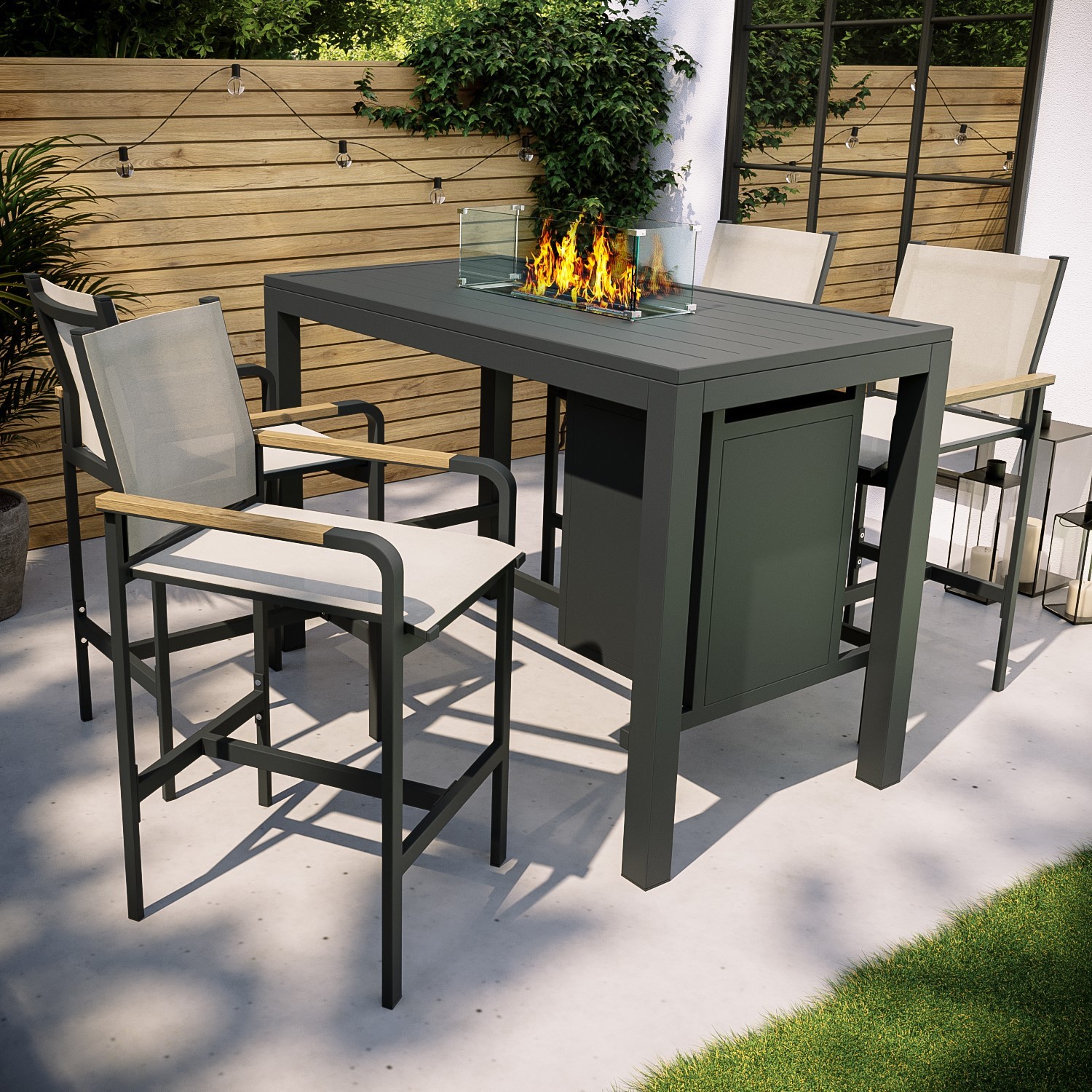
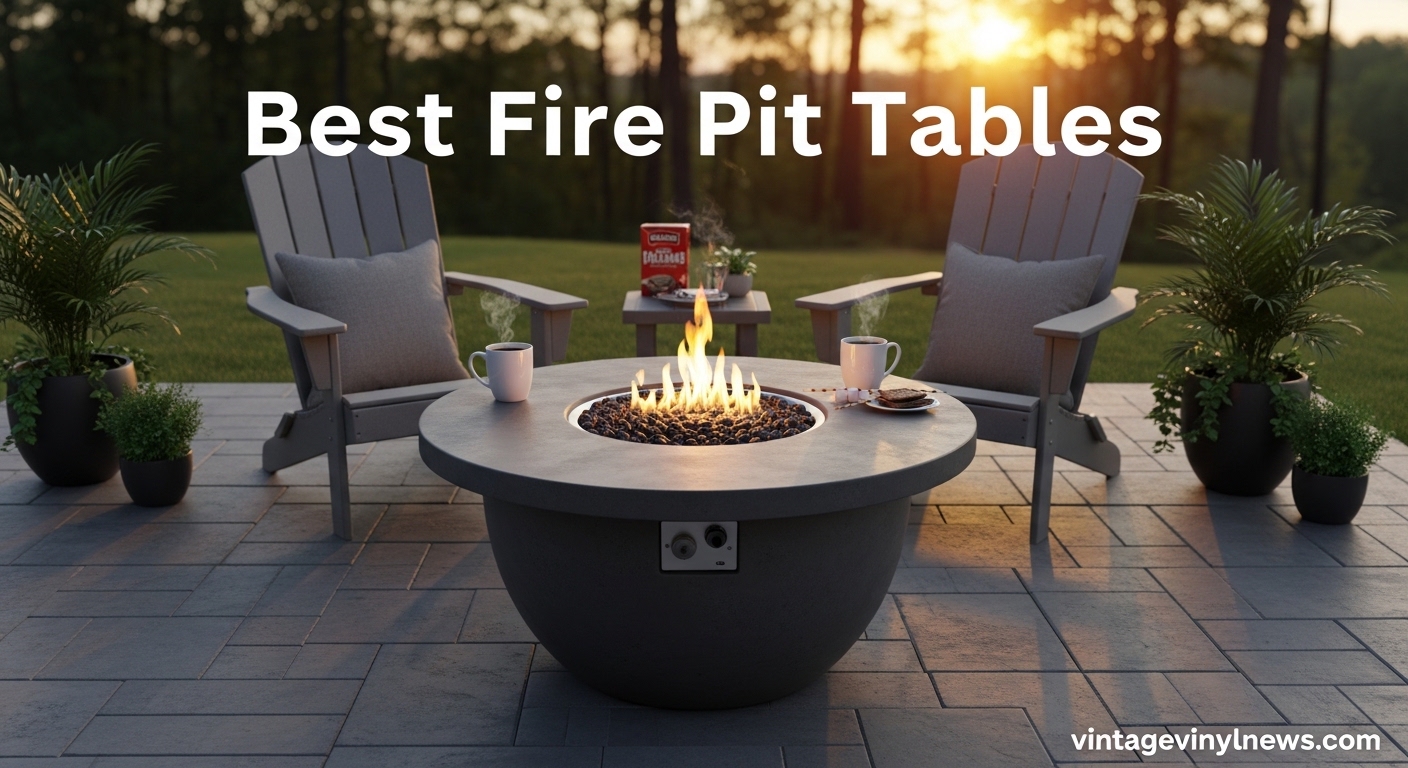
A 4-seater fire pit table is a specialized outdoor furniture piece that integrates a central gas or bioethanol burner within a tabletop surface designed to accommodate four adults. These units provide localized warmth, ambient lighting, and a functional surface for drinks or small plates, making them the primary social anchor for modern patios and decks in 2026.
Understanding the Anatomy of a 4-Seater Fire Pit Table
The primary appeal of a 4-seater fire pit table lies in its dual-purpose design. Unlike traditional fire pits that sit low to the ground and serve only as a heat source, a fire pit table is elevated—usually to "chat height" (approx. 24-25 inches) or "dining height" (approx. 29-30 inches). This elevation allows users to sit in standard outdoor chairs rather than low-slung Adirondack seats, facilitating more natural conversation and dining.
The table surface generally ranges from 42 to 54 inches in diameter (for round models) or width (for square models). This provides a "buffer zone" of 10 to 15 inches between the burner pan and the edge of the table. This space is critical; it ensures that guests have enough room for glassware and plates without their belongings—or their laps—becoming uncomfortably hot. In 2026, many high-end models utilize thermal breaks or insulated burner pans to keep the outer perimeter of the tabletop cool to the touch even during peak operation.
Material Selection and Durability Standards
When selecting a 4-seater fire pit table, the material composition determines the unit’s lifespan, weight, and maintenance requirements. Because these units are exposed to both high heat and outdoor elements, the quality of the substrate is paramount.
Aluminum and Cast Aluminum
Aluminum remains the industry standard for 2026 due to its inherent resistance to rust and corrosion. Cast aluminum is particularly favored for 4-seater configurations because it is heavy enough to remain stable in high winds but light enough to be moved if the patio layout changes. Look for powder-coated finishes, which provide a secondary barrier against UV degradation and chipping.
GFRC (Glass Fiber Reinforced Concrete)
GFRC is a high-performance material that offers the aesthetic of natural stone or heavy concrete without the excessive weight. By reinforcing the concrete with glass fibers, manufacturers can create thinner, stronger tabletops that are less prone to cracking from thermal expansion. These are ideal for modern, minimalist designs but require a high-quality sealant to prevent staining from food or drink spills.
Stainless Steel
While rare as a primary tabletop material due to heat conduction, 304-grade stainless steel is the gold standard for the burner pan and ring itself. In coastal environments, 316-grade "marine grade" stainless steel is recommended to prevent pitting from salt air. Avoid units that use galvanized steel for burners, as these will inevitably rust and clog the gas orifices within two to three seasons.
Fuel Types and Heat Output (BTUs)
For a 4-seater arrangement, the balance of heat is delicate. You want enough warmth to satisfy four people in a 6-to-8-foot radius without scorching those closest to the flame.
- Propane (LPG): The most common choice for 4-seater tables. Most models are designed to house a standard 20lb propane tank within the base of the table, eliminating unsightly hoses. A typical 4-seater table produces between 40,000 and 60,000 BTUs.
- Natural Gas (NG): Ideal for permanent installations. Natural gas requires a professional line to be run to the table’s location. While it offers the convenience of never running out of fuel, it limits the table's portability. Ensure the unit is "Natural Gas Ready" or includes a certified conversion kit.
- Bioethanol: These units are often ventless and produce no smoke or ash. However, they generally offer lower heat output (BTUs) compared to gas, making them better suited for ambiance in milder climates rather than primary heating in cold regions.
Spatial Planning and Safety Clearances
Before purchasing a 4-seater fire pit table, you must measure your available space to ensure safe operation and comfortable movement.
- The Footprint: A 48-inch table requires a minimum area of 10x10 feet to accommodate the table, four chairs, and "push-back" space for guests to stand up.
- Horizontal Clearance: Most manufacturers require at least 36 to 48 inches of clearance from the burner to any combustible side walls or railings.
- Vertical Clearance: This is the most frequently ignored safety metric. For tables placed under a pergola or covered porch, a minimum of 72 to 80 inches of overhead clearance is typically required. In 2026, many local fire codes specifically mandate these clearances for insurance compliance.
- Ventilation: If using propane or natural gas, the base of the table must have adequate ventilation to prevent the buildup of gas in the event of a leak. Never block the vent holes at the bottom of the table frame.
Comparison of Common 4-Seater Fire Pit Table Configurations
| Feature | Aluminum Chat Table | GFRC Modern Square | Wood-Look Composite |
|---|---|---|---|
| Average Width | 42" - 48" | 40" - 54" | 42" |
| BTU Range | 50,000 | 60,000+ | 40,000 |
| Durability | Excellent (Rust-proof) | High (Chipping risk) | Moderate (UV fading) |
| Weight | 60 - 80 lbs | 150 - 250 lbs | 90 - 110 lbs |
| Tank Storage | Internal (Most models) | Often External/Side Tank | Internal |
| Best For | Coastal/Humid areas | Permanent High-end Patios | Budget-conscious decor |
Essential Features and Accessories
To maximize the utility of a 4-seater fire pit table, certain accessories are considered essential rather than optional.
- Burner Cover / Lid: A matching metal lid that sits over the burner pan when the fire is not in use. This converts the unit into a full coffee table, protecting the burner from debris and rain while providing more usable surface area.
- Wind Guard: A tempered glass perimeter that surrounds the flame. Wind guards are highly recommended for 4-seater tables because they prevent the flame from "licking" toward guests sitting on the downwind side and improve fuel efficiency by stabilizing the fire.
- Fire Media: This includes lava rocks, fire glass, or ceramic logs. Fire glass (tempered glass beads) provides a modern look and reflects light, while lava rocks are more traditional and hold heat longer after the flame is extinguished.
- Protective Cover: A heavy-duty, waterproof fabric cover is the single most important factor in extending the life of the table. Even "weatherproof" materials like aluminum benefit from being covered during the off-season or heavy storms.
Maintenance and Long-Term Care
Maintaining a fire pit table is relatively simple but requires consistency. In 2026, the primary cause of system failure remains burner blockage due to spiders or debris.
Monthly Inspection: Check the burner ports for blockages. Spiders are attracted to the smell of propane and often spin webs inside the venturi tube, which can cause "backburn" or uneven flames. Use a small paperclip or compressed air to clear the orifices.
Surface Cleaning: For aluminum and GFRC tables, use a mild dish soap and warm water solution. Avoid abrasive scrubbers or harsh chemicals (like bleach or ammonia), which can strip the protective powder coating or sealant. For GFRC, re-apply a concrete sealer once every 12-18 months to maintain water resistance.
Ignition System Care: Most modern tables use a push-button piezo ignition or an electronic sparker. If the burner fails to light, the most common culprit is a dead AAA battery (usually hidden behind the push-button) or a misaligned thermocouple. Ensure the thermocouple (the small metal probe near the burner) is clean and positioned within the path of the pilot flame.
Common Mistakes to Avoid
- Buying Too Large for the Space: A 54-inch table may look great in a showroom, but if it leaves only 12 inches of walking space on your balcony, it becomes a safety hazard.
- Neglecting the Tank Access: If you choose a model without internal tank storage, you will have a hose running across your patio to a "tank hideaway" box. This is a significant tripping hazard for 4-seater setups where space is often tight.
- Incorrect Fire Media Depth: Adding too much fire glass or piling lava rocks too high can "smother" the burner, leading to poor combustion, excessive carbon monoxide production, and soot buildup. Follow the manufacturer’s depth guidelines—usually just enough to cover the burner ring.
FAQ
Can I use a 4-seater fire pit table on a wooden deck?
Yes, most gas fire pit tables are safe for wooden decks because the heat is directed upward and the burner pan is insulated. However, you should ensure the unit has legs or a base that allows airflow underneath it. Always check the manufacturer's "deck-safe" rating and consider using a fire-resistant mat for added peace of mind.
How long does a 20lb propane tank last in a 4-seater fire pit table?
On a medium setting (approx. 40,000 - 50,000 BTUs), a standard 20lb propane tank will typically last between 8 and 12 hours of continuous use. If the unit is run on "High" constantly, expect roughly 6 to 8 hours.
Do I need a professional to install my fire pit table?
If the unit uses a standard 20lb propane tank, no professional installation is required; these are "plug-and-play" appliances. However, if you are connecting the table to a permanent natural gas line or a large stationary propane tank, a licensed gas fitter is required to ensure the pressure regulators and connections meet local building codes.
Is fire glass better than lava rock?
"Better" depends on your goal. Fire glass is tempered to withstand high heat and does not spark or pop, making it safer for close-proximity 4-seater tables. Lava rock is more porous and can occasionally pop if moisture is trapped inside the rock when it is heated, but it is significantly more affordable and offers a more rustic aesthetic.
Can I cook over a 4-seater fire pit table?
Most gas fire pit tables are not designed for cooking. Dripping grease or food particles can clog the burner ports and damage the fire media. However, some models are specifically sold with "griddle inserts" or are rated for marshmallow roasting. Unless explicitly stated by the manufacturer, avoid using it as a grill.
Selecting Your Ideal 4-Seater Configuration
To choose the right fire pit table, first determine your primary use case. If the table will be used mostly for evening drinks and conversation, a 42-inch "chat height" aluminum model offers the best balance of durability and comfort. For those intending to serve light meals, a 48-to-54-inch "dining height" square table provides the necessary surface area to prevent plates from overheating. Always prioritize units with CSA or UL certifications to ensure the gas components have been rigorously tested for safety and reliability.