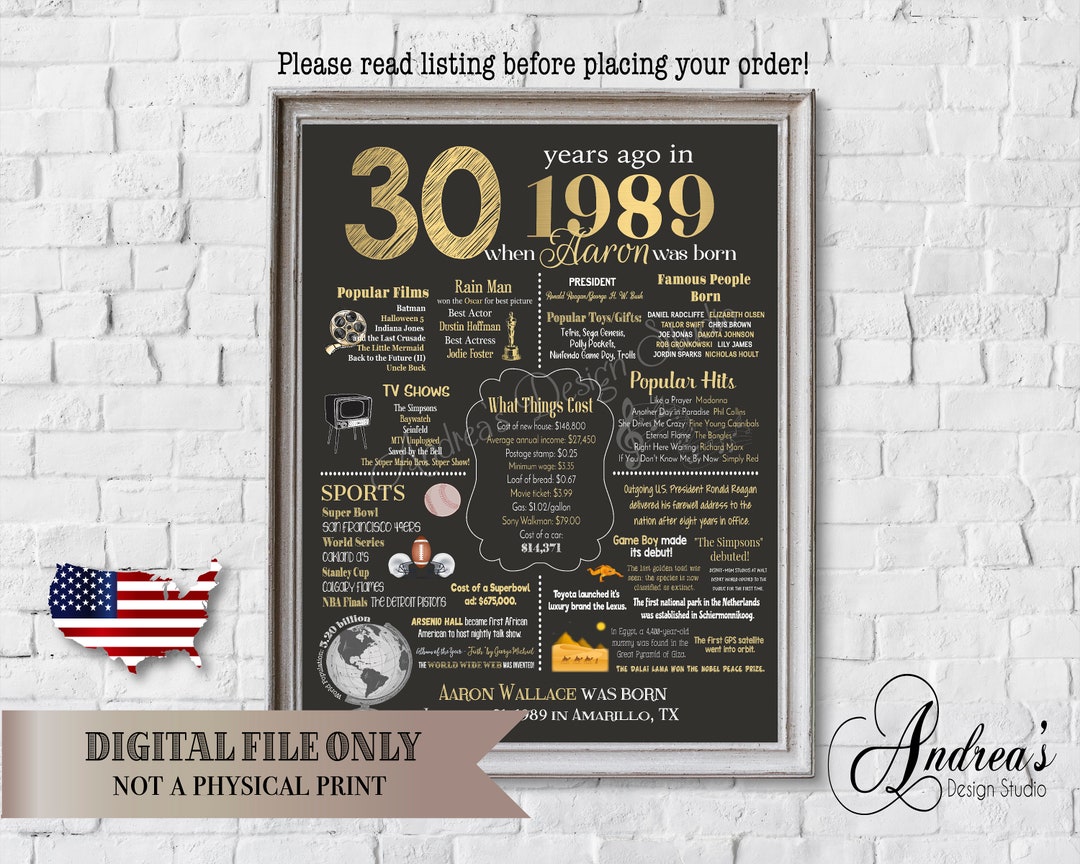
1989 was a transformative year that signaled the end of the Cold War era and the birth of the modern digital age. Key events included the fall of the Berlin Wall, the tragic Tiananmen Square protests, the invention of the World Wide Web, and the debut of cultural icons like The Simpsons.
The Geopolitical Revolution: The Collapse of the Iron Curtain
The year 1989 is often referred to by historians as the "Year of the Miracle" because of the rapid, largely peaceful collapse of communism across Eastern Europe. This shift did not happen in a vacuum; it was the result of years of economic stagnation within the Soviet bloc and the reformist policies of Mikhail Gorbachev, specifically Glasnost (openness) and Perestroika (restructuring).
One of the most shocking events of the year occurred on November 9, 1989, when the Berlin Wall—the physical and ideological symbol of the Cold War—finally fell. What began as a misunderstood press conference by East German official Günter Schabowski led to thousands of citizens swarming the border crossings. The guards, overwhelmed and lacking clear instructions, eventually opened the gates. This event paved the way for German reunification and the eventual dissolution of the Soviet Union.
Elsewhere in Europe, the Velvet Revolution in Czechoslovakia saw the peaceful overthrow of the communist government, led by playwright Václav Havel. In Poland, the Solidarity trade union, led by Lech Wałęsa, forced the government into "Round Table" talks, leading to the first semi-free elections in the Eastern Bloc. However, the transition was not peaceful everywhere. In Romania, the decade-long rule of Nicolae Ceaușescu ended in a violent uprising and his subsequent execution on Christmas Day, 1989. These headlines dominated global news, signaling a permanent shift in the world's balance of power.
Tragedy and Defiance: The Tiananmen Square Protests
While Europe was celebrating a new era of freedom, events in Asia took a darker turn. In the spring of 1989, student-led demonstrations began in Beijing's Tiananmen Square. The protesters called for greater political freedom, freedom of the press, and government accountability amidst rising inflation and corruption.
The movement grew to include over a million people at its peak. However, on the night of June 3 and the morning of June 4, the Chinese government sent in the People’s Liberation Army with tanks and infantry to clear the square. The resulting massacre remains one of the most censored topics in China today. A "shocking event" that remains etched in history is the image of the "Tank Man," an unidentified individual who stood alone in front of a column of Type 59 tanks on June 5. This image became a global symbol of individual resistance against state oppression.
The Dawn of the Digital Age: The World Wide Web and Gaming
From the perspective of 2026, 1989 is perhaps most significant for a document written at CERN. In March 1989, British scientist Tim Berners-Lee submitted a proposal titled "Information Management: A Proposal." This document outlined the framework for what would become the World Wide Web. While the internet had existed in various forms for decades, Berners-Lee’s invention of HTML, HTTP, and the first web browser allowed the public to navigate digital information easily.
In the world of consumer technology, 1989 saw the release of the Nintendo Game Boy in Japan and North America. Bundled with the addictive puzzle game Tetris, the Game Boy revolutionized handheld gaming and established Nintendo as a dominant force in the industry. Meanwhile, the first commercial dial-up Internet Service Provider (ISP), known as "The World," began operations in 1989, providing the first public gateway to the burgeoning digital landscape.
Environmental and Human Disasters that Changed Policy
The year was also marked by significant disasters that led to major shifts in safety and environmental regulations. On March 24, 1989, the Exxon Valdez oil spill occurred in Prince William Sound, Alaska. The tanker spilled approximately 11 million gallons of crude oil, coating 1,300 miles of coastline and killing hundreds of thousands of seabirds and marine mammals. This remains one of the most devastating human-caused environmental disasters in history and led to the passage of the Oil Pollution Act of 1990.
In the United Kingdom, the Hillsborough Disaster occurred on April 15 during an FA Cup semi-final. A crush in the standing-room-only pens led to the deaths of 97 people. The tragedy resulted in the Taylor Report, which mandated that all major British football stadiums become all-seater, fundamentally changing the fan experience and safety protocols in sports.
Later in the year, on October 17, the Loma Prieta earthquake struck the San Francisco Bay Area. Measuring 6.9 on the Richter scale, it occurred just before the start of Game 3 of the World Series, making it the first major earthquake to be broadcast live on national television. The event highlighted the need for stricter seismic building codes and infrastructure retrofitting.
30 Fascinating 1989 Facts at a Glance
The following table summarizes 30 of the most significant headlines, events, and cultural milestones from 1989.
| Fact Number | Event/Headline | Date | Impact/Significance |
|---|---|---|---|
| 1 | Fall of the Berlin Wall | Nov 9 | Ended the physical division of Europe. |
| 2 | Tiananmen Square Massacre | June 4 | Violent crackdown on pro-democracy protests. |
| 3 | WWW Proposal at CERN | March | Conceptual birth of the World Wide Web. |
| 4 | Nintendo Game Boy Release | April 21 | Popularized handheld mobile gaming. |
| 5 | Exxon Valdez Oil Spill | March 24 | Massive environmental disaster in Alaska. |
| 6 | The Simpsons Debut | Dec 17 | Longest-running American scripted primetime series. |
| 7 | Hillsborough Disaster | April 15 | Led to major stadium safety reforms in the UK. |
| 8 | Loma Prieta Earthquake | Oct 17 | Struck during the MLB World Series. |
| 9 | Voyager 2 Reaches Neptune | Aug 25 | First and only spacecraft to visit the planet. |
| 10 | Soviet Withdrawal from Afghanistan | Feb 15 | Ended a decade-long conflict for the USSR. |
| 11 | Velvet Revolution | Nov–Dec | Non-violent transition of power in Czechoslovakia. |
| 12 | Execution of Nicolae Ceaușescu | Dec 25 | Violent end to communist rule in Romania. |
| 13 | Solidarity Wins Polish Elections | June 4 | First non-communist government in the Soviet bloc. |
| 14 | Taylor Swift is Born | Dec 13 | Future global music icon and business mogul. |
| 15 | Daniel Radcliffe is Born | July 23 | Future actor known for the Harry Potter series. |
| 16 | First GPS Satellite Launched | Feb 14 | Start of the modern Global Positioning System. |
| 17 | Fatwa against Salman Rushdie | Feb 14 | Ayatollah Khomeini issued a death sentence over The Satanic Verses. |
| 18 | Sky Television Launches | Feb 5 | Transformed the media landscape in Europe. |
| 19 | F.W. de Klerk Becomes President | Sept 20 | Began the process of dismantling Apartheid in South Africa. |
| 20 | Dalai Lama Wins Nobel Peace Prize | Oct 5 | Recognized for his non-violent struggle for Tibet. |
| 21 | Seinfeld Pilot Airs | July 5 | Initially titled The Seinfeld Chronicles. |
| 22 | Game of Tetris License Battle | 1989 | Nintendo secured the handheld rights for Game Boy. |
| 23 | Sega Genesis US Launch | Aug 14 | Started the "Console Wars" of the 16-bit era. |
| 24 | Batman "Batmania" | June 23 | Tim Burton's film broke box office records. |
| 25 | Milli Vanilli Scandal Begins | 1989 | The duo released their hit album before the lip-sync reveal. |
| 26 | First Commercial ISP Opens | Nov | "The World" (std.com) offered public internet access. |
| 27 | Pan-European Picnic | Aug 19 | Peaceful protest at the Austrian-Hungarian border. |
| 28 | Launch of the COBE Satellite | Nov 18 | Mapped the cosmic microwave background radiation. |
| 29 | The Little Mermaid Released | Nov 17 | Sparked the "Disney Renaissance" era of animation. |
| 30 | Malta Summit | Dec 2-3 | Bush and Gorbachev declared the Cold War over. |
Science and Space Exploration: Beyond Earth’s Reach
In August 1989, NASA’s Voyager 2 spacecraft made its closest approach to Neptune. This was a landmark moment for planetary science, as it provided the first high-resolution images of the blue gas giant, its rings, and its moon, Triton. Voyager 2 discovered the "Great Dark Spot," a massive storm system similar to Jupiter's Great Red Spot, though it has since disappeared. This mission marked the end of the "Grand Tour" of the outer solar system.
On the home front, the launch of the first Block II GPS satellite in February 1989 laid the groundwork for the navigation systems we rely on in 2026. While originally intended for military use, the expansion of the constellation during this year was critical for the eventually ubiquitous civilian GPS technology found in every smartphone and vehicle today.
Pop Culture: The Birth of Icons
1989 was a banner year for entertainment that continues to influence the world today. "Simpsons Roasting on an Open Fire," the first full-length episode of The Simpsons, aired in December. The show broke the mold for animated series, targeting adults with social satire and complex humor. Simultaneously, the pilot of Seinfeld (originally titled The Seinfeld Chronicles) aired, though it wouldn't become a massive hit until several years later.
The music world saw the birth of Taylor Swift in December 1989. Decades later, her birth year would become a brand in itself with her chart-topping album 1989. In the film industry, "Batmania" swept the globe with the release of Tim Burton's Batman, starring Michael Keaton and Jack Nicholson. The film’s dark, serious tone redefined the superhero genre, moving it away from the campy depictions of the 1960s.
FAQ: Understanding the Impact of 1989
Why is 1989 considered the most important year of the 20th century?
1989 is often cited as the most pivotal year because it effectively ended the Cold War, which had dominated global politics since 1945. The fall of the Berlin Wall and the democratic revolutions in Eastern Europe dismantled the Soviet empire's influence, leading to a unipolar world and the spread of globalization and democratic ideals.
Who was the President of the United States in 1989?
The year 1989 saw a transition in the U.S. Presidency. Ronald Reagan finished his second term in January, and George H.W. Bush was inaugurated as the 41st President of the United States on January 20, 1989. Bush was the primary U.S. leader who navigated the delicate diplomatic waters during the collapse of the Soviet Union.
What was the biggest movie and song of 1989?
The highest-grossing film of 1989 was Indiana Jones and the Last Crusade, followed closely by Batman. In music, the Billboard Year-End number-one single was "Look Away" by Chicago, though artists like Madonna, Bobby Brown, and Paula Abdul dominated the airwaves throughout the year.
How did the World Wide Web start in 1989?
Tim Berners-Lee created the proposal at CERN to help scientists share information more efficiently. He developed the three fundamental technologies that remain the foundation of the web today: HTML (Hypertext Markup Language), URL (Uniform Resource Identifier), and HTTP (Hypertext Transfer Protocol).
What major conflict ended in 1989?
The Soviet-Afghan War officially ended on February 15, 1989, as the last Soviet troops withdrew from Afghanistan. This nine-year conflict is often described as the "Soviet Union’s Vietnam," as it drained the USSR’s military and economic resources and contributed to the internal collapse of the communist state.
Researching 1989 for Modern Context
If you are a student, researcher, or history enthusiast in 2026, the best way to understand the legacy of 1989 is through digital archives. Organizations like the CERN Document Server offer original scans of the World Wide Web proposal, while the National Archives provide extensive documentation on the Cold War's end. For those interested in the cultural shift, watching documentaries such as The 80s: The Decade That Made Us provides excellent visual context for the shocking events and historical headlines that shaped our current world. Understanding 1989 is not just about nostalgia; it is about recognizing the roots of our modern geopolitical and technological landscape.