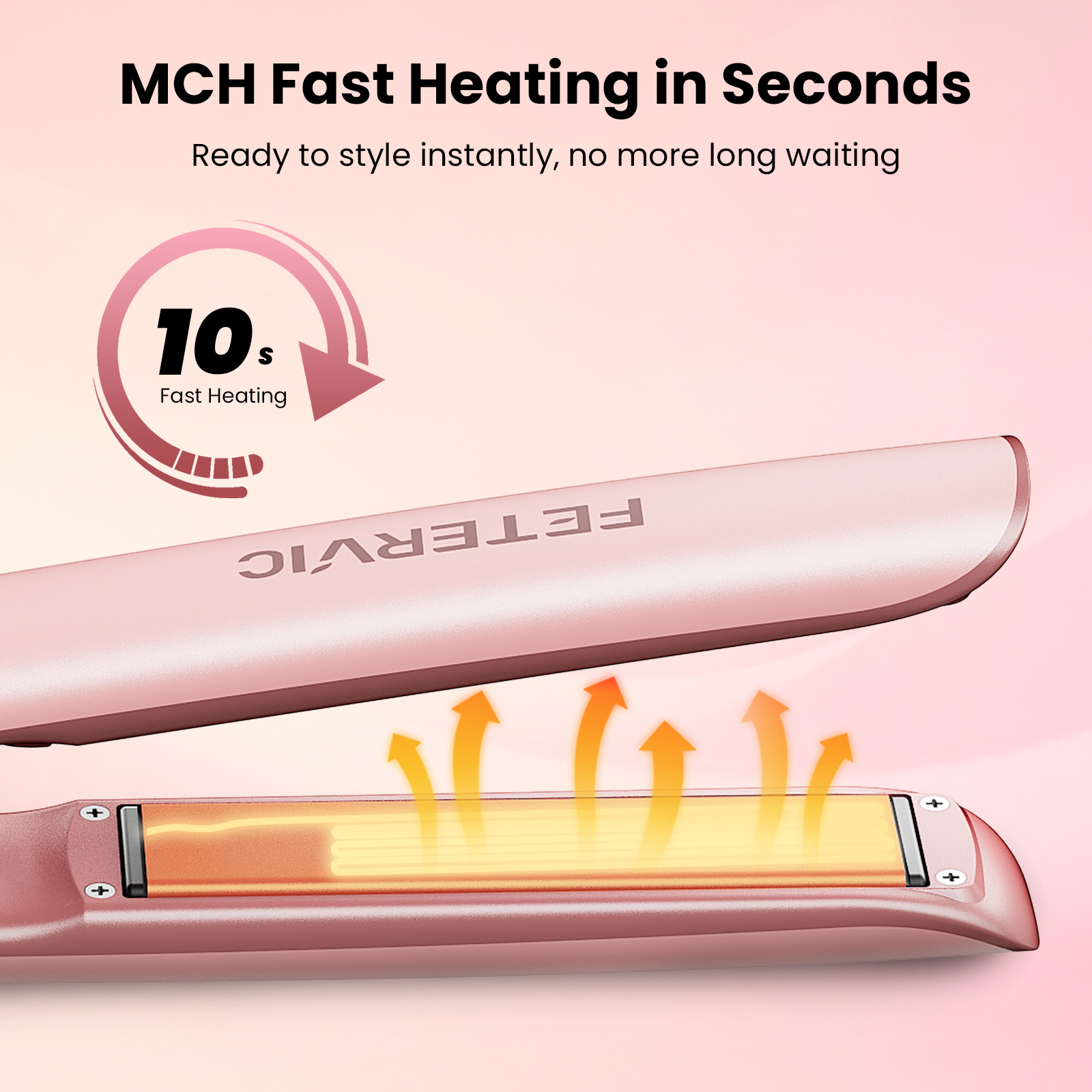
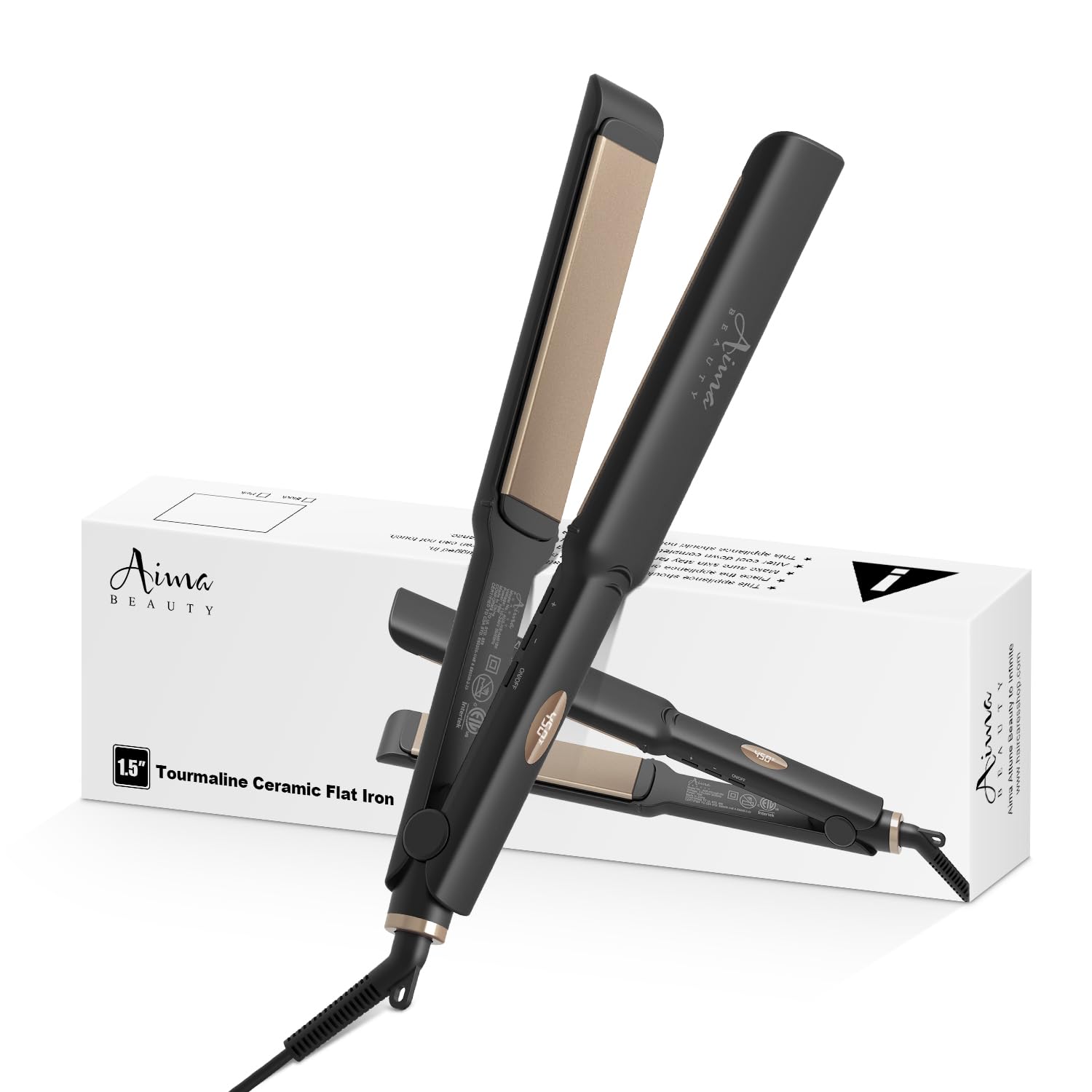
Choosing between a 3-inch wide flat iron and a half-inch straightener depends entirely on your hair length, density, and specific styling goals. Use a 3-inch wide iron to save time on extremely long, thick, or coarse hair by covering more surface area per pass. Select a half-inch straightener for precision work, such as styling pixie cuts, short bangs, or reaching the roots and edges without risking scalp burns.
Understanding the Specialized Roles of Wide and Narrow Plates
The world of hair styling tools in 2026 has moved far beyond the "one size fits all" approach of a standard 1-inch iron. While the 1-inch plate remains a versatile staple, professional-grade results often require specialized widths. The 3-inch wide flat iron and the half-inch straightener represent the two extremes of the styling spectrum, each serving a distinct architectural purpose for hair.
A 3-inch iron is a powerhouse designed for efficiency. Its primary function is to distribute heat across a massive surface area, which is essential for managing high-volume hair that would otherwise take hours to style. Conversely, the half-inch iron is a surgical tool. It is designed for maneuverability and detail, allowing the user to manipulate individual sections of hair that are too short or too fine for larger plates to grip effectively.
Understanding the physics of these tools is the first step in making an informed purchase. Wider plates retain more heat and apply more pressure over a larger section, while narrower plates allow for higher tension and more creative "flipping" or "curling" motions that are physically impossible with a wide-format tool.
The 3-Inch Wide Flat Iron: A Solution for Thick and Long Hair
The 3-inch wide flat iron is a specialized tool often found in professional salons or in the kits of those with exceptionally demanding hair types. Because the plates are three times the width of a standard iron, they can process much larger sections of hair in a single pass. This is not merely a convenience; for individuals with hair reaching mid-back or lower, it can reduce styling time by up to 60%.
Ideal Hair Types for 3-Inch Plates
These wide-format tools are best suited for thick, coarse, or extremely curly hair. If you have fine or thin hair, a 3-inch iron can actually be detrimental, as the weight of the plates and the excessive heat exposure can lead to limp strands or heat damage. However, for those with high density, the 3-inch plates ensure that the heat penetrates the center of the hair section, providing a uniform silkiness that smaller irons struggle to achieve without multiple, damaging passes.
Ergonomics and Weight Considerations
One trade-off with a 3-inch iron is the physical weight. As of 2026, manufacturers have utilized lightweight magnesium and carbon-fiber housings to offset the weight of the large heating elements, but these tools are still heavier than their narrower counterparts. When choosing one, look for an ergonomic handle and a 360-degree swivel cord to prevent wrist strain during the longer sessions required for thick hair.
The Half-Inch Straightener: Precision for Short Hair and Roots
The half-inch straightener, often called a "pencil iron" or "mini-straightener," is the ultimate tool for detail. Its slim profile allows it to get incredibly close to the scalp, making it the gold standard for taming new growth (roots) and smoothing the "baby hairs" around the hairline.
Precision Styling and Pixie Cuts
For anyone with a pixie cut, a bob with short layers, or bangs, the half-inch iron is non-negotiable. Large plates are bulky and cannot navigate the curves of the head or the short length of the hair without leaving "crimping" marks or burning the skin. The half-inch plates allow you to grip the hair at the very base and create lift or directional flow, which is essential for short hairstyles that require volume at the root.
The "Edge" Specialist
In the natural hair community, the half-inch iron is frequently used for "laying edges" and straightening the hair near the nape of the neck. Because the plates are narrow, you have much higher visibility while styling, allowing you to see exactly where the heat is being applied. This reduces the risk of accidental burns on the ears or forehead.
Technical Specifications to Consider in 2026
When evaluating either a 3-inch or a half-inch iron, the material of the plates and the internal technology are just as important as the width. In 2026, we see a convergence of traditional materials with advanced sensor technology.
| Feature | 3-Inch Wide Flat Iron | Half-Inch Straightener |
|---|---|---|
| Best Hair Length | Long (past shoulders) to Extra-Long | Short (pixie) to Medium (for roots) |
| Primary Benefit | Speed and volume reduction | Precision and root access |
| Plate Material | Titanium (for fast heat-up on thick hair) | Ceramic or Tourmaline (for gentle styling) |
| Temperature Range | 300°F - 450°F | 250°F - 410°F |
| Weight | 1.2 lbs - 1.8 lbs | 0.5 lbs - 0.9 lbs |
| Travel Friendly | No (bulky for luggage) | Yes (ideal for carry-ons) |
Plate Materials: Titanium vs. Ceramic
For the 3-inch iron, titanium is often the preferred material. Titanium heats up faster and maintains a more consistent high temperature, which is necessary when you are sandwiching a thick section of hair between the plates. For the half-inch iron, ceramic or tourmaline-infused plates are often better. Since these tools are used close to the scalp and on shorter, often more fragile hairs, the gentle, infrared heat produced by ceramic helps prevent moisture loss and breakage.
Smart Heat Sensors
Modern 2026 models now include micro-sensors embedded beneath the plates. In a 3-inch iron, these sensors ensure that the heat is even across the entire 3-inch span, preventing "cold spots" that result in uneven textures. In a half-inch iron, sensors prevent the plates from overheating in such a small area, which is vital for protecting the delicate hair around the face.
Step-by-Step Guide to Using Wide vs. Narrow Irons
The technique for using these tools differs significantly. Mastering the specific "glide" for each will ensure you achieve professional results while maintaining hair health.
How to Use the 3-Inch Wide Flat Iron
- Preparation: Always apply a high-grade heat protectant. Because wide plates apply more heat to a larger area, the hair must be shielded.
- Sectioning: Divide the hair into horizontal sections that are no wider than the 3-inch plates.
- The Glide: Start about an inch from the root. Close the plates and move in a slow, steady downward motion. Because the plates are wide, you do not need to "chase" the iron with a comb as aggressively as you would with a smaller iron.
- Cooling: Allow the large section of hair to cool completely before touching it, as the residual heat helps set the straightness.
How to Use the Half-Inch Straightener
- Preparation: Focus heat protectant on the roots and the ends, which are most prone to damage.
- The "Root Lift": To create volume, place the iron at the root, close it, and rotate your wrist 180 degrees upward before gliding it out.
- Detailing: For bangs or "edges," use small, quick "flicking" motions. Do not hold the iron in one place, as the concentrated heat on such a small plate can cause damage quickly.
- The Nape: Use a mirror to see the back of your neck. The narrow plates allow you to straighten the "kitchen" (the hair at the nape) safely.
Common Mistakes to Avoid When Styling
Despite their specialized designs, it is easy to misuse these tools. One of the most frequent errors with a 3-inch iron is trying to use it for curling. While you can technically curl hair with a flat iron, 3-inch plates are too wide to create a natural-looking spiral; they are strictly for straightening and smoothing. Attempting to curl with them often results in harsh, boxy ridges in the hair.
With the half-inch iron, the most common mistake is using a temperature that is too high. Users often assume that because the tool is small, it isn't powerful. However, the surface-area-to-heat ratio is high. Using 450°F on a half-inch section of hair near the scalp can lead to immediate singeing. Always start at the lowest effective temperature (usually around 300°F to 350°F for fine hair).
FAQ
Can I use a 3-inch flat iron on short hair?
While technically possible, it is highly discouraged. A 3-inch plate is too wide to get close to the scalp on short hair, leaving the roots wavy while only straightening the very ends. It also increases the risk of burning your forehead or ears due to the bulk of the tool.
Is a half-inch straightener good for thick hair?
A half-inch iron can be used on thick hair for roots and touch-ups, but it is not practical for straightening the entire head. It would take an incredibly long time to process thick, long hair with such small plates, leading to arm fatigue and uneven styling.
How do I clean the plates of these specialized irons?
For both sizes, wait until the tool is completely cool. Use a soft cloth dampened with a small amount of rubbing alcohol or a specialized iron cleaner. This is especially important for 3-inch irons, as the large surface area can collect a significant amount of product buildup, which eventually causes "drag" or snagging.
Do 3-inch irons have an automatic shut-off?
Most professional models in 2026 include a 30-minute to 60-minute automatic shut-off feature. However, because 3-inch irons generate significant heat, you should always double-check the specific model's safety ratings before purchase.
Can a half-inch iron be used as a curling iron?
Yes, half-inch straighteners are excellent for creating tight, "ringlet" style curls or "S-waves" on short to medium hair. Their narrow profile allows you to wrap the hair around the body of the iron much like a curling wand.
Selecting Your Ideal Tool Configuration
When deciding which tool to add to your collection, evaluate your daily "pain points." If your primary frustration is the two hours it takes to smooth your waist-length, thick hair, the 3-inch wide flat iron is a life-changing investment in efficiency. It provides the surface area and pressure needed to streamline your routine.
If your frustration stems from "flyaways," unruly bangs, or the inability to straighten the hair at your temples and nape, the half-inch straightener is the necessary solution. Many professionals suggest a "hybrid" approach: using a wider iron for the bulk of the hair and keeping a half-inch iron specifically for the perimeter and root work. By selecting the tool that matches the specific geometry of your hair, you reduce heat damage and achieve a polished, salon-quality finish every time.