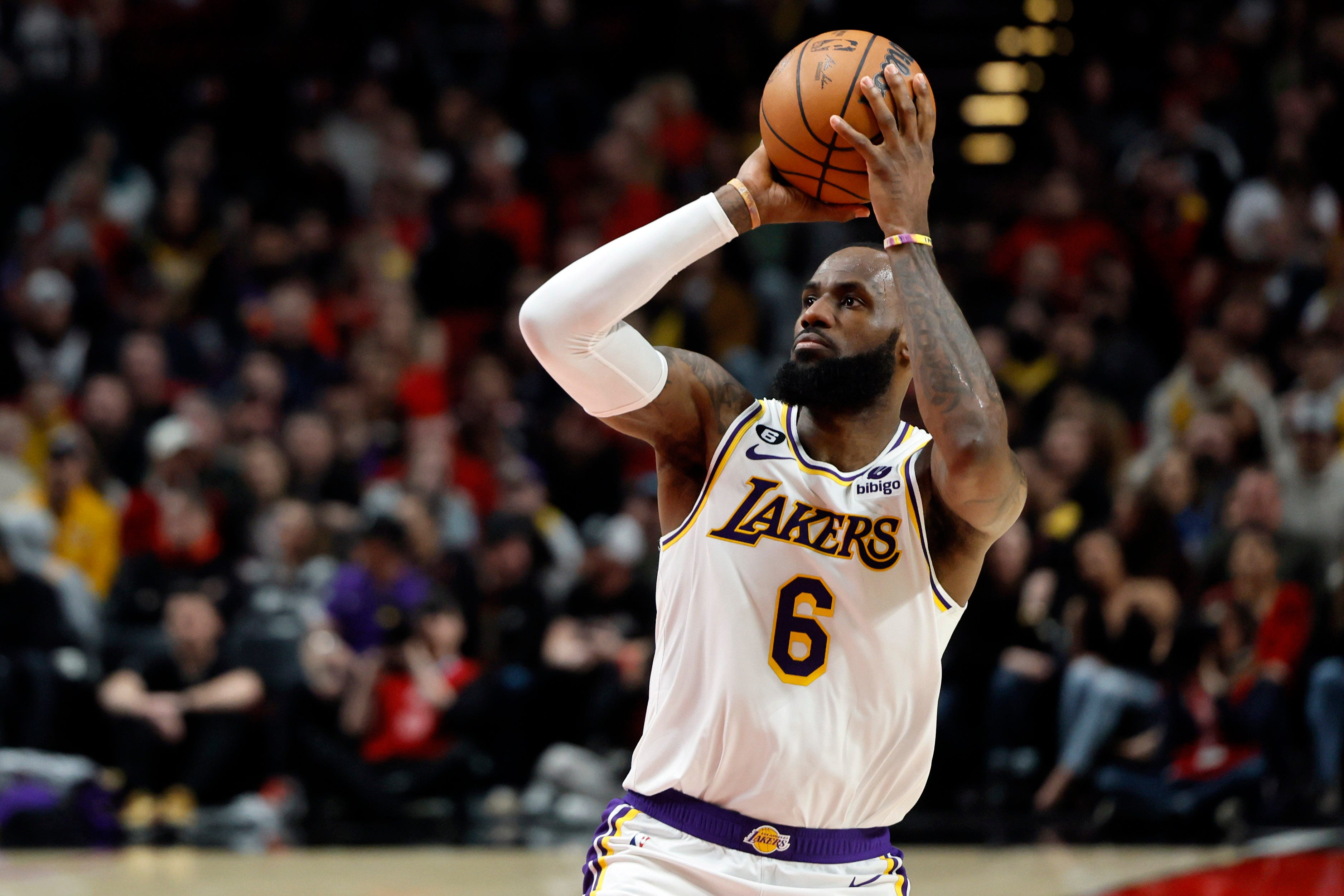
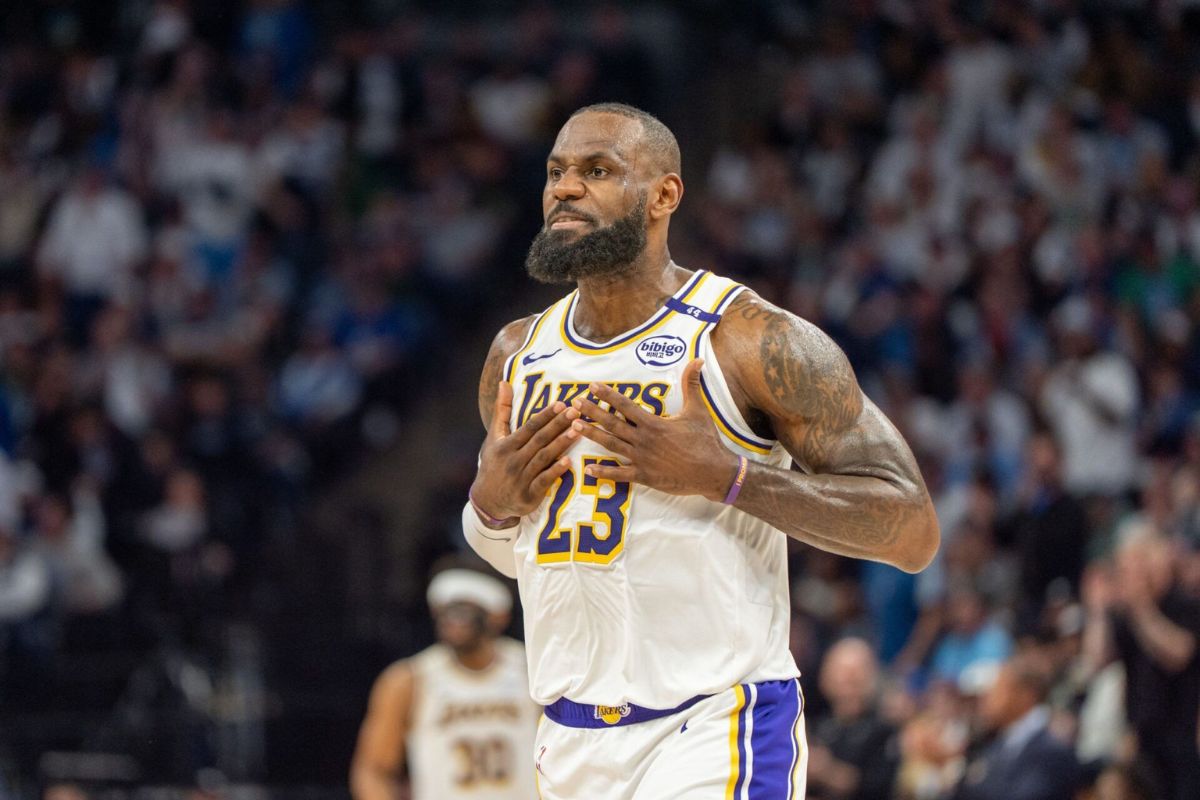
LeBron James has redefined basketball excellence by combining unprecedented longevity with a versatile skill set that transcends traditional scoring. Beyond his record-breaking point totals, his "King" status is cemented by unique milestones in playmaking, rebounding, and postseason dominance that no other player in NBA history has ever approached.
The name LeBron James is synonymous with statistical dominance, but to truly understand the "King," one must look past the nightly box score. While casual fans focus on his pursuit of scoring records, the underlying data reveals a player who has functioned as a hybrid of a point guard, a power forward, and a coach on the floor for over two decades. By 2026, his resume has moved from "great" to "statistically anomalous," creating a blueprint for sustained peak performance that may never be replicated.
To appreciate his impact, we must analyze the specific areas where he separates himself from other legends like Michael Jordan or Kareem Abdul-Jabbar. It is not just about the volume of points, but the intersection of multiple disciplines. Here are three profound "King stats" that showcase why LeBron James remains the gold standard for all-around basketball impact.
1. The Architect of the 40,000-10,000-10,000 Club
The most significant "fun fact" regarding LeBron James’ statistical profile is his membership in a club of exactly one person. LeBron is the only player in the history of the National Basketball Association to record at least 40,000 points, 10,000 rebounds, and 10,000 assists. This is often referred to by analysts as the "411 Club" (referring to the 40k/10k/10k milestones).
To put this achievement into perspective, one must understand the specialization of NBA roles. Traditionally, 10,000 rebounds are reserved for elite centers and power forwards—players whose primary job is to control the glass. Conversely, 10,000 assists are typically the domain of pure "pass-first" point guards. LeBron James has essentially played at a Hall-of-Fame level in two diametrically opposed roles simultaneously, all while becoming the greatest scorer in the history of the sport.
The Mathematics of Versatility
Achieving these numbers requires a level of consistency that borders on the impossible. To reach 10,000 assists, a player must average 8 assists per game over 1,250 games. To reach 40,000 points, they must average 25 points per game over 1,600 games. LeBron’s ability to maintain these averages while also crashing the boards for rebounds highlights his physical durability and high basketball IQ. This stat proves that he is not just a "scorer" who happened to play a long time; he is a primary playmaker who happened to be the most efficient scoring threat on the court.
Impact on Team Success
This statistical versatility means that LeBron James can influence a game even when his shot isn't falling. In games where he scores fewer than 20 points, his teams often still win because his rebounding and "King stats" in the passing lane compensate for the lack of scoring. By 2026, the gap between LeBron and the next closest active player in this combined category remains astronomical, underscoring the "Unicorn" nature of his career trajectory.
2. Postseason Supremacy: More Wins than Most NBA Franchises
When discussing LeBron’s "King stats," the conversation eventually moves to the playoffs. A startling fun fact is that LeBron James has more career playoff wins than 28 of the 30 active NBA franchises. As of the mid-2020s, only the Los Angeles Lakers and the Boston Celtics—two organizations with decades of winning tradition—have more total playoff victories as entire franchises than LeBron James has as a single individual.
This statistic is a testament to his "playoff ceiling." While many players can put up gaudy numbers in the regular season, LeBron’s ability to elevate his performance during the most pressurized moments of the year is what truly defines his legacy.
Breaking Down the Playoff Longevity
LeBron’s postseason dominance is not just about winning series; it is about the sheer volume of high-level basketball he has played. He has played the equivalent of more than three full extra seasons just in playoff games. This workload would break most athletes, yet he has consistently led his teams to the Finals across three different decades.
- Total Playoff Points: He holds the all-time record, significantly ahead of Michael Jordan.
- Series Wins: He has won a playoff series in nearly every year of his career since 2006.
- Clutch Performance: He holds the record for the most "buzzer-beater" game-winning shots in playoff history, debunking the early-career myth that he was "not a closer."
The "King" of the Eastern and Western Conferences
LeBron is also one of the few players to lead teams from both the Eastern and Western conferences to multiple championships. This ability to "carry" a roster regardless of the surrounding personnel or the strength of the conference is a stat that goes beyond the scoreboard. It speaks to his role as a foundational piece—if you have LeBron James, your statistical probability of reaching the Finals increases by a margin unseen since the era of Bill Russell.
3. The Generational Bridge: Playing Across Four Decades of Talent
A third fascinating statistical reality of LeBron’s career is his longevity relative to the players he has faced. By 2026, LeBron James has officially played against fathers and their sons in the NBA on multiple occasions. This "King stat" of endurance is perhaps the most impressive feat of his career because it highlights a level of biological maintenance that was previously thought impossible.
Facing the Next Generation
LeBron entered the league in 2003, competing against legends like Shaquille O'Neal, Gary Payton, and Reggie Miller. Fast forward to the 2024-2025 and 2025-2026 seasons, and he is competing against the children of his former rivals—and in the historic case of his son, Bronny James, playing alongside his own offspring.
| Metric | LeBron James (Career Highlights) | Context/Significance |
|---|---|---|
| Seasons Played | 23+ Seasons | Tied or broke the record for most seasons in NBA history. |
| All-NBA Selections | 20+ Selections | Most in history, reflecting sustained elite status. |
| All-Star Starts | 20+ Starts | Every year of his career since his sophomore season. |
| Minutes Played | 65,000+ (Reg + Post) | The highest physical "mileage" of any basketball player. |
| Win Shares | Top 3 All-Time | A metric measuring a player's total contribution to wins. |
The Evolution of the Game
The "stats beyond the scoreboard" here involve LeBron's adaptability. In the early 2000s, the NBA was a slow-paced, defensive-heavy league. By the 2020s, it became a high-octane, three-point-centric environment. LeBron’s ability to maintain his "King" status across these tactical shifts—transforming from a rim-attacker to a high-volume three-point shooter and elite floor general—is a statistical anomaly. He didn't just survive different eras; he dominated the specific metrics prioritized by each era.
Comparing LeBron James to Historical Benchmarks
To understand why these "3 fun facts" matter, we must compare his output to the other titans of the game. Statistics are only as relevant as the context they exist within. While Michael Jordan is often cited for his perfect Finals record, LeBron’s "King stats" focus on the totality of the basketball experience.
According to data from Basketball-Reference, LeBron’s cumulative "Value Over Replacement Player" (VORP) is the highest ever recorded. This means that if you replaced LeBron James with an average NBA player, his team would lose more value than any other team replacing any other player in history. This is the ultimate "beyond the scoreboard" metric.
Efficiency and Advanced Metrics
LeBron James has consistently maintained a Player Efficiency Rating (PER) above 25 for nearly two decades. For context, a PER of 25 is typically considered "MVP level." While most players see a sharp decline after age 32, LeBron’s statistical "cliff" has never arrived. Even in his late 30s and early 40s, his assist-to-turnover ratio and effective field goal percentage (eFG%) remained in the top tier of the league.
The Physical Foundation of the "King Stats"
None of these fun facts would be possible without LeBron’s legendary commitment to his body. It is widely reported by sources like ESPN that James spends over $1.5 million annually on his physical recovery, including cryotherapy, hyperbaric chambers, and personal chefs.
This investment is the "silent stat." It doesn't appear on a box score, but it is the reason he can record a triple-double in 2026 at an age when most of his draft classmates have been retired for a decade. His durability is his greatest skill. In an era of "load management," LeBron’s career minutes total is a towering monument to his availability.
Why Longevity is a Quality in Itself
In sports debates, longevity is sometimes used as a slight, suggesting a player only has records because they "played a long time." However, in the NBA, playing a long time at a high level is a massive statistical hurdle. Every year a player stays in the league, the competition gets younger, faster, and more specialized. LeBron’s ability to hold off the "young guard" for over 20 years is a testament to his basketball IQ, which is the engine behind all his "King stats."
Questions and Answers About LeBron's Legacy
What is the "411 Club" and why is LeBron the only member?
The 411 Club refers to LeBron James reaching 40,000 points, 10,000 rebounds, and 10,000 assists. He is the only member because these three milestones require three different skill sets (scoring, rebounding, and playmaking) that are rarely found in one player. Most specialists reach one or two, but never all three at such high volumes.
How many playoff games has LeBron James won compared to NBA teams?
LeBron has more playoff wins than 28 of the 30 NBA franchises. Only the Lakers and Celtics have more total playoff wins as organizations than LeBron has as an individual. This highlights his consistent ability to lead his teams deep into the postseason regardless of which team he is playing for.
Has any other player played against as many father-son duos as LeBron?
No other player has reached the level of "generational overlap" that LeBron James has. Because he entered the league at 18 and played at an All-Star level into his 40s, he has faced multiple sets of fathers and sons, including the Jabari Smiths and the Kenyon Martins, marking a unique era-spanning career.
What does "Beyond the Scoreboard" mean in LeBron's context?
It refers to metrics like VORP (Value Over Replacement Player), Win Shares, and longevity stats that aren't captured by looking at a single game's points total. These stats look at a player's cumulative impact on the game's outcome and the history of the league over multiple decades.
How has LeBron James' style of play changed to maintain his stats?
LeBron has evolved from a high-flying dunker in his first Cleveland stint to a versatile "Point Forward" in Miami, and eventually to a high-volume three-point shooter and elite facilitator in Los Angeles. This evolution allowed him to keep his statistical production high even as his raw vertical athleticism naturally declined with age.
Monitoring the Legacy of the King
For fans and analysts looking to follow LeBron’s final statistical chapters, the best course of action is to focus on cumulative career milestones rather than single-game scoring. As we move through 2026, every game LeBron plays sets a new "oldest player to..." record.
To stay updated on these historical shifts, regularly check official league trackers and advanced analytics databases. Whether you are a fan of his "King" persona or a skeptic of his GOAT (Greatest of All Time) status, the numbers provide an objective truth: we are witnessing a statistical outlier that the sport of basketball may never see again. The most practical way to appreciate his impact is to watch how he manipulates the game not just with his physical tools, but with his unrivaled understanding of the floor—a "King stat" that will endure long after his final jersey is retired.