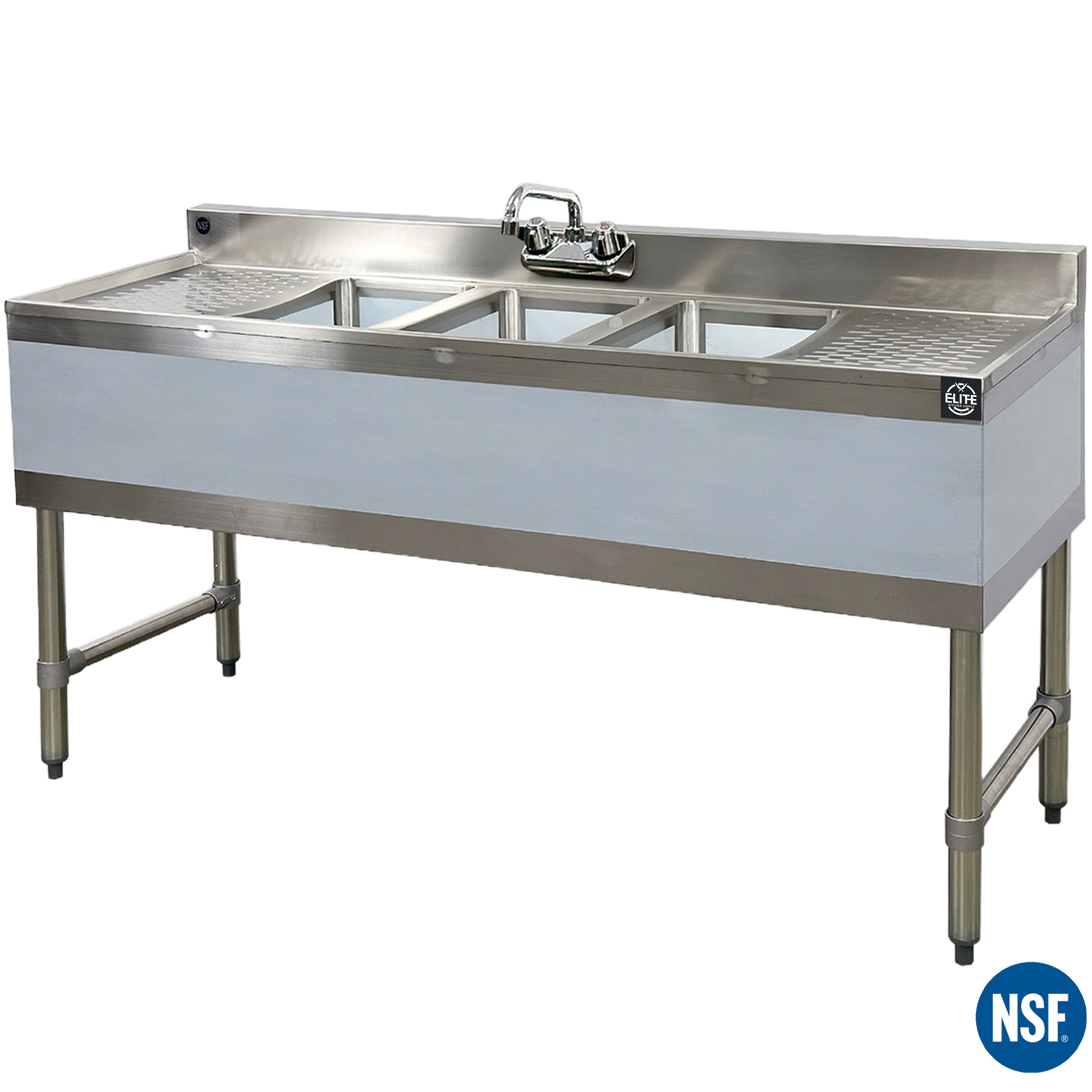
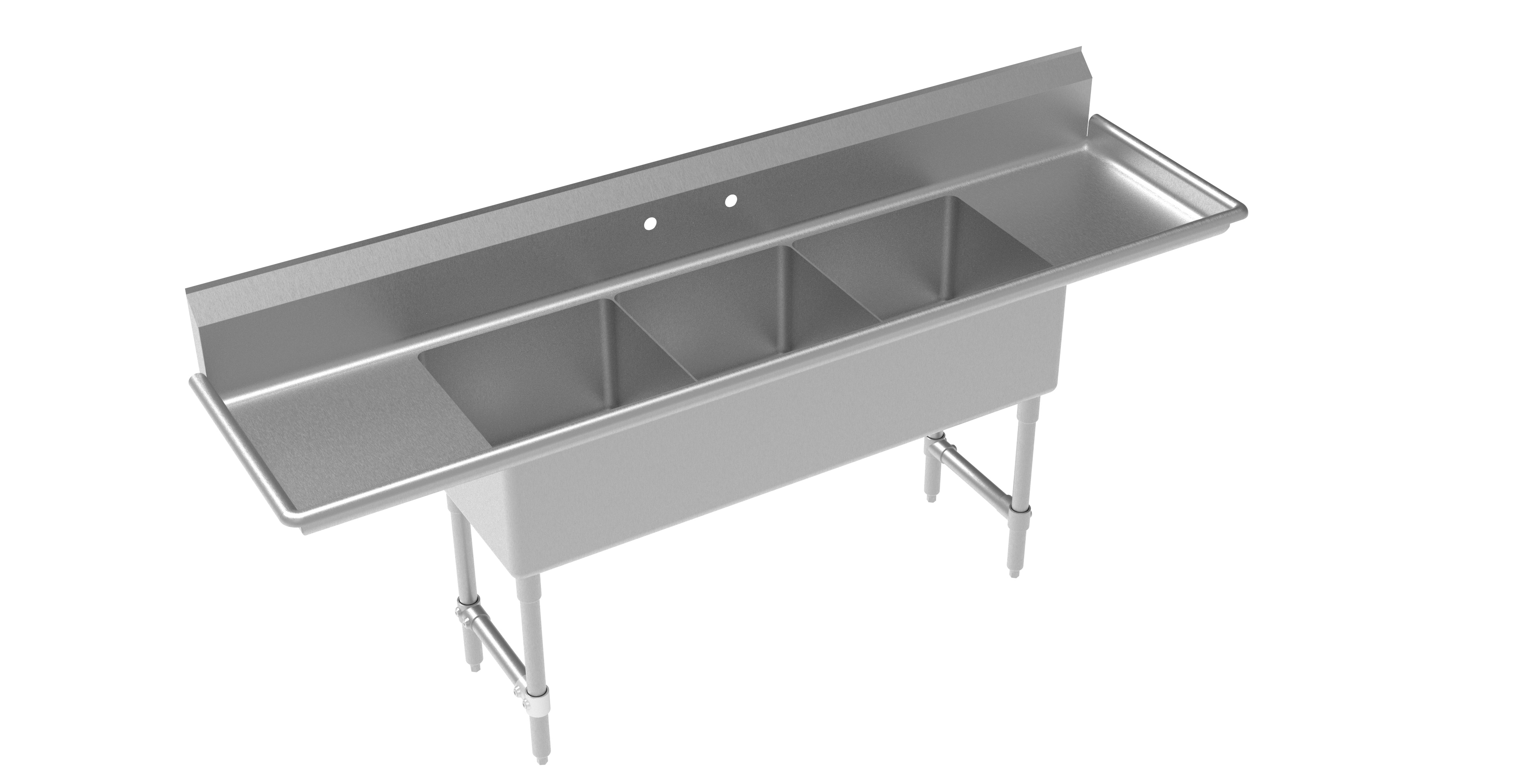
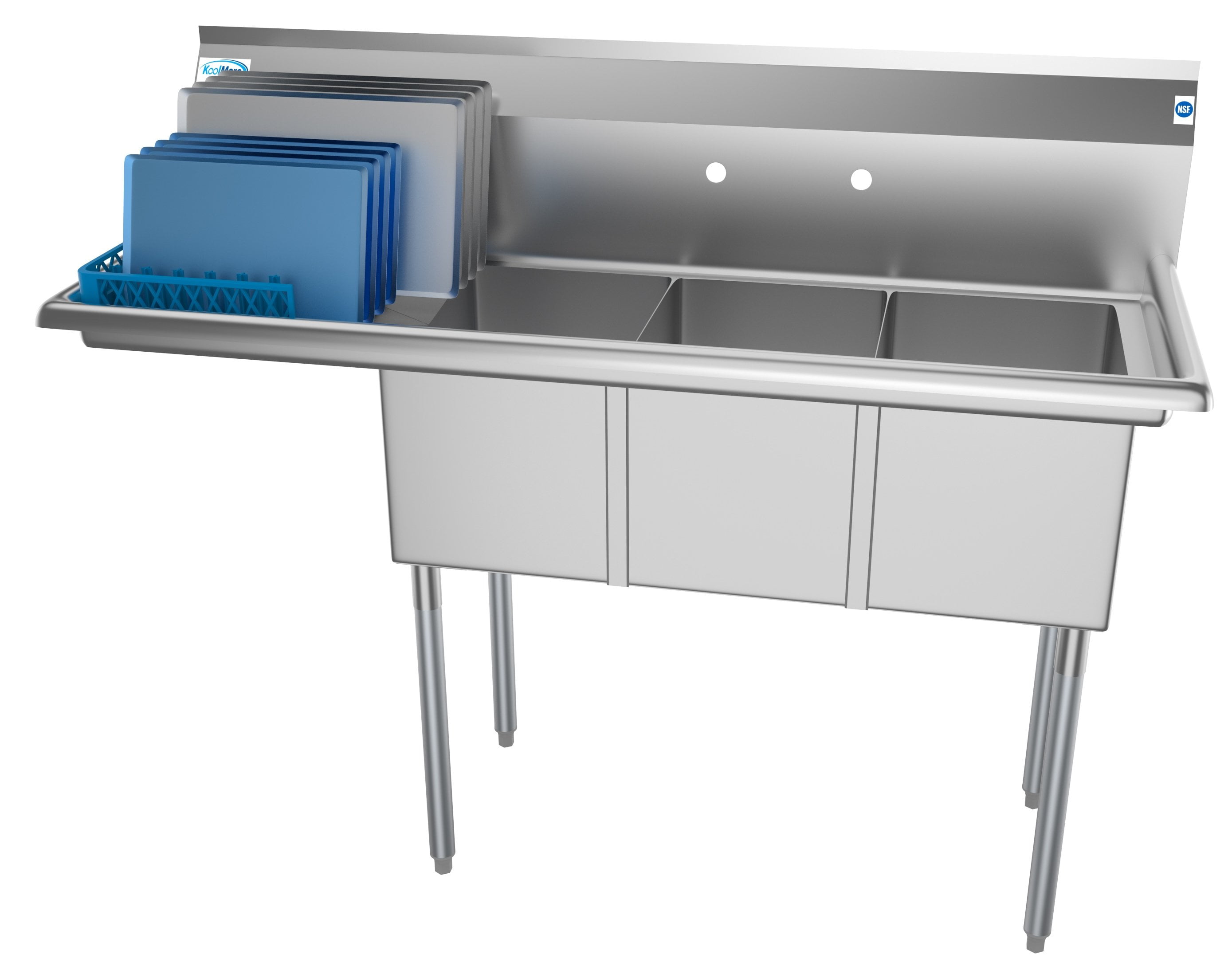
A 3-compartment sink is a specialized piece of equipment designed for the manual cleaning and sanitization of kitchenware, utensils, and equipment in a food service environment. It utilizes a three-step process—Wash, Rinse, and Sanitize—to ensure that all food-contact surfaces are free of debris and harmful pathogens, meeting strict health department regulations.
While the term "3-compartment" can occasionally refer to meal preparation containers or storage units, in a commercial or regulatory context, it almost exclusively identifies the three-bay stainless steel sink system. This system remains the backbone of food safety in 2026, serving as the primary dishwashing method for small establishments and the essential backup for larger facilities utilizing high-volume dishwashers. Proper operation is not merely a matter of cleanliness; it is a legal requirement under the FDA Food Code and local health ordinances to prevent foodborne illnesses.
Regulatory Standards and Construction Requirements
In 2026, the design and material of a 3-compartment sink must adhere to stringent standards set by organizations like NSF International (formerly the National Sanitation Foundation) and the American National Standards Institute (ANSI). Specifically, the NSF/ANSI 2 standard governs the construction of food equipment, including these sinks.
The primary material used is Type 304 stainless steel, which is prized for its corrosion resistance and durability. The "gauge" of the steel is a critical specification; a lower gauge number indicates thicker, more durable steel. For heavy-duty commercial use, 14-gauge or 16-gauge stainless steel is standard. If a sink is constructed from 18-gauge steel, it may be prone to denting or warping under the weight of large stockpots and heavy cast-iron cookware.
Beyond the material, the physical configuration must include integrated drainboards. Health codes generally require at least two drainboards: one for "soiled" items waiting to be washed and one for "clean" items to air dry. The transition between the compartments and the drainboards must be coved (rounded) to prevent the accumulation of bacteria in sharp corners. Furthermore, the sink must be equipped with an indirect waste connection—a physical air gap between the sink’s drainpipe and the floor drain—to prevent sewage from backing up into the basins where food-contact items are handled.
The First Compartment: Effective Washing Procedures
The first bay is dedicated to the "Wash" phase. The primary objective here is to remove visible food particles, grease, and proteins from the surfaces of the dishes. According to the 2026 FDA Food Code guidelines, the water in this compartment must be maintained at a temperature of at least 110°F (43°C), unless the detergent manufacturer’s instructions specify otherwise.
Effective washing requires the use of a high-quality commercial detergent. Unlike household soaps, these detergents are formulated to break down heavy fats and oils quickly in a high-volume environment. It is a common mistake to overfill the sink with soap, which can lead to excessive suds and difficulty rinsing.
Operators must also implement a "pre-scraping" or "pre-rinsing" stage before items enter the first compartment. By removing bulk food waste into a trash receptacle or via a pre-rinse sprayer, the wash water stays cleaner for longer. If the water in the first compartment becomes visibly greasy or cold, it must be drained and refilled immediately. Failure to maintain the wash water quality renders the subsequent steps less effective and can lead to health inspection violations.
The Second Compartment: The Importance of Rinsing
The middle bay is the "Rinse" compartment. While it may seem like a simple transition step, the rinse phase is vital for two reasons: it removes the detergent residues that could interfere with the chemical sanitizer in the third bay, and it provides a final check for any remaining food particles.
The water in the second compartment should be clean, clear, and preferably warm. It is not a stagnant pool; the water should be refreshed frequently. If detergent suds begin to accumulate on the surface of the rinse water, it indicates that the operator is moving items too quickly or that the wash water has become too saturated with soap.
In some high-efficiency kitchen designs, the second compartment may be equipped with a constant-flow system or a spray nozzle to ensure that no "carryover" of dirty water occurs. Any film or residue left on a plate after the rinse phase will act as a barrier, preventing the sanitizer in the third compartment from reaching the surface of the item, thereby compromising the safety of the entire process.
The Third Compartment: Sanitization Methods and Chemistry
The third bay is where "Sanitization" occurs. This is the most critical step for public health. In 2026, there are two primary methods permitted for sanitizing in a 3-compartment sink: chemical sanitization and hot water sanitization.
Chemical Sanitization
The most common method involves using chemical agents. The three most widely approved chemicals are Chlorine, Quaternary Ammonium (Quats), and Iodine. Each has specific requirements for concentration and contact time.
| Sanitizer Type | Required Concentration | Minimum Contact Time | Pros/Cons |
|---|---|---|---|
| Chlorine (Bleach) | 50–100 ppm | 10 seconds | Inexpensive but can be corrosive and dissipates quickly. |
| Quat (Quaternary Ammonium) | Per manufacturer (usually 200 ppm) | 30 seconds | Non-corrosive, stable at high temps, but sensitive to hard water. |
| Iodine | 12.5–25 ppm | 30 seconds | Non-irritating to skin but can stain plastics and equipment. |
Hot Water Sanitization
If chemicals are not used, the sink must be capable of hot water sanitization. This requires the third compartment to have a built-in heating element or booster heater to maintain a water temperature of at least 171°F (77°C). Items must be completely submerged for at least 30 seconds. Because this temperature is high enough to cause severe burns, mechanical baskets are required to lower and raise the dishes into the water.
Verification, Testing, and Air Drying
A 3-compartment sink system is only as effective as its verification process. Health inspectors in 2026 emphasize the use of appropriate test kits. For chemical sanitizers, pH-sensitive test strips must be used to verify that the concentration is within the legal range. Strips must match the chemical being used; you cannot use a chlorine test strip for a Quat solution.
If the concentration is too low, the bacteria are not killed. If it is too high, the chemical residue can be toxic to consumers or cause "off-flavors" in food. Testing should occur every time the sink is refilled and at least every two hours during heavy use.
The final, and often overlooked, stage is Air Drying. It is a violation of nearly all food safety codes to dry sanitized dishes with a towel. Towels can harbor bacteria and cross-contaminate the freshly sanitized surfaces. Items must be placed on the clean drainboard in a position that allows them to drain freely and dry via evaporation. Racks should be used to ensure air can circulate inside cups, bowls, and containers.
Maintenance and Common Operational Failures
To keep a 3-compartment sink functioning properly, regular maintenance is required. The most frequent issue is the clogging of drains due to food debris. This is why the use of removable "crumb cups" or sink strainers is mandatory. Furthermore, because these sinks handle high volumes of grease, they must be connected to a grease trap or interceptor.
Common mistakes include:
- Improper Sequence: Skipping the rinse step or going from wash directly to sanitize.
- Incorrect Temperatures: Using lukewarm water for the wash phase or failing to maintain the 171°F requirement for hot-water sanitizing.
- Overcrowding: Stacking dishes so tightly in the third bay that the sanitizer cannot reach all surfaces.
- Using the Sink for Other Purposes: Using the 3-compartment sink for handwashing or food preparation. This is a major cross-contamination risk and a critical health code violation.
Frequently Asked Questions
Can I use a 3-compartment sink to wash my hands?
No. Handwashing must be performed in a dedicated handwashing sink equipped with soap and single-use towels. Using a 3-compartment sink for handwashing introduces skin pathogens into the dishwashing area and is prohibited by the FDA Food Code.
How often should the water be changed in a 3-compartment sink?
The water must be changed whenever it becomes visibly dirty, the temperature drops below the required threshold (110°F for wash), or the sanitizer concentration falls outside the effective range. At a minimum, many high-volume kitchens change the water every 2 to 4 hours.
Do I need a 3-compartment sink if I have a commercial dishwasher?
Yes. Most jurisdictions require a 3-compartment sink even if a mechanical dishwasher is present. The sink serves as a backup in case the machine breaks down and is often necessary for washing large items (like oversized baking sheets or mixing bowls) that do not fit in the machine.
Is a 4-compartment sink better than a 3-compartment sink?
A 4-compartment sink is sometimes used to add a "pre-soak" or "pre-rinse" bay before the wash cycle. While not usually required by code, it can improve efficiency in kitchens dealing with heavy starch or protein buildup, as it keeps the main wash water cleaner for a longer period.
What is the purpose of the "Air Gap" in sink plumbing?
The air gap is a vertical space between the sink's drain and the floor drain. It is a safety feature that prevents "backflow." If the city sewer lines backup, the air gap ensures the waste spills onto the floor rather than being pushed back up into the sink where clean dishes are kept.
Recommendations for Compliance and Efficiency
When installing or operating a 3-compartment sink in 2026, prioritize the purchase of NSF-certified equipment with at least 16-gauge thickness. Ensure that the plumbing includes a properly sized grease trap and that your staff is trained on the specific contact times for the sanitizers you use.
For optimal efficiency, mount a "Sanitization Station" nearby that includes a thermometer, the correct test strips, and a wall chart detailing the five steps: Scrape, Wash, Rinse, Sanitize, and Air Dry. This visual reminder helps maintain consistency during busy shifts and ensures that your facility remains compliant with the latest food safety standards. Regular self-audits of water temperatures and chemical concentrations will not only prepare you for official inspections but, more importantly, protect the health of your customers.