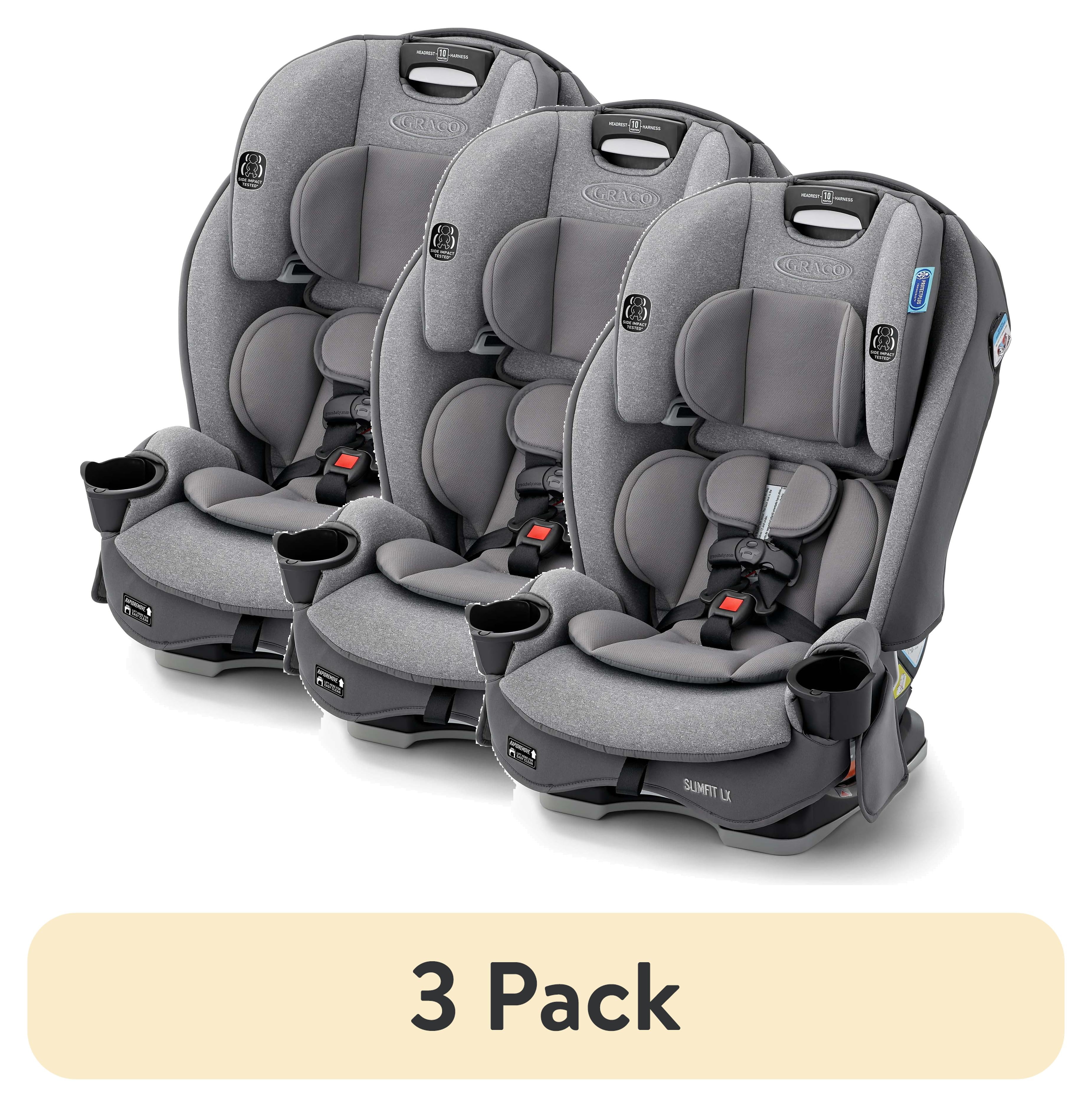
A 3-in-1 car seat is a versatile child restraint system designed to evolve with a child through three distinct stages: rear-facing for infants and toddlers, forward-facing with a five-point harness, and a belt-positioning booster. By consolidating these modes into one unit, it offers a long-term safety solution from birth through early childhood.
Understanding the Three Stages of Protection
The primary appeal of a 3-in-1 car seat—often referred to as an "all-in-one" or "multistage" seat—is its ability to adapt to a child’s physical development. In 2026, these seats have become the industry standard for parents seeking a balance between economic value and rigorous safety compliance. Understanding how these stages function is critical for ensuring the seat is used correctly at every age.
Stage 1: Rear-Facing Mode
In the rear-facing configuration, the 3-in-1 seat is designed to cradle the child's head, neck, and spine. In the event of a frontal collision—the most common type of high-impact crash—the seat back absorbs the force of the impact, distributing it across the strongest parts of the child's body. Current safety recommendations from the National Highway Traffic Safety Administration (NHTSA) emphasize keeping children rear-facing for as long as possible, often until they reach the maximum weight or height limit of the seat, which in 2026 models frequently extends to 40 or 50 pounds.
Stage 2: Forward-Facing with Harness
Once a child outgrows the rear-facing limits, the 3-in-1 seat transitions to a forward-facing position using a five-point harness. This harness system secures the child at the shoulders and hips, and the crotch buckle ensures they remain positioned deep in the seat. A critical component of this stage is the top tether, a strap that connects the top of the car seat to an anchor point in the vehicle. The tether significantly reduces the forward movement of the child’s head during a crash, mitigating the risk of traumatic brain and spinal injuries.
Stage 3: Belt-Positioning Booster
The final stage of a 3-in-1 seat is the high-back booster mode. At this point, the internal five-point harness is removed or tucked away into integrated storage compartments. The seat then uses the vehicle’s own lap and shoulder belt to secure the child. The booster’s primary function is to elevate the child so that the vehicle’s seat belt fits correctly: across the center of the chest and shoulder (not the neck) and low across the upper thighs (not the stomach).
Safety Engineering and Regulatory Compliance
In 2026, car seat safety is governed by stringent federal standards that dictate crash-test performance, flame retardancy, and labeling requirements. A 3-in-1 car seat is not merely a plastic shell; it is a highly engineered safety device utilizing advanced materials like Energy Absorbing Foam (EPS or EPP) and reinforced steel frames to maintain structural integrity under extreme stress.
Side-Impact Protection
While federal testing traditionally focused on frontal impacts, modern 3-in-1 seats feature enhanced side-impact protection (SIP). This often includes deep side wings and multi-layered headrests designed to shield the child’s head from protruding vehicle components and glass during a lateral collision. Some 2026 premium models also incorporate "crumple zone" technology within the base of the seat to further absorb kinetic energy.
The Role of LATCH and ISOFIX
The Lower Anchors and Tethers for CHildren (LATCH) system—standardized in most vehicles manufactured after 2002—simplifies the installation of 3-in-1 seats. In 2026, many manufacturers have improved these connectors with "push-button" or "click-tight" mechanisms that provide audible or visual confirmation of a secure lock. However, it is essential to monitor the weight limits for LATCH; once a child reaches a certain weight (usually 65 pounds combined weight of child and seat), the seat must be installed using the vehicle’s seat belt system instead.
Expiration and Material Integrity
Unlike many consumer products, car seats have a definitive expiration date, typically 10 years for 3-in-1 models. This is due to the degradation of plastic over time, especially when exposed to the extreme temperature fluctuations inside a vehicle. Furthermore, safety standards evolve; a seat manufactured a decade ago may not meet the rigorous side-impact or "smart" sensor requirements of 2026.
Comparative Analysis: 3-in-1 vs. Dedicated Seat Systems
When deciding on a vehicle restraint strategy, parents often choose between a single 3-in-1 seat and a "graduated" system consisting of an infant carrier followed by a convertible seat and then a separate booster. Each approach has distinct trade-offs regarding portability, cost, and fit.
| Feature | 3-in-1 (All-in-One) Seat | Infant Carrier (Dedicated) | Convertible Seat |
|---|---|---|---|
| Usage Duration | Birth to approx. 10 years | Birth to approx. 1-2 years | Birth to approx. 5-6 years |
| Portability | Heavy; stays in the vehicle | Light; clicks into strollers/bases | Heavy; stays in the vehicle |
| Rear-Facing Limit | High (Up to 50 lbs) | Moderate (Up to 30-35 lbs) | High (Up to 45-50 lbs) |
| Booster Mode | Included (High-back) | None | None (usually) |
| Cost Efficiency | High (One-time purchase) | Low (Requires replacements) | Moderate |
| Size/Footprint | Large; can be bulky | Compact | Moderate to Large |
Critical Factors for Selection and Installation
Choosing a 3-in-1 car seat requires more than just checking safety ratings; the seat must be compatible with your specific vehicle and easy enough to use correctly every single time. According to the American Academy of Pediatrics (AAP), the "best" car seat is the one that fits your child, fits your vehicle, and is used correctly on every trip.
Vehicle Compatibility
Not all 3-in-1 seats fit in all cars. Due to their extended lifespan and multiple configurations, these seats tend to be larger and heavier. In compact cars, a 3-in-1 seat in the rear-facing position may force the front passenger seat so far forward that it becomes unusable or dangerous for an adult. It is vital to measure the "depth" of the seat when fully reclined before purchase.
Ease of Use and "Mistake-Proofing"
A seat is only safe if it is installed tightly. A properly installed seat should move less than one inch in any direction at the belt path. In 2026, many 3-in-1 seats feature integrated tensioning systems—mechanical levers that tighten the seat belt for you—to eliminate the "body weight" struggle often associated with car seat installation. Look for seats with clear, color-coded belt paths and built-in bubble levels to ensure the correct recline angle for newborns.
Maintenance and Cleaning
Children are notoriously messy, and a seat that is difficult to clean can become a burden. Most modern 3-in-1 seats offer "rapid-remove" covers that can be machine-washed without needing to unthread the entire harness system. However, it is imperative to never wash the actual harness straps in a washing machine or submerge them in water, as this can degrade the strength of the webbing fibers.
Longevity, Maintenance, and the "One Seat" Philosophy
The 3-in-1 car seat is the cornerstone of the "one seat" philosophy: the idea that a single investment can protect a child for a decade. While this is economically attractive, it requires a commitment to maintenance. Because the seat will likely see 10 years of crumbs, spills, and sunlight, choosing a model with durable, breathable fabrics and a reinforced frame is essential for long-term satisfaction.
In 2026, many manufacturers have moved toward "green" materials, utilizing naturally flame-retardant wool or recycled ocean plastics that do not require added chemicals. These materials are often more durable over a ten-year span than traditional treated polyesters. Additionally, as the child grows, the seat's components—such as the infant insert and the harness—will need to be stored safely so they can be re-installed or removed as the stages change.
FAQ: Common Questions Regarding 3-in-1 Car Seats
Can I use a 3-in-1 car seat for a newborn baby?
Yes, most 3-in-1 car seats are rated for use starting at 4 or 5 pounds. They typically come with specialized infant inserts—padded cushions that ensure a snug fit for smaller frames and prevent the infant's head from flopping forward. However, unlike dedicated infant carriers, 3-in-1 seats cannot be removed from the car to be used as a baby carrier or clicked into a stroller "travel system."
When should I transition my child from rear-facing to forward-facing?
You should wait as long as possible. While many jurisdictions have a legal minimum of 2 years old for forward-facing, safety experts recommend staying rear-facing until the child reaches the maximum height or weight limit allowed by the seat manufacturer. Many 3-in-1 seats in 2026 allow for rear-facing up to 50 pounds, which can accommodate most children until they are 4 years old.
What is the difference between a 3-in-1 and a 4-in-1 car seat?
The primary difference is the final stage. A 3-in-1 seat usually covers Rear-Facing, Forward-Facing Harness, and High-Back Booster. A 4-in-1 seat typically adds a fourth stage: a backless booster. The backless booster mode is used when the child is older and taller but still needs a slight lift for the vehicle's seat belt to fit correctly across their hips.
Are 3-in-1 car seats as safe as dedicated infant seats?
Yes, all car seats sold in the United States must meet the same federal safety standards (FMVSS 213). A 3-in-1 seat is just as safe as a dedicated infant seat, provided it is installed correctly and the child fits within the manufacturer's specified height and weight ranges. The main difference is convenience and portability, not crash-test performance.
How do I know if my 3-in-1 car seat has been recalled?
To stay informed about recalls, you must register your seat with the manufacturer using the card provided in the box or through their website. You can also check the NHTSA Recall Database by entering your seat’s model name and date of manufacture, which is found on a white sticker located on the side or bottom of the seat frame.
Making an Informed Purchase Decision
When selecting a 3-in-1 car seat in 2026, prioritize "ease of install" features and height/weight limits over aesthetic extras. If you have a small vehicle or plan on having multiple children in car seats simultaneously, look for "slim-fit" models designed to fit three-across in a standard backseat. While the upfront cost of a premium 3-in-1 may be higher than an infant carrier, its ten-year utility makes it one of the most cost-effective safety investments a parent can make. Always verify the manufacture date before purchase to ensure you are receiving the full ten-year lifespan of the product, and never purchase a used car seat if its history is unknown, as invisible structural damage from a previous accident can render the seat useless in a future crash.