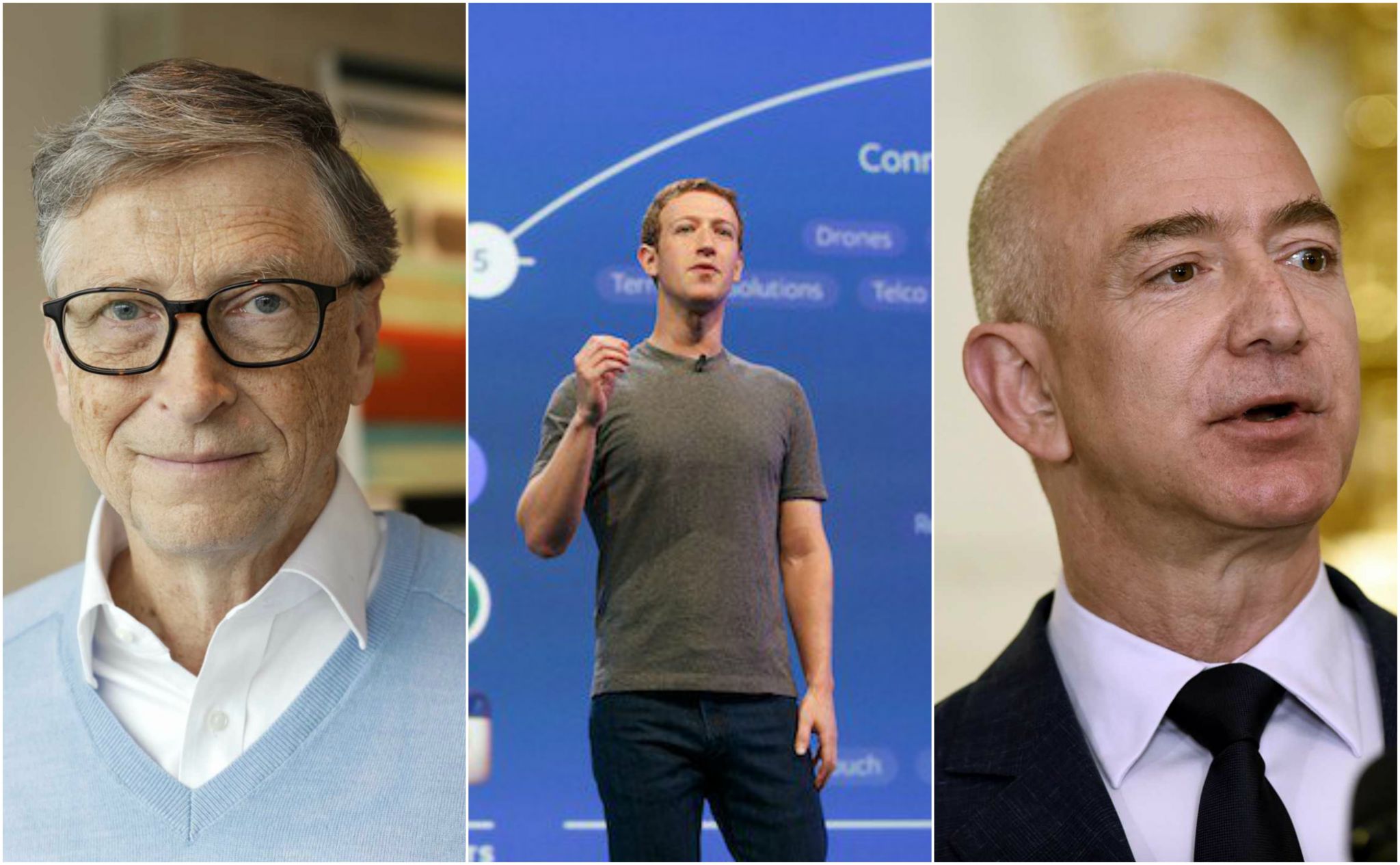
As of early 2026, Jeff Bezos maintains his position as the second richest man in the world, with a net worth estimated at approximately $228 billion. His wealth is anchored by his significant equity in Amazon.com, Inc., the valuation of his private space venture Blue Origin, and a diverse portfolio of high-value real estate and venture capital investments managed through Bezos Expeditions.
The Composition of a $228 Billion Fortune
The financial profile of Jeff Bezos in 2026 is a study in both massive equity concentration and strategic diversification. While most of the world associates his wealth solely with Amazon, the structure of his net worth has shifted significantly since he stepped down as CEO in 2021. As of the current fiscal year, his holdings are split between publicly traded equities, private aerospace interests, and liquid assets derived from systematic stock liquidations.
Bezos’s primary asset remains his stake in Amazon (AMZN). Even after numerous divestments to fund his other ventures and philanthropic efforts, he still owns roughly 9% of the company. In 2026, Amazon’s market capitalization remains robust, driven not just by its e-commerce dominance but by the continued high-margin growth of Amazon Web Services (AWS) and its burgeoning AI-integrated logistics network.
Beyond Amazon, Blue Origin represents a massive portion of his "paper" wealth. Unlike Elon Musk’s SpaceX, Blue Origin remains largely a privately funded entity, with Bezos reportedly liquidating $1 billion in Amazon stock annually for years to fund its operations. By 2026, analysts value Blue Origin at upwards of $50 billion, following successful milestones with the New Glenn orbital launch vehicle and a series of lucrative lunar lander contracts with NASA.
Additionally, his personal investment firm, Bezos Expeditions, manages stakes in companies like Airbnb, Uber, and Google (where he was one of the earliest investors), as well as more recent forays into biotechnology and nuclear fusion. His real estate portfolio, estimated to be worth over $600 million, includes massive estates in Beverly Hills, Miami’s "Billionaire Bunker," and a 165,000-acre ranch in Texas.
Early Life and the Foundations of an Analytical Mind
Born Jeffrey Preston Jorgensen on January 12, 1964, in Albuquerque, New Mexico, the future billionaire’s life was shaped by a combination of academic excellence and a rigorous work ethic. His mother, Jacklyn, was a teenager at the time of his birth, and his biological father, Ted Jorgensen, was a unicyclist. His life took a definitive turn when his mother married Miguel "Mike" Bezos, a Cuban immigrant who adopted Jeff and gave him his surname.
Bezos displayed an early interest in science and technology. As a child, he famously rigged an electric alarm to keep his younger siblings out of his room and turned his parents' garage into a laboratory for his projects. This penchant for engineering led him to Princeton University, where he graduated summa cum laude in 1986 with degrees in electrical engineering and computer science.
Before the "everything store" was a concept, Bezos honed his financial and analytical skills on Wall Street. He worked for several firms, including Fitel and Bankers Trust, before joining the hedge fund D.E. Shaw & Co. It was there that he rose to the rank of Senior Vice President and first noticed the staggering 2,300% annual growth of the internet in the early 1990s. This specific statistic served as the catalyst for his "Regret Minimization Framework," a decision-making model that led him to leave his lucrative career to sell books online.
The Evolution of Amazon: From Garage to Global Hegemony
In 1994, Jeff Bezos founded Amazon in his garage in Bellevue, Washington. The choice of books as the initial product was a tactical decision based on their low cost, universal demand, and the sheer number of titles available, which no physical bookstore could match. However, the biography of his wealth is not just about selling books; it is about the relentless pursuit of "Day 1" thinking—the philosophy that a company must always maintain a startup’s energy and customer obsession or face a slow decline.
Throughout the late 1990s and early 2000s, Amazon survived the dot-com bubble burst by pivoting from a simple retailer to a platform. Two major developments during this era cemented Bezos’s path to becoming the 2nd richest man in the world:
- The Third-Party Marketplace: Allowing other sellers to use Amazon’s platform increased inventory without increasing risk, creating a powerful flywheel effect.
- Amazon Prime: Launched in 2005, this subscription model shifted consumer behavior toward loyalty and high-frequency shopping, creating a predictable recurring revenue stream.
The most significant driver of his 2026 net worth, however, remains AWS. Launched in 2006, Amazon Web Services pioneered cloud computing. By providing the infrastructure that powers much of the modern internet—including competitors like Netflix—AWS has become the most profitable arm of the Amazon empire. This high-margin revenue has allowed the company to weather economic downturns and reinvest in experimental technologies like automated delivery drones and satellite internet (Project Kuiper).
Blue Origin and the Race for the Final Frontier
If Amazon was about the "Everything Store," Bezos’s second act is about the "Everything Ocean" of space. Founded in 2000, Blue Origin was kept relatively secret for its first decade. Bezos’s vision for the company is more long-term than many of his peers; he speaks frequently about moving heavy industry off Earth to preserve the planet and envisioning millions of people living and working in space.
By 2026, Blue Origin has transitioned from a suborbital tourism provider (via the New Shepard rocket) to a major player in the global launch market. The New Glenn rocket, a massive heavy-lift vehicle, is designed to be reusable for up to 25 flights, significantly lowering the cost of access to orbit.
His wealth in this sector is difficult to track with the precision of a public stock, but the "Blue Moon" lunar lander project and the development of the "Orbital Reef" (a commercial space station) have positioned Blue Origin as a vital national security and scientific asset. His investment in space is not just a hobby; it is a strategic play for the next century’s economy, where he believes the first trillionaires will be made.
Philanthropy, Media, and Lifestyle Shifts
As his net worth ballooned, Bezos faced increasing scrutiny regarding his charitable giving. Unlike Bill Gates or Warren Buffett, Bezos was a late entrant to large-scale philanthropy. However, since 2018, his commitments have accelerated significantly.
- The Bezos Day One Fund: A $2 billion commitment focused on funding non-profits that help homeless families and creating a network of non-profit preschools in low-income communities.
- The Bezos Earth Fund: A $10 billion pledge launched in 2020 to combat climate change. By 2026, this fund has distributed billions to reforestation efforts, sustainable agriculture research, and environmental justice groups.
- The Washington Post: In 2013, Bezos purchased the legendary newspaper for $250 million. Under his ownership, the paper underwent a digital transformation, becoming a profitable and tech-forward media powerhouse, though he maintains a hands-off editorial approach.
His personal life has also undergone a public transformation. Following his 2019 divorce from MacKenzie Scott—which resulted in the largest divorce settlement in history—Bezos has become more visible in the social and cultural spheres. His relocation to Miami in late 2023 was a significant move, citing a desire to be closer to his parents and the launch operations at Cape Canaveral, though analysts also noted the favorable tax environment in Florida compared to Washington state.
Wealth Comparison: Bezos vs. Other Centibillionaires
To understand Bezos's standing as the 2nd richest man in 2026, it is useful to compare his financial structure with his closest rivals. While Elon Musk’s wealth is often more volatile due to the retail-driven fluctuations of Tesla stock, Bezos’s fortune is perceived as more stable due to the diversified utility of Amazon’s services.
| Feature | Jeff Bezos (Rank #2) | Elon Musk (Rank #1) | Bernard Arnault (Rank #3) |
|---|---|---|---|
| Primary Source | Amazon / AWS | Tesla / SpaceX / X | LVMH (Luxury Goods) |
| 2026 Net Worth Est. | $228 Billion | $250 Billion | $195 Billion |
| Primary Asset Class | Tech & Infrastructure | Automotive & Aero | Luxury Retail |
| Wealth Volatility | Moderate | High | Low/Stable |
| Private Holdings | Blue Origin, WaPo | SpaceX, xAI, Neuralink | Family Holding Companies |
| Philanthropic Focus | Climate & Education | Multi-planetary life | Arts & Culture |
Risk Factors and the Future Wealth Outlook
Maintaining the status of the 2nd richest man in the world is not without challenges. In 2026, several factors could impact Bezos’s net worth and his legacy.
First, regulatory pressure remains the primary threat to the Amazon valuation. Antitrust lawsuits in both the United States and the European Union have sought to break up the company’s retail and logistics arms. A forced divestiture of AWS would likely unlock short-term value for shareholders but could diminish the long-term strategic power of the consolidated entity.
Second, the success of Blue Origin is crucial. Unlike Amazon, which is a cash-generating machine, Blue Origin is still in the "heavy investment" phase. If the New Glenn rocket faces significant delays or if the commercial space station market fails to materialize by the late 2020s, it could represent a massive drain on Bezos’s liquid assets.
Finally, there is the factor of inflation and market shifts. As a centibillionaire, Bezos is heavily exposed to the broader health of the S&P 500. A prolonged high-interest-rate environment typically suppresses the multiples of tech stocks like Amazon. However, his shift into hard assets—real estate and physical infrastructure—provides a hedge that many other tech billionaires lack.
Frequently Asked Questions
Who is the 2nd richest man in the world right now?
As of 2026, the position is held by Jeff Bezos, the founder of Amazon. While rankings can fluctuate daily based on stock market performance, Bezos has consistently held a top-three spot for nearly a decade, currently trailing only Elon Musk.
How does Jeff Bezos make his money in 2026?
His income and wealth growth now come from three main areas: the appreciation of his Amazon stock, the valuation of his private space company Blue Origin, and the returns on his vast venture capital investments through Bezos Expeditions. He also earns through high-value real estate appreciation and his ownership of The Washington Post.
What happened to Jeff Bezos's wealth after his divorce?
In 2019, Jeff Bezos settled his divorce with MacKenzie Scott, transferring 25% of his then-Amazon stake to her. At the time, this was worth roughly $38 billion. Despite this massive transfer, the subsequent growth of Amazon’s stock price and the success of AWS allowed his net worth to rebound and exceed its pre-divorce peaks within a few years.
Is Jeff Bezos still the CEO of Amazon?
No, Jeff Bezos stepped down as CEO of Amazon in July 2021. He currently serves as the Executive Chair of the Amazon Board. This role allows him to focus on "new products and early initiatives" while spending more time on Blue Origin and his philanthropic endeavors. Andy Jassy succeeded him as CEO.
What is the Bezos Earth Fund?
The Bezos Earth Fund is a $10 billion commitment made by Jeff Bezos to fund scientists, NGOs, and activists working to mitigate the impacts of climate change. It is one of the largest philanthropic commitments to environmental causes in history and aims to distribute the full $10 billion by 2030.
Diversification as a Wealth Preservation Strategy
For those tracking the net worth of global elites, the primary lesson from the biography of Jeff Bezos is the power of reinvestment. Bezos did not merely hoard his Amazon earnings; he systematically moved capital into the sectors he believes will dominate the next 50 years: cloud computing, biotechnology, and aerospace.
If you are looking to apply his principles to your own financial planning, focus on his "Regret Minimization" approach. Identify the long-term trends—be it AI, green energy, or infrastructure—and prioritize long-term equity over short-term liquidity. For the average investor, this means consistent participation in diversified index funds that capture the growth of companies like Amazon, rather than trying to time the market for the next "garage startup." Monitoring the Bloomberg Billionaires Index or Forbes Real-Time rankings remains the best way to track how these massive fortunes evolve against the backdrop of the global economy.