May 29 serves as a pivotal date in human history, marking the transition between eras, the heights of human exploration, and the complexities of international diplomacy. From the fall of the Byzantine Empire in 1453 to the first successful ascent of Mount Everest in 1953, this date encapsulates moments of profound change and achievement.
In 2026, May 29 falls on a Friday. For many, it represents the onset of a significant weekend, particularly in the United States, where it leads into the Memorial Day holiday period. However, beyond the modern calendar, the day is deeply rooted in historical milestones that have shaped the political, social, and physical maps of our world. Understanding the events of May 29 requires looking at the intersection of medieval warfare, colonial expansion, and the birth of modern international peacekeeping.
The Fall of Constantinople: The End of the Middle Ages
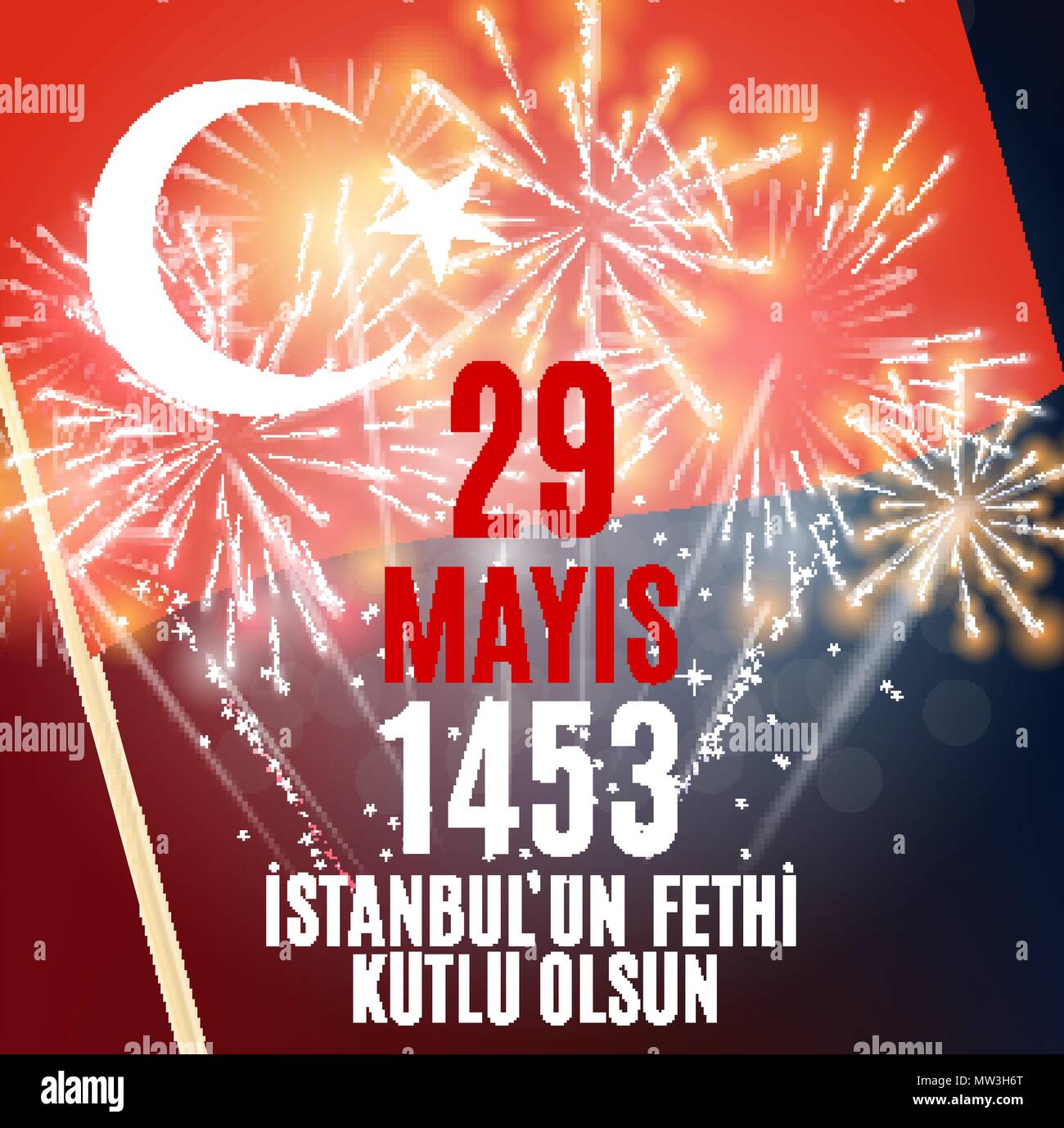
On May 29, 1453, the city of Constantinople fell to the Ottoman Turks, led by Sultan Mehmed II. This event is widely regarded by historians as the definitive end of the Middle Ages and the beginning of the Renaissance. Constantinople had served as the capital of the Byzantine Empire—the successor to the Roman Empire—for over a millennium. Its fall signaled the final collapse of Roman political continuity in the East.
The siege lasted 53 days, culminating in a final assault on the morning of May 29. The Ottomans utilized massive cannons, a relatively new technology at the time, to breach the legendary Theodosian Walls. The death of the final Byzantine Emperor, Constantine XI Palaiologos, in the thick of the fighting, remains a subject of historical legend and mourning in the Greek-speaking world.
The geopolitical consequences were immediate and far-reaching. The closure of traditional silk road trade routes by the Ottoman Empire forced European powers to look westward across the Atlantic for new routes to Asia, indirectly leading to the Age of Discovery. Furthermore, the flight of Greek scholars to Italy, carrying with them ancient manuscripts and classical knowledge, provided the intellectual spark for the Italian Renaissance.
The Restoration of the Monarchy and Oak Apple Day
In English history, May 29, 1660, marks the "Restoration," when King Charles II returned to London to claim the throne after years of republican rule under Oliver Cromwell’s Protectorate. This date was Charles II's 30th birthday, adding a layer of symbolic rebirth to the event.
For centuries, this day was celebrated as Oak Apple Day (or Royal Oak Day). The name commemorates the Royal Oak tree in Boscobel House, where Charles II reportedly hid from Roundhead soldiers during the English Civil War in 1651. Following the Restoration, Parliament passed an "Act for a Perpetual Anniversary Thanksgiving on the Nine and Twentieth Day of May," making it a public holiday.
While the formal holiday was abolished in the mid-19th century, many villages in England still observe traditional festivities on May 29. These celebrations often involve wearing sprigs of oak leaves or "oak apples" (galls caused by wasps). The day serves as a reminder of the shift from the rigid Puritanism of the Commonwealth back to the cultural and religious traditions of the Stuart monarchy.
Reaching the Roof of the World: The Conquest of Everest
Transitioning to the 20th century, May 29, 1953, witnessed one of the greatest feats of human endurance and exploration. At 11:30 AM, Sir Edmund Hillary of New Zealand and Tenzing Norgay, a Sherpa of Nepal, became the first humans confirmed to reach the summit of Mount Everest, the highest point on Earth at 29,032 feet (8,848 meters).
The success of the 1953 British Mount Everest Expedition was a masterclass in logistics and physical grit. Previous attempts throughout the 1920s and 30s had ended in failure or tragedy. Hillary and Norgay spent only about 15 minutes at the summit due to their limited oxygen supply. They took photographs, Norgay buried some sweets and biscuits as an offering to the gods, and Hillary placed a small crucifix.
The news reached London on June 2, the morning of Queen Elizabeth II’s coronation, turning the achievement into a symbol of a "New Elizabethan Age." For the global community, the conquest of Everest on May 29 proved that even the most formidable physical barriers on the planet could be overcome through international cooperation and scientific advancement.
International Day of United Nations Peacekeepers
In the contemporary era, May 29 is designated by the United Nations as the International Day of United Nations Peacekeepers. This observance serves a dual purpose: to honor the memory of the more than 4,000 peacekeepers who have lost their lives in the line of duty and to pay tribute to all the men and women who have served and continue to serve in UN peacekeeping operations.
The date was chosen because May 29, 1948, marked the establishment of the first UN peacekeeping mission, the United Nations Truce Supervision Organization (UNTSO), which was deployed to monitor the ceasefire following the 1948 Arab-Israeli War.
As of 2026, UN peacekeeping remains a critical tool for global security. These "Blue Helmets" are deployed in some of the most volatile regions of the world to protect civilians, facilitate political processes, and support the delivery of humanitarian aid. The May 29 commemorations typically involve wreath-laying ceremonies at UN headquarters in New York and in field missions worldwide, highlighting the evolving challenges of modern conflict resolution.
Notable Historical Milestones of May 29
The following table summarizes several key events that occurred on May 29, illustrating the day's diverse impact on history, science, and politics.
| Year | Event | Category | Impact/Significance |
|---|---|---|---|
| 1453 | Fall of Constantinople | Warfare/Politics | End of the Byzantine Empire; Start of the Renaissance. |
| 1660 | English Restoration | Monarchy | Charles II returns to the throne; End of the Commonwealth. |
| 1787 | Virginia Plan proposed | Governance | Set the framework for the U.S. Constitution's bicameral legislature. |
| 1848 | Wisconsin Statehood | Geography | Wisconsin is admitted as the 30th U.S. state. |
| 1917 | Birth of John F. Kennedy | Biography | Birth of the 35th President of the United States. |
| 1919 | Einstein's Relativity Confirmed | Science | Solar eclipse observations by Arthur Eddington prove general relativity. |
| 1953 | First Ascent of Everest | Exploration | Humans reach the highest point on Earth for the first time. |
| 1999 | Democracy Day (Nigeria) | Politics | Olusegun Obasanjo takes office, ending decades of military rule. |
Scientific Breakthroughs: Proving Einstein
Beyond politics and exploration, May 29, 1919, is a monumental date in the world of physics. During a total solar eclipse, Sir Arthur Eddington conducted an experiment that provided the first empirical evidence for Albert Einstein's General Theory of Relativity.
Einstein’s theory predicted that gravity would bend light. By photographing stars near the sun during the darkness of the eclipse and comparing their positions to when the sun was not present, Eddington was able to show that the sun’s mass did indeed deflect the light from distant stars. When the results were announced later that year, Einstein became an overnight global celebrity, and our fundamental understanding of space, time, and gravity was permanently altered.
Births and Legacies: John F. Kennedy
May 29 also marks the birthday of John Fitzgerald Kennedy (1917–1963), the 35th President of the United States. Born in Brookline, Massachusetts, Kennedy’s legacy is inextricably linked to the Cold War, the Civil Rights Movement, and the Space Race.
His vision for the "New Frontier" challenged Americans to look beyond their current limitations, most famously embodied in his 1961 goal of landing a man on the moon before the end of the decade. Though his life was cut short by assassination in 1963, his birth on May 29 remains a point of reflection for his contributions to international diplomacy—such as the creation of the Peace Corps—and his handling of the Cuban Missile Crisis.
FAQs About May 29
Is May 29 a public holiday?
It depends on the country. In Nigeria, May 29 was traditionally celebrated as Democracy Day to mark the return to civilian rule in 1999, though the official holiday was moved to June 12 in recent years. In the UK, it is no longer a public holiday, but "Oak Apple Day" traditions persist. In the US, it is not a federal holiday, but it often falls during the Memorial Day weekend.
What is the significance of Wisconsin joining the Union on this day?
On May 29, 1848, Wisconsin became the 30th state admitted to the United States. Its admission was a key part of the westward expansion and the balancing of interests between northern and southern states in the lead-up to the American Civil War.
Why is May 29 important for the United Nations?
It is the International Day of United Nations Peacekeepers. It commemorates the start of the first peacekeeping mission in 1948 and honors those who serve in these high-risk roles to maintain global stability.
Who was the first person to climb Everest on May 29?
Sir Edmund Hillary of New Zealand and Tenzing Norgay, a Nepali-Indian Sherpa, reached the summit together at 11:30 AM on May 29, 1953.
What happened to the Byzantine Empire on May 29?
The Byzantine Empire effectively ceased to exist on May 29, 1453, when the Ottoman Empire captured its capital, Constantinople (modern-day Istanbul).
Observing May 29 in 2026
As May 29, 2026, approaches, individuals and organizations can engage with the date’s rich history in several ways. For educators and students, it is an excellent opportunity to study the transition from the medieval to the modern world through the lens of 1453. For those interested in science and exploration, celebrating the spirit of the 1953 Everest climb or Einstein's 1919 confirmation offers a chance to reflect on human ingenuity.
In a professional context, May 29 is a day for government and non-governmental organizations to recognize the sacrifices made by international peacekeepers. Whether through formal ceremonies or personal study, acknowledging the events of May 29 provides a deeper understanding of the forces—technological, political, and physical—that have crafted the modern global landscape.