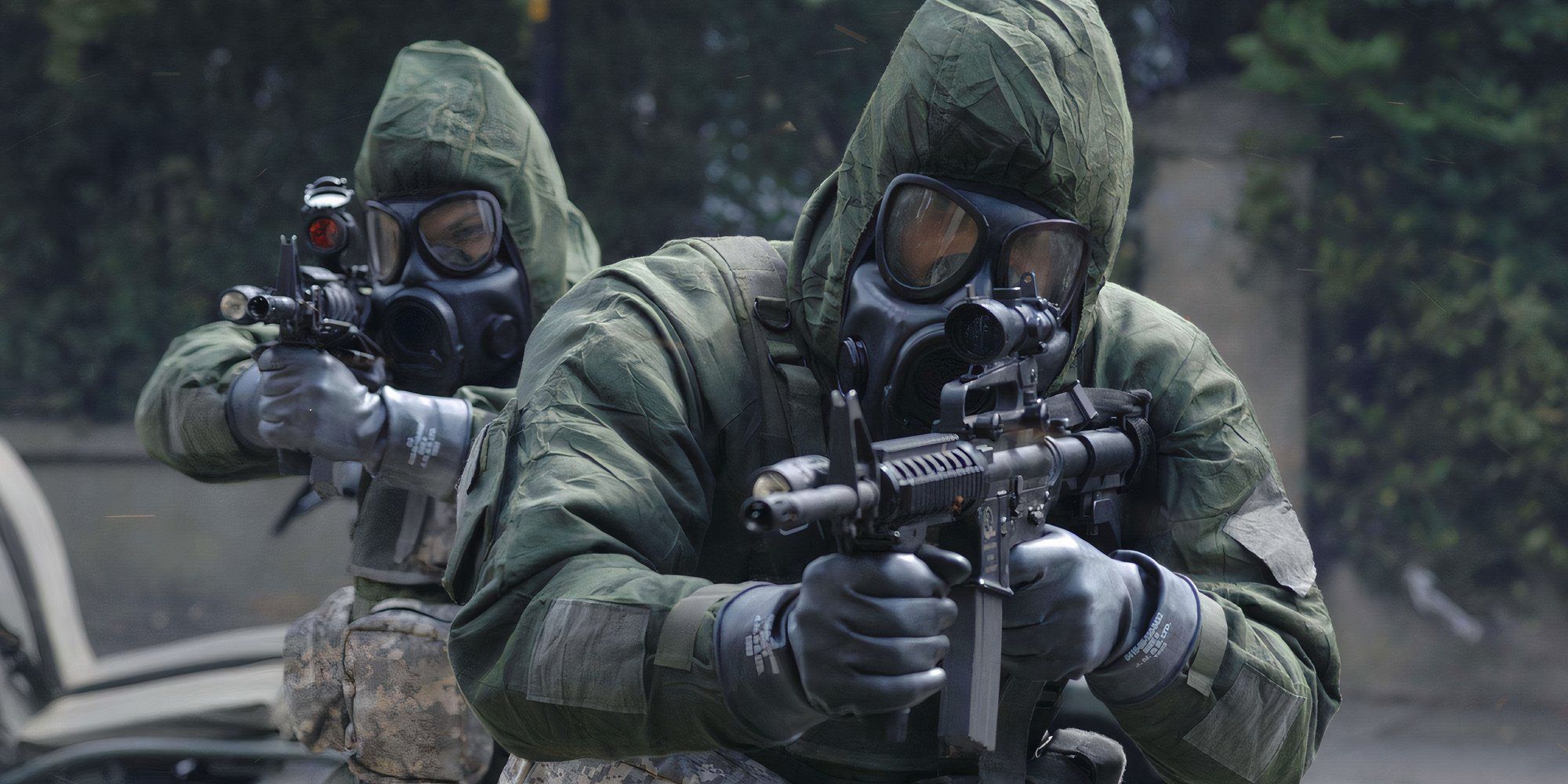
In the 2007 cult-classic horror sequel 28 Weeks Later, Flynn serves as a pivotal supporting character whose actions dictate the survival of the protagonists and the eventual fate of the European continent. Portrayed by Harold Perrineau, Flynn is a U.S. Army helicopter pilot who represents the pragmatic middle ground between the rigid military bureaucracy and the desperate needs of the civilian survivors.
As a character, Flynn provides the necessary aerial perspective and mobility required for the narrative to transition from the claustrophobic District 1 to the wider landscape of post-apocalyptic London. His role is defined by his professionalism, his friendship with Sergeant Doyle, and a survival instinct that often clashes with traditional heroic tropes. In 2026, with the franchise seeing a significant resurgence through new entries, understanding Flynn’s profile remains essential for grasping the thematic shift from the original film’s intimate survival to the sequel’s exploration of institutional failure and geopolitical catastrophe.
The Character Profile of Flynn: Background and Personality
Flynn is introduced as a skilled pilot attached to the NATO-led American forces overseeing the repopulation of London. Unlike the ground troops who are forced into the messy, face-to-face brutality of the Rage Virus outbreak, Flynn operates from a position of relative safety and detachment. This detachment is not born of coldness, but rather a professional necessity. As a pilot of a Bell UH-1H Iroquois—commonly known as a "Huey"—Flynn is the primary logistical link for the military operation.
His personality is characterized by a blend of cynicism and loyalty. He shares a close bond with Sergeant Doyle (Jeremy Renner), a relationship that serves as the emotional anchor for the military subplot. Flynn is depicted as a man who understands the "Rules of Engagement" but is also acutely aware of the futility of the military's containment strategies once "Code Red" is declared. He is not a traditional soldier who follows every order blindly; instead, he prioritizes the safety of his aircraft and his life, which creates a complex dynamic when he is asked to intervene in the ground-level chaos.
Military Status and Equipment
Flynn holds the rank of a warrant officer or commissioned officer, given his status as a primary pilot. His aircraft, the Huey, is a symbolic choice by the filmmakers. While newer helicopters were available in 2007 (and certainly by 2026 standards), the Huey invokes the imagery of the Vietnam War—a conflict often associated with military overreach and chaotic evacuations. This choice underscores the film's theme of a powerful military struggling to contain an unconventional and relentless enemy.
Flynn’s Role in the Narrative: The Exit Strategy
Flynn’s primary function in the plot of 28 Weeks Later is to serve as the "Exit Strategy." In horror cinema, especially in the "fast zombie" subgenre, characters are often divided into those who provide protection (Doyle/Scarlet) and those who provide escape. Flynn is the latter.
When the Rage Virus breaches District 1, the military transitions from protection to "sanitization"—the indiscriminate killing of everyone in the zone to prevent the virus's spread. Flynn is tasked with aerial surveillance and fire support during this transition. However, his most significant narrative contribution begins when Doyle abandons his post to save a group of survivors, including Tammy and Andy Harris. Flynn becomes the only hope for these survivors to leave the firebombed ruins of London.
The Helicopter Blade Scene: A Technical and Visceral Turning Point
One of the most famous sequences in horror history involves Flynn using his helicopter as a weapon. While clearing an area in Regent's Park for the survivors, he finds himself swarmed by the infected. Rather than landing or retreating, he tilts the helicopter, using the rotating main rotor blades to decapitate a field of approaching infected.
From a technical standpoint, this scene highlights Flynn’s extraordinary skill as a pilot and his willingness to use unconventional tactics. Narratively, it serves as a "cleansing" moment that demonstrates the sheer power of military technology against the biological threat, while also establishing that Flynn is committed to the rescue—provided it can be done on his terms.
The Moral Conflict: The Firebombing and Abandoning Doyle
The most debated aspect of Flynn’s role is his refusal to land during the firebombing of London. When Doyle and the survivors are trapped in the streets, Doyle pleads with Flynn via radio to pick them up. Flynn, observing the firebombing from the air, refuses.
This decision is often viewed as a moment of cowardice, but a deeper analysis of the character profile suggests it was a calculated necessity. Flynn’s orders were to stay clear of the strike zone. Landing a helicopter in the middle of a firebombing run would not only risk his life but would also destroy the only vehicle capable of eventually transporting the survivors to safety.
Pragmatism vs. Heroism
Flynn’s role is to survive so that others may eventually follow. If he had landed and died alongside Doyle, the film would have ended with the deaths of Tammy and Andy in the London Underground. By choosing to wait and meeting them at a secondary extraction point (Wembley Stadium), Flynn proves that his pragmatism is more effective than Doyle’s self-sacrificial heroism. Unfortunately, this choice comes at the cost of Doyle’s life, who is incinerated by flamethrower troops while pushing the survivors' car.
Technical Specifications: The UH-1H "Huey" in 28 Weeks Later
To understand Flynn’s role, one must understand the tool he uses. The helicopter isn't just a vehicle; it is an extension of Flynn’s character and the primary setting for the film's climax.
| Feature | Specification/Detail | Narrative Significance |
|---|---|---|
| Model | Bell UH-1H Iroquois (Huey) | Symbolizes military evacuation and chaos. |
| Capacity | Approx. 10-14 passengers | Restricted space increases tension during the final escape. |
| Armament | Door-mounted machine guns (optional) | Used by Flynn to provide cover for ground survivors. |
| Rotor Diameter | 48 feet | Utilized as a weapon in the Regent's Park scene. |
| Role in Film | CASEVAC / Aerial Surveillance | The only bridge between London and the outside world. |
The Ending: Flynn’s Fate and the Spread of the Infection
The final act of 28 Weeks Later sees Flynn successfully piloting Tammy and Andy across the English Channel to France. However, this "rescue" is the catalyst for a global catastrophe. During the flight, it is revealed that Andy, who is an asymptomatic carrier of the Rage Virus, is on board.
The film concludes with the helicopter found abandoned on a hillside in France. A distress call from Flynn is heard, but the final shots show infected humans running through the streets of Paris toward the Eiffel Tower.
Did Flynn Survive?
The prevailing interpretation among fans and film analysts is that Flynn did not survive. Given the proximity of the cockpit to the cabin in a Huey, it is highly likely that Andy turned or infected Flynn shortly after landing. The radio transmission heard at the end is frantic, suggesting a breach of the cockpit. In the context of the 2026 franchise timeline, Flynn is remembered not as a savior, but as the unwitting "Patient Zero" for the European mainland outbreak. His desire to save his friend's charges ultimately led to the fall of Europe, a tragic irony that defines his character arc.
Thematic Significance of the "Pilot" Character
Flynn follows a long tradition of pilot characters in zombie media (similar to the pilots in Dawn of the Dead or World War Z). These characters often represent the bridge between the old world and the new. In Flynn's case, he represents the failure of the old world’s systems. Despite his skill and his Huey's power, he cannot escape the biological reality of the virus.
His role explains the film's stance on military intervention: no matter how high you fly or how many "rotary blade" maneuvers you perform, the "Rage" is a ground-level reality that eventually consumes everyone. Flynn’s profile is that of a man trying to stay above the fray, only to be dragged down by the very people he tried to save.
Frequently Asked Questions
Why didn't Flynn land to save Doyle?
Flynn refused to land because the U.S. Air Force was actively firebombing the area. A helicopter is extremely vulnerable to the heat, pressure waves, and debris caused by incendiary bombs. Flynn’s priority was to preserve the aircraft for a later extraction, which he eventually carried out at Wembley Stadium.
How did Flynn use the helicopter blades to kill the infected?
Flynn performed a maneuver where he tilted the aircraft's nose down and leaned it to the side, bringing the main rotor blades close to the ground. This turned the helicopter into a giant horizontal blender. While visually spectacular, this is an incredibly dangerous and difficult maneuver that would likely result in a rotor strike and a crash in real-world conditions.
Was Flynn aware that Andy was infected?
No, Flynn was not aware of the specifics of Andy's condition. He knew the group was being pursued and that they were "clean" enough to be rescued per his loyalty to Doyle. He did not know that Andy was an asymptomatic carrier of the virus, which is what allowed the virus to bypass his security and travel to France.
What happened to Flynn after the movie ended?
The film implies that Flynn was killed by the infected shortly after landing in France. The final scene shows the helicopter abandoned at the Trocadéro in Paris with the doors open and a radio distress call playing, followed by a swarm of infected emerging from the Paris Metro.
Who played Flynn in 28 Weeks Later?
Flynn was played by Harold Perrineau. Perrineau is a veteran actor known for his roles as Michael Dawson in Lost, Link in The Matrix sequels, and Mercutio in Romeo + Juliet. His performance as Flynn is noted for bringing a sense of "reluctant professionalism" to the film.
Recommended Viewing and Analysis for 2026 Audiences
For those revisiting the franchise in 2026, it is highly recommended to watch 28 Weeks Later with a focus on the aerial cinematography. The way Flynn is framed—often looking down through the glass or through his headset—emphasizes the isolation of the military class from the civilians they are tasked to protect.
To further understand Flynn's role, viewers should:
- Analyze the Regent's Park Scene: Note the change in music and Flynn's facial expressions; it is the only time he looks truly "enraged" by the infected.
- Compare to the Original: Contrast Flynn with the pilots (or lack thereof) in 28 Days Later to see how the scale of the disaster has evolved.
- Monitor the New Trilogy: With the 2025/2026 release of 28 Years Later, look for references to the "Paris Incident," which was caused by Flynn's final flight.
Flynn remains a complex figure: a hero to the two children he saved, a traitor to the orders he broke, and a harbinger of doom for the rest of the world.