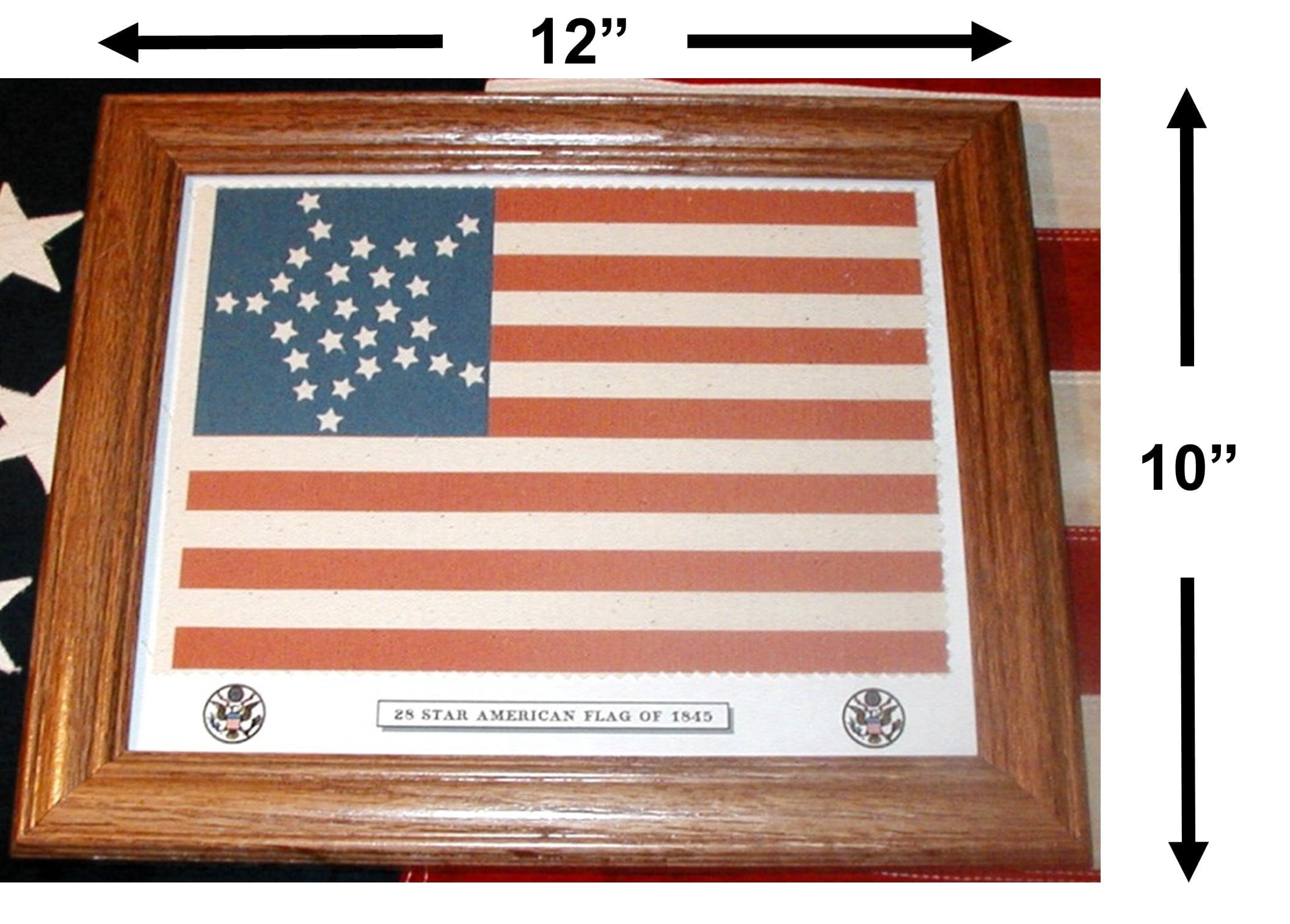
The 28 star flag is a rare and historically significant banner in the evolution of the United States flag, officially representing the admission of Texas as the 28th state to the Union in 1845. It served as the official national standard for a single year, from July 4, 1846, to July 3, 1847, capturing a pivotal era of westward expansion and shifting geopolitical borders in North America.
Historical Context of the 28 Star Flag
The path to the 28 star flag began with the annexation of the Republic of Texas, which was formally admitted to the United States on December 29, 1845. According to United States flag traditions and legal statutes of the 19th century, a new star was added to the national flag on the Fourth of July following the admission of a new state. Consequently, the 28 star design officially flew starting on July 4, 1846.
This specific period in American history was marked by rapid territorial growth and intense national debate over expansionism and slavery. Barely a month after the 28 star flag became the official standard, the Mexican-American War erupted in May 1846. As American troops carried variations of national banners into battle across Texas, California, and Mexico, the 28 star flag became closely associated with the sweeping geographic ambitions of Manifest Destiny.
During the mid-19th century, the United States Congress had not yet enacted strict statutory regulations dictating the exact arrangement, orientation, or proportions of the stars on the flag. As a result, flag makers and manufacturers across the country enjoyed considerable creative freedom in designing the canton, often referred to as the "union." This lack of uniformity means that surviving historical examples of the 28 star flag exhibit a remarkable variety of design patterns.
Design Variations and Star Arrangements
Because official oversight was limited to the count of the stars rather than their precise placement, historical 28 star flags showcase diverse artistic expressions by period seamstresses and commercial flag makers. Unlike the rigid, standardized rows established by later executive orders, 19th-century banners reflect local craftsmanship and available materials.
Common star patterns found on authentic 28 star flags include:
- Staggered Horizontal Rows: The most traditional layout, featuring balanced rows of stars running horizontally across the blue canton.
- Medallion Configurations: An artistic arrangement where stars are arranged in a circle or oval pattern, sometimes enclosing a central star or geometric motif.
- Wreath and Diamond Patterns: Elaborate geometric formations designed to create visual symmetry within rectangular cantons.
- Great Star Patterns: A large, overarching star formed by smaller individual stars, a popular motif during the early and mid-18th and 19th centuries.
Manufacturers also experimented with materials depending on regional resources and intended use, ranging from heavy wool bunting for maritime and military installations to lightweight cotton and silk for domestic or ceremonial displays. Hand-stitching was standard, with individual stars frequently appliquéd onto both sides of the blue field.
Comparative Overview of Mid-19th Century Flags
Understanding where the 28 star flag fits within the chronological sequence of American flags helps collectors and historians authenticate period artifacts. The table below outlines the progression of flags surrounding the admission of Texas and its immediate successor.
| Flag Designation | Admission State | Official Date Effective | Duration as Official Standard | Notable Historical Context |
|---|---|---|---|---|
| 27 Star Flag | Florida | July 4, 1845 | 1 Year (1845–1846) | Represented the 27th state admitted March 3, 1845. |
| 28 Star Flag | Texas | July 4, 1846 | 1 Year (1846–1847) | Coincided with the outbreak of the Mexican-American War. |
| 29 Star Flag | Iowa | July 4, 1847 | 1 Year (1847–1848) | Marked the entry of Iowa as a free state. |
| 30 Star Flag | Wisconsin | July 4, 1848 | 3 Years (1848–1851) | Flew during the final phases of the California Gold Rush era. |
Collecting, Authenticating, and Preserving Antique Flags
Antique 28 star flags are highly sought after by collectors, museums, and historical institutions due to their relative scarcity and short official lifespan. Because the flag was official for only twelve months, the number of surviving period-authentic examples is significantly lower than those of flags with longer tenures, such as the 13-star or 48-star variants.
Authenticating a 28 star flag requires careful examination of textile science, stitching techniques, and material composition. Experts analyze thread types, dye chemistry, and the method of star attachment. Natural indigo dyes and hand-sewn lockstitches or whipstitches are characteristic of mid-19th-century manufacturing, whereas modern synthetic fibers, machine-printed stars, or brass grommets typical of the 20th century indicate later reproductions or commemorative pieces.
Proper preservation is critical for maintaining the structural integrity of historical textiles. Antique flags should be kept away from direct sunlight, fluorescent lighting, and excessive humidity, which accelerate fiber degradation and color fading. Archival framing using acid-free materials or flat storage in climate-controlled environments ensures that these fragile pieces of Americana remain intact for future generations.
Frequently Asked Questions About the 28 Star Flag
How long was the 28 star flag the official US flag?
The 28 star flag was the official national standard of the United States for exactly one year, from July 4, 1846, to July 3, 1847. It was succeeded by the 29 star flag following the admission of Iowa.
Which state did the 28th star represent?
The 28th star represented the State of Texas, which was annexed and admitted to the Union on December 29, 1845. In accordance with U.S. flag protocol at the time, the new star was officially added to the flag on the following Independence Day.
Why do some 28 star flags look different from each other?
Before executive orders standardized flag design in the 20th century, federal guidelines only specified the number of stars and stripes. Flag makers had complete artistic freedom regarding the arrangement and orientation of the stars, resulting in diverse geometric and linear patterns.
Are original 28 star flags valuable to collectors?
Yes, original 19th-century 28 star flags command significant interest and value in the antique market due to their scarcity. Their one-year official window limits the pool of surviving authentic specimens, making them prized items for advanced vexillological collections.
How can I tell if a 28 star flag is an antique or a modern reproduction?
Authentication requires examining the textile composition, sewing techniques, and dye types. Authentic mid-19th-century flags feature period-correct fabrics like wool bunting or hand-spun cotton, hand-stitched or early machine-sewn construction, and natural dyes, whereas modern replicas often use synthetic materials and contemporary manufacturing methods.
Preserving Vexillological Heritage
For historians, collectors, and educators, studying the 28 star flag offers a tangible connection to the dynamic expansion of the United States during the 1840s. Whether housed in a major museum or evaluated as a private collection piece, this rare banner encapsulates a defining chapter of American history. Proper identification, rigorous authentication, and careful archival conservation remain essential practices for safeguarding these historical textile artifacts against deterioration.