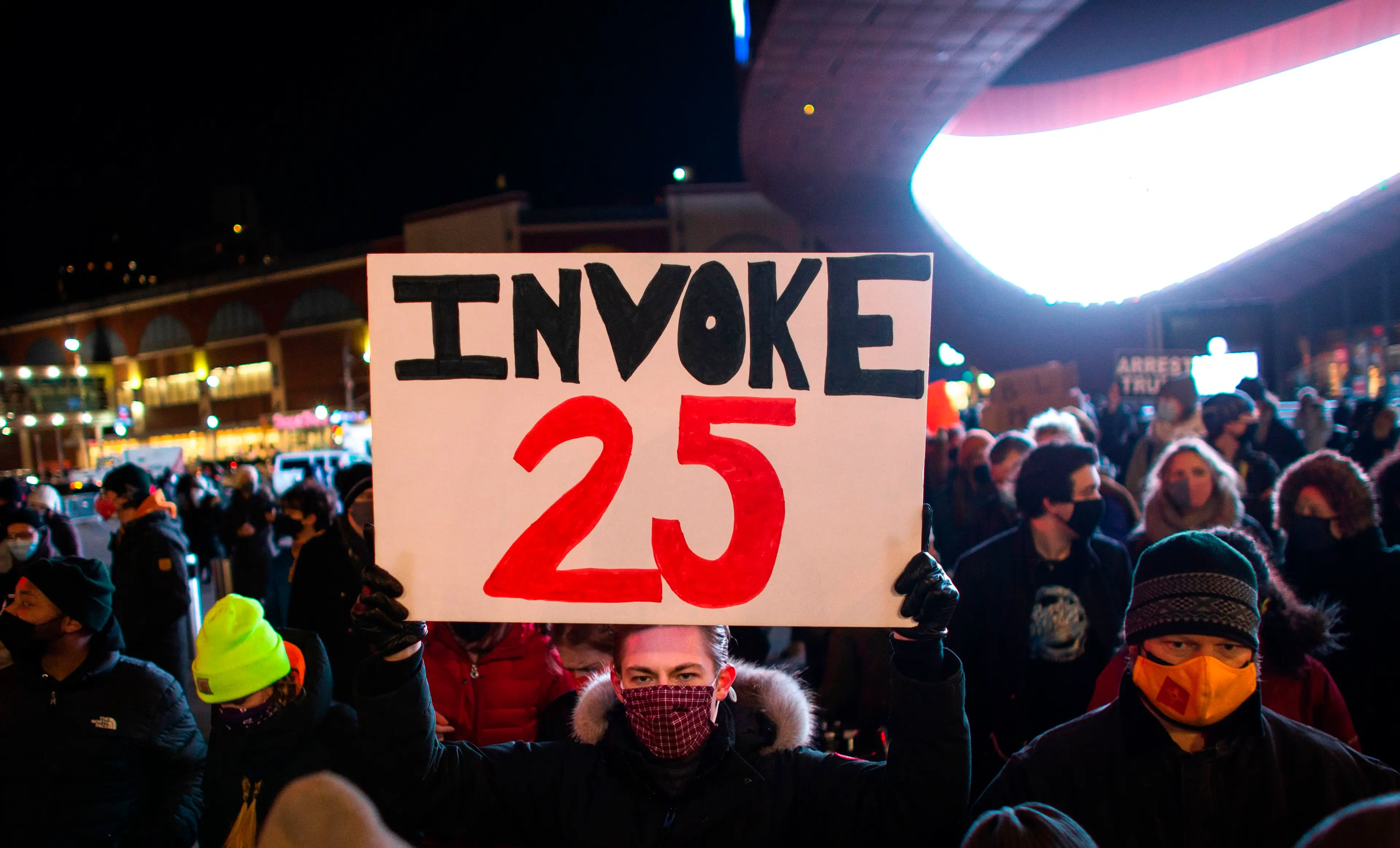
The 25th Amendment of the U.S. Constitution provides the legal framework for presidential succession and disability. Specifically, Section 4 allows the Vice President and a majority of the Cabinet to declare a president "unable" to serve, immediately transferring power to the Vice President as Acting President. While designed to ensure continuity of government, the process remains politically sensitive and carries the potential for a constitutional crisis if the declaration is contested.
The Origin and Purpose of the 25th Amendment
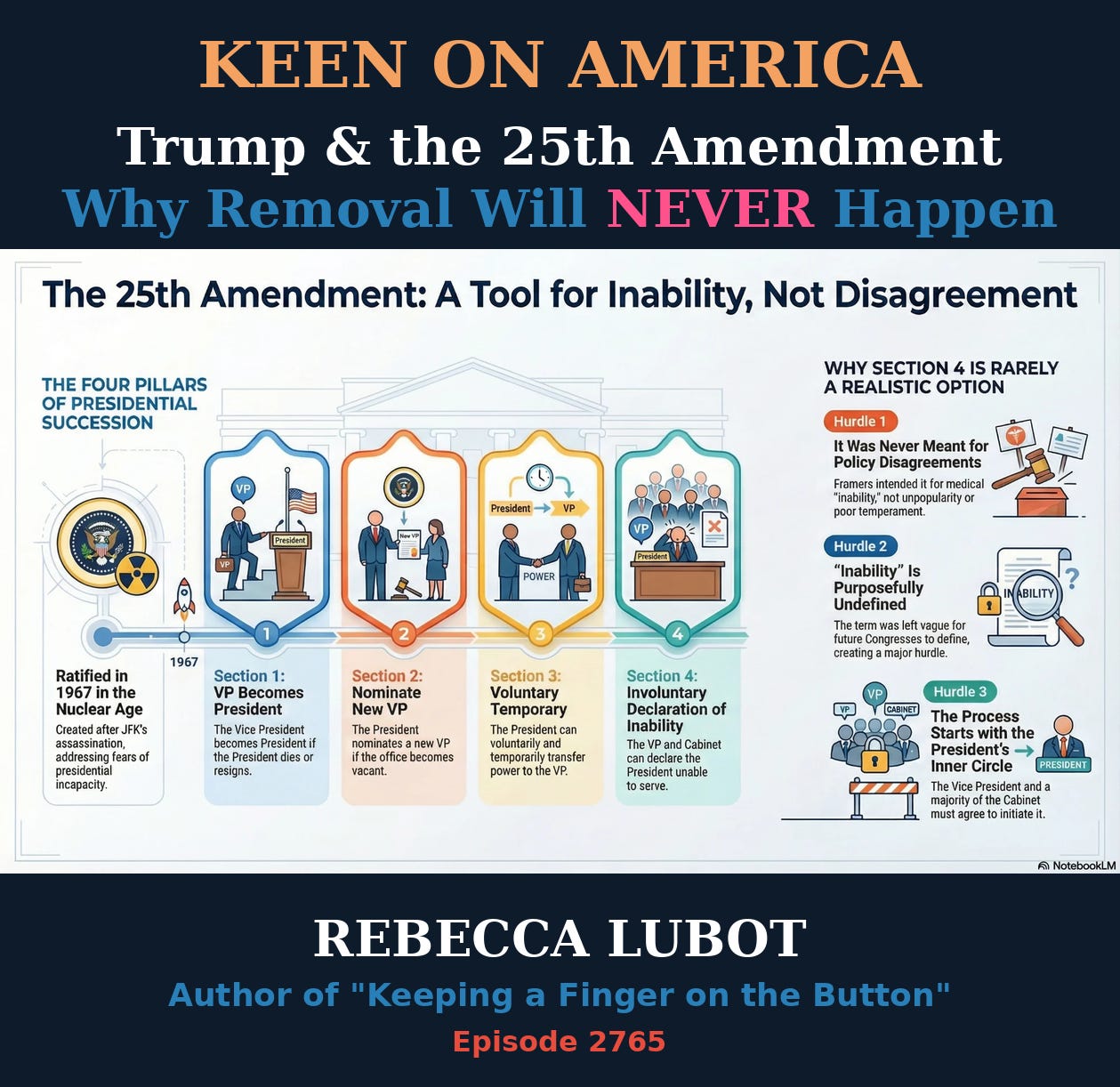
The 25th Amendment was ratified on February 10, 1967, in the wake of the assassination of John F. Kennedy. Before its passage, the Constitution was notoriously vague regarding what constituted "inability" and whether a Vice President would become the President or merely an "Acting President" during such a period. This ambiguity created several historical moments of uncertainty, most notably when President James A. Garfield lingered for months after being shot in 1881, and when President Woodrow Wilson suffered a debilitating stroke in 1919.
The amendment was designed to provide a clear, codified procedure for three primary scenarios:
- Section 1: Permanent vacancy (death, resignation, or removal) where the Vice President becomes President.
- Section 2: Filling a vacancy in the Vice Presidency.
- Section 3: Voluntary transfer of power (e.g., during surgery).
- Section 4: Involuntary transfer of power due to presidential inability.
As of 2026, Section 4 remains the only part of the amendment that has never been formally invoked. Its existence serves as a "safety valve" for the executive branch, yet the high bar for its implementation reflects the framers' desire to prevent it from being used as a tool for a political "palace coup."
Section 4: The Involuntary Removal Process
Section 4 is the most complex and controversial component of the amendment. It outlines a process for removing a president's powers without their consent. The process begins with a written declaration sent to the President pro tempore of the Senate and the Speaker of the House of Representatives.
The Role of the Vice President and the Cabinet
For Section 4 to be triggered, the Vice President must be the primary driver. The Vice President, joined by a majority of the "principal officers of the executive departments" (the Cabinet), must state that the President is "unable to discharge the powers and duties of his office." It is important to note that without the Vice President’s signature, the process cannot move forward under this section.
The "Cabinet" specifically refers to the 15 heads of the executive departments, such as the Secretary of State, Secretary of Defense, and Attorney General. Acting secretaries are generally considered to have the authority to sign, though this has been a point of minor legal debate.
The "Other Body" Provision
The amendment also allows for a "body as Congress may by law provide" to replace the Cabinet in this process. While Congress has debated creating a permanent commission of medical experts or former officials to evaluate presidential health, no such body has been established as of 2026. Consequently, the power remains exclusively with the Vice President and the Cabinet.
Procedural Mechanics and Timelines
The timeline of the 25th Amendment is designed for speed but includes checks and balances to prevent abuse. Once the initial declaration is delivered to Congress, the Vice President immediately assumes the powers of the presidency as Acting President.
The President’s Right to Contest
The President can respond at any time by sending their own written declaration to Congress stating that "no inability exists." Upon this declaration, the President immediately resumes their powers and duties. However, the conflict does not necessarily end there. If the Vice President and the Cabinet still believe the President is unfit, they have four days to send a second declaration to Congress.
Congressional Adjudication
If a second declaration is sent, Congress must assemble within 48 hours to decide the issue. They have 21 days to reach a verdict. During this 21-day period, the Vice President continues to serve as Acting President. To permanently strip the President of their powers for the remainder of the term, a two-thirds majority vote is required in both the House of Representatives and the Senate. If the vote falls short of this threshold in either chamber, the President resumes their office.
| Feature | Section 3 (Voluntary) | Section 4 (Involuntary) |
|---|---|---|
| Initiated By | The President | VP + Majority of Cabinet |
| Immediate Effect | VP becomes Acting President | VP becomes Acting President |
| Contestability | N/A (President decides when to return) | President can contest via written notice |
| Congressional Role | None (unless conflict arises) | Must vote if VP/Cabinet persist (2/3 required) |
| Current Status (2026) | Used multiple times (Reagan, Bush, Biden) | Never been invoked |
| Burden of Proof | Self-determined | VP/Cabinet must prove "inability" |
The Scope of "Inability" and Constitutional Crisis Risks
The primary reason Section 4 is viewed as a "constitutional crisis" trigger is the lack of a formal definition for the word "unable." The framers of the amendment intentionally left the term vague to cover a wide range of physical and mental conditions. However, this vagueness creates significant legal and political risks.
Defining Inability
"Inability" could mean a physical coma, but it could also theoretically cover severe mental illness, cognitive decline, or even a situation where the President is kidnapped or otherwise unreachable. The danger arises when the definition of "inability" drifts into "policy disagreement" or "unpopularity." If the 25th Amendment is used to remove a president simply because the Cabinet disagrees with their decisions, it bypasses the impeachment process and undermines the democratic mandate.
The "Two Presidents" Scenario
A constitutional crisis is most likely to occur during the 21-day window when Congress is debating the issue. In this scenario, the nation effectively has two individuals claiming the right to the presidency: the President (claiming no inability) and the Vice President (serving as Acting President). If the military or federal agencies receive conflicting orders from both individuals, the chain of command could fracture, leading to domestic instability or vulnerability to foreign adversaries.
How the 25th Amendment Differs from Impeachment
It is a common misconception that the 25th Amendment is a "faster" version of impeachment. In reality, the two serve entirely different purposes and have different legal standards.
- Intent: Impeachment (Article II, Section 4) is intended to punish "High Crimes and Misdemeanors." It is a quasi-judicial process for wrongdoing. The 25th Amendment is a functional process for incapacity.
- The Bar for Removal: Impeachment requires a simple majority in the House and a two-thirds majority in the Senate. The 25th Amendment (Section 4) requires a two-thirds majority in both houses to keep the Vice President in power if the President contests the removal. This makes the 25th Amendment a higher hurdle to clear than impeachment.
- Permanence: A president who is impeached and convicted is removed from office permanently. Under the 25th Amendment, the President technically remains "The President" but is stripped of their "powers and duties," which are exercised by the "Acting President."
Political and Legal Implications of Invocation
The invocation of Section 4 would be a watershed moment in American history. Beyond the immediate transfer of power, the long-term implications for the executive branch are profound.
- Erosion of Executive Authority: If a president is successfully challenged but remains in office after a failed Congressional vote, their authority would be severely diminished. They would be seen as "vetted" but potentially "damaged," making it difficult to negotiate with foreign leaders or lead their own party.
- Cabinet Loyalty: The requirement for a Cabinet majority ensures that the President’s own appointees—those supposedly most loyal to them—must turn against them. This creates a high political cost for the Vice President, as they must convince the President’s closest allies to participate in the removal.
- Judicial Review: While the 25th Amendment is largely a "political question," it is possible that the Supreme Court could be asked to intervene on procedural grounds (e.g., what constitutes a "majority" of the Cabinet if several seats are vacant).
Monitoring Executive Stability and Constitutional Integrity
As we navigate the political landscape of 2026, the 25th Amendment remains a vital, if dormant, safeguard. Citizens and policymakers should monitor legislative discussions regarding the "Other Body" provision, as the creation of a medical commission could shift the power dynamic away from the Cabinet.
Understanding the distinction between political opposition and true constitutional "inability" is essential for maintaining the stability of the Republic. The 25th Amendment is not a tool for overturning elections, but a mechanism for ensuring that the person holding the nuclear codes and the veto pen is capable of executing the heavy responsibilities of the office.
Frequently Asked Questions
Can the President fire the Cabinet to stop a 25th Amendment invocation?
Theoretically, yes. A president who suspects a Section 4 move is imminent could attempt to fire the Vice President (which is not legally possible) or, more likely, fire the members of the Cabinet who are planning to sign the declaration. However, this would likely trigger an immediate political backlash and could be used as evidence of "inability" or "malfeasance" in a subsequent impeachment trial.
Does the Vice President become the President or the Acting President?
Under Section 4, the Vice President becomes the Acting President. The President remains the President in title, but all powers and duties of the office are transferred to the Vice President. This remains the case unless the President resigns or the term expires.
How many Cabinet members must sign the declaration?
A majority of the 15 principal officers must sign. As of current executive structure, this means 8 out of the 15 department heads. If there are vacancies, the "majority" is typically calculated based on the number of existing, Senate-confirmed (or sometimes acting) officers, though this is a point of potential legal contention.
Has Section 4 ever been used?
No. Section 4 has never been invoked in U.S. history. Section 3 (voluntary) has been used multiple times, most recently in 2021 when President Biden briefly transferred power to Vice President Harris during a medical procedure, and previously by George W. Bush and Ronald Reagan for similar reasons.
What happens if the Vice President and the Cabinet disagree?
The process cannot begin under Section 4 without the Vice President's participation. Even if the entire Cabinet agrees the President is unfit, they have no power to act without the Vice President’s signature on the written declaration to Congress.