The 25th Amendment to the United States Constitution provides the definitive legal framework for presidential succession and inability. It clarifies that the Vice President becomes President upon a vacancy, establishes a process for filling Vice Presidential openings, and creates protocols for the temporary or permanent transfer of power when a President is unable to discharge their duties.
The stability of the American executive branch relies heavily on the clear procedures established by the 25th Amendment. As of 2026, this amendment remains the primary safeguard against "constitutional crises" involving the health or sudden absence of a sitting President. While many citizens are familiar with the general concept of presidential succession, the specific mechanics of the amendment—particularly its provisions for involuntary removal—are often misunderstood. This article provides a comprehensive breakdown of what the 25th Amendment means today, its historical context, and how its four distinct sections function in practice.
The Historical Necessity of the 25th Amendment
To understand what the 25th Amendment means today, one must first understand why it was ratified in 1967. Before this period, the Constitution was notoriously vague regarding presidential disability and Vice Presidential vacancies. Article II, Section 1, Clause 6 originally stated that in the case of the President’s "Inability to discharge the Powers and Duties of the said Office, the Same shall devolve on the Vice President." This phrasing left two critical questions unanswered: Did the Vice President become the President, or merely an "Acting President"? And who had the authority to declare a President "unable"?
The "Tyler Precedent" set by John Tyler in 1841 established that the Vice President becomes the President in title and fact upon the death of the incumbent. However, the issue of non-fatal disability remained perilous. When President James A. Garfield lingered for months after being shot in 1881, the Cabinet was afraid to let Vice President Chester A. Arthur take over, fearing Garfield could never reclaim his office. Similarly, when Woodrow Wilson suffered a massive stroke in 1919, his wife and physician essentially ran the executive branch in secret because there was no legal mechanism to declare him incapacitated.
The assassination of John F. Kennedy in 1963 was the final catalyst. With the Cold War at its height, the prospect of a disabled President unable to respond to a nuclear threat necessitated a formal, written procedure. Congress proposed the amendment in 1965, and it was ratified by the states on February 10, 1967.
Section 1: The Rule of Succession
Section 1 is the most straightforward part of the amendment. It codifies the Tyler Precedent into law: "In case of the removal of the President from office or of his death or resignation, the Vice President shall become President."
This section eliminates any ambiguity regarding the status of the Vice President. They do not serve as a placeholder or an interim manager; they are the President of the United States. In the modern era, this ensures that the command structure of the U.S. military and the head of the executive branch remain continuous without the need for a special election or a lengthy transition period. The most notable application of Section 1 occurred in 1974, when Gerald Ford became President immediately upon the resignation of Richard Nixon.
Section 2: Filling the Vice Presidential Vacancy
Before 1967, if a Vice President died or succeeded to the presidency, the office of the Vice President remained vacant until the next general election. This happened 16 times in American history. Section 2 corrected this by creating a mechanism to fill the vacancy:
"Whenever there is a vacancy in the office of the Vice President, the President shall nominate a Vice President who shall take office upon confirmation by a majority vote of both Houses of Congress."
This section was used twice in the 1970s. First, when Vice President Spiro Agnew resigned, President Nixon nominated Gerald Ford. Later, when Ford became President, he nominated Nelson Rockefeller to be Vice President. Today, Section 2 ensures that the line of succession is always fortified with a confirmed Vice President, preventing the presidency from potentially falling to the Speaker of the House (who is third in line) due to a lingering vacancy.
Section 3: Voluntary Transfer of Power
Section 3 allows a President to voluntarily and temporarily step aside if they know they will be unable to perform their duties—most commonly for medical procedures involving anesthesia. The President must transmit a written declaration to the President pro tempore of the Senate and the Speaker of the House of Representatives.
During this period, the Vice President serves as Acting President. The President can reclaim their powers by sending another written declaration stating they are once again fit for duty.
Notable Uses of Section 3:
- 1985: Ronald Reagan transferred power to George H.W. Bush for eight hours during cancer surgery.
- 2002 & 2007: George W. Bush transferred power to Dick Cheney during routine colonoscopies.
- 2021: Joe Biden transferred power to Kamala Harris for 85 minutes while undergoing a medical procedure.
In 2026, Section 3 is viewed as a routine administrative tool. It allows the government to function seamlessly while the President undergoes necessary medical care, removing the "macho" stigma that historically prevented Presidents from admitting to physical vulnerability.
Section 4: The Involuntary Incapacity Clause
Section 4 is the most complex and controversial part of the 25th Amendment. It has never been invoked, but it remains a frequent topic of debate during times of political instability or concerns over a President’s mental health. This section provides a way to remove a President who is "unable to discharge the powers and duties of his office" but is either unwilling or unable to admit it.
To invoke Section 4, the Vice President and a majority of "the principal officers of the executive departments" (the Cabinet) must send a written declaration to Congress stating the President is unable to serve. Immediately upon this transmission, the Vice President becomes Acting President.
The Challenge Mechanism
The President can contest this by sending their own declaration to Congress, stating that no inability exists. In this case, the President resumes office unless the Vice President and the Cabinet send another declaration within four days. If that second declaration is sent, the issue moves to Congress.
Congress has 21 days to decide the matter. A two-thirds vote in both the House and the Senate is required to keep the Vice President as Acting President. If the vote falls short of two-thirds, the President resumes their duties. This high threshold ensures that Section 4 cannot be used as a simple political tool or a "palace coup."
| Feature | Section 3 (Voluntary) | Section 4 (Involuntary) |
|---|---|---|
| Initiator | The President | VP + Majority of Cabinet |
| Recipient | Speaker of House & President pro tem | Speaker of House & President pro tem |
| VP Status | Acting President | Acting President |
| President's Role | Directs the transfer | May contest the transfer |
| Resolution | President sends "fit for duty" letter | Congress decides if contested (2/3 vote) |
| Primary Use Case | Planned surgery/medical care | Sudden stroke, coma, or mental collapse |
Determining "Inability" in the Modern Era
A significant point of discussion in 2026 involves the definition of "inability." The 25th Amendment does not define the term, and the framers of the amendment intentionally left it vague. This was done to cover a wide range of scenarios, from physical ailments (like a coma) to mental health crises or cases where a President is captured or missing.
Legal scholars generally agree that "inability" is not meant to be a substitute for impeachment. Impeachment is a punishment for "High Crimes and Misdemeanors," whereas the 25th Amendment is a matter of functional capacity. If a President is simply unpopular or making poor policy decisions, the 25th Amendment is not the appropriate remedy; rather, impeachment or the next election is the constitutional path.
However, the question of psychological fitness remains a gray area. As medical science advances, the ability to diagnose cognitive decline or personality disorders has improved, but the 25th Amendment remains a political and legal process, not a purely medical one. The requirement for the Vice President’s involvement is the ultimate "check," as it is unlikely a Vice President would move against their own President without overwhelming evidence of incapacity.
The Role of the "Other Body"
One little-known detail of Section 4 is that Congress can, by law, replace the Cabinet with "such other body as Congress may by law provide" to work with the Vice President in declaring a President unable. While such a body (which could consist of medical experts or retired statesmen) has never been established, the option exists should a future Congress believe the Cabinet is too loyal to the President to act objectively during a crisis.
In 2026, discussions about creating a permanent "Presidential Capacity Commission" occasionally surface in legislative debates, but the political risks of establishing such a body—and the potential for it to be weaponized—have prevented it from becoming law.
Common Misconceptions About the 25th Amendment
There are several persistent myths regarding how the amendment functions today:
- It is a way to "fire" the President: The 25th Amendment does not technically remove a President from office; it strips them of their "powers and duties." They remain President in title, while the Vice President becomes "Acting President."
- The Vice President can do it alone: The Vice President has no power to act under Section 4 without the support of at least eight of the 15 principal Cabinet members (or the "other body" mentioned above).
- It’s faster than impeachment: While the initial transfer of power in Section 4 is immediate, the resolution of a contested claim can take weeks. It is not necessarily a "shortcut" for removing a leader.
Tracking Executive Continuity
For citizens and legal professionals, staying informed about the 25th Amendment involves monitoring the "Line of Succession" and the status of Cabinet confirmations. Because Section 4 requires the "principal officers of the executive departments," a President with an unconfirmed or "acting" Cabinet may face different legal hurdles during an invocation of the amendment.
The 25th Amendment remains a cornerstone of American stability. It ensures that no matter the physical or mental state of the individual holding the office, the Office of the President itself remains functional, decisive, and legally occupied.
FAQ
Can the 25th Amendment be used to remove a President for bad behavior?
No, the 25th Amendment is specifically designed for cases of "inability," not misconduct. If a President commits a crime or violates the Constitution, the appropriate mechanism for removal is impeachment and conviction under Article I and Article II. Using the 25th Amendment for political disagreements or behavioral issues would likely be considered a misuse of the Constitution and would be difficult to sustain given the 2/3 vote requirement in Congress.
What happens if the Vice President and the Cabinet disagree?
If the Vice President does not support the move, Section 4 cannot be invoked. The Vice President is the "indispensable actor" in this process. If the Vice President supports it but a majority of the Cabinet does not, the move also fails. Both the Vice President and a majority of the Cabinet must be in agreement to initiate an involuntary transfer of power.
Has Section 4 ever been used?
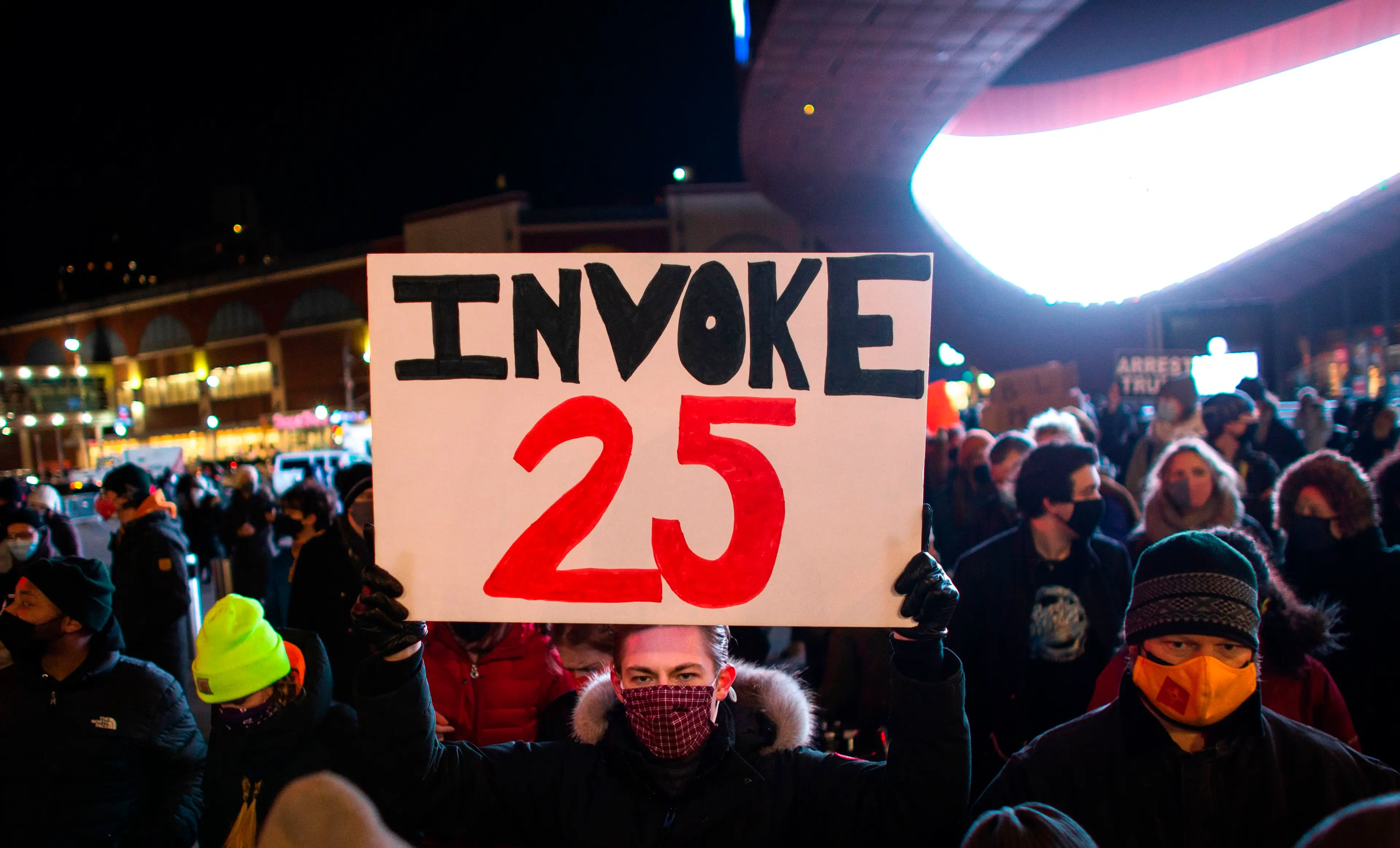
As of 2026, Section 4 has never been invoked. There have been moments in history where it was discussed—most notably during the final days of the Nixon administration and following the 2021 Capitol riot—but it has never reached the stage of a formal written declaration being sent to Congress.
Is the "Acting President" the same as the President?
An Acting President has all the constitutional powers and duties of the President. They can sign bills into law, command the military, and issue executive orders. The only difference is that their tenure is temporary and contingent upon the original President's inability. Once the President is declared "able" through the Section 3 or Section 4 procedures, the Acting President reverts to their role as Vice President.
How long does Congress have to vote on a Section 4 dispute?
If the Vice President and Cabinet maintain that the President is unable to serve after the President has contested the claim, Congress must assemble within 48 hours if not in session. They then have 21 days to reach a decision. During those 21 days, the Vice President continues to serve as Acting President.