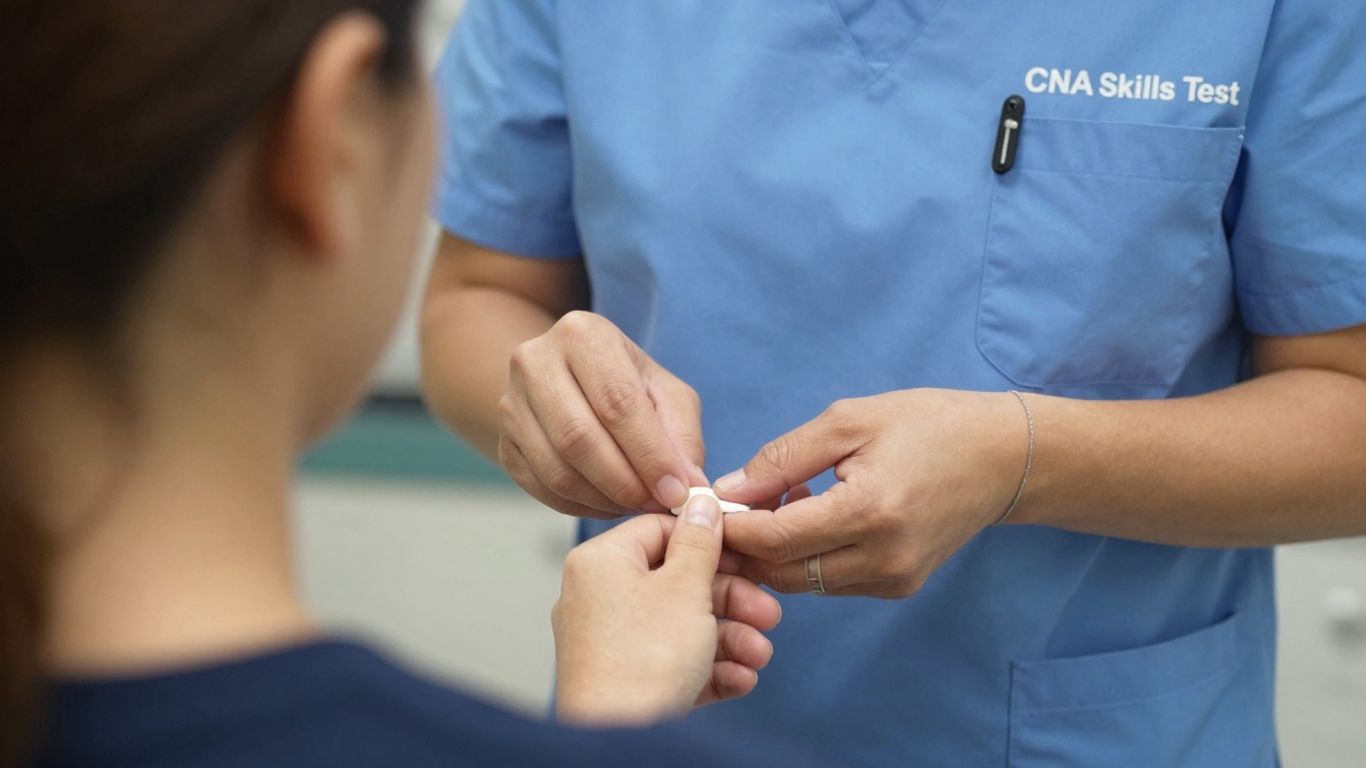
To succeed as a Certified Nursing Assistant (CNA) in 2026, you must master a specific set of 21 clinical and interpersonal skills required for both state certification exams and daily clinical practice. These competencies include hand hygiene, measuring vital signs, assisting with mobility, and providing personal care, all while maintaining patient dignity and safety. Mastery of these skills ensures you meet the rigorous standards of the National Nurse Aide Assessment Program (NNAAP) and provide high-quality care in long-term care facilities, hospitals, and home health settings.
The Foundation of CNA Competency: Why These Skills Matter
The role of a Certified Nursing Assistant is the backbone of the healthcare system. As a CNA, you are often the primary point of contact for patients and residents, spending more time at the bedside than any other member of the clinical team. In 2026, the demand for skilled nursing assistants continues to rise as the population ages, making the mastery of these 21 essential skills more than just a requirement for a certificate—it is a prerequisite for patient safety and career longevity.
State competency exams are designed to verify that a candidate can perform these tasks safely and effectively. Most exams consist of two parts: a written (or oral) knowledge test and a clinical skills evaluation. During the skills evaluation, you are typically asked to perform five randomly selected tasks from the master list of 21. One of these will almost always be hand hygiene, which is a "critical step" skill. Failing a critical step usually results in an automatic failure of the entire exam, highlighting why precision and practice are non-negotiable.
Beyond the exam, these skills represent the "Activities of Daily Living" (ADLs) that allow patients to maintain their quality of life. Whether you are assisting a stroke survivor with range-of-motion exercises or helping a resident with dementia eat their dinner, your technical proficiency directly impacts their physical health and emotional well-being.
Core Clinical Skills: Measurement and Recording
Clinical accuracy is a fundamental expectation of the CNA. In 2026, while digital tools have become more integrated into healthcare, the manual ability to measure and record data remains a core competency to ensure backup accuracy and patient safety.
1. Hand Hygiene
Hand hygiene is the single most important skill to prevent the spread of healthcare-associated infections (HAIs). In a testing environment, you must demonstrate the proper technique: using warm water, applying soap, and rubbing all surfaces of the hands together for at least 20 seconds. You must ensure you do not touch the inside of the sink and use a clean, dry paper towel to turn off the faucet.
2. Measuring and Recording Radial Pulse
This skill requires you to locate the radial artery on the thumb side of the patient's wrist. You must count the beats for a full 60 seconds (or 30 seconds multiplied by two if the pulse is regular) and record the result accurately within a specific margin of error (usually plus or minus 4 beats per minute).
3. Measuring and Recording Respirations
Counting respirations must be done subtly so the patient does not change their breathing pattern. Usually, this is done immediately after checking the pulse while still holding the wrist. You must count the rise and fall of the chest for one full minute.
4. Measuring and Recording Blood Pressure
Despite the prevalence of automatic cuffs, CNAs must master manual blood pressure measurement using a sphygmomanometer and stethoscope. Accuracy is vital, as these numbers dictate medication administration and emergency interventions.
5. Measuring and Recording Urinary Output
For patients with catheters or those using bedside commodes, monitoring output is essential for tracking kidney function and hydration. You must be able to read a graduate container at eye level on a flat surface and record the amount in milliliters (mL).
6. Measuring and Recording Weight
Weight fluctuations can indicate heart failure or nutritional deficiencies. You must ensure the scale is balanced at zero before the patient steps on and record the weight accurately, often to the nearest fraction of a pound or kilogram.
Personal Care and Activities of Daily Living (ADLs)
Assisting with personal care requires a blend of technical skill and a high degree of empathy. These tasks are intimate, and the CNA must prioritize the patient's privacy and autonomy throughout.
7. Bed Bath (Partial)
Providing a partial bed bath involves washing the face, hands, underarms, and perineal area. You must demonstrate proper water temperature checks (allowing the resident to test the water) and use different sections of the washcloth for different areas to maintain hygiene.
8. Dressing a Resident with a Weak Arm
This is a common exam task that tests your understanding of "dressing the weak side first" (TOSS - Tailor On Strong Side is for undressing; POW - Put On Weak for dressing). This prevents unnecessary strain on the patient's affected limb.
9. Providing Mouth Care (Brushing Teeth)
Oral hygiene prevents pneumonia and maintains nutrition. You must demonstrate proper brushing technique, including the tongue, and ensure the patient is in an upright position to prevent choking.
10. Cleaning and Storing Dentures
Dentures are expensive and fragile. You must line the sink with a towel or fill it with water to prevent breakage if dropped, and use cool or tepid water, as hot water can warp the dental material.
11. Perineal Care
Perhaps the most sensitive task, "peri-care" involves cleaning the genital and anal areas. You must use a front-to-back wiping motion to prevent urinary tract infections (UTIs) and change washcloth surfaces with every stroke.
12. Feeding a Resident
Feeding is not just about nutrition; it is about safety. You must ensure the resident is sitting at a 90-degree angle, offer small bites, and wait for them to finish chewing before offering more. You must also record the percentage of the meal consumed.
13. Foot Care
Foot care is particularly critical for diabetic patients, where small injuries can lead to severe infections. You must soak, wash, and dry the feet (especially between the toes) but never apply lotion between the toes or perform nail clipping, as that is often a nursing or podiatry task.
Mobility and Restorative Care
Restorative care focuses on maintaining or improving a patient's physical function. Improper technique here can lead to falls or musculoskeletal injuries for both the patient and the CNA.
14. Transferring from Bed to Wheelchair
Using a gait belt is standard practice in 2026. You must ensure the wheelchair wheels are locked, the patient has non-skid footwear, and you use proper body mechanics (lifting with your legs, not your back) to pivot the patient safely.
15. Ambulation with a Gait Belt
Assisting a resident to walk requires you to stand slightly behind and to the side of the patient while holding the gait belt firmly. You must be prepared to ease the patient to the floor if they become faint.
16. Range of Motion (ROM) - Upper Extremities
You must support the joints (shoulder, elbow, wrist) and move the limb through its natural range of motion—flexion, extension, and abduction—stopping immediately if the patient reports pain.
17. Range of Motion (ROM) - Lower Extremities
Similar to the upper extremities, you assist with the hip, knee, and ankle. These exercises are vital for preventing contractures and blood clots in immobile patients.
18. Positioning a Patient on Their Side
To prevent pressure ulcers, patients must be turned every two hours. You must use pillows to support the head, the back, the upper arm, and between the knees to maintain proper alignment and skin integrity.
Safety and Specialized Procedures
The final set of skills involves technical procedures that require strict adherence to safety protocols to prevent injury or infection.
19. Catheter Care
For patients with indwelling catheters, you must clean the tubing starting at the meatus and moving downward at least four inches. You must ensure there are no kinks in the tubing and that the drainage bag is always kept below the level of the bladder.
20. Applying an Anti-Embolic Stocking (TED Hose)
These stockings prevent blood clots. The skill involves turning the stocking inside out and smoothing it over the foot and leg without any wrinkles, which could cause skin breakdown.
21. Occupied Bed Making
Changing the linens while a patient is still in the bed requires coordination and a focus on safety. You must keep the patient covered for modesty, ensure the side rails are up as required, and leave the bed wrinkle-free to prevent pressure sores.
Essential CNA Skills Comparison Table
| Skill Category | Primary Focus | Critical Success Factor |
|---|---|---|
| Infection Control | Hand Hygiene | Scrubbing for 20+ seconds; no sink contact. |
| Vital Signs | Accuracy | Recording within the allowed margin of error. |
| Mobility | Safety | Consistent use of gait belts and locked wheels. |
| ADLs | Dignity | Explaining the procedure and providing privacy. |
| Skin Integrity | Prevention | Wrinkle-free linens and 2-hour turning cycles. |
Mastering the "Soft Skills" for Career Success
While the 21 technical skills get you through the exam, "soft skills" ensure you thrive in your career. In 2026, healthcare employers prioritize CNAs who demonstrate:
- Empathy and Compassion: Understanding that patients are often at their most vulnerable.
- Effective Communication: Being able to give a concise "shift report" to the Registered Nurse (RN) and listening to the needs of the resident.
- Time Management: Prioritizing care for multiple residents without rushing or compromising safety.
- Ethical Behavior: Adhering to HIPAA (Health Insurance Portability and Accountability Act) and respecting patient rights.
How to Prepare for the Clinical Skills Exam
Preparation for the CNA skills exam in 2026 should be systematic. Most students find success by following these three steps:
- Verbalize the Steps: As you practice, speak each step out loud. This reinforces the memory and ensures you don't skip "invisible" steps like "knocking on the door" or "providing privacy."
- Peer Review: Practice with a classmate. Have them use a checklist to "grade" you. Being the "patient" also helps you understand how the movements feel from the other side.
- Focus on Critical Elements: Every state has a list of "Critical Element Steps." These are usually highlighted in bold in your manual. If you miss one of these, you fail the skill. Memorize these first.
Common "Critical Fail" Points to Avoid
- Forgetting to lock wheelchair brakes.
- Allowing the patient's skin to touch the floor during a transfer.
- Contaminating clean hands by touching the sink after washing.
- Failing to check the water temperature before a bath.
- Not pulling the privacy curtain before beginning a procedure.
Frequently Asked Questions
What happens if I make a mistake during the CNA skills test?
If you realize you made a mistake during the test, you can usually correct it as long as you haven't moved on to the next skill. Simply tell the evaluator, "I would like to correct a step," and then perform the step correctly from that point forward.
Which of the 21 skills is the hardest to pass?
Many students struggle with manual blood pressure and radial pulse measurement because they require high accuracy. Additionally, "Occupied Bed Making" can be physically challenging to coordinate without contaminating the clean linens.
Do I have to perform all 21 skills during the exam?
No. You will typically be tested on 5 randomly selected skills. However, Hand Hygiene is almost always one of the five, and at least one measurement skill (like pulse or weight) is usually included.
How often do these skills change or get updated?
The core clinical principles remain stable, but specific guidelines (like the duration of handwashing or the use of specific PPE) are updated periodically by organizations like the CDC. Your training program in 2026 will reflect the most current evidence-based practices.
Can I work as a CNA without mastering all 21 skills?
To be listed on your state's Nurse Aide Registry, you must pass the competency exam, which requires proficiency in these skills. In a professional setting, you will use a combination of these 21 skills every single day.
Next Steps for Aspiring CNAs
Once you have reviewed the 21 essential skills, the next step is hands-on clinical practice. Use the checklists provided by your training program or state testing agency (such as Credentia or Prometric) to track your progress. Consistent, repetitive practice is the only way to build the muscle memory required to perform these tasks under the pressure of an exam. After certification, consider specializing in areas like dementia care or hospice to further advance your career and increase your earning potential in the 2026 healthcare market.