In 2026, the Supplemental Nutrition Assistance Program (SNAP) remains the primary federal defense against food insecurity, operating under updated income thresholds and cost-of-living adjustments. To qualify, households must meet specific gross and net income limits, satisfy work requirements for able-bodied adults, and successfully complete periodic renewals to ensure uninterrupted access to monthly electronic benefits.
Understanding the 2026 SNAP Landscape
As we move through the 2026 fiscal year, SNAP (formerly known as food stamps) continues to adapt to the economic realities of food inflation and shifting labor markets. Administered by the USDA Food and Nutrition Service (FNS), the program provides monthly funds via an Electronic Benefits Transfer (EBT) card, which functions like a debit card at authorized retailers.
The 2026 guidelines are governed by the annual Cost-of-Living Adjustment (COLA), which took effect on October 1, 2025, and will remain in place through September 30, 2026. This adjustment ensures that as the price of the "Thrifty Food Plan" increases, the purchasing power of SNAP recipients does not erode. For 2026, the maximum allotments have seen a modest increase to reflect the stabilization of supply chains alongside persistent retail price levels.
Accessing these benefits requires a clear understanding of three pillars: eligibility criteria, benefit calculation formulas, and the renewal lifecycle. Navigating these correctly is essential, as administrative errors or missed deadlines are the leading causes of benefit "churn"—the temporary loss of benefits by eligible households.
2026 Eligibility Requirements: Income and Assets
To qualify for SNAP in 2026, most households must meet both a gross and a net income test. However, households with an elderly member (60 or older) or a person receiving disability payments only need to meet the net income test.
Gross and Net Income Limits
Gross income refers to a household's total non-excluded income before any deductions are made. For most applicants, this limit is set at 130% of the Federal Poverty Level (FPL). Net income is the amount remaining after specific allowed deductions are subtracted from the gross income. This must be at or below 100% of the FPL.
Common deductions that help households meet the net income test include:
- Standard Deduction: A flat amount allowed for all households, varying by household size.
- Earned Income Deduction: 20% of gross earnings, which accounts for taxes and work-related expenses.
- Dependent Care Deduction: Costs related to childcare or the care of disabled dependents necessary for work or training.
- Medical Expenses: For elderly or disabled members, out-of-pocket medical costs exceeding $35 per month.
- Excess Shelter Deduction: Costs for rent, mortgage, utilities, and taxes that exceed half of the household’s income after other deductions.
Asset and Resource Limits
In 2026, federal asset limits apply to households that are not "categorically eligible" (meaning they don't already receive other forms of public assistance like TANF or SSI). The limit for most households is approximately $3,000 in countable resources, such as bank accounts. For households with at least one member who is elderly or disabled, the limit is higher, typically around $4,500.
It is important to note that many states have implemented "Broad-Based Categorical Eligibility" (BBCE), which allows them to increase or eliminate asset tests entirely to encourage low-income families to maintain modest savings. You should verify your specific state's asset policy, as it may be significantly more lenient than the federal baseline.
Maximum Monthly Allotments for 2026
The amount of SNAP benefits a household receives depends on its size and its net income. If a household has zero net income, they receive the "maximum allotment." For households with income, the benefit is calculated by taking the maximum allotment and subtracting 30% of the household's net income, based on the assumption that families should spend 30% of their own resources on food.
The following table outlines the estimated maximum monthly allotments for the 48 contiguous states and D.C. for the 2026 fiscal year (October 1, 2025 – September 30, 2026).
| Household Size | Maximum Monthly Allotment (Est. 2026) | Gross Monthly Income Limit (130% FPL) | Net Monthly Income Limit (100% FPL) |
|---|---|---|---|
| 1 | $298 | $1,632 | $1,255 |
| 2 | $547 | $2,215 | $1,704 |
| 3 | $783 | $2,798 | $2,152 |
| 4 | $995 | $3,380 | $2,600 |
| 5 | $1,182 | $3,963 | $3,049 |
| 6 | $1,418 | $4,546 | $3,497 |
| 7 | $1,568 | $5,129 | $3,945 |
| 8 | $1,792 | $5,712 | $4,394 |
| Each Add'l Person | +$224 | +$583 | +$449 |
Note: Limits are higher in Alaska, Hawaii, Guam, and the U.S. Virgin Islands due to higher local food costs.
The Renewal and Recertification Process
SNAP benefits are not indefinite. Every household is assigned a "certification period," after which they must prove they are still eligible. In 2026, most certification periods last between 6 and 12 months, though households consisting entirely of elderly or disabled members may have 24-month periods.
Steps for a Successful Renewal
- Notice of Expiration: Approximately 30 to 45 days before your benefits expire, your state agency will mail a renewal notice. In 2026, many states also provide these notifications via SMS or mobile app alerts.
- Submission of the Recertification Form: You must complete the renewal application, updating any changes in income, household members, or address. Most states prioritize online submissions through their respective social services portals.
- The Interview: Most households are required to participate in a recertification interview. This is typically conducted over the phone. In 2026, some states have "on-demand" interview systems where you can call the agency at your convenience during a specific window rather than waiting for a scheduled appointment.
- Verification of Income: You will likely need to provide recent pay stubs, bank statements, or proof of rent. Failure to provide these documents by the deadline is the most common reason for benefit termination.
Periodic Reporting (Mid-Certification)
Many recipients are required to file a "Simplified Report" or "Periodic Report" halfway through their certification period. This is a shorter form used to report major changes. If your income increases above 130% of the FPL, you are generally required to report this within 10 days, even if you are not currently in a renewal window.
Work Requirements and ABAWD Rules in 2026
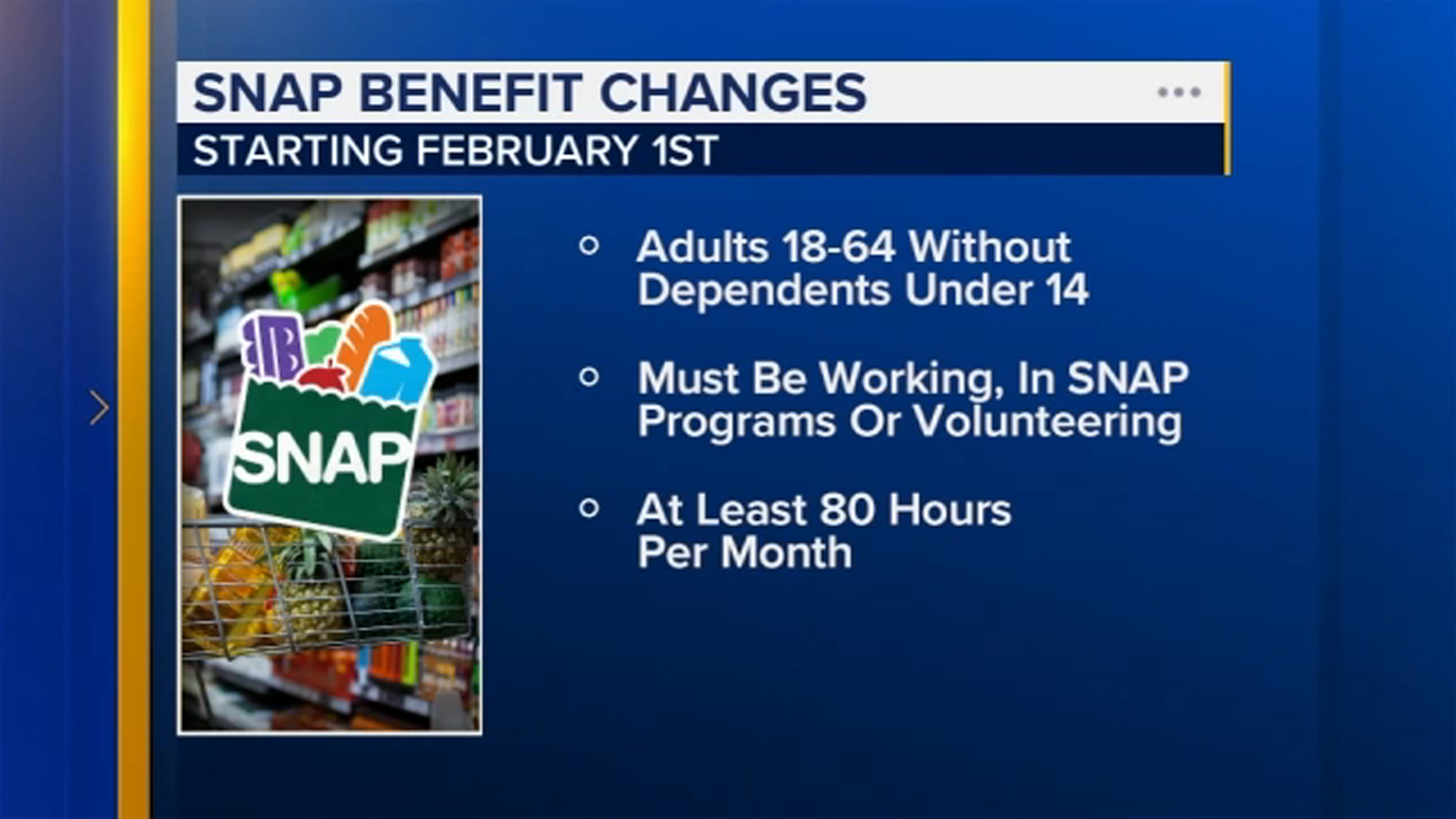
The rules for "Able-Bodied Adults Without Dependents" (ABAWDs) remain a critical component of SNAP eligibility in 2026. Under current federal law, ABAWDs aged 18 through 54 are limited to receiving SNAP benefits for only three months in a three-year period unless they meet specific work requirements or are exempt.
To maintain eligibility beyond the three-month limit, an ABAWD must:
- Work at least 80 hours per month (paid or in-kind).
- Participate in a qualifying work program for at least 80 hours per month.
- Participate in a combination of work and work program hours.
Exemptions to ABAWD Rules: In 2026, exemptions include individuals who are physically or mentally unable to work, those who are pregnant, individuals residing in a household with a child under 18, and specific groups such as veterans, individuals experiencing homelessness, and former foster youth (up to age 24). States may also request waivers for areas with high unemployment rates, so the strictness of these rules can vary by zip code.
Using Your 2026 SNAP Benefits: EBT and Beyond
The EBT system has seen significant technological advancements by 2026. Beyond traditional grocery stores, the program has expanded to better serve modern consumer habits.
Online Shopping and Delivery
The USDA SNAP Online Purchasing Pilot is now a permanent, nationwide feature. Major retailers like Amazon, Walmart, Target, and many regional grocery chains allow SNAP recipients to pay for eligible food items online. While SNAP benefits cannot be used to pay for delivery fees or tips, the ability to shop online has significantly increased food access for those with mobility issues or living in "food deserts."
The Restaurant Meals Program (RMP)
In participating states, the Restaurant Meals Program allows elderly, disabled, and homeless SNAP recipients to use their EBT cards at authorized restaurants. This recognize that these populations may not have the means to store or cook food. If you fall into one of these categories, check if your state (such as California, Arizona, or Illinois) participates in the RMP.
Prohibited Purchases
Despite the flexibility of EBT, federal law remains strict about what cannot be purchased:
- Alcoholic beverages and tobacco.
- Vitamins, medicines, and supplements (if an item has a "Supplement Facts" label, it is generally ineligible).
- Live animals (except shellfish and fish removed from water).
- Hot foods ready for immediate consumption (unless through the RMP).
- Non-food items such as pet food, cleaning supplies, and hygiene products.
Frequently Asked Questions
What is the maximum income to qualify for SNAP in 2026?
For a single-person household, the gross monthly income limit is generally $1,632 (130% of the FPL). For a family of four, the limit is approximately $3,380. These limits are higher for households with elderly or disabled members, as they only need to meet the net income test of 100% FPL ($1,255 for one person or $2,600 for four).
How do I check my EBT balance in 2026?
Recipients can check their balance via their state's official SNAP mobile app, by calling the toll-free number on the back of their EBT card, or by viewing the bottom of their most recent grocery receipt. Many third-party apps also offer balance tracking, though it is safer to use official state-sanctioned portals.
Can I receive SNAP if I am a college student?
In 2026, students aged 18 to 49 enrolled at least half-time in higher education must meet specific "student exemptions" to qualify. These include working at least 20 hours a week, participating in a federal or state work-study program, caring for a dependent child, or being enrolled in specific career and technical education programs.
What should I do if my SNAP application is denied?
If your application is denied or your benefits are reduced, you have the right to request a Fair Hearing. You must generally do this within 90 days of the decision. During the hearing, an administrative law judge will review your case to ensure the state agency followed federal and state regulations correctly.
Are immigrant families eligible for SNAP in 2026?
Eligibility for non-citizens depends on their immigration status. Generally, "qualified" immigrants such as refugees, asylees, and LPRs (Green Card holders) who have been in the U.S. for five years are eligible. Children under 18 who are legal permanent residents are eligible without a waiting period. Applying for SNAP does not make an individual a "public charge" and will not negatively impact most pathways to citizenship.
Immediate Actions for Applicants and Recipients
To ensure your benefits are processed quickly and maintained accurately in 2026, follow these proactive steps:
- Download Your State’s App: Most states now use integrated apps (like "Providers" or state-specific versions) that allow you to upload documents directly from your phone’s camera, which is significantly faster than mailing or faxing.
- Keep Your Contact Info Updated: The number one reason for lost benefits is a missed renewal notice due to an outdated mailing address. Update your profile immediately if you move.
- Track Your Expenses: Since SNAP benefits are based on "net" income, reporting every possible deduction (like high utility bills or medical costs for seniors) can significantly increase your monthly allotment.
- Check for "Double Up" Programs: Many farmers' markets in 2026 offer "Double Up Food Bucks," where every dollar of SNAP spent on fresh produce is matched with an extra dollar, effectively doubling your purchasing power for healthy foods.
For specific local rules or to begin an application, visit the official USDA Food and Nutrition Service website to find your state’s SNAP directory.