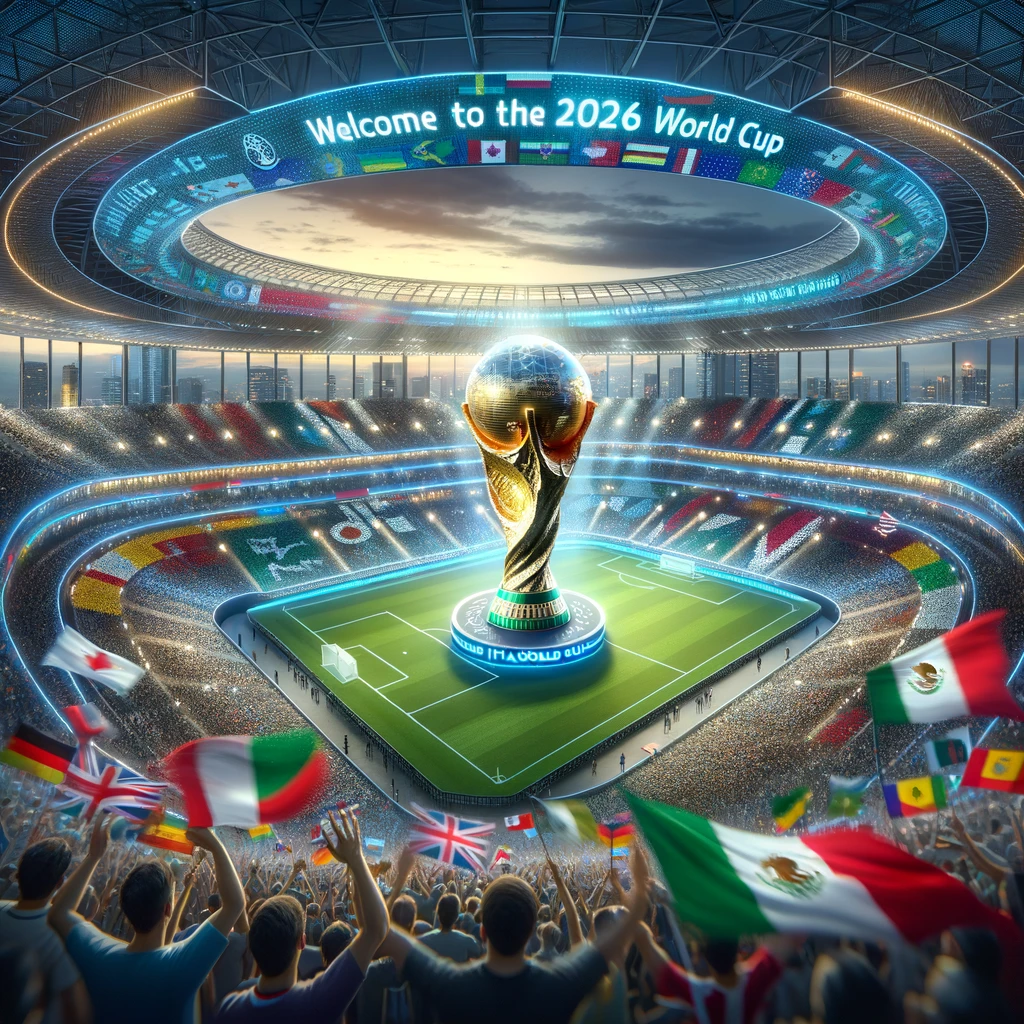
The 2026 FIFA World Cup represents a historic milestone as the first edition featuring 48 teams and three co-host nations: Canada, Mexico, and the United States. Running from June 11 to July 19, 2026, the tournament consists of 104 matches played across 16 iconic North American cities, concluding with the final at MetLife Stadium in East Rutherford, New Jersey.
A Historic Expansion: The 48-Team Format Explained
The 2026 FIFA World Cup is the largest in the history of the competition, marking a significant shift from the 32-team format that had been the standard since 1998. By increasing the field to 48 nations, FIFA has opened the door for more diverse representation from every global confederation. This expansion is not merely about volume; it changes the entire competitive architecture of the tournament.
Under the new format, the teams are divided into 12 groups of four. The top two teams from each group, along with the eight best third-placed teams, advance to a brand-new knockout stage: the Round of 32. This additional round means that the teams reaching the semi-finals will now play a total of eight matches instead of the traditional seven. The increase to 104 total matches—up from 64 in previous tournaments—provides a massive boost in content for fans but also requires a rigorous logistical framework to manage player recovery and travel.
The decision to move to 12 groups of four, rather than 16 groups of three (which was initially proposed), was made to preserve the drama of the final group-stage matchday. In groups of four, simultaneous kickoffs prevent teams from "colluding" on a specific result to advance, ensuring the sporting integrity of the group stage remains intact. This format also ensures that every qualified team is guaranteed at least three high-stakes matches on the world stage.
Host Nations and the 16 Official Host Cities
For the first time, the World Cup is being hosted by three different countries. While the 2002 tournament was split between South Korea and Japan, the 2026 iteration spans an entire continent. To manage the immense distances between venues, FIFA has organized the 16 host cities into three regional clusters: West, Central, and East. This clustering is designed to minimize travel for both teams and fans during the group stages.
Western Region
- Vancouver, Canada: BC Place
- Seattle, USA: Lumen Field
- San Francisco Bay Area, USA: Levi's Stadium
- Los Angeles, USA: SoFi Stadium
Central Region
- Guadalajara, Mexico: Estadio Akron
- Mexico City, Mexico: Estadio Azteca
- Monterrey, Mexico: Estadio BBVA
- Houston, USA: NRG Stadium
- Dallas, USA: AT&T Stadium
- Kansas City, USA: Arrowhead Stadium
Eastern Region
- Atlanta, USA: Mercedes-Benz Stadium
- Miami, USA: Hard Rock Stadium
- Toronto, Canada: BMO Field
- Boston, USA: Gillette Stadium
- Philadelphia, USA: Lincoln Financial Field
- New York/New Jersey, USA: MetLife Stadium
Each city brings a unique footballing culture to the tournament. Mexico City’s Estadio Azteca becomes the first stadium to host matches in three different World Cups (1970, 1986, and 2026), while Canadian cities like Toronto and Vancouver offer a modern, multicultural backdrop for the beautiful game. The U.S. venues consist primarily of massive NFL stadiums, many of which have undergone significant pitch conversions to accommodate natural grass and FIFA-standard dimensions.
Tournament Schedule and Key Milestones
The 2026 World Cup schedule is the longest in history, spanning 39 days. This extended duration is necessary to accommodate the increased number of matches while maintaining a minimum of three days of rest for players between games.
The tournament kicks off on June 11, 2026, at the legendary Estadio Azteca in Mexico City. As the host nation with the deepest World Cup history, Mexico was granted the honor of the opening match. On the same day, the opening matches for the Canadian and American legs of the tournament also take place in their respective territories, ensuring a continental celebration of the sport.
Following the group stage, which concludes in late June, the knockout rounds begin. The Round of 32 represents a high-stakes transition where the field is cut from 32 to 16. The quarter-finals and semi-finals are primarily concentrated in major U.S. hubs with high-capacity stadiums and major international airports. The tournament reaches its climax on July 19, 2026, at MetLife Stadium in New Jersey. The choice of the New York/New Jersey area for the final reflects the region's infrastructure, global accessibility, and status as a premiere international hub.
| Event | Date | Venue |
|---|---|---|
| Opening Match | June 11, 2026 | Estadio Azteca, Mexico City |
| Group Stage | June 11 – June 27, 2026 | Various (All 16 Cities) |
| Round of 32 | June 28 – July 3, 2026 | Various (USA/Mexico/Canada) |
| Round of 16 | July 4 – July 7, 2026 | Various (USA/Mexico/Canada) |
| Quarter-finals | July 9 – July 11, 2026 | Los Angeles, Kansas City, Miami, Boston |
| Semi-finals | July 14 – July 15, 2026 | Dallas, Atlanta |
| Third Place Play-off | July 18, 2026 | Hard Rock Stadium, Miami |
| World Cup Final | July 19, 2026 | MetLife Stadium, NJ |
Ticketing and Attendance: How to Secure Your Seats
Securing tickets for the 2026 FIFA World Cup requires early planning and adherence to FIFA’s official ticketing platform. FIFA typically releases tickets in several phases, beginning with a random selection draw (lottery) followed by "first-come, first-served" periods.
Phases of Ticket Sales
- Random Selection Draw: Fans apply for specific match tickets or team-specific series. This phase is not dependent on when you apply, as long as it is within the window.
- First-Come, First-Served: Once the lottery phase is complete, remaining tickets are sold to those who log in earliest.
- Last-Minute Sales: Occurring closer to the tournament, these allow fans to pick up remaining inventory or tickets returned by sponsors.
Fans should be wary of secondary market platforms. FIFA frequently implements digital ticketing systems that require a specific mobile app, and "paper" tickets are increasingly rare. Resale is officially permitted only through FIFA's authorized resale platform to prevent price gouging.
In addition to individual match tickets, "Supporter Tickets" are available for fans of specific qualifying nations, and "Venue Series" tickets allow locals to see all matches played in their specific city during the group stage. Prices vary significantly based on the category of the seat and the importance of the match, with Category 1 being the most expensive and Category 4 often reserved for residents of the host nations at a discounted rate.
Travel and Logistics Across Three Borders
The sheer scale of North America poses a logistical challenge unlike any previous World Cup. Fans planning to follow their teams must navigate three different legal jurisdictions and vast distances.
Visa and Entry Requirements
While the three nations are working to streamline travel for ticket holders, standard entry requirements still apply. Fans must check the visa policies for the U.S. Department of State, Government of Canada, and Mexico’s National Institute of Migration. A "Fan ID" or similar digital credential may be required to facilitate border crossings, but it does not always replace a formal visa for citizens of countries that do not have visa-waiver agreements.
Regional Travel
To reduce the environmental impact and fan fatigue, the tournament is designed around regional clusters. If a fan follows a team in Group A, that team will likely play its matches within the Western region (e.g., Vancouver, Seattle, and San Francisco). However, once the knockout rounds begin, cross-continental travel becomes inevitable.
Domestic air travel is the primary method of transit between Central and Eastern cities. While rail options exist in the "Northeast Corridor" of the U.S. (connecting Boston, New York, and Philadelphia), they are less prevalent in the West and South. Fans are encouraged to book travel and accommodation months in advance, as the demand for hotels in host cities often exceeds capacity during match weeks.
Venue Spotlight: Infrastructure and Technology
The 16 stadiums selected for 2026 are among the most technologically advanced in the world. Most were built for American Football but have been retrofitted for soccer. This involves removing lower-tier corner seating to fit the wider FIFA-regulated pitch and, in many cases, replacing artificial turf with advanced hybrid grass systems.
Estadio Azteca (Mexico City): Underwent significant renovations leading up to 2026 to modernize its lighting, media facilities, and VIP areas while preserving its historic soul. It remains the "Cathedral of Football" in North America.
SoFi Stadium (Los Angeles): Known for its "Infinity Screen" and indoor-outdoor design, SoFi represents the pinnacle of modern stadium architecture. Although its pitch width was a point of initial concern, engineering solutions ensured it met FIFA standards for 2026.
Mercedes-Benz Stadium (Atlanta): Featuring a retractable roof and a circular "halo" video board, this venue is a centerpiece for the Central/Eastern region and is known for its fan-friendly food pricing and accessibility.
BMO Field (Toronto): As one of the smaller venues, it underwent a capacity expansion specifically for this tournament to ensure it could accommodate at least 45,000 spectators as per FIFA requirements for group-stage matches.
Frequently Asked Questions
How many teams qualify from each continent?
The expansion to 48 teams has increased the slots for every confederation. Asia (AFC) now has 8 direct slots, Africa (CAF) has 9, North/Central America (CONCACAF) has 6 (including the three hosts), South America (CONMEBOL) has 6, Oceania (OFC) has 1 direct slot, and Europe (UEFA) has 16. Two remaining spots are decided via an intercontinental playoff tournament.
Which stadium will host the 2026 World Cup Final?
The final will be held at MetLife Stadium in East Rutherford, New Jersey, on July 19, 2026. The stadium, located just outside New York City, has a capacity of approximately 82,500 and is the home of the NFL's New York Giants and New York Jets.
Are there any new countries debuting in 2026?
With 48 teams, the 2026 World Cup is highly likely to feature several debutants, particularly from the AFC and CAF regions, which saw their slot allocations nearly double. The intercontinental playoff also provides a pathway for nations that have historically fallen just short of qualification.
Is there a "Fan ID" for the 2026 World Cup?
While not exactly like the "Hayya Card" used in Qatar or the Fan ID in Russia, the host nations have implemented digital solutions to link tickets with security clearances. Fans should monitor official FIFA announcements regarding the "FIFA+ App" which serves as the primary hub for digital tickets and entry requirements.
How can I volunteer for the 2026 World Cup?
FIFA typically opens its volunteer portal roughly one year before the tournament. Volunteers are needed for roles ranging from media operations and guest services to anti-doping and transport. Information can be found on the FIFA Volunteer Platform.
Next Steps for Fans and Travelers
If you plan to attend the 2026 FIFA World Cup, the most critical next action is to register for ticket alerts on the official FIFA website. Because the tournament is spread across three massive countries, your experience will depend heavily on the "region" you choose to follow.
Begin by auditing your travel documents; ensure your passport is valid for at least six months beyond July 2026. If you are traveling internationally, research the "ESTA" (for the U.S.), "eTA" (for Canada), and Mexican tourist requirements early. Given the peak summer season and the scale of the event, coordinating your lodging before the final "first-come, first-served" ticket phase will be essential to avoiding exorbitant surge pricing in the 16 host cities.