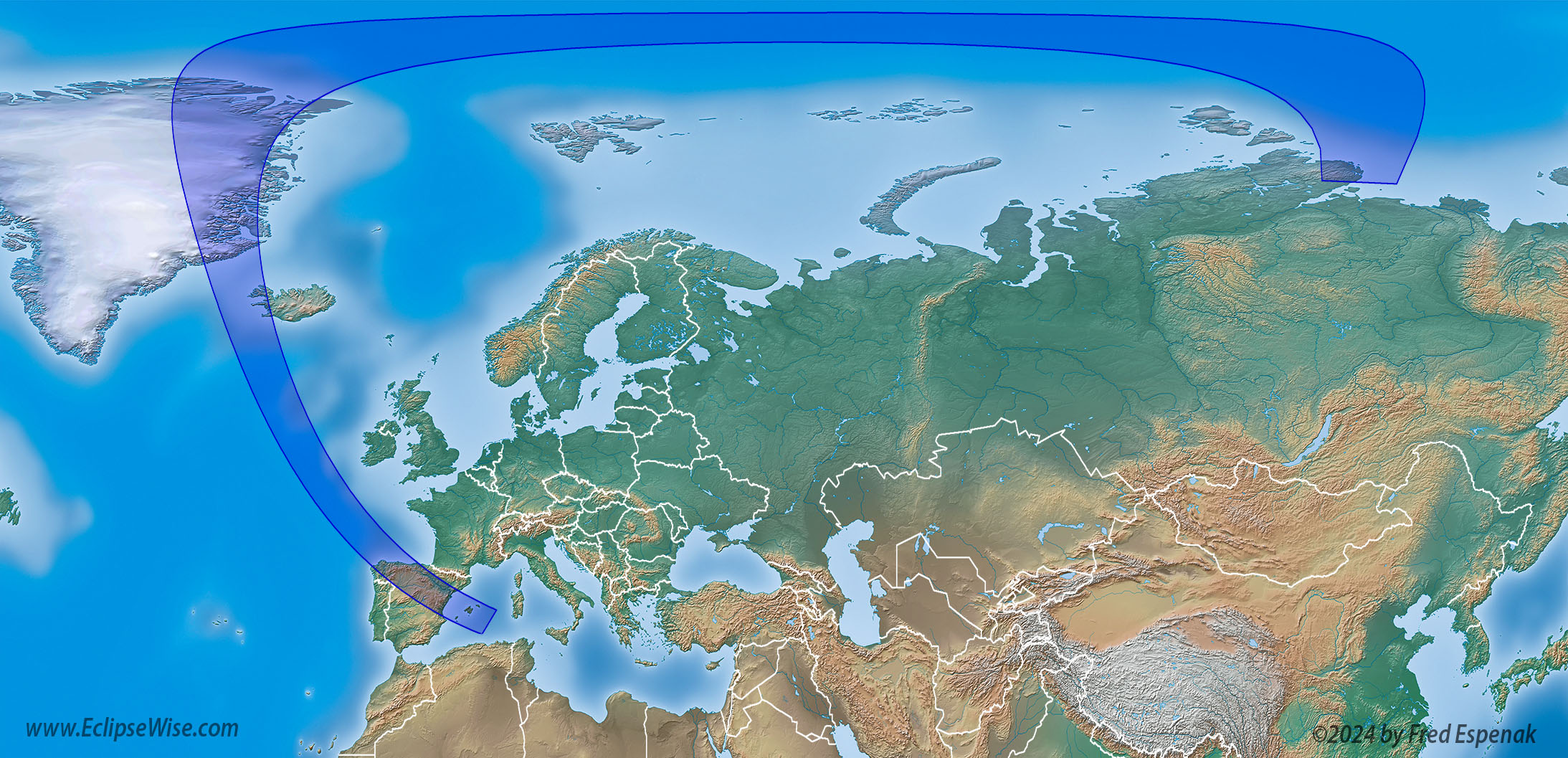
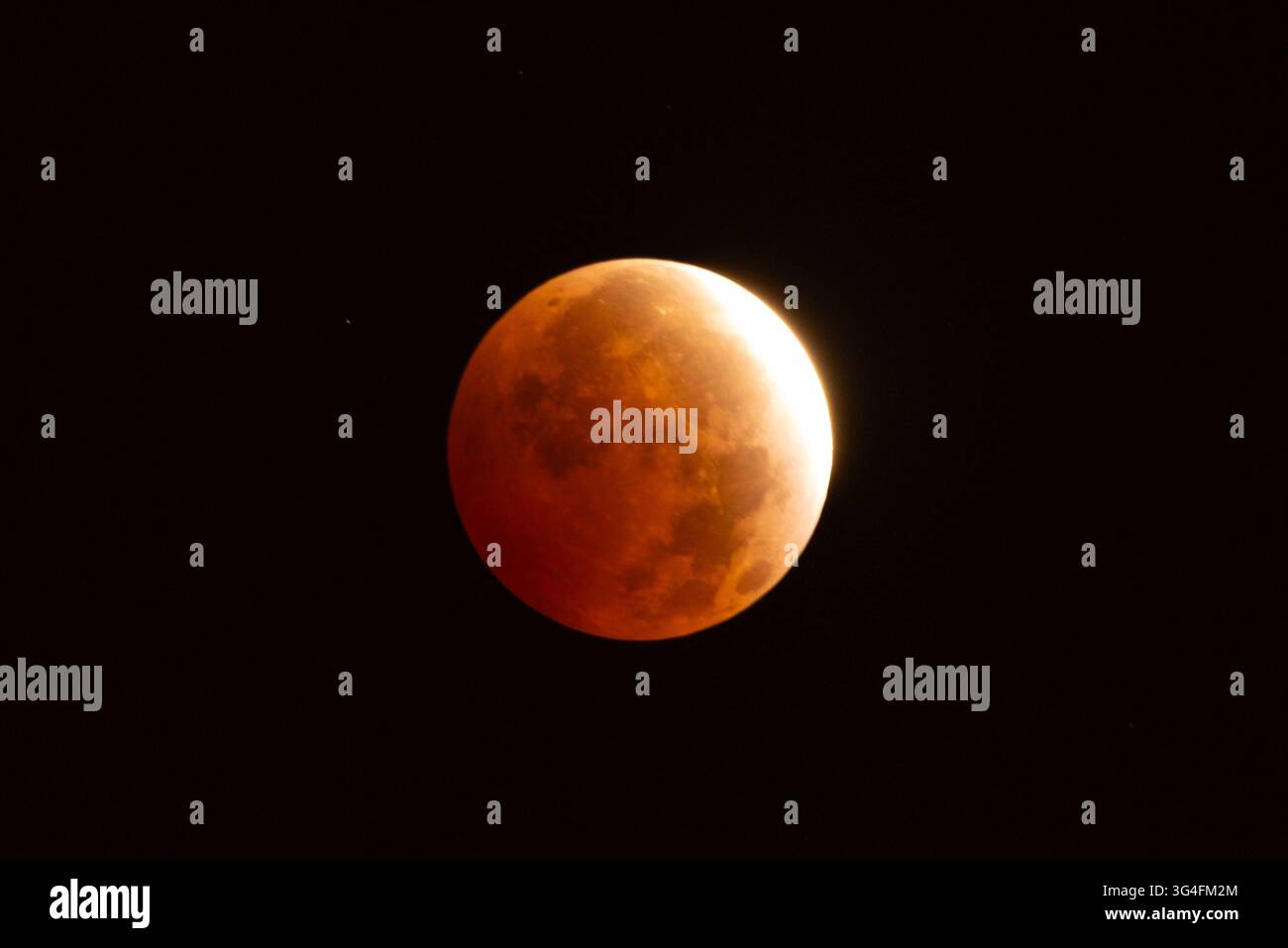
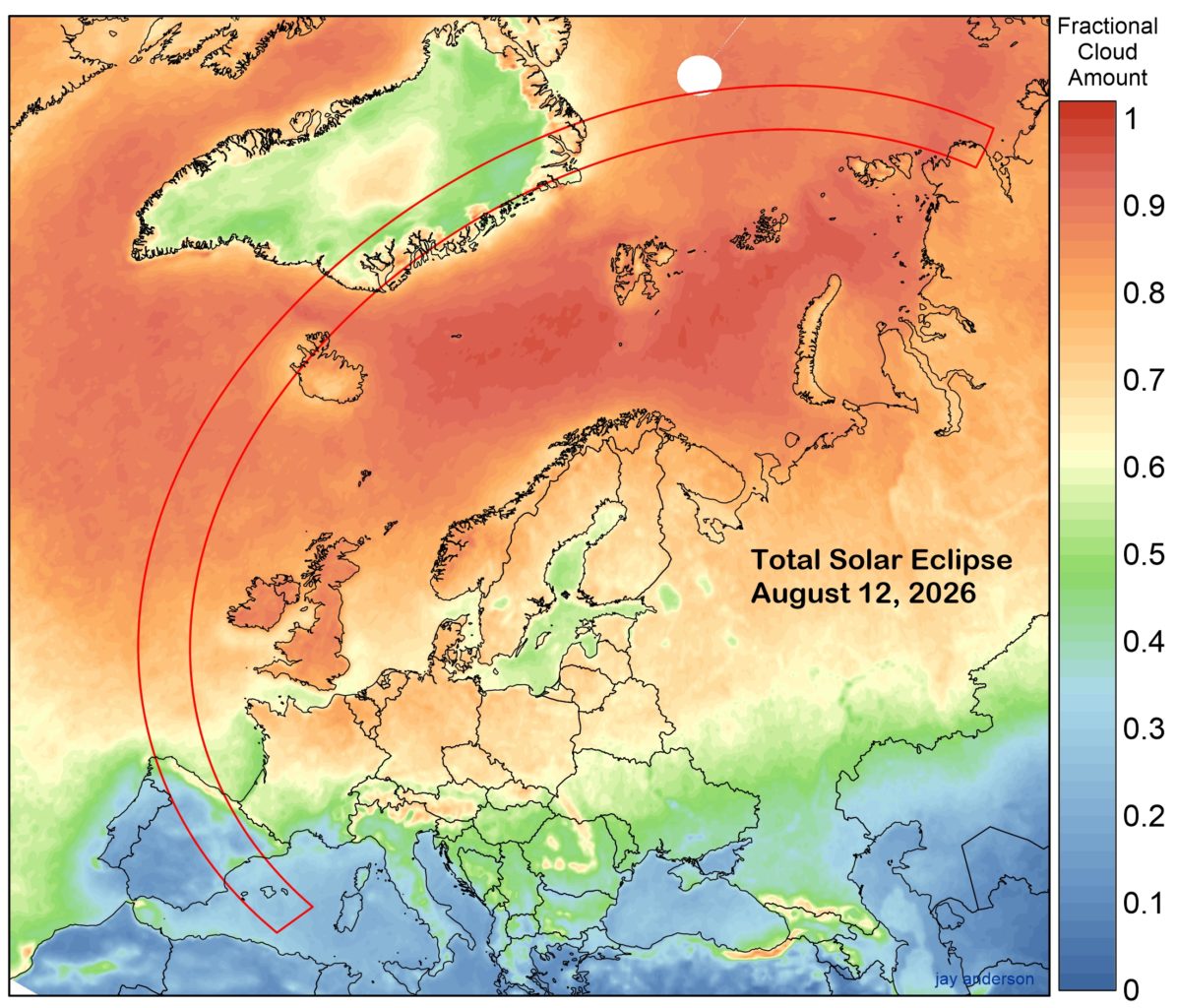
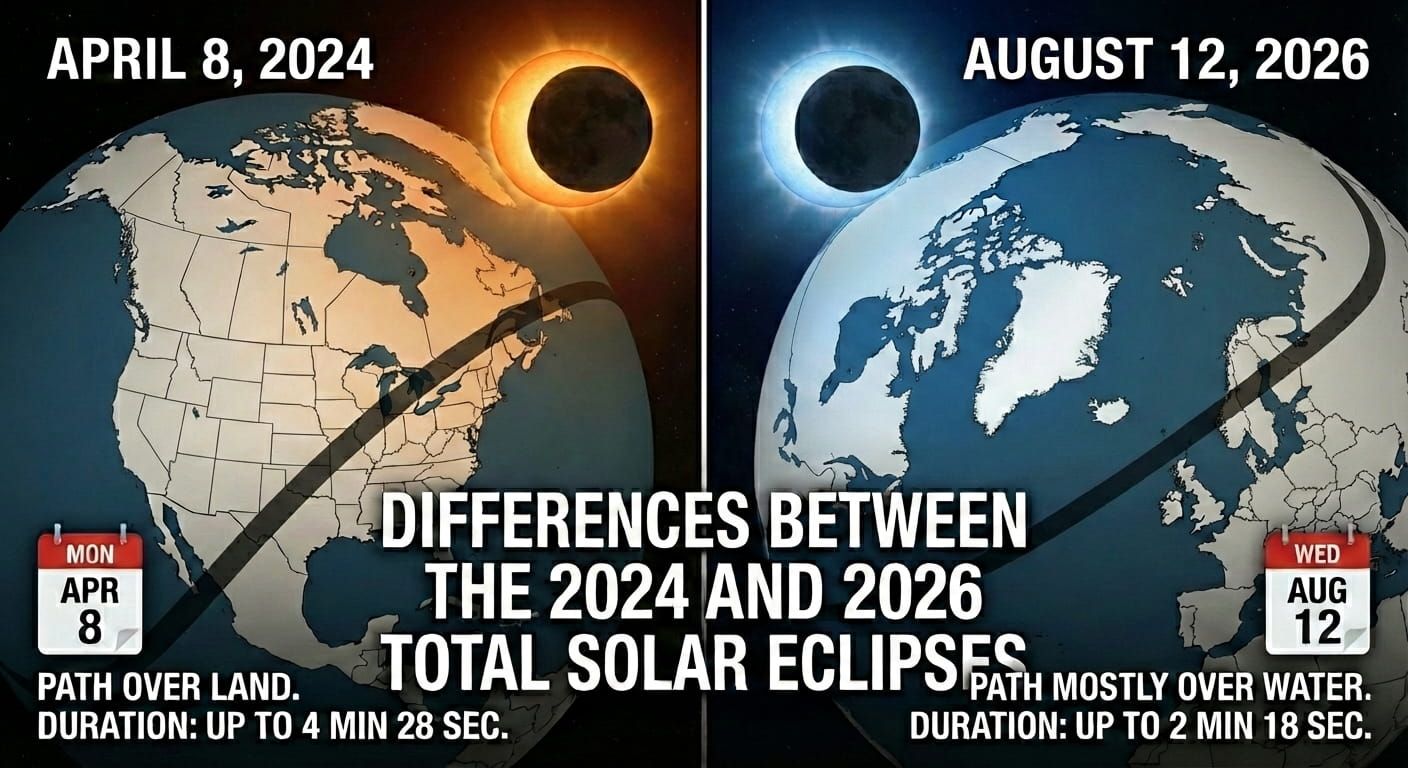
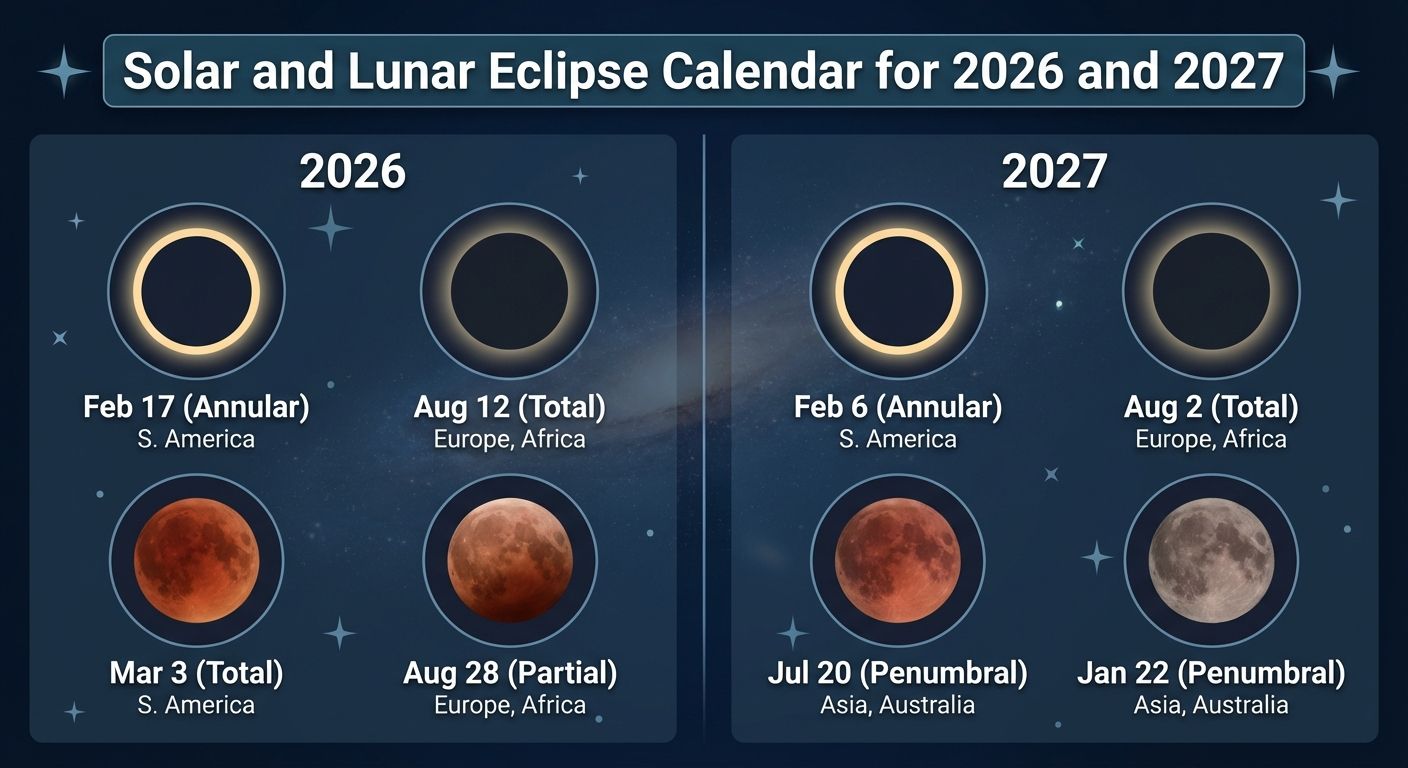
The total solar eclipse of August 12, 2026, is a landmark celestial event, marking the first total solar eclipse visible in continental Europe since 1999. The path of totality crosses the Arctic Ocean, Greenland, Iceland, the Atlantic Ocean, and northern Spain, offering a rare sunset totality for observers in the Mediterranean.
Scientific Significance of the 2026 Total Eclipse
The August 12, 2026, eclipse belongs to Saros series 126, a cycle that has been producing solar eclipses for centuries. This particular event is scientifically significant due to its unique trajectory over high-latitude regions and its conclusion over the Iberian Peninsula. For solar physicists and astronomers, the 2026 eclipse provides a critical opportunity to study the solar corona—the sun's outer atmosphere—against different atmospheric conditions, from the crisp, thin air of Greenland to the denser, warmer horizons of Spain.
Unlike the "Great American Eclipses" of 2017 and 2024, the 2026 event is characterized by a "low-altitude totality" in its most populated viewing areas. In northern Spain, the sun will be positioned between 2 and 10 degrees above the horizon during totality. This creates a spectacular visual phenomenon where the eclipsed sun, surrounded by the shimmering corona, sits just above the landscape, potentially framed by mountains or the sea. This low angle also increases the path of the lunar shadow through the Earth's atmosphere, which can enhance the vividness of the "sunset colors" visible 360 degrees around the observer.
Furthermore, this eclipse serves as the opening act for a "Golden Age" of eclipses in Spain, which will also host a total eclipse in 2027 and an annular eclipse in 2028. This concentration of celestial events in a single geographic region is statistically extraordinary and has made Spain the global hub for eclipse chasers and astronomical tourism in 2026.
Detailed Path of Totality and Viewing Locations
The lunar shadow first touches Earth at sunrise in northern Siberia, then moves across the North Pole toward Greenland. As it progresses, the path widens and the duration of totality increases, peaking in the Denmark Strait between Greenland and Iceland.
Greenland and the Arctic
Viewing from Greenland offers the most rugged and remote experience. The path covers the eastern coast, including regions like Ittoqqortoormiit. While the sun is relatively low in the sky here, the combination of glacial landscapes and the "black sun" provides a peerless photographic opportunity. However, logistics in this region are complex, requiring specialized travel arrangements and high-readiness for extreme weather.
Iceland
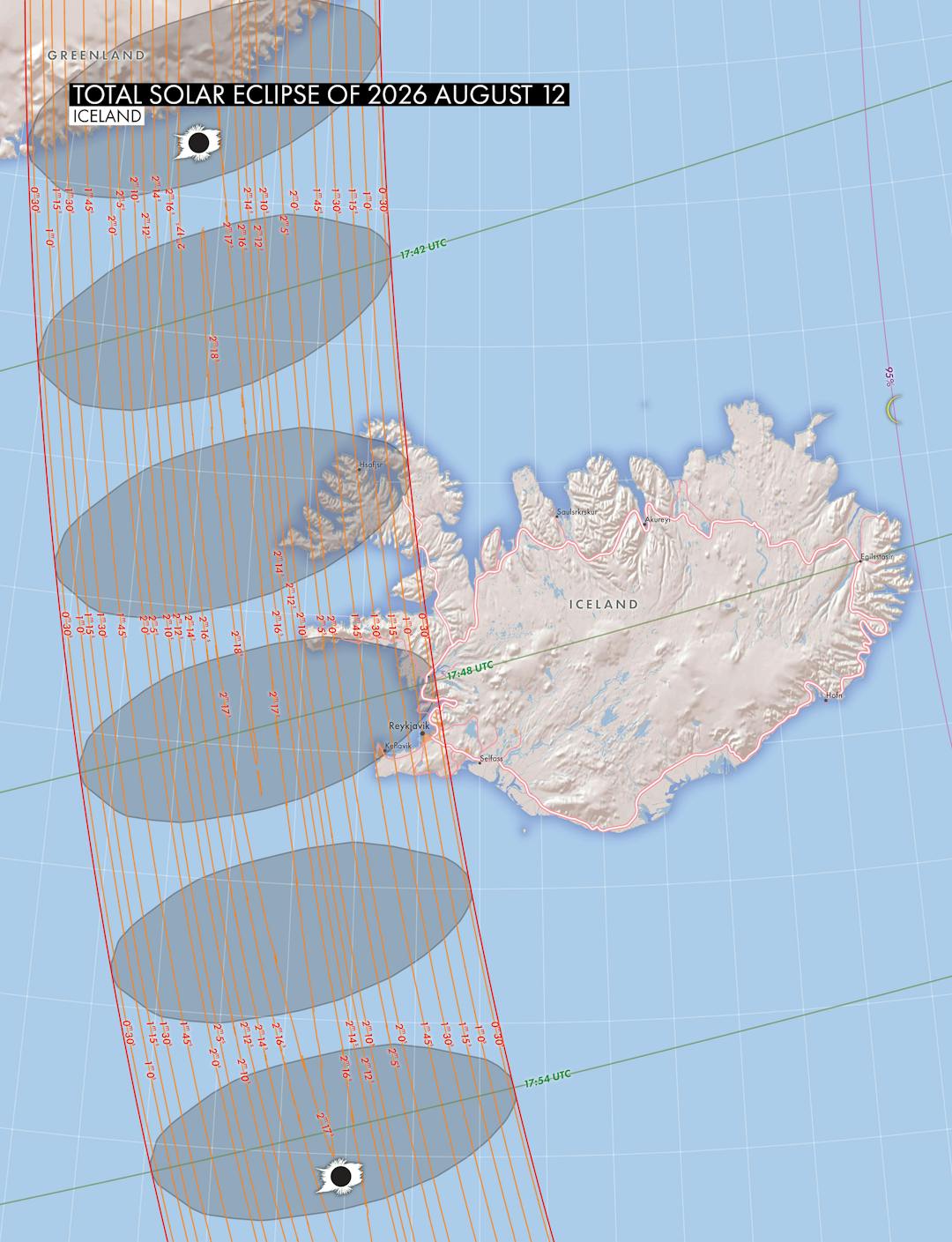
Iceland is one of the most accessible locations for the 2026 eclipse. The path of totality grazes the western part of the island, including the capital, Reykjavik. While the center line remains offshore in the Denmark Strait, observers in the Snæfellsnes Peninsula will experience over two minutes of totality. The primary challenge in Iceland is the maritime climate; cloud cover is frequent in August, so mobile observers who can drive to clear patches based on short-term forecasts have the best chance of success.
Northern Spain and the Mediterranean
Spain is the primary destination for the majority of eclipse tourists. The path enters the Spanish mainland through Galicia and Asturias, moving southeast across Castilla y León, Cantabria, País Vasco, La Rioja, Navarra, Aragón, and finally reaching the Mediterranean coast at Valencia and the Balearic Islands.
Because the eclipse occurs late in the evening (local time), the sun will be very low. For those on the east coast, such as in Palma de Mallorca, totality occurs just minutes before sunset. This "sunset totality" is rare and visually distinct from midday eclipses, as the moon’s shadow appears as a massive, dark column descending from the sky toward the horizon.
| Location | Totality Start (Local Time) | Duration | Sun Altitude | Weather Prospect |
|---|---|---|---|---|
| Reykjavik, Iceland | 17:48 | 1m 02s | 24° | Moderate/Low |
| Gijón, Spain | 20:27 | 1m 45s | 10° | Moderate/High |
| Burgos, Spain | 20:28 | 1m 44s | 7° | High |
| Zaragoza, Spain | 20:28 | 1m 25s | 4° | High |
| Palma, Mallorca | 20:31 | 1m 36s | 2° | Very High |
Weather Prospects and Climate Considerations
When choosing a viewing site for the 2026 eclipse, weather is the single most important factor. August in northern Spain typically offers the most stable conditions. The interior plains of Castilla y León and the Ebro Valley (near Zaragoza) have historically low cloud cover in mid-August. The Mediterranean coast is also generally clear, though coastal haze can occasionally obscure a sun sitting very low on the horizon.
In contrast, the Atlantic coast (Galicia and Asturias) is subject to the "Cantabrian fringe" weather patterns, where moist air from the Bay of Biscay can create persistent cloud decks or fog, even if the interior is clear. For those viewing in Iceland, the weather is famously unpredictable. A clear morning in Reykjavik does not guarantee a clear afternoon, making the use of high-resolution satellite imagery and local meteorological services like the Icelandic Meteorological Office essential on eclipse day.
For the Arctic and Greenland, the air is often dry and clear, but the low sun angle means that even a small, distant cloud on the horizon can block the view of the sun during the critical minutes of totality.
Observation Requirements and Eye Safety
Viewing a solar eclipse requires strict adherence to safety protocols to prevent permanent eye damage. The only time it is safe to look at the sun without protection is during the brief period of totality—when the moon completely covers the sun's bright face. At all other times, including the partial phases leading up to and following totality, you must use specialized solar filters.
- ISO 12312-2 Compliance: Ensure your eclipse glasses or handheld solar viewers are certified to the ISO 12312-2 international safety standard. Do not use regular sunglasses, smoked glass, or unverified filters, as they do not block the invisible infrared and ultraviolet radiation that causes retinal burns.
- Telescope and Camera Filters: If using binoculars, a telescope, or a camera, the solar filter must be attached to the front (the objective lens) of the device. Never look through an unfiltered optical device using eclipse glasses; the concentrated light will melt the glasses and damage your eyes instantly.
- Low-Altitude Hazards: Because the 2026 eclipse occurs low on the horizon in Spain, there may be a temptation to look at it without glasses as the sun appears "dimmer" due to atmospheric extinction. This is dangerous. Even if the sun looks orange or red, the harmful rays are still present until the sun is 100% obscured.
- Shadow Bands and Baily's Beads: In the seconds before totality, look for "shadow bands"—faint, shimmering ripples of light on the ground caused by atmospheric turbulence. Just as totality begins and ends, you will see "Baily's Beads," which are points of sunlight peeking through lunar valleys.
Logistics, Travel, and Accommodation Tips
Given that this is the first total eclipse in continental Europe in over 25 years, demand for accommodation in the path of totality is extreme. Major cities like Burgos, León, and Zaragoza are primary hubs.
- Transportation: In Spain, the high-speed rail (AVE) network is an excellent way to move between cities, but tickets for the days surrounding August 12 should be booked as early as possible. If renting a car, ensure you have a designated viewing spot, as road congestion is expected to be severe on the afternoon of the eclipse.
- Site Selection: For the 2026 event, your viewing site must have an unobstructed western horizon. Because the sun is so low (especially in eastern Spain), a building, a hill, or even a line of trees could block your view of totality. Use apps like The Photographer's Ephemeris or Stellarium to simulate the sun's position at your exact coordinates.
- Duration vs. Location: While being on the "center line" provides the longest duration of totality, the difference of 20 or 30 seconds is often less important than having clear skies. If weather forecasts 24 hours out suggest clouds on the center line, be prepared to move toward the edges of the path where clear skies are predicted.
Photography and Technical Setup
Capturing a low-altitude eclipse presents unique challenges and opportunities. The proximity of the sun to the horizon allows for "landscape astrophotography," where you can include foreground elements like cathedrals, lighthouses, or mountain peaks in the same frame as the eclipsed sun.
- Focal Length: A 200mm to 400mm lens (full-frame equivalent) is often the "sweet spot" for 2026. This is long enough to show the solar corona in detail but short enough to include some horizon or landscape features.
- Solar Filters: You must use a "white light" solar filter (solar film or glass) for the partial phases. This must be removed the moment totality begins and replaced the second it ends.
- Atmospheric Refraction: Because the sun is low, atmospheric refraction will "flatten" the sun slightly into an oval shape. Furthermore, the thick atmosphere will dim the light more than a midday eclipse, so be prepared to use slightly longer exposure times or higher ISO settings than you would for an eclipse high in the sky.
- Bracketing: The brightness of the solar corona varies wildly from the inner edge to the outer streamers. Set your camera to "bracket" exposures (e.g., 5 or 7 shots at different shutter speeds) to ensure you capture the full dynamic range of the event.
FAQ: Common Questions About the August 2026 Eclipse
Where is the best place to see the 2026 eclipse?
The best location depends on your priority. For the highest probability of clear skies, the interior plains of northern Spain (near Burgos or Palencia) are statistically superior. For the most dramatic scenery and longest duration, the western fjords of Iceland or the Snæfellsnes Peninsula are ideal, provided the weather cooperates.
How long will totality last in 2026?
The maximum duration of totality is 2 minutes and 18 seconds, occurring in the Denmark Strait off the coast of Iceland. In the most popular Spanish viewing areas, totality will range from approximately 1 minute and 30 seconds to 1 minute and 50 seconds.
Is it safe to drive during the eclipse?
Driving during the partial phases is safe, but you should not look at the sun while driving. As totality approaches, the sky will darken rapidly, and drivers may become distracted or pull over unexpectedly. It is highly recommended to be at your stationary viewing location at least two hours before totality to avoid traffic gridlock.
Will the 2026 eclipse be visible in the UK or USA?
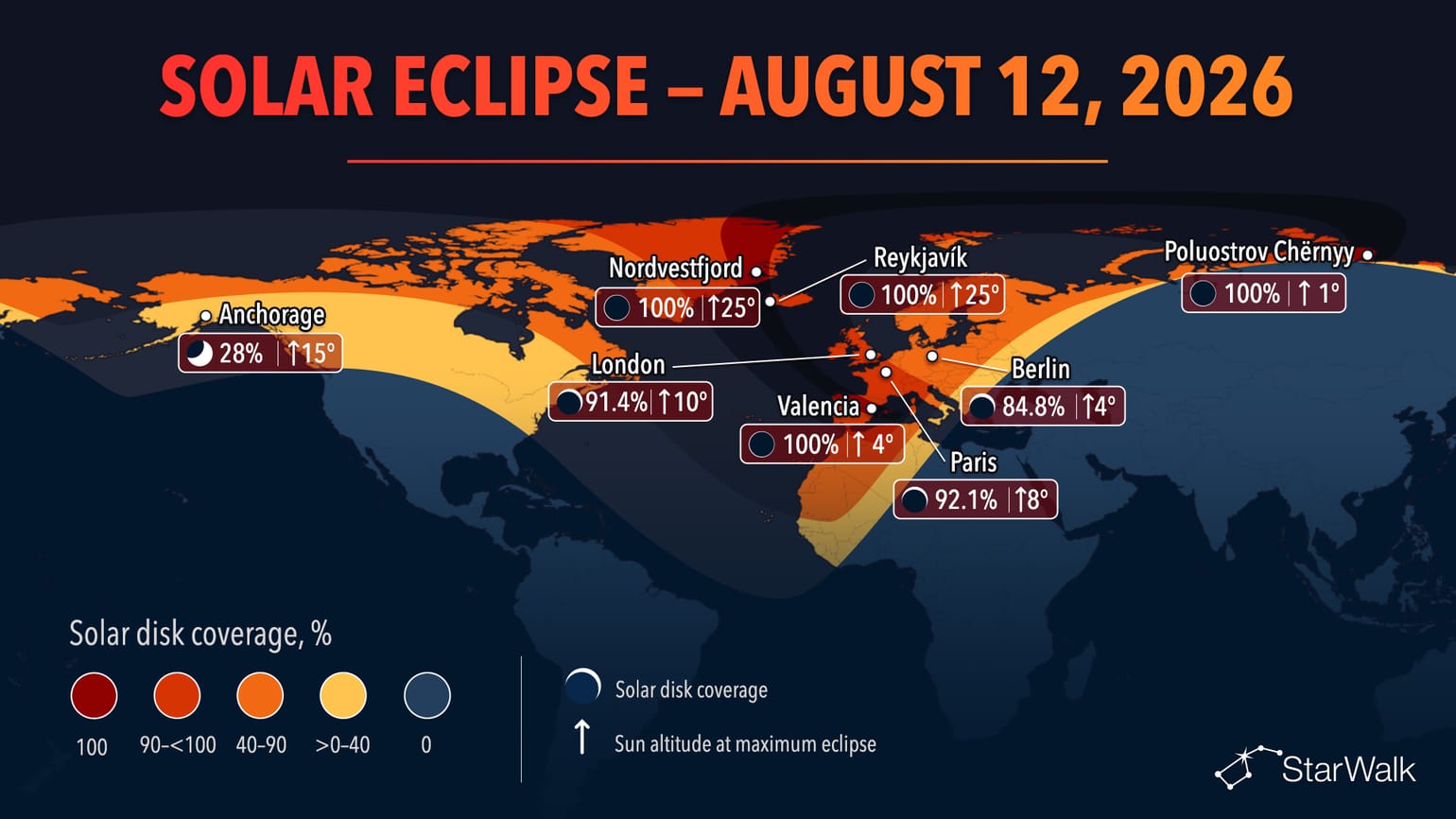
The United States will not see any part of this eclipse. The United Kingdom and Ireland will experience a significant partial eclipse. In London, approximately 90% of the sun will be covered; in Scotland and Northern Ireland, coverage will exceed 95%. While the sky will grow noticeably dim and the temperature may drop, the sun will never be fully covered, and eclipse glasses must be worn at all times.
What happens if it is cloudy?
If it is cloudy, you will still experience the "sudden night" effect as the lunar shadow passes over. The sky will turn a deep, eerie indigo, and the temperature will drop. However, you will not see the solar corona or the "diamond ring" effect. This is why mobility and monitoring weather apps (like Windy or local national weather services) are crucial for eclipse chasers.
Planning Your Observation Strategy
To maximize your experience of the 2026 total solar eclipse, finalize your location choice based on the 48-hour weather forecast. Ensure you have a "Plan B" location at least 100-200 kilometers away in case a localized weather front moves in. If you are in Spain, prioritize finding a high vantage point or a flat plain with a clear view of the west-northwest horizon.
Once situated, focus on the sensory experience. Beyond the visual spectacle, listen for the silence of birds, the sudden drop in wind, and the drop in temperature. The 2026 eclipse is a rare alignment of celestial mechanics and terrestrial beauty—proper preparation ensures you are ready when the shadow arrives.