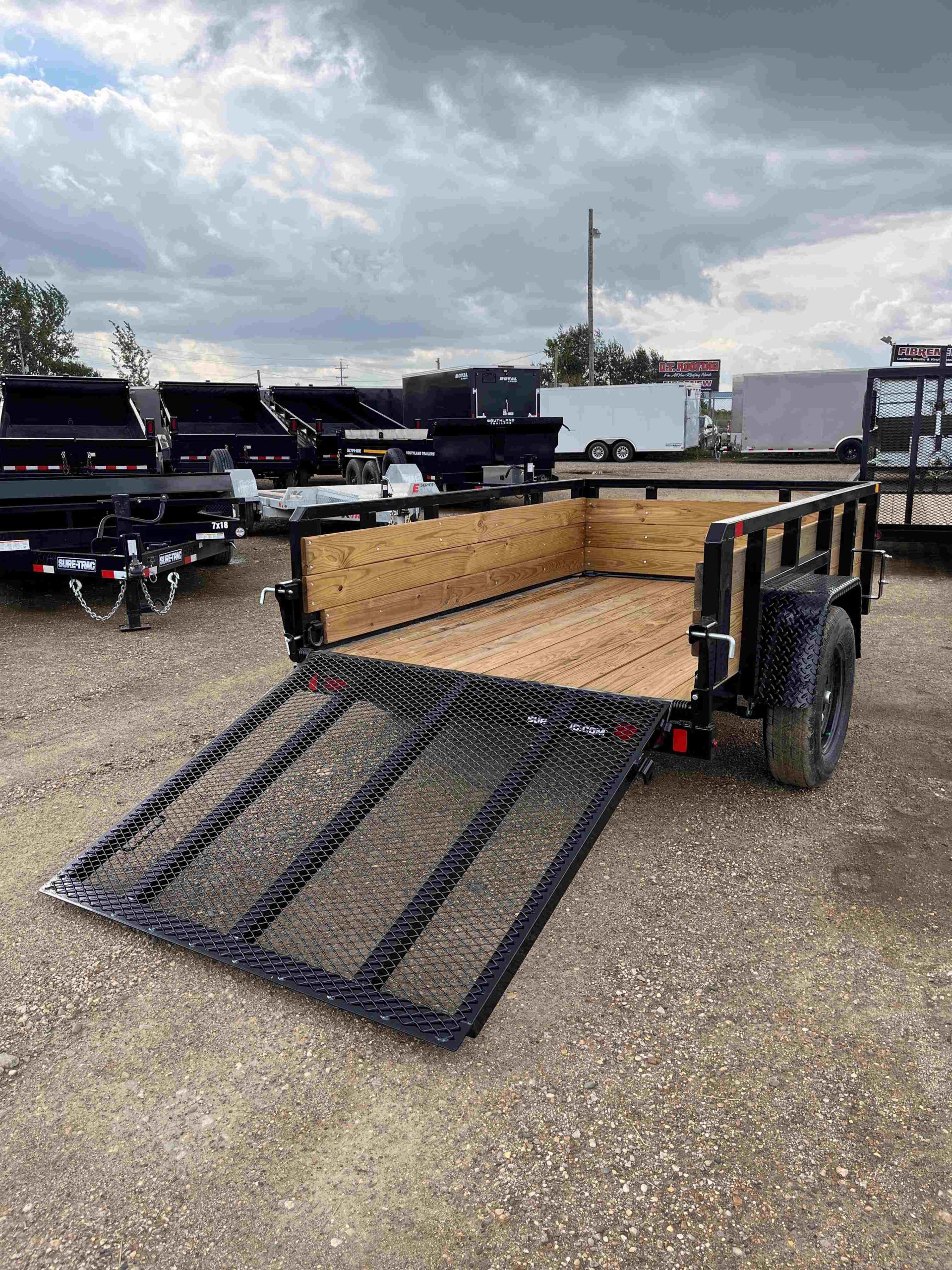
In 2026, the 2025 model year trailers—ranging from recreational vehicles (RVs) and fifth wheels to heavy-duty utility and cargo haulers—represent a significant secondary market and "new-old stock" opportunity. These units introduced standardized lithium power systems, smart-monitoring integration, and lightweight composite materials that remain the industry benchmark for modern towing efficiency and durability.
The Landscape of 2025 Trailer Models in 2026
As we move through 2026, the 2025 trailer lineup has transitioned from being the latest innovation to the primary focus of savvy buyers looking for modern features without the 2026 "current year" price premium. The 2025 manufacturing cycle was defined by a pivot toward "off-grid readiness" and a drastic reduction in dry weight across all categories. Whether you are evaluating a pre-owned travel trailer or a commercial-grade utility unit, understanding the specific engineering shifts of the 2025 models is essential for making an informed investment.
For recreational users, the 2025 models solidified the move away from traditional wood-frame construction in favor of full-aluminum skeletal structures and Azdel composite wall panels. In the commercial sector, 2025 utility trailers saw a widespread adoption of powder-coated finishes over standard paint, significantly increasing the lifespan of frames subjected to harsh environments.
Key Technical Advancements in 2025 Manufacturing
The 2025 production year was not merely an incremental update; it served as a technical milestone for several structural and electrical standards. Manufacturers prioritized three main pillars: weight-to-strength ratios, energy independence, and aerodynamic efficiency.
Lightweight Composite Materials
A hallmark of the 2025 trailer generation is the reduced reliance on luan (wood) backing in laminated walls. Instead, many manufacturers standardized Azdel Onboard or similar thermoplastic composites. These materials are 50% lighter than wood, impervious to water damage, and provide superior R-value insulation. For the 2026 buyer, this means a 2025 unit is much less likely to suffer from delamination or hidden mold issues compared to older models.
Integrated Solar and Lithium Systems
By 2025, "solar prep" was largely replaced by "solar standard." Most mid-to-high-tier 2025 trailers came equipped with 200W to 800W of roof-mounted glass panels and dedicated lithium-ion (LiFePO4) battery banks. These systems were integrated into the trailer's central nervous system, allowing users to monitor state-of-charge and power consumption via smartphone apps—a feature that has become a requirement for modern boondocking.
Advanced Braking and Suspension
In the utility and cargo segments, 2025 saw the proliferation of self-adjusting electric brakes and torsion axles as standard equipment. These components reduce the maintenance burden for owners. Torsion axles, specifically, use rubber cords inside the axle tube to dampen road shock, providing a smoother ride for sensitive cargo or livestock compared to traditional leaf-spring suspensions.
Comparative Specifications of 2025 Trailer Classes
When selecting a 2025 model in the current 2026 market, it is vital to compare the physical and technical capacities across different categories. The following table highlights the standard averages for the most popular 2025 configurations.
| Trailer Category | Average GVWR (lbs) | Frame Construction | Primary Use Case | Key 2025 Feature |
|---|---|---|---|---|
| Travel Trailer | 3,500 – 9,000 | Aluminum / Azdel | Family Camping | Standard Lithium Batteries |
| Fifth Wheel | 12,000 – 18,000 | I-Beam Steel | Full-time Living | Auto-Leveling Systems |
| Cargo Trailer | 2,990 – 10,000 | Box Tube Steel | Equipment Transport | Screwless Exterior Panels |
| Dump Trailer | 7,000 – 14,000 | Channel Steel | Construction/Debris | Telescopic Hydraulic Rams |
| Car Hauler | 7,000 – 12,000 | C-Channel Steel | Vehicle Transport | Removable Fenders |
Essential Towing Requirements and Safety Standards
Operating a 2025 trailer in 2026 requires strict adherence to weight ratings and safety protocols established by the National Highway Traffic Safety Administration (NHTSA). The sophistication of 2025 units—particularly their electronic safety features—requires specific hardware on the tow vehicle.
Understanding Weight Distribution
For 2025 travel trailers exceeding 5,000 lbs, a Weight Distribution Hitch (WDH) is not just a recommendation; it is often a requirement for maintaining vehicle stability. These hitches use spring bars to distribute the tongue weight across all axles of the tow vehicle and trailer. In 2025, many manufacturers integrated "Sway Control" features directly into the trailer's braking system (such as the Lippert ABS system), which works in tandem with the tow vehicle to prevent "fishtailing" in high winds.
Electronic Brake Controllers
Most 2025 trailers utilize electric-over-hydraulic or standard electric brakes. To operate these, your 2026 tow vehicle must be equipped with a proportional brake controller. Unlike older "timed" controllers, proportional units use accelerometers to apply trailer braking force that matches the tow vehicle’s deceleration rate, ensuring smooth and safe stops.
Market Value and Depreciation: Buying 2025 Models in 2026
In 2026, the 2025 model year represents the "sweet spot" of the depreciation curve. Typically, a new trailer loses 15% to 25% of its value in the first year. By purchasing a 2025 model now, you are bypassing the steepest initial drop in value while still acquiring a unit that is under—or has just exited—its manufacturer warranty period.
Inspection Checklist for Pre-owned 2025 Units
When evaluating a used 2025 unit, focus on the following high-value areas:
- Roof Seals: Even on a one-year-old unit, check the Dicor self-leveling sealant around vents and sky-lights. Sun exposure in 2025 could have already caused minor cracking.
- Tire Date Codes: Ensure the tires are original and do not show signs of "lot rot" or sidewall cracking, which can occur if the trailer sat stationary at a dealership for all of 2025.
- Battery Health: If the unit has a lithium system, check the cycle count if the BMS (Battery Management System) allows app access. Deep discharges can damage even modern batteries.
- Frame Integrity: Inspect the 2025 powder-coated frames for any signs of premature chipping or rust, especially if the trailer was used in coastal or snow-belt regions.
Common Maintenance and Troubleshooting for 2025 Units
The 2025 generation of trailers introduced more complex "smart" systems, which require a different troubleshooting approach than older, purely analog models.
Managing the Multiplex System
Many 2025 RVs use multiplex wiring, where a single control panel or app operates lights, slides, and awnings. If a component fails to respond, the issue is often a software "glitch" or a blown 12V fuse in the distribution center, rather than a broken switch. Resetting the main 12V disconnect for 30 seconds can often resolve communication errors between the control tablet and the hardware.
Wheel Bearing Lubrication
Despite advancements, the 2025 utility and RV axles still require periodic lubrication. Most 2025 Dexter or Lippert axles feature "EZ-Lube" hubs. In 2026, any 2025 trailer that has traveled more than 3,000 miles should have its bearings inspected and greased to prevent spindle damage.
Maintaining Slide-out Seals
For trailers with slide-outs, the rubber "wiper seals" are the primary defense against water intrusion. In 2026, these seals on a 2025 model should be treated with a UV-protectant spray to keep the rubber pliable. If the seals become brittle, they can "smile" or fold inward, allowing rain to bypass the gutter system.
FAQ: 2025 Model Year Trailers
Is a 2025 trailer still covered under warranty in 2026?
Most 2025 trailers come with a one-year comprehensive warranty and a two-to-three-year structural warranty. Depending on the original purchase date in 2025, the comprehensive coverage may be nearing its end, but the structural warranty (covering the frame and walls) is likely still active. Always verify if the warranty is transferable to a second owner, as some manufacturers restrict coverage to the original purchaser.
Can I tow a 2025 travel trailer with an electric vehicle (EV)?
Yes, many 2025 trailers were designed with aerodynamic front caps specifically to reduce drag for EVs and fuel-efficient trucks. However, you must be aware of the "range hit." In 2026, testing shows that towing a 2025 model at 65 mph typically reduces an EV's range by 40-50% due to wind resistance and the weight of the battery-heavy 2025 chassis.
What is the difference between "Solar Prep" and "Solar Installed" on 2025 models?
"Solar Prep" means the trailer has internal wiring and a port on the roof, but no panels or controllers are included. "Solar Installed" means the 2025 unit left the factory with active panels and a charge controller. In 2026, many dealers are retrofitting 2025 "Prep" units with modern 2026 panels to move inventory, which can be a value-add for buyers.
Are 2025 trailers better than the 2026 models?
Not necessarily "better," but often more cost-effective. The 2026 models usually feature updated interior aesthetics and perhaps refined software for the smart systems. However, the core mechanical components—axles, frames, and appliances—on 2025 models are often identical to 2026 versions, making the 2025 models a superior value in the current market.
What are the weight limits for 2025 single-axle utility trailers?
Most 2025 single-axle utility trailers are rated for a GVWR of 2,990 lbs. This specific number is used because trailers with a GVWR of 3,000 lbs or more often require independent braking systems and annual inspections in many jurisdictions. Always check the VIN plate on the driver's side of the tongue for the exact rating.
Next Steps for Evaluating a 2025 Trailer
If you are considering a 2025 model in 2026, your first action should be to obtain the specific brochure or "build sheet" for that unit's VIN. Verify the tank capacities (Fresh/Grey/Black water) and the cargo carrying capacity (CCC). Before finalizing a purchase, perform a "shore power" test to ensure the 2025-era converter/charger is correctly managing the lithium or AGM batteries. For commercial utility trailers, ensure the floorboards are treated and that the 2025 lighting harness is free of corrosion.