Looking back from the vantage point of 2026, 2025 stands as a transformative year for science fiction, defined by the long-awaited return of high-concept auteur cinema, the maturation of "Solarpunk" in literature, and a shift toward philosophical realism in interactive media. Major releases like Mickey 17 and Tron: Ares redefined visual standards, while streaming services solidified hard sci-fi as a dominant television genre.
The Cinematic Renaissance: Auteur Vision and Legacy Sequels
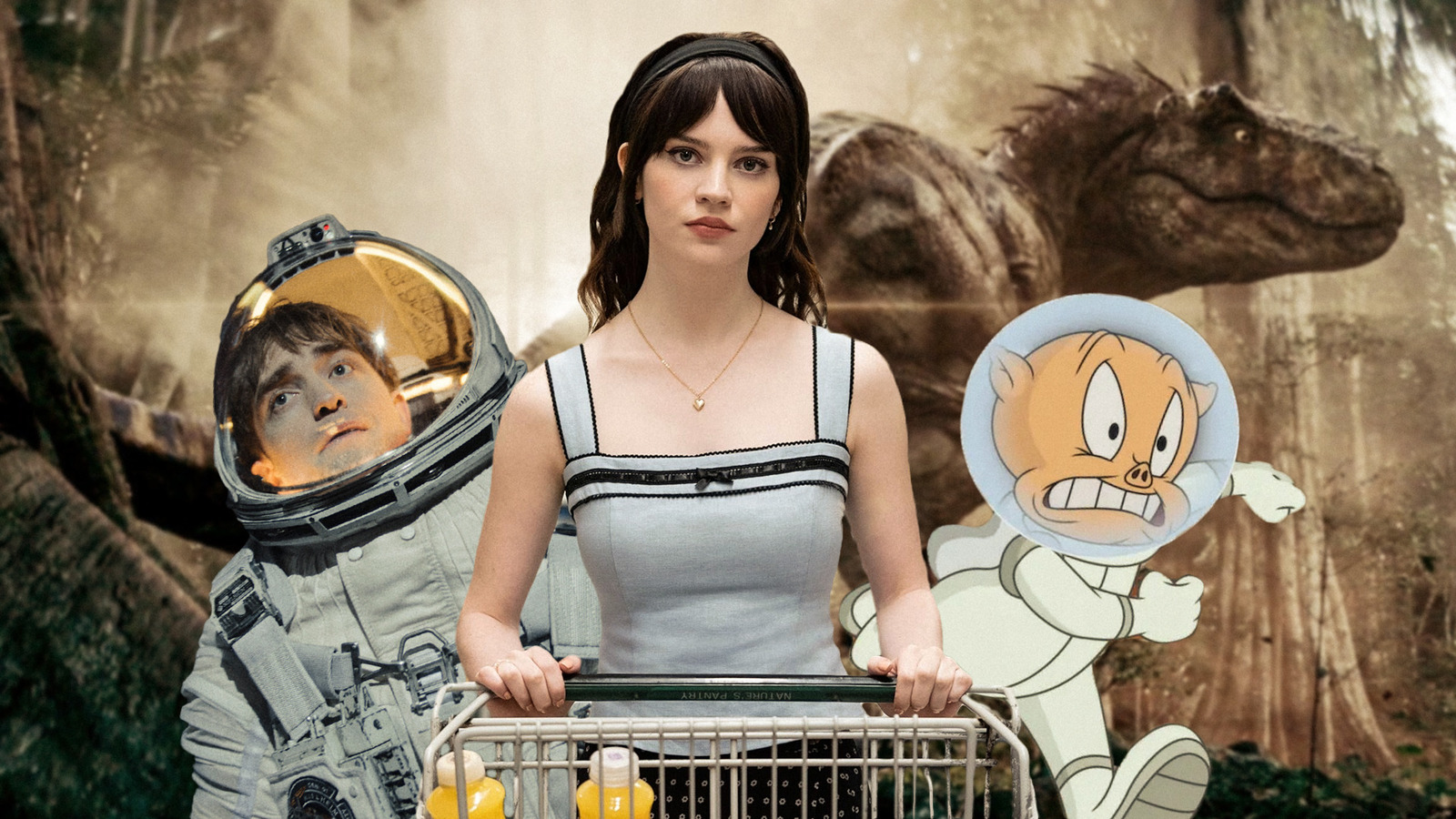
The landscape of 2025 sci-fi cinema was characterized by a move away from generic superhero tropes toward distinct, director-driven narratives. This shift was most evident in the release of Bong Joon-ho’s Mickey 17. Originally delayed from 2024, the film finally reached audiences in early 2025, bringing with it a biting, cynical look at disposable labor through the lens of human cloning. Robert Pattinson’s dual performance as Mickey 17 and Mickey 18 became a cultural touchstone, prompting deep societal discussions about identity and corporate ethics that continue to resonate here in 2026.
Beyond the auteur space, 2025 saw the revival of legacy franchises that prioritized world-building over simple nostalgia. Tron: Ares represented a significant technical leap, utilizing advanced "Volume" technology and real-time ray-tracing to depict a digital world that felt more tactile than its predecessors. By bringing the "Program" into the physical world, the film flipped the script on the franchise's traditional "user-in-the-machine" dynamic, exploring the bio-technical implications of digital life.
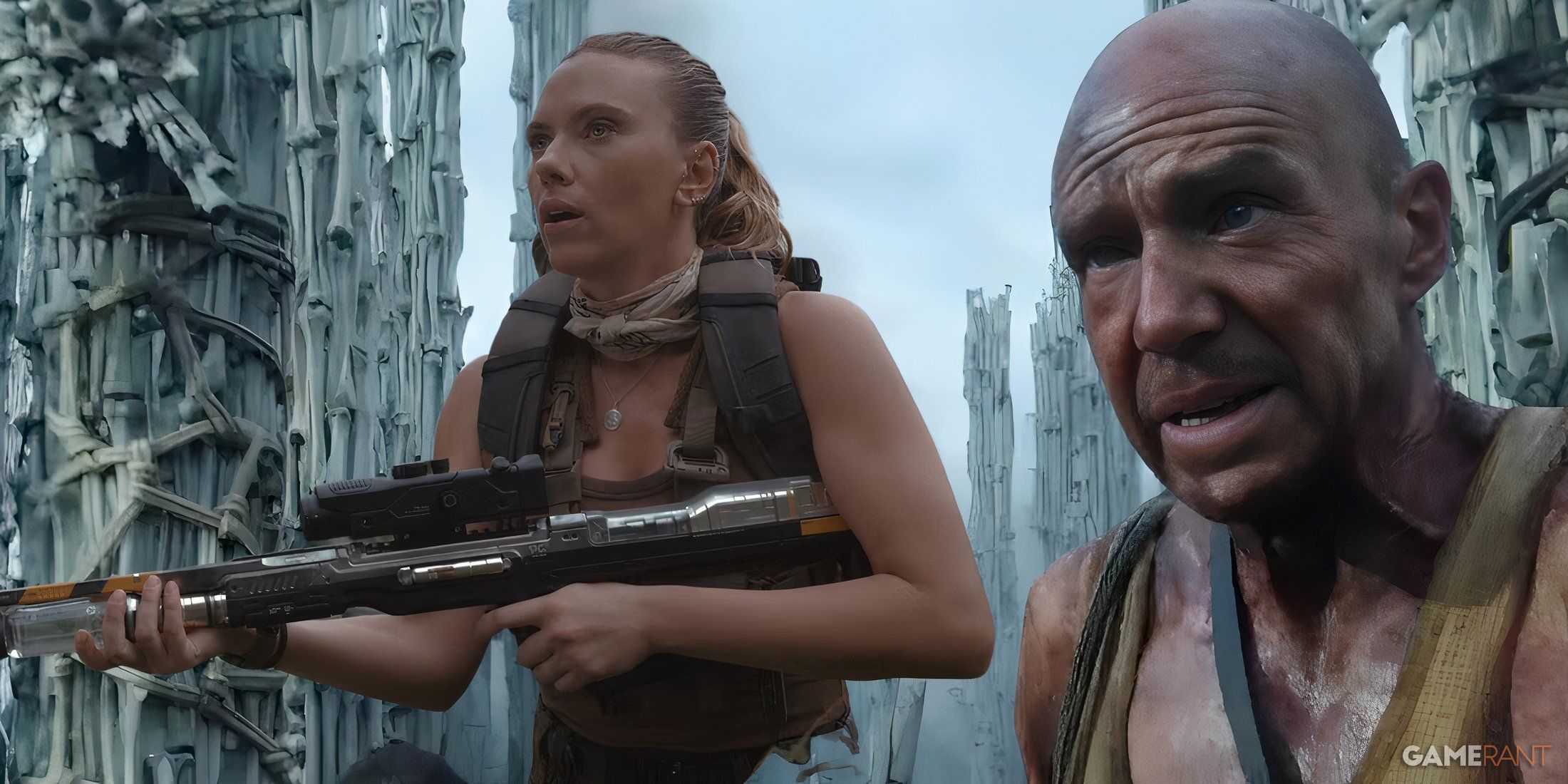
Similarly, Jurassic World Rebirth sought to ground the franchise back in the "speculative biology" roots of Michael Crichton. Directed by Gareth Edwards, the film utilized his signature sense of scale to emphasize the "science" in science fiction, focusing on the ecological consequences of de-extinction rather than mere spectacle. This trend toward "Hard Sci-Fi" in blockbusters was a defining feature of the 2025 box office, proving that audiences were hungry for narratives with intellectual depth.
Television’s Golden Age of Hard Science Fiction
In 2025, television and streaming platforms moved beyond episodic "planet-of-the-week" formats to embrace complex, multi-season arcs grounded in speculative physics and political sociology. The second season of Andor was perhaps the most significant cultural event in this category. By concluding the narrative bridge to Rogue One, the series cemented itself as a masterclass in political sci-fi, focusing on the mundane realities of authoritarianism and the logistical grit of revolution.
Apple TV+ continued its dominance in the genre with the release of Silo Season 2 and Severance Season 2. The latter, after years of production delays, finally arrived in 2025 to universal acclaim. Its exploration of "work-life balance" through surgical consciousness-splitting felt increasingly relevant as 2025 saw real-world advancements in neural interface technologies. These shows succeeded by using "low-fi" or "retro-futurist" aesthetics to ground their high-concept premises, making the speculative elements feel dangerously close to home.
Furthermore, 2025 marked the expansion of the Foundation universe. As the series entered its third season, it successfully tackled the "unfilmable" aspects of Isaac Asimov’s psychohistory. The production’s ability to visualize deep time and the decay of galactic empires set a new standard for space opera, competing directly with the visual fidelity of major motion pictures.
Literary Trends: The Rise of Solarpunk and Post-AI Fiction
The literary world of 2025 responded to the rapid integration of artificial intelligence in the real world by moving toward "Post-AI" narratives. These stories didn't focus on the "robot uprising" tropes of the past but rather on the subtle, often invisible ways AI-human synthesis changes the nature of creativity and empathy.
One of the most significant releases of the year was the expansion of James S.A. Corey’s new "Captive’s War" series. Following the success of The Mercy of Gods in late 2024, the subsequent 2025 publications solidified a shift toward "biological space opera." Instead of focusing on faster-than-light travel or laser weaponry, these books explored the terrifying potential of genetic engineering and the psychological trauma of an apex predator species dominating humanity.
Parallel to this was the explosion of the "Solarpunk" sub-genre. While sci-fi has long been synonymous with dystopia, 2025 saw a surge in "Utopian Realism"—fiction that imagines sustainable futures. These novels focused on community-building, ecological restoration, and the de-growth movement. This wasn't "naive" fiction; rather, it was a rigorous exploration of the technical and social engineering required to survive a climate-altered Earth. Writers in 2025 used these stories to provide a blueprint for hope, a stark contrast to the "cyberpunk" cynicism that had dominated the previous decade.
Interactive Media: Gaming’s Technical Leap
In the realm of interactive media, 2025 was the year that Unreal Engine 5 truly matured, leading to a slew of "hyper-realistic" sci-fi titles that blurred the line between cinema and gameplay. Hideo Kojima’s Death Stranding 2: On the Beach was the pinnacle of this movement. The game’s focus on "human connection" in a fractured, alien world utilized state-of-the-art motion capture and environmental physics to create a sense of presence that was previously impossible.
Nintendo also made waves with Metroid Prime 4: Beyond. After nearly a decade of anticipation, the 2025 release proved that the "Metroidvania" formula could be elevated through sophisticated environmental storytelling and advanced AI behaviors. The game emphasized the "lonely explorer" aspect of sci-fi, tasking players with deciphering alien biology and ancient technology without the hand-holding common in modern gaming.
| Release Title | Format | Primary Sub-Genre | Key Cultural Impact |
|---|---|---|---|
| Mickey 17 | Film | Social Satire / Hard Sci-Fi | Sparked debates on labor ethics and cloning. |
| Andor (Season 2) | TV | Political Thriller | Redefined the "Star Wars" aesthetic as mature drama. |
| Death Stranding 2 | Game | Experimental / Post-Apoc | Pushed the boundaries of photorealistic environments. |
| Tron: Ares | Film | Cyberpunk / Action | Advanced the integration of real-time CGI. |
| The Mercy of Gods | Book | Space Opera | Reinvigorated the biological horror sub-genre. |
| Severance (S2) | TV | Psychological Sci-Fi | Deepened the critique of corporate surveillance. |
Technological Themes: From Cybernetics to Biopunk
The thematic core of 2025 sci-fi moved away from the "virtual reality" obsession of the 2010s toward a preoccupation with "The Body." We call this the Biopunk Era. Whether it was the cloning in Mickey 17 or the genetic editing in The Mercy of Gods, the central question of 2025 was: "What constitutes a human when the biology can be edited?"
This shift was driven by real-world 2025 developments in CRISPR technology and the first successful human trials of advanced neural links. Sci-fi writers used these developments to explore the "Ship of Theseus" paradox—if you replace every part of a human with a synthetic or edited version, is the person still there? This was not just a philosophical exercise but a reflection of the anxieties surrounding the "longevity" industry and the divide between those who can afford biological "upgrades" and those who cannot.
Furthermore, the "dystopia" of 2025 was less about a single "Big Brother" and more about "Algorithmic Drift"—the idea that society is being steered not by a dictator, but by a series of feedback loops that no one fully understands. This was a recurring theme in independent sci-fi literature and smaller, "AA" video games, which often portrayed characters trying to find meaning within automated systems that have no central authority to rebel against.
Frequently Asked Questions
What was the most influential sci-fi movie of 2025?
Mickey 17, directed by Bong Joon-ho, is widely considered the most influential. Its success proved that high-budget, philosophical sci-fi could still dominate the cultural conversation. By utilizing a "cloning" premise to critique modern labor and class structures, it moved beyond the tropes of the genre to offer a profound social commentary that felt uniquely suited to the mid-2020s economy.
How did sci-fi literature change in 2025?
Literature saw a decisive move toward "Solarpunk" and "Hard Biology." Authors moved away from the neon-lit, rain-soaked streets of 1980s-style cyberpunk and toward "bright green" futures or terrifyingly plausible biological horrors. The focus shifted from "what the machines will do to us" to "what we will do to ourselves with new biological tools."
Was 2025 a good year for sci-fi gaming?
Yes, 2025 was a landmark year, specifically for the "Atmospheric Sci-Fi" sub-genre. With the release of Metroid Prime 4 and Death Stranding 2, gaming moved toward slower, more methodical experiences that prioritized immersion and environmental puzzles over traditional combat-heavy loops. The use of Unreal Engine 5 also allowed for a level of visual fidelity that made alien worlds feel genuinely "other."
Which 2025 sci-fi TV show had the best reviews?
Andor Season 2 and Severance Season 2 shared the top spot in critical circles. Andor was praised for its masterful writing and grounded political stakes, while Severance was lauded for its surrealist direction and its ability to turn the corporate office into a terrifying sci-fi landscape. Both shows demonstrated that the best sci-fi often uses the future to talk about the deeply uncomfortable aspects of the present.
What are the "Post-AI" narratives mentioned in 2025 fiction?
Post-AI narratives are stories where artificial intelligence is a "settled" technology—meaning it is no longer the "enemy" or a "new invention" but a fundamental, invisible part of the world. In these 2025 stories, the conflict usually arises from how humans lose their agency to automated systems or how they must rediscover their "humanity" in a world where machines can simulate art, conversation, and logic perfectly.
Recommendations for Navigating the 2025 Catalog
For those looking to catch up on the best of 2025 sci-fi, start with the "Essential Three": Mickey 17 for cinema, Andor Season 2 for television, and The Mercy of Gods for literature. These three works provide a comprehensive overview of the year’s major themes: the disposable nature of the individual, the grit of political resistance, and the terrifying scale of the biological unknown.
As we progress through 2026, the influence of these 2025 works is evident in the new wave of "Eco-Tech" thrillers currently in production. The lesson of 2025 was clear: science fiction is at its strongest when it stops looking at the stars and starts looking at the mirror—reflecting our biological, social, and political evolution back at us. To stay ahead of the curve, focus on works that emphasize "Speculative Realism"—the sub-genre that treats the impossible with the rigorous logic of the everyday.