The 2025 Papal Conclave was defined by a decisive majority of electors appointed by Pope Francis, cementing a long-term shift toward the Global South and a "synodal" church model. While traditionalist elements remained a vocal minority, the ideological makeup prioritized pastoral flexibility, social justice, and a decentralization of authority away from the Roman Curia.
The transition of the papacy in 2025 represented one of the most significant ideological crossroads for the Catholic Church in the 21st century. Following years of speculation regarding the health and tenure of Pope Francis, the assembly of the College of Cardinals in 2025 revealed a body that had been fundamentally reshaped. To understand the insights of this conclave, one must look at the specific theological factions, the geographic redistribution of voting power, and the specific mandates that the "Francis era" cardinals sought to preserve or evolve.
The Francis Legacy: A Decade of Strategic Appointments
By the time the 2025 conclave was convened, the "Francis effect" on the College of Cardinals was undeniable. Through successive consistories—most notably those in 2023 and the anticipated additions of 2024—Pope Francis had appointed approximately 75% to 80% of the cardinal electors. This statistical dominance is the primary lens through which the ideological makeup must be analyzed.
Unlike his predecessors, Francis did not prioritize the heads of major European archdioceses or high-ranking officials within the Roman Curia. Instead, he favored "pastoral" bishops from the "peripheries"—nations like Mongolia, South Sudan, and various island territories in Asia and Oceania. These appointments were not merely geographic; they were ideological markers. These cardinals generally shared a vision of the Church that emphasizes:
- Mercy over Dogma: A preference for addressing the lived realities of the faithful (such as divorce, remarriage, and LGBTQ+ outreach) over strict adherence to canon law.
- Environmental Stewardship: Integration of the "integral ecology" found in Laudato si’ into the core mission of the Church.
- Economic Reform: A persistent critique of neoliberal capitalism and a focus on the "Church of the poor."
This bloc entered the 2025 conclave with the goal of ensuring that the reforms of the Second Vatican Council, as interpreted through the lens of Francis’s papacy, could not be easily reversed.
The Synodal Bloc: Proponents of a Listening Church
One of the most potent ideological factions within the 2025 conclave was the "Synodal Bloc." This group was composed of cardinals who were heavily involved in the Synod on Synodality (2021–2024). They viewed the future of the Church as a collaborative process rather than a top-down monarchy.
Key figures in this group advocated for a "decentralized" papacy. Their insights during the pre-conclave meetings (the General Congregations) focused on the role of bishops' conferences and the potential for greater lay involvement in Church governance. For this faction, the ideal candidate was not necessarily a "strongman" but a facilitator who would continue the path of dialogue. They sought to formalize the changes initiated by the apostolic constitution Praedicate Evangelium, which reformed the Roman Curia to be more service-oriented toward local dioceses.
The Conservative Minority: Preservation and Liturgical Clarity
Despite the overwhelming number of Francis appointees, a significant and intellectually rigorous conservative minority played a crucial role in the 2025 deliberations. This group was characterized by a desire for "clarity" and the preservation of traditional liturgical and moral teachings.
Their primary ideological concern was what they perceived as "doctrinal ambiguity" stemming from documents like Amoris Laetitia and Fiducia Supplicans. In the 2025 conclave, this group focused on the following key insights:
- Liturgical Continuity: Protecting the celebration of the Tridentine Mass (the Vetus Ordo) following the restrictions of Traditionis Custodes.
- Moral Absolute: Maintaining a firm stance on life issues and traditional marriage without the "pastoral exceptions" that they argued led to confusion in Western Europe and North America.
- Governance Reform: Criticizing the "kitchen cabinet" style of governance and calling for a return to traditional collegiality among the College of Cardinals.
While they lacked the numbers to elect a candidate of their own, this bloc functioned as a "blocking minority" or a significant influence in refining the profile of the eventual successor to ensure he would be a "man of the Church" rather than a purely political reformer.
Geographical Distribution and Geopolitical Insights
The 2025 conclave was the most diverse in history, which shifted the ideological focus from European secularization to the challenges of the Global South. The reduction of the European "bloc" meant that Eurocentric debates regarding church-state relations or secularism were no longer the dominant themes.
Regional Elector Breakdown (Estimate 2025)
| Region | Elector Percentage | Primary Ideological Focus |
|---|---|---|
| Europe | ~38% | Secularism, institutional survival, reform. |
| Latin America | ~18% | Social justice, poverty, popular piety. |
| Africa | ~15% | Moral traditionalism, growth, interreligious dialogue (Islam). |
| Asia | ~15% | Minority rights, cultural adaptation, diplomatic relations. |
| North America | ~10% | Religious freedom, financial transparency, doctrinal clarity. |
| Oceania | ~4% | Climate change, indigenous rights. |
The African contingent, in particular, emerged as a distinct ideological force. While often aligned with Francis on economic and environmental issues, the African cardinals remained staunchly conservative on social and moral issues. Their insight into the 2025 conclave was that the Church cannot "Westernize" its morality if it wishes to remain vibrant in the fastest-growing regions of the world.
The Role of the "Institutionalists"
Between the reformers and the traditionalists stood a group of "Institutionalists"—cardinals who prioritized the stability and diplomatic standing of the Holy See. This group was less concerned with ideological purity and more focused on finding a candidate who could manage the Vatican’s complex finances and navigate the increasing geopolitical tensions in Eastern Europe and East Asia.
For the Institutionalists, the key insights involved:
- Financial Integrity: Continuing the cleanup of the Institute for the Works of Religion (IOR) and ensuring compliance with international standards (Moneyval).
- Diplomatic Strategy: Re-evaluating the Holy See's relationship with China and its role as a mediator in global conflicts.
- Administrative Competence: Selecting a leader who could reconcile the fractured Roman Curia.
Critical Issues that Shaped the 2025 Deliberations
The "makeup" of the conclave was not just a list of names but a set of priorities. During the 2025 gatherings, three critical issues served as the litmus test for any potential candidate:
1. The Future of the "Permanent Synod"
The cardinals had to decide if the synodal process was a temporary experiment or the new, permanent "modus operandi" of the Church. The ideological divide here was sharp: some saw it as the Holy Spirit’s guidance for a modern age, while others saw it as a path toward "Protestantization" and the loss of apostolic authority.
2. Women in the Church
While the ordination of women to the priesthood remained off the table, the 2025 conclave dealt heavily with the role of women in governance and the possible restoration of the female diaconate. Ideological progressives pushed for concrete commitments, while conservatives warned of a "slippery slope" regarding the sacrament of Holy Orders.
3. The Liturgical Question
The tension surrounding the Latin Mass was a major undercurrent. The 2025 electors were tasked with finding a "liturgical peace" that would satisfy the growing traditionalist youth movements in the West without undermining the reforms of the Second Vatican Council.
Key Takeaways from the Electoral Dynamic
The ideological makeup of the 2025 conclave proved that the "Franciscan Revolution" was not merely a personality-driven phase but a structural realignment. The insights gathered from the voting patterns suggest that the "center of gravity" for the Catholic Church has permanently moved away from the Mediterranean.
The successful candidate in 2025 had to navigate a "cross-ideological" path: they needed to be pastoral enough for the Francis appointees, doctrinally sound enough for the conservatives, and administratively capable enough for the Institutionalists. This led to a focus on "unity through diversity," a theme that dominated the post-conclave analysis.
FAQ
How did the 2024 Consistory affect the 2025 Conclave?
The 2024 Consistory served as the final "stacking" of the electoral deck by Pope Francis. By elevating several prelates from the Global South and key allies in the Synod, Francis ensured that the reformist majority reached a "critical mass" (above two-thirds) necessary to influence the outcome without requiring substantial support from the conservative wing.
Was the 2025 Conclave divided along political lines?
Yes, but not in the secular "Left vs. Right" sense. The divisions were primarily "Ecclesiological"—concerning how the Church is governed—and "Missiological"—concerning how the Church interacts with the world. The "political" divide was more about the level of decentralization and the degree of dialogue with secular culture.
Did the age of the Cardinals impact the 2025 ideological makeup?
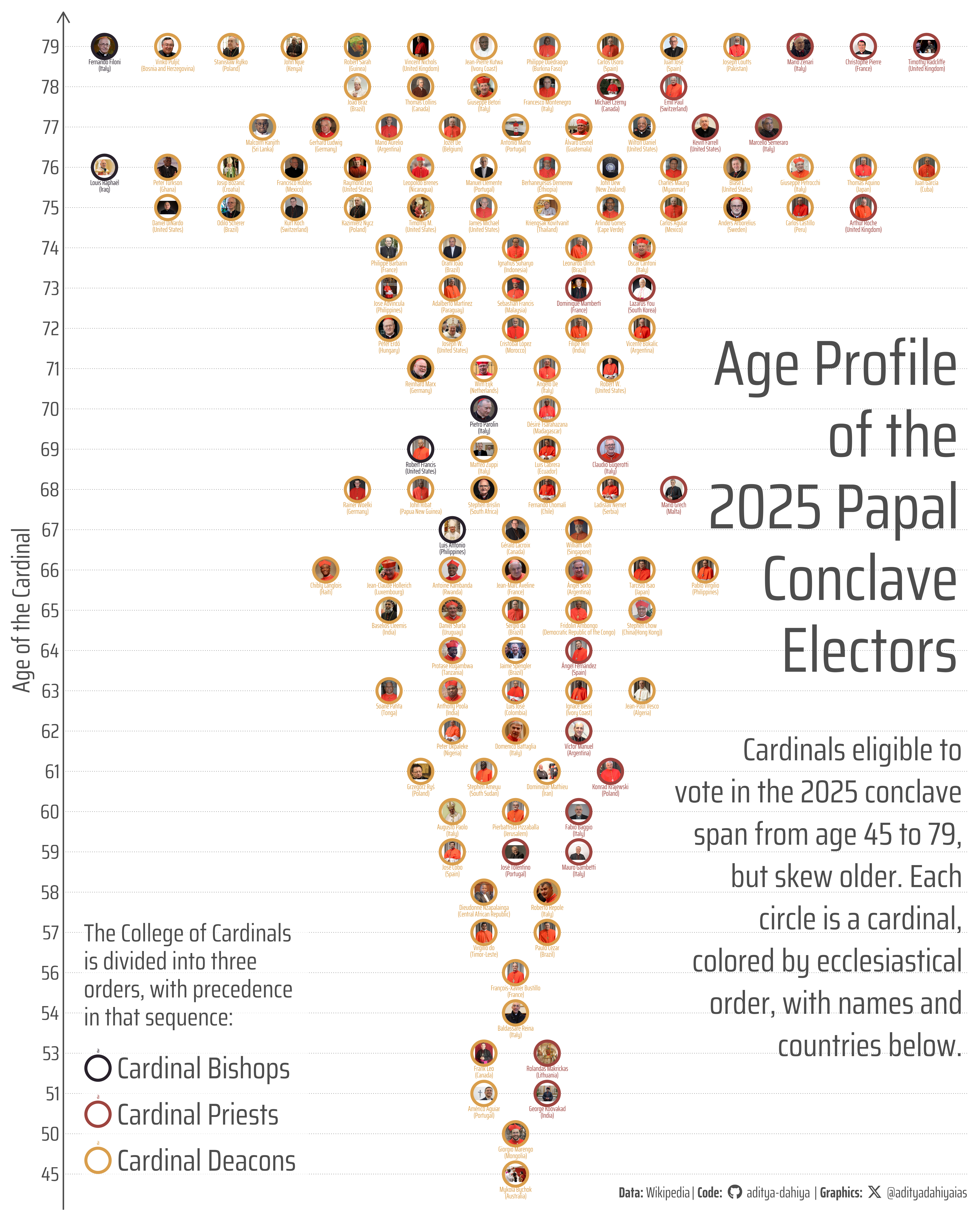
Significantly. The 80-year-old rule meant that many influential conservative cardinals from the Benedict XVI era had lost their voting rights. The 2025 electorate was younger on average, with many electors having spent their entire episcopal careers under the shadow of the Francis papacy, making them more receptive to his "culture of encounter" philosophy.
What role did the "Dubia" cardinals play in 2025?
While most of the original "Dubia" cardinals had retired or passed away by 2025, their ideological successors continued to press for "Yes or No" answers on controversial topics. They functioned as the conscience of the traditionalist wing, ensuring that the pre-conclave discussions included rigorous debates on the preservation of the deposit of faith.
How to Monitor Future Shifts in Vatican Ideology
For those tracking the ongoing ideological evolution of the Holy See following the 2025 conclave, it is essential to monitor the "appointments to the dicasteries" (Vatican departments). These roles are the most immediate indicators of whether the new papacy is maintaining the Francis trajectory or pivoting back toward a more traditionalist or institutionalist stance. Additionally, following the official publications in the Acta Apostolicae Sedis provides the legal and theological framework for the current administration's priorities.