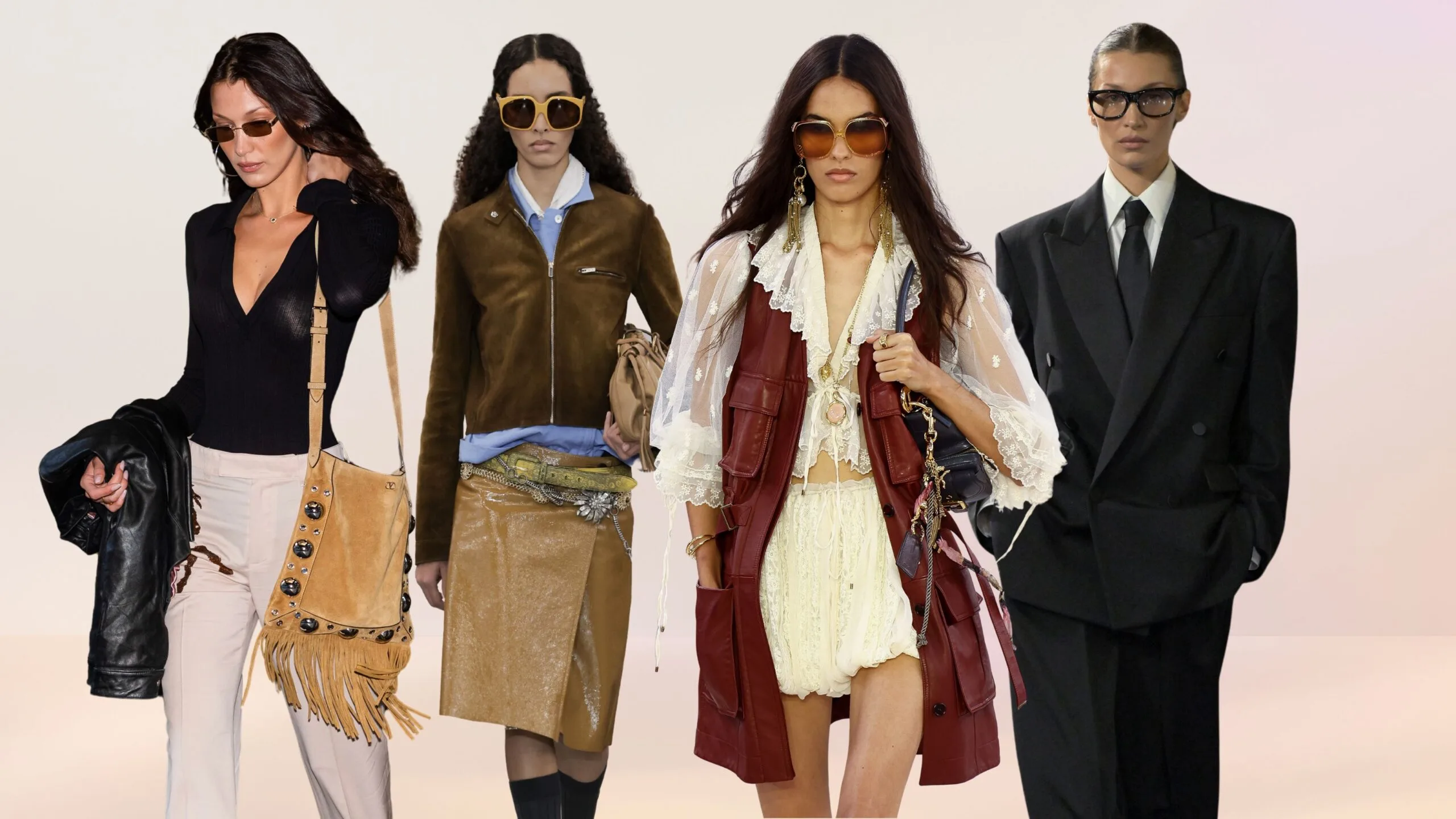
2025 fashion was defined by a transition toward Functional Futurism and Hyper-Personalization. The year saw a decisive shift away from "Quiet Luxury" toward "Loud Heritage" and expressive maximalism, underpinned by the mandatory adoption of Digital Product Passports and a resurgence of 1970s bohemian silhouettes, driven largely by high-fashion creative directors.
The Defining Aesthetic: Functional Futurism and the Neo-Nomad
The fashion landscape of 2025 was characterized by a synthesis of high-performance utility and avant-garde silhouettes, a movement often referred to as Functional Futurism. This aesthetic prioritized the "Neo-Nomad"—a consumer who requires clothing that transitions seamlessly between digital work environments, urban commuting, and extreme outdoor climates.
Unlike the "Gorpcore" trend of previous years, which focused on the aesthetic of hiking gear, 2025’s Functional Futurism integrated technology directly into the textile structure. We saw the mainstreaming of Phase Change Materials (PCMs), which were originally developed for aerospace applications to regulate body temperature. These garments do not just insulate; they actively absorb, store, and release heat to maintain a constant thermal state for the wearer.
Silhouettes in 2025 moved toward "protective" shapes. High collars, modular pockets, and transformable lengths became standard in both luxury and mass-market collections. The influence of digital life was also evident in the "pixelated" textures and iridescent coatings that mimicked the appearance of digital interfaces, creating a visual bridge between the physical and virtual worlds.
The Color of the Year and the 2025 Palette
The color story of 2025 was dominated by "Future Dusk," a dark, moody hue sitting between blue and purple. Identified by trend forecasting authorities like WGSN, this color reflected a period of transition—the literal and metaphorical dusk before a new era. It provided a sense of stability and mystery, working effectively in both velvet evening wear and technical outerwear.
Beyond Future Dusk, the 2025 palette was defined by a tension between synthetic vibrance and grounded earthiness:
- Cyber Lime: A high-visibility green that signaled the continued influence of digital gaming and virtual reality on physical fashion.
- Ray Flower: A radiant, mustard-toned yellow that brought a sense of optimism and connection to the bio-design movement.
- Aquatic Aethers: Translucent, watery blues used primarily in sheer layering pieces and recycled polyester knits.
These colors were frequently used in monochromatic sets, a styling choice that persisted from the early 2020s but evolved with more complex textures, such as 3D-knitted mesh and laser-cut leather.
The "Boho-Chic" Renaissance: The Chloé Effect
While technology drove the functional side of 2025 fashion, a powerful counter-movement emerged in the form of a Bohemian Renaissance. This was ignited in late 2024 by Chemena Kamali’s debut at Chloé and reached its peak in mid-2025. The aesthetic moved away from the structured minimalism of the "Old Phoebe Philo" era toward fluid, romantic, and highly tactile garments.
Key elements of the 2025 Boho revival included:
- Sheer Layering: Ruffled chiffon dresses worn over leather trousers or denim.
- Heavy Hardware: The use of oversized gold belts, wooden platforms, and fringed suede bags to ground delicate fabrics.
- Vintage Heritage: A focus on "found" items, where consumers prioritized authentic 1970s archival pieces or high-quality reproductions that used traditional lace-making and embroidery techniques.
This trend represented a "return to humanity" in the face of increasing AI integration. It prioritized the "imperfections" of hand-crafted goods, which became a significant status symbol in 2025.
Sustainability and the Rise of Digital Product Passports
2025 was a landmark year for fashion regulation, particularly within the European Union. The implementation of the Ecodesign for Sustainable Products Regulation (ESPR) fundamentally changed how clothes were manufactured and sold. The most visible result was the Digital Product Passport (DPP).
Every major garment released in 2025 featured a scannable QR code or NFC chip embedded in the care label. This passport provided consumers with verified data regarding:
- Origin of Raw Materials: Traceability back to the specific farm or recycling facility.
- Carbon and Water Footprint: Real-time data on the environmental impact of that specific production run.
- Repair and Recycling Instructions: Direct links to local repair shops or official brand "take-back" programs.
This transparency effectively ended the era of vague "green" claims. Brands that could not prove their sustainability credentials through the DPP saw a significant decline in market share, as Gen Z and Alpha consumers—now the dominant spending force—prioritized radical honesty over marketing slogans.
Technological Integration: AI and Generative Design
By 2025, Artificial Intelligence moved from a novelty to a core infrastructure in the design room. Generative Design allowed brands to optimize fabric usage, reducing textile waste by up to 30% during the cutting phase. However, the most significant impact was in "Hyper-Personalization."
Retailers implemented AI-driven fit technology that used smartphone scans to create 1:1 patterns for consumers. This solved the industry’s long-standing "sizing crisis" and drastically reduced return rates. Furthermore, AI was used to "remix" brand archives, allowing heritage houses to generate new patterns based on 50 years of historical data, ensuring that 2025 collections felt both fresh and deeply rooted in brand identity.
Comparison of 2024 vs. 2025 Fashion Trends
The following table outlines the key shifts in aesthetic and consumer behavior observed between 2024 and 2025.
| Feature | 2024 Trend | 2025 Trend |
|---|---|---|
| Primary Aesthetic | Quiet Luxury / Clean Girl | Functional Futurism / Loud Heritage |
| Key Silhouette | Oversized Blazers & Baggy Jeans | Protective Layers & Fluid Bohemianism |
| Sustainability Focus | Voluntary Carbon Offsetting | Mandatory Digital Product Passports |
| Technology | Virtual Try-Ons (Beta) | AI-Optimized Hyper-Personalization |
| Color Palette | Neutrals, Peach Fuzz, Navy | Future Dusk, Cyber Lime, Deep Earth |
| Footwear | Retro Low-Profile Sneakers | Modular Boots & Sculptural Wedges |
| Fabric Innovation | Recycled Polyester | Lab-Grown Leather & Bio-Iridescent Fibers |
Footwear and Accessories: Sculptural and Modular
In 2025, footwear moved away from the "flat" sneaker trend of previous years. The dominant silhouette was the Modular Boot—a footwear system where the sole, upper, and internal sock could be separated for cleaning or replacement. This was a direct response to the "Right to Repair" movement.
Accessories became increasingly sculptural. Jewelry in 2025 leaned toward "Organic Brutalism," featuring heavy, unpolished metals and bio-materials like lab-grown crystals. Eyewear saw the rise of "Smart Frames" that subtly integrated Augmented Reality (AR) without the bulk of previous headsets, allowing users to view their Digital Product Passports or navigation prompts directly on their lenses.
Frequently Asked Questions
What was the most significant change in 2025 fashion compared to previous years?
The most significant change was the shift from "aesthetic-led" fashion to "data-led" fashion. With the introduction of Digital Product Passports, the industry moved toward total transparency, forcing brands to justify their pricing and environmental impact through hard data rather than brand prestige alone.
Is "Quiet Luxury" still relevant in 2025?
Quiet Luxury evolved into what experts call "Intellectual Minimalism." While the focus on high-quality, logo-free garments remained, 2025 added a layer of technical complexity. It wasn't enough for a coat to be made of cashmere; in 2025, it needed to be "smart" cashmere or ethically sourced through a verified blockchain supply chain.
Which fabrics were most popular in 2025?
2025 saw a massive surge in Bio-Synthetics. Fabrics made from orange peel waste, mushroom mycelium (for leather alternatives), and lab-grown collagen became standard in luxury collections. These materials were preferred because they offered the performance of synthetics with the circularity of natural fibers.
How did AI change the way people shopped for clothes in 2025?
AI shifted the shopping experience toward "Curation over Search." Instead of scrolling through thousands of items, consumers used "Personal Style Oracles"—AI assistants that analyzed their existing wardrobe (via the Digital Product Passport) and suggested only the items that would complement their current collection and fit their specific body measurements.
What happened to "Fast Fashion" in 2025?
Fast fashion underwent a painful contraction due to new "Extended Producer Responsibility" (EPR) laws. Retailers were held financially responsible for the end-of-life disposal of their garments. This led to a price increase in ultra-cheap clothing and a pivot toward "Ultra-Fast Circularity," where items were designed to be shredded and re-spun into new garments within months.
Moving Forward: Managing Your 2025 Legacy Wardrobe
As we navigate through 2026, the pieces acquired during 2025 remain highly relevant due to their durable, functional nature. To maintain the value and utility of your 2025 items, prioritize the following actions:
- Audit Your Digital Passports: Check the "Circular Status" of your 2025 garments. Many brands have now activated their "re-commerce" platforms, allowing you to trade in 2025 pieces for store credit or professional upcycling.
- Maintain Technical Fabrics: Ensure that your PCM (Phase Change Material) garments are cleaned according to the specific sensor-safe instructions found in their digital labels to preserve their thermal properties.
- Blend the Aesthetics: The "Functional Futurism" of 2025 pairs exceptionally well with the emerging "Bio-Organic" trends of 2026. Use your 2025 technical shells as a base for the softer, more tactile layers currently entering the market.