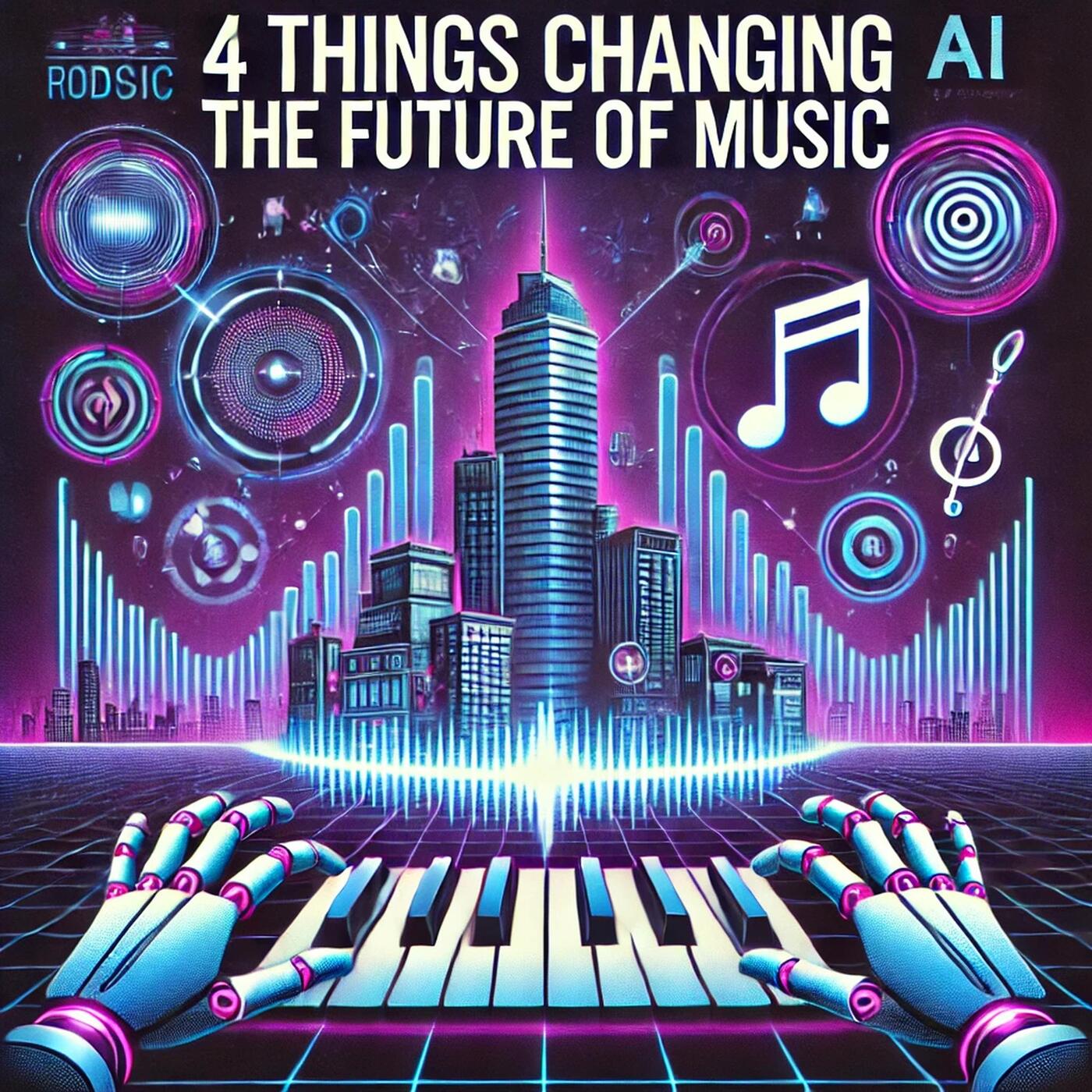
The landscape of music creativity in 2025 shifted from a focus on individual virtuosity to a model of collaborative intelligence, where artists integrated generative AI, spatial audio, and decentralized fan networks into their core workflows. This transition redefined the "artist" as a multi-modal curator who manages complex technological ecosystems to produce immersive, hyper-personalized sonic experiences.
The Generative Pivot: How 2025 Artists Redefined Authorship
By the end of 2025, the music industry moved past the initial "AI vs. Artist" conflict into an era of hybridized authorship. Artists began utilizing customized Large Music Models (LMMs) trained specifically on their own stems and historical compositions. This allowed for a new form of creative recursion: an artist could prompt an AI to generate "variations on a theme" in their own unique style, which they would then deconstruct and reassemble.
The concept of the "original" work changed. In 2025, several top-tier artists released living albums—dynamic files that used real-time data (such as the listener's time of day, heart rate, or local weather) to subtly alter the arrangement or tempo of a track. This required artists to think less about "fixed recordings" and more about "musical parameters" and "latent space boundaries." Creativity became the act of designing the system that makes the music, rather than just the music itself.
Furthermore, legal frameworks established in late 2024 and early 2025 provided the necessary "safety rails" for this creativity. The adoption of ethical AI metadata standards meant that 2025 artists could prove their "human-in-the-loop" contribution, ensuring their works remained eligible for copyright protection while leveraging machine efficiency.
Immersive Soundscapes: Spatial Audio and the Death of Stereo
In 2025, the industry witnessed the definitive decline of the traditional stereo mix for major releases. Object-based audio (such as Dolby Atmos and Sony 360 Reality Audio) became the mandatory standard, not an optional luxury. For the 2025 artist, creativity was no longer restricted to a horizontal plane; it became three-dimensional.
Artists began composing with "height" and "depth" in mind from the initial demo phase. This led to the rise of Architectural Music, a genre where the arrangement is designed to be explored physically within a VR or AR environment. Instead of a bridge following a chorus, a listener might move from one virtual "room" of a song into another. This spatial shift forced producers to rethink frequency masking and phase relationships, as sounds could now be placed anywhere in a 360-degree sphere around the listener.
The hardware side also caught up. With the mass adoption of high-fidelity spatial earbuds and haptic vests in 2025, artists started incorporating "sub-perceptual" frequencies and tactile signals into their tracks, turning music into a full-body sensory experience.
The Tech Stack of 2025: A Comparative Analysis
The tools available to artists in 2025 represented a significant leap from the DAW-centric (Digital Audio Workstation) models of the early 2020s. The following table illustrates the shift in technical requirements and creative outputs that defined the 2025 landscape.
| Feature | Pre-2025 Standard | 2025/2026 Paradigm | Creative Impact |
|---|---|---|---|
| Primary Tool | Linear DAWs (Ableton, Logic) | Neural DAWs & Prompt-to-Stem | Shift from manual editing to high-level "intent curation." |
| Mixing Format | Stereo (L/R) | Object-Based Spatial Audio | Music is felt and explored in 3D space, not just heard. |
| Fan Interaction | Social Media (Passive) | Tokenized Communities (Active) | Fans participate in remixing and governance of the artist's IP. |
| Visuals | 2D Music Videos | Volumetric Video & Real-time Engines | Artists become avatars in persistent, interactive 3D worlds. |
| Monetization | DSP Streaming (Cent-per-stream) | Hybrid Micro-payments & NFT 2.0 | Diversified revenue through digital scarcity and direct access. |
The Rise of the "Global-Local" Sound and Cross-Border Creativity
One of the most profound shifts in 2025 was the eradication of geographical barriers through latency-free remote collaboration. High-speed satellite internet and neural-link audio protocols allowed artists in Lagos, Seoul, and Nashville to jam in real-time with less than 5 milliseconds of delay.
This gave birth to "Hyper-Fusion" genres. In 2025, we saw the rise of Afro-Cyberpunk and K-Phonk, genres that blended hyper-local cultural instruments with globalized electronic textures. Creativity in this context was about "cultural translation." Artists were no longer just making music for their local market; they were building global bridges.
Moreover, AI-powered real-time translation allowed vocalists to release tracks in multiple languages simultaneously, with the AI adjusting the "lip-sync" and phonetic nuances of the vocal performance to match the target language. This allowed 2025 artists to achieve a level of global intimacy that was previously impossible.
Economic Creativity: New Monetization Models
Creativity in 2025 was not limited to the studio; it extended to the business model. The "starving artist" trope was challenged by the rise of Fractional IP Ownership. Artists began "stock-titting" their individual songs, allowing fans to buy small percentages of a track’s future royalties during the production phase.
This created a "Creator-Investor" ecosystem. Fans who owned a piece of a song became its most aggressive promoters, effectively acting as a decentralized marketing agency. This model required artists to be transparent and communicative about their creative process, leading to the "Always-On" creative cycle.
Additionally, the use of Smart Contracts ensured that every time a song was sampled or used in a 3D environment (like a digital fashion show or a virtual game), the original artist received an instant, automated micropayment. This financial stability allowed 2025 artists to take more experimental risks, as they were less dependent on the "hit-driven" mechanics of traditional streaming platforms.
Visual-Sonics: The Multimedia Artist as the New Standard
By 2025, the distinction between a "musician" and a "visual artist" had nearly evaporated. Most successful 2025 artists were proficient in real-time rendering engines like Unreal Engine 5 or Unity. A "song release" was rarely just an audio file; it was an executable environment.
This led to the "Visual-Sonic" movement, where the music’s waveform directly drives the geometry and lighting of a virtual world. In this environment, the "lyrics" might be represented as floating architectural structures, and the "bass" might manifest as changes in the virtual gravity.
This holistic approach to creativity meant that 2025 artists had to manage a broader range of assets. The creative process involved:
- Sonic Composition: The core melody and rhythm.
- Visual World-Building: The aesthetic context of the sound.
- Interactive Logic: How the audience "plays" the music.
Frequently Asked Questions
Did AI replace human artists in 2025?
No, AI did not replace human artists; it shifted the "bottleneck" of creativity from technical execution to conceptual vision. While AI could generate a perfect pop song by late 2024, it lacked the "cultural narrative" and "emotional intent" that audiences crave. The most successful 2025 artists used AI as a sophisticated multi-instrumentalist or a "brainstorming partner," but the final creative decisions—the "soul" of the work—remained human-centric.
What was the biggest technical challenge for artists in 2025?
The primary challenge was Data Management and Interoperability. Artists had to manage massive amounts of data, from high-resolution spatial audio stems to 3D volumetric assets. Ensuring that a "virtual concert" worked across multiple hardware platforms (Apple Vision Pro, Meta Quest, and standard mobile AR) required a high degree of technical literacy or a very specialized technical team.
How did "live" performances change for 2025 artists?
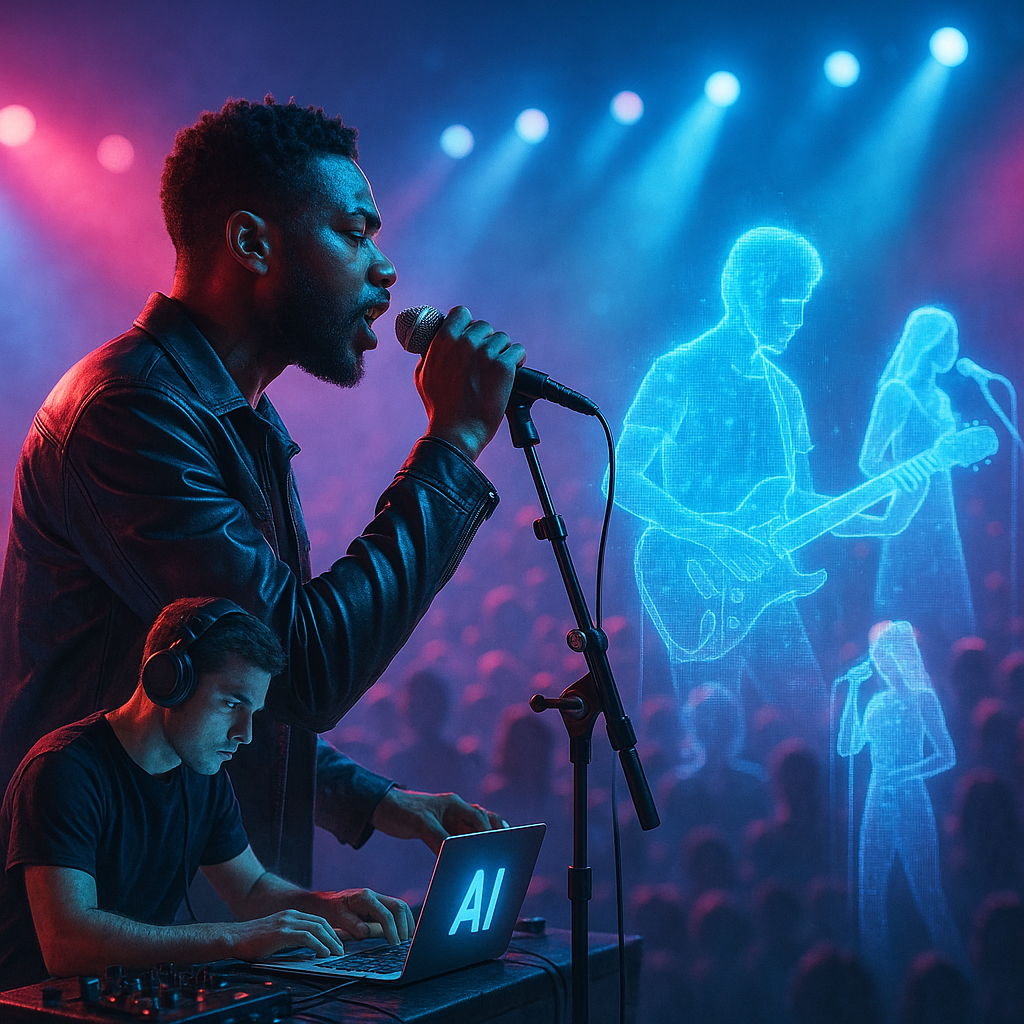
Live performances became hybridized. A typical 2025 tour involved a physical venue where the "real" artist performed, while simultaneously being broadcast as a volumetric avatar to thousands of "virtual venues" worldwide. These virtual attendees could interact with the artist and each other, creating a shared global experience that combined the energy of a physical crowd with the limitless possibilities of digital space.
Did genre labels matter in 2025?
Genre labels became almost entirely obsolete. Because AI-driven discovery algorithms focused on "mood," "texture," and "activity" rather than rigid categories like "Rock" or "Hip-Hop," artists felt free to blend disparate elements. The "Future of Music Creativity" in 2025 was defined by fluidity, where a single track could transition from acoustic folk to industrial techno based on the listener's preference or the context of the playlist.
How did independent artists compete with major labels in 2025?
Independent artists gained a significant advantage through democratized high-end tools. The gap between a "bedroom studio" and a "million-dollar facility" closed significantly as AI-based mixing, mastering, and marketing tools became affordable. In 2025, a solo artist with a powerful laptop could produce a spatial audio experience that rivaled the production quality of a major label superstar.
Strategic Action: Embracing the 2026 Creative Landscape
As we move further into 2026, the lessons of 2025 are clear: adaptability is the ultimate creative skill. Artists who wish to remain relevant must move beyond traditional musicianship and embrace a multi-disciplinary approach.
- Develop a Personal AI Strategy: Stop viewing AI as a threat and start "fine-tuning" models on your own creative DNA. This ensures that your "digital twin" remains an extension of your voice, not a replacement for it.
- Master Spatial Audio Logic: If you are still mixing in stereo, you are creating for the past. Begin experimenting with object-based panning and binaural rendering to prepare for the immersive hardware that dominates 2026.
- Build On-Chain Communities: Direct-to-fan relationships are the only hedge against changing algorithms. Utilize decentralized platforms to give your core audience a stake in your success, ensuring a stable foundation for experimental creativity.
The future of music creativity belongs to those who see the "studio" not as a room with instruments, but as an infinite digital canvas where sound, sight, and interaction converge.