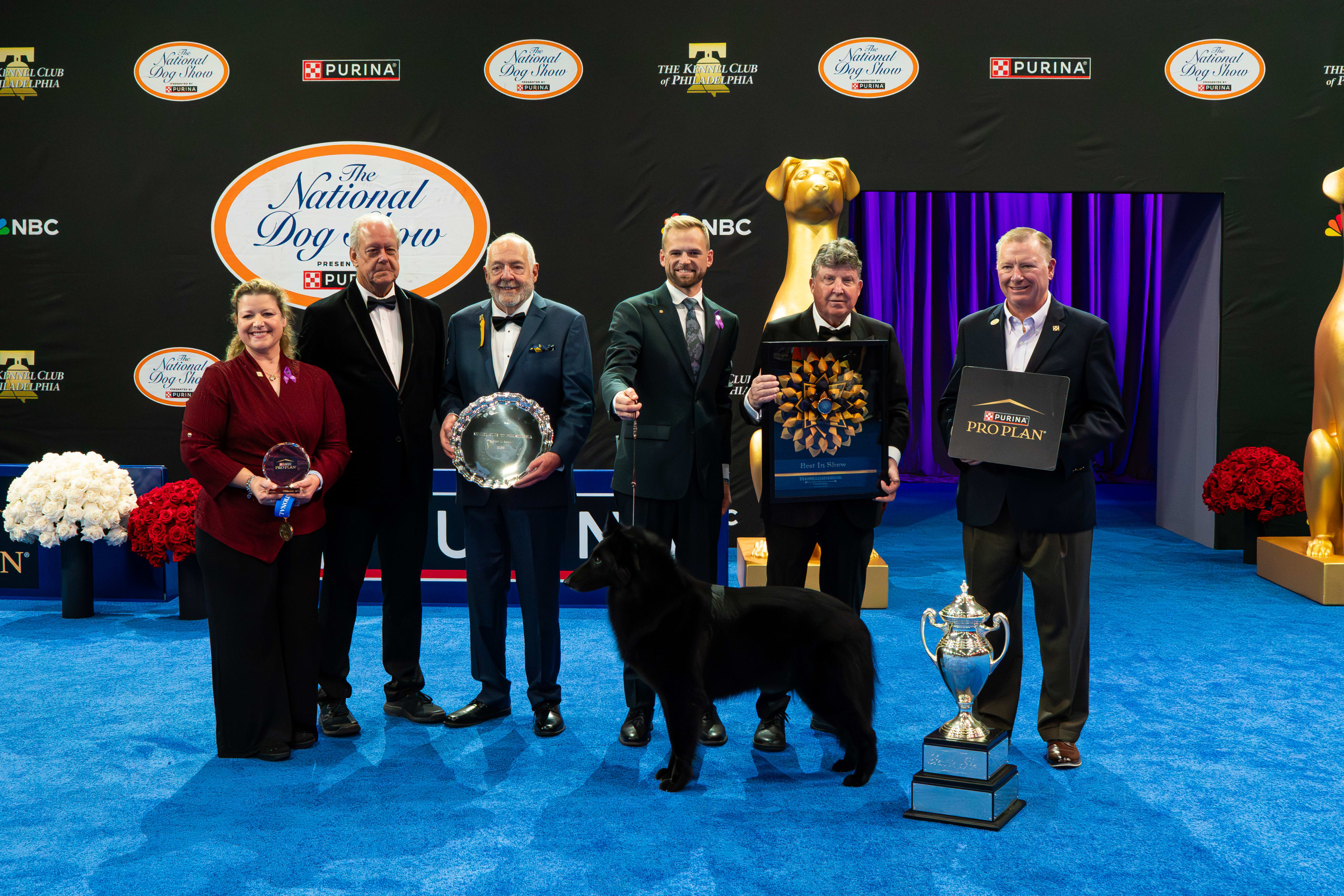
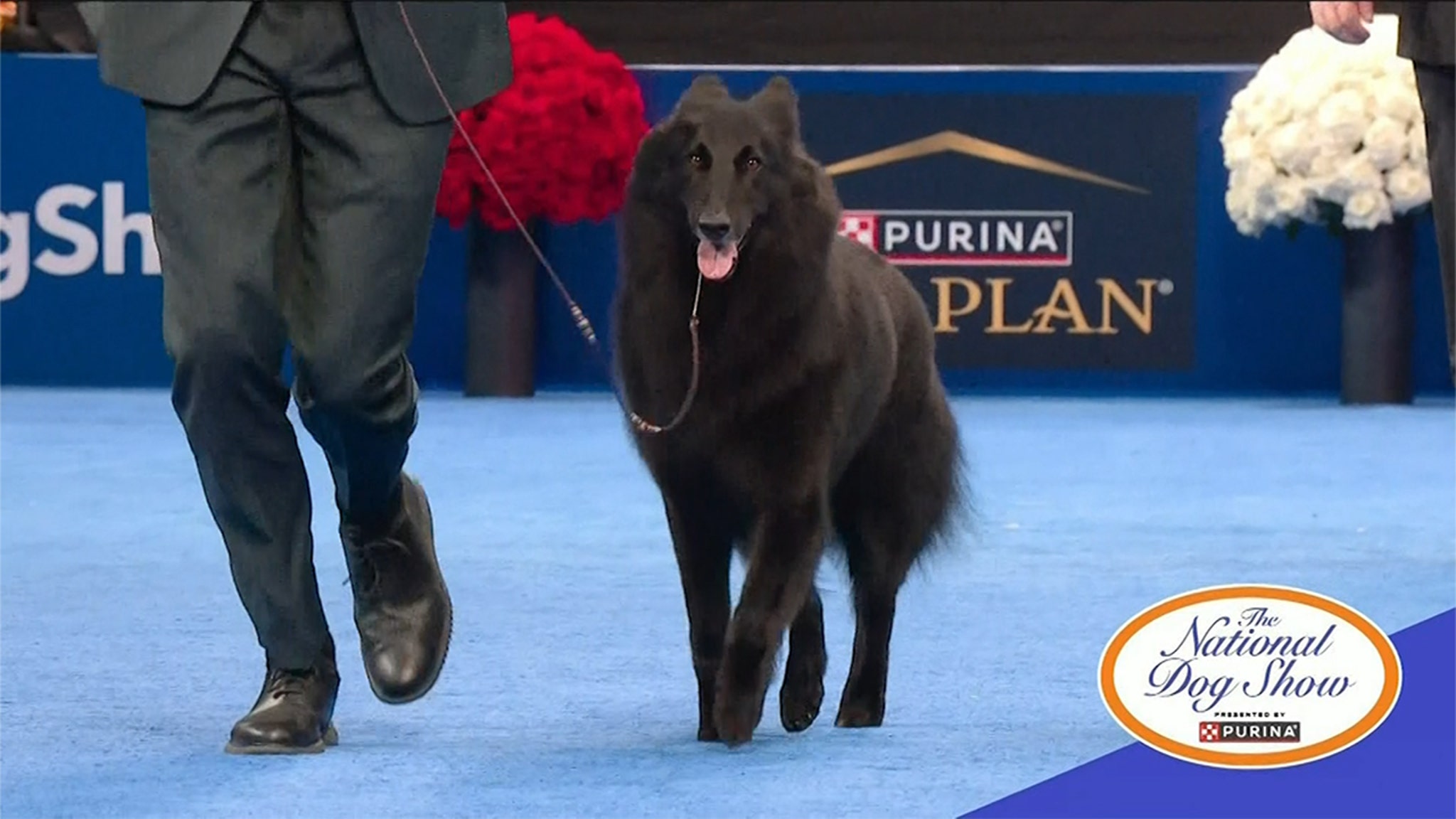
The 2023 National Dog Show crowned Stier, a four-year-old male Sealyham Terrier officially registered as GCHG Good Time Crisp N D'Lish, as its Best in Show champion. Handled by veteran professional handler Margery Good, Stier bested more than 1,800 dogs across 199 recognized breeds and varieties to claim top honors at the historic competition presented by Purina and hosted by the Kennel Club of Philadelphia.
Profile of a Champion: Pedigree and Background
Stier's victory at the 2023 National Dog Show represented the culmination of years of selective breeding, rigorous conditioning, and competitive experience on the American Kennel Club (AKC) conformation circuit. Competing under his official show name, Grand Champion Grand (GCHG) Good Time Crisp N D'Lish, Stier embodies the strict structural and behavioral standards established for the Sealyham Terrier breed.
- Registered Name: GCHG Good Time Crisp N D'Lish
- Call Name: Stier
- Breed: Sealyham Terrier
- Group: Terrier Group
- Handler: Margery Good
- Primary Owners: Linda Jidd, Margery Good, and Sandra Middlebrooks
- Key Title: Best in Show Winner, 2023 National Dog Show
In purebred dog sport terminology, a dog's "call name" is the informal name used by owners and handlers in daily life, while the registered name tracks lineage, kennel origins, and accumulated titles. The prefix "Good Time" reflects the well-known kennel name managed by handler and co-owner Margery Good, who has spent decades breeding and showing Sealyham Terriers at the highest competitive levels in North America.
Stier’s lineage traces back through generationally tested champions selected for structural soundness, proper coat texture, correct head proportions, and the quintessential terrier temperament: bold, confident, yet steady and agreeable. Prior to his Thanksgiving Day broadcast victory, Stier had already earned multiple Best in Show titles and Group placements across the country, establishing himself as the top-ranking Sealyham Terrier in the United States for the 2023 show season.
The Path to Best in Show at the Kennel Club of Philadelphia
The National Dog Show, hosted annually by the Kennel Club of Philadelphia—an organization established in 1879—is one of the oldest and most prestigious dog shows in North America. The event uses a traditional elimination format governed by AKC rules, meaning every entry must advance through multiple competitive rounds to reach the final ring.
Breed Level Judging
Group Level Judging (7 AKC Variety Groups)
Best in Show Ring (7 Group Winners + Judge Evaluation)
National Champion Announced
Breed Level Judging: Stier first competed against all other entered Sealyham Terriers. A designated breed judge evaluated each entry against the written AKC Sealyham Terrier standard, awarding Stier "Best of Breed."
Group Level Judging: As the Best of Breed winner, Stier advanced to the Terrier Group ring. There, he competed against the winners of all other recognized terrier breeds, including Popular breeds like the Miniature Schnauzer, Scottish Terrier, and Wire Fox Terrier. Stier won first place in the Terrier Group, earning one of seven spots in the final round.
Best in Show Judging: In the final arena, Best in Show judge Vicki Seiler-Cushman evaluated the seven group winners. Each dog was judged individually on movement, anatomy, coat condition, ring presence, and adherence to their respective breed standards.
When judge Seiler-Cushman selected Stier as the Best in Show winner, it marked only the second time in the broadcast history of the National Dog Show that a Sealyham Terrier captured the top award. The victory earned Stier national recognition, a champion trophy, and a permanent place in the archives of American purebred dog history.
Understanding the Sealyham Terrier: Breed History and Standards
To appreciate why Stier stood out to judges, it is essential to understand the history and physical requirements of the Sealyham Terrier. Originating in Wales during the mid-19th century, the breed was developed by Captain John Edwardes at Sealy Ham, an estate in Pembrokeshire. Edwardes sought to breed a small, courageous, and sturdy working terrier capable of quarrying badgers, otters, and foxes alongside hunting hounds.
- Sealyham Terrier Structural Characteristics
- Body: Low-to-ground, sturdy, rectangular frame
- Height: Approx. 10.5 inches at the shoulder
- Weight: 23 to 24 pounds (ideal show weight)
- Coat: Double coat (hard, wire topcoat; soft under)
- Color: All white, or white with lemon/tan markings
- Head: Long, broad skull with characteristic "fall"
The American Kennel Club Sealyham Terrier Breed Standard describes the breed as a low-to-the-ground, strong-bodied dog embodying power and determination without clumsy heaviness. Key physical points evaluated during conformation judging include:
- Overall Balance and Size: A mature Sealyham Terrier stands approximately 10.5 inches high at the shoulder and weighs between 23 and 24 pounds. The body is long relative to its height, creating a sturdy, rectangular outline.
- Head and Expression: The skull is broad between the ears and slightly domed, featuring a powerful jaw and deep muzzle. The distinctive long facial hair, known as the "fall" and beard, protects the dog's eyes and face while working.
- Coat and Color: The breed possesses a weather-resistant double coat consisting of a hard, wiry topcoat and a dense undercoat. The ideal coat color is predominantly white, though badger, lemon, or tan markings on the head and ears are common and fully permissible under the standard.
- Movement and Gait: In the ring, a Sealyham must move with drive and coordination. The front legs should reach smoothly forward without paddling, while the rear assembly provides powerful drive from behind, keeping the top-line firm and level during movement.
Despite their distinguished history, Sealyham Terriers are currently categorized as a vulnerable native breed by international kennel organizations due to relatively low annual registration numbers. Wins by prominent champions like Stier bring valuable public attention to the breed, encouraging preservation efforts by dedicated fanciers.
2023 National Dog Show Finalists and Group Breakdown
Winning Best in Show at the National Dog Show requires outperforming elite champions across all seven official AKC variety groups. The 2023 final ring presented a exceptionally competitive lineup of dogs, each having earned their spot by winning their respective group.
| AKC Group | Breed | Dog's Call Name | Official Registered Name | Placement / Role |
|---|---|---|---|---|
| Terrier | Sealyham Terrier | Stier | GCHG Good Time Crisp N D'Lish | Best in Show Winner |
| Working | Great Dane | Carson | GCHP CH Alpine's High Fidelity | Reserve Best in Show |
| Herding | German Shepherd Dog | Heathcliff | GCHG Gerans Pura Vida | Group Winner (Finalist) |
| Toy | Shih Tzu | Comet | GCHP Hallmarks Hallmark Jolee Rocket Man | Group Winner (Finalist) |
| Sporting | Chesapeake Bay Retriever | Cider | GCHG Next Generation Good Good Time | Group Winner (Finalist) |
| Hound | Whippet | Yola | GCHB Pinnacle Kentucky Desire | Group Winner (Finalist) |
| Non-Sporting | French Bulldog | Mousse | GCHP Fox Canyon's I Won The War At Goldshield | Group Winner (Finalist) |
In addition to Stier's ultimate victory, Carson, a Great Dane representing the Working Group, was awarded Reserve Best in Show (runner-up). Carson's commanding size, sleek coat, and effortless side gait earned significant praise from judges and commentators during the national telecast.
Conformation Judging Demystified: How Stier Won
A common misconception among casual television viewers is that dogs in a conformation show compete directly against one another's appearance or personality. In reality, conformation judging is an evaluation of how closely an individual dog matches its breed's official written standard.
- Conformation Evaluation Factors
- Structural Anatomy & Skeleton Mechanics
- Coat Texture, Density, and Preparation
- Breed-Specific Movement and Gait
- Temperament, Ring Presence, and Expression
During the 2023 final round, judge Vicki Seiler-Cushman evaluated Stier on several precise criteria:
1. Hands-On Examination (The Table Test)
Because Sealyham Terriers are a smaller breed, they are examined on an elevated judging table. The judge physically examined Stier’s bone structure, rib cage depth, shoulder placement, dentition (bite), and coat texture. Stier demonstrated the correct hard, wiry topcoat density that is mandatory for working terriers.
2. Individual Movement (Gaiting)
The judge instructed handler Margery Good to move Stier in patterns—typically down-and-back and around the perimeter of the ring. This step reveals mechanical soundness. Stier displayed a level topline (backline) while in motion, with no excessive roll, sagging, or awkward footfall.
3. Ring Presence and Conditioning
Conformation champions require exceptional stamina and focus. Under the bright television lighting and surrounded by thousands of spectators, Stier remained alert, responsive, and composed. This calm, confident demeanor—often called "ring presence"—signals to judges that a dog possesses the steady temperament required by its breed standard.
The Team Behind the Champion: Handling, Grooming, and Care
Behind every national dog show winner is a specialized team dedicated to the animal's nutrition, physical fitness, grooming, and mental health. Stier’s success at the 2023 show was driven by veteran handler Margery Good, who also co-owns the dog alongside Linda Jidd and Sandra Middlebrooks.
- The Champion's Support System
- Professional Handling
- Ring Presentation & Stacking
- Gait Control & Pattern Execution
- Stress Management & Travel Prep
- Conditioning & Grooming
- Hand-Stripping Wire Coat
- Daily Muscle Conditioning
- Specialized High-Protein Nutrition
- Professional Handling
Hand-Stripping and Coat Preparation
Maintaining a show-quality wire coat requires hand-stripping—a labor-intensive technique where dead outer coat hairs are pulled manually rather than cut with clippers. Hand-stripping preserves the rich texture and moisture-resistant properties of the terrier coat. Trimming or clipping a wire coat causes it to become soft, faded, and functionally inferior under AKC standard guidelines.
Conditioning and Daily Management
Conformation dogs are elite canine athletes. Stier’s daily routine included controlled roadwork and free exercise to build muscle tone without putting stress on his joints. His diet was formulated to support high metabolic demand, shiny skin health, and optimal energy levels during multi-day show travel schedules.
Frequently Asked Questions
Which dog won the 2023 National Dog Show?
Stier, a four-year-old male Sealyham Terrier whose registered name is GCHG Good Time Crisp N D'Lish, won Best in Show at the 2023 National Dog Show.
Who handled Stier during his 2023 championship win?
Stier was handled by veteran dog handler and co-owner Margery Good. Good is widely recognized in the dog show community for her decades of work breeding and presenting show-line terriers.
What is a Sealyham Terrier, and are they considered rare?
The Sealyham Terrier is a small, low-to-the-ground terrier breed originally developed in Wales for hunting badgers and otter. They are considered a rare breed today, appearing on vulnerable native breed lists maintained by kennel clubs due to low annual puppy registrations worldwide.
Which dog earned Reserve Best in Show in 2023?
Carson, a Great Dane representing the Working Group (registered name GCHP CH Alpine's High Fidelity), was awarded Reserve Best in Show at the 2023 event.
How many dogs competed in the 2023 National Dog Show?
More than 1,800 purebred dogs representing 199 AKC-recognized breeds and varieties competed at the 2023 National Dog Show in Oaks, Pennsylvania.
Where is the National Dog Show held, and when is it broadcast?
The National Dog Show is held annually at the Greater Philadelphia Expo Center in Oaks, Pennsylvania, under the auspices of the Kennel Club of Philadelphia. It is broadcast nationally by NBC on Thanksgiving Day immediately following the Macy's Thanksgiving Day Parade.
Exploring AKC Conformation Events and Breed Engagement
For readers interested in learning more about show dogs, purebred dog conservation, or participating in American Kennel Club events, several practical steps exist to get involved:
- Attend Local Conformation Shows: Visit the American Kennel Club Event Calendar to locate upcoming dog shows in your region. Attending local shows allows prospective owners to view different breeds in person and speak with experienced handlers and breeders.
- Research Recognized Parent Clubs: Every AKC breed maintains a national parent club—such as the American Sealyham Terrier Club. Parent club websites offer verified historical information, detailed breed health guidelines, recommended genetic testing protocols, and breeder referral services.
- Understand Responsible Ownership Requirements: Breeds like the Sealyham Terrier require specialized grooming routines (such as hand-stripping or regular trimming) and structured exercise. Researching a breed's maintenance requirements ensures a good match between a dog's needs and an owner's lifestyle.
- Follow Official Show Sanctioning Guidelines: If you plan to compete in AKC events, consult the official AKC Rules Applying to Dog Shows to understand age requirements, registration qualifications, class structures, and point schedules necessary to earn championship titles.