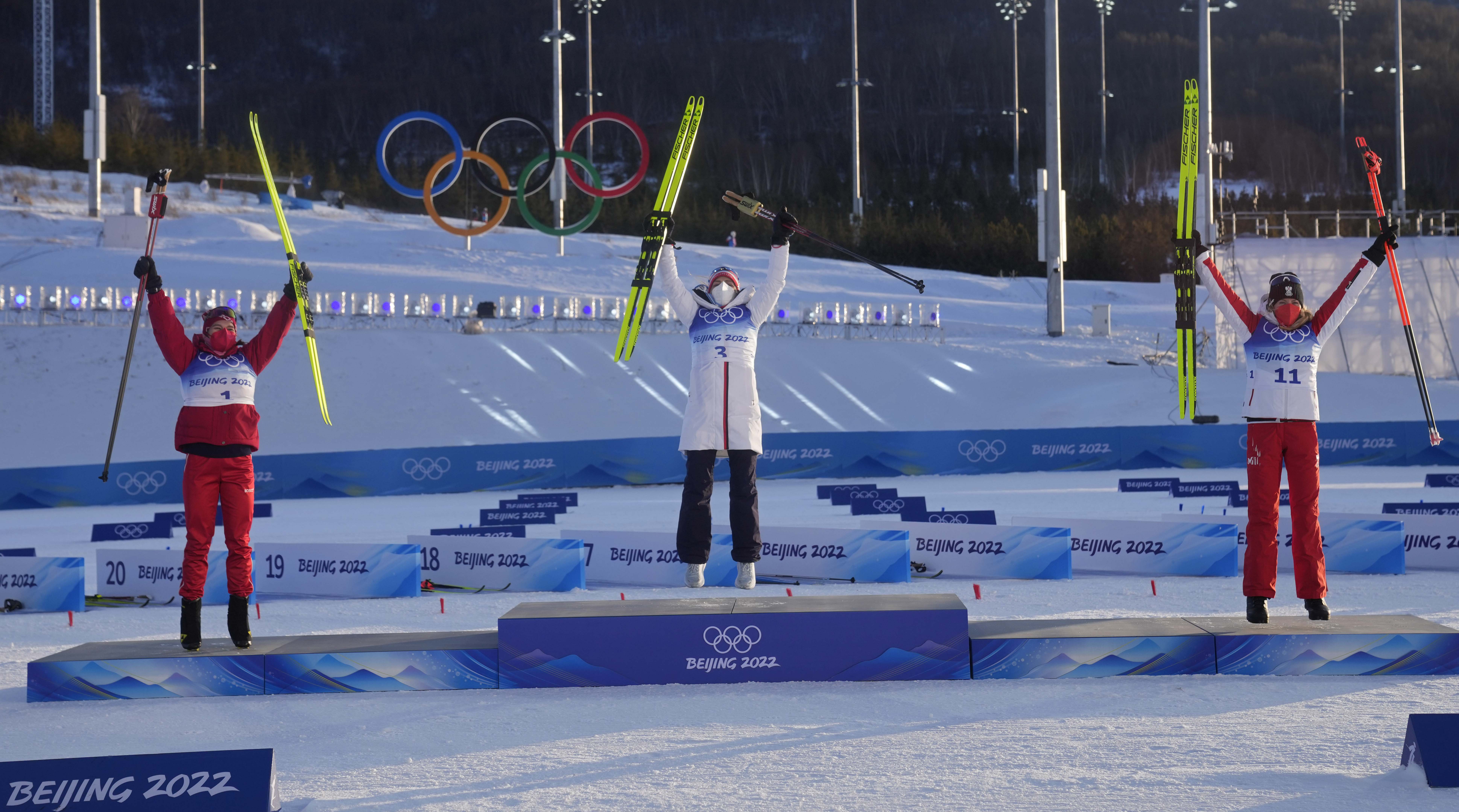
The 2022 Winter Olympics, officially known as the XXIV Olympic Winter Games and held in Beijing, concluded with Norway atop the medal table, securing a record-breaking 16 gold medals and 37 total medals. Germany followed in second place with 12 golds, while the host nation, China, achieved its best-ever Winter Games performance, finishing third with 9 gold medals.
The Beijing 2022 Games marked a significant chapter in international sports history, occurring under strict "closed-loop" protocols and featuring 109 events across 15 disciplines. From a 2026 perspective, these games remain a benchmark for individual dominance, particularly in biathlon and speed skating, and a turning point for host-nation investment in winter sports infrastructure. To understand the full scope of the competition, one must examine not only the final tallies but also the specific sporting dominance that fueled these standings.
The Dominance of Norway: A Record-Breaking Campaign
Norway’s performance at the 2022 Winter Olympics solidified its status as the world’s premier winter sports powerhouse. By earning 16 gold medals, Norway surpassed the previous record of 14 gold medals in a single Winter Games, which had been held jointly by Norway and Germany (2018) and Canada (2010).
The engine behind Norway’s success was largely its biathlon and cross-country skiing teams. Johannes Thingnes Bø emerged as the most successful athlete of the Games, winning four gold medals and one bronze. His performance in the 10km sprint, 15km mass start, and the relay events demonstrated a level of physical and mental preparation that remains a case study for elite endurance athletes.
Norway’s success is often attributed to the "Olympiatoppen" model—a centralized sports science and training philosophy that prioritizes athlete well-being and long-term development over immediate results. In 2022, this translated to medals across multiple disciplines, including speed skating and freestyle skiing, proving that their expertise was no longer confined to traditional Nordic events.
Official 2022 Winter Olympics Medal Standings
The following table details the top 15 nations based on the official gold-first ranking system used by the International Olympic Committee (IOC). While some regional broadcasters prioritize total medal count, the gold medal tally remains the primary metric for determining the overall winner of the Games.
| Rank | Nation | Gold | Silver | Bronze | Total |
|---|---|---|---|---|---|
| 1 | Norway | 16 | 8 | 13 | 37 |
| 2 | Germany | 12 | 10 | 5 | 27 |
| 3 | China | 9 | 4 | 2 | 15 |
| 4 | USA | 8 | 10 | 7 | 25 |
| 5 | Sweden | 8 | 5 | 5 | 18 |
| 6 | Netherlands | 8 | 5 | 4 | 17 |
| 7 | Austria | 7 | 7 | 4 | 18 |
| 8 | Switzerland | 7 | 2 | 5 | 14 |
| 9 | ROC (Russian Olympic Committee) | 6 | 12 | 14 | 32 |
| 10 | France | 5 | 7 | 2 | 14 |
| 11 | Canada | 4 | 8 | 14 | 26 |
| 12 | Japan | 3 | 6 | 9 | 18 |
| 13 | Italy | 2 | 7 | 8 | 17 |
| 14 | South Korea | 2 | 5 | 2 | 9 |
| 15 | Slovenia | 2 | 3 | 2 | 7 |
Note: The ROC competed under a neutral flag due to ongoing sanctions related to previous anti-doping violations. Their total medal count of 32 was the second-highest at the Games, despite ranking 9th in gold medals.
Germany’s Mastery of the Sliding Track
Germany’s second-place finish was driven by an almost total sweep of the sliding events at the Yanqing National Sliding Centre. In a display of technical and athletic perfection, German athletes won 9 out of the 10 gold medals available across luge, bobsleigh, and skeleton.
In the luge competition, Germany won every single gold medal available. Natalie Geisenberger became the first luger to win the women’s singles title at three consecutive Olympics, while Francesco Friedrich continued his reign in the bobsleigh, winning both the two-man and four-man events. This dominance was a result of superior engineering in sled design and a deep pool of talent that benefited from access to four world-class tracks in Germany.
The efficiency of the German "Sliding Machine" provided a significant buffer in the standings, allowing them to stay ahead of the United States and China even as they faced challenges in traditional areas like alpine skiing.
Host Nation Highlights: China’s Strategic Ascent
China’s performance in 2022 was a landmark moment for the nation, as they secured 15 medals in total, including 9 golds. This was a significant improvement from the 2018 Pyeongchang Games, where they won only one gold medal.
The face of the Games for the host nation was undoubtedly Eileen Gu. Competing in freestyle skiing, Gu won gold in big air and halfpipe, and silver in slopestyle. Her success sparked a massive surge in interest in winter sports across China, fulfilling the government’s goal of engaging 300 million people in snow and ice activities.
Beyond Gu, China showed newfound strength in short-track speed skating and aerials. The victory of Su Yiming in the men’s snowboard big air further highlighted China’s investment in younger, "extreme" sports disciplines, which have become increasingly vital for climbing the medal table as the IOC adds more freestyle events to the program.
North American Performance: USA and Canada
The United States finished fourth in the gold medal standings with 8 victories. A major highlight was Nathan Chen’s dominant performance in men's figure skating, where he set a world record in the short program to eventually secure the gold. The U.S. also saw success in the debut of "monobob," with Kaillie Humphries taking the inaugural gold medal.
Canada, traditionally a top-three contender in total medals, finished with 26 medals but only 4 golds, placing them 11th in the official standings. While they remained competitive in hockey (winning gold in the women’s tournament) and short-track speed skating, their lower gold conversion rate was a point of analysis for their national sports federations. The 2022 Games underscored a shift where European nations like Sweden and the Netherlands leveraged hyper-specialization in skating and skiing to surpass traditional multi-sport powers in the gold count.
The ROC and the Figure Skating Controversy
The Russian Olympic Committee (ROC) finished with 32 total medals, the second-highest count behind Norway. However, their Games were overshadowed by the controversy surrounding figure skater Kamila Valieva. After leading the ROC to gold in the team event, it was revealed that Valieva had tested positive for a banned substance (trimetazidine) prior to the Games.
The ensuing legal battles and the decision to allow her to compete in the individual event created a significant rift in the international sporting community. This situation resulted in the delay of medal ceremonies and a focus on the ethical treatment of minor athletes in high-pressure environments. Despite the shadow cast by the scandal, the ROC’s athletes in cross-country skiing and speed skating delivered performances that kept them at the top of the total medal rankings.
Notable Historical Firsts and Upsets
The 2022 Winter Olympics were not just about the powerhouse nations; several smaller countries achieved historic milestones:
- New Zealand: Zoi Sadowski-Synnott won the women’s snowboard slopestyle, securing New Zealand’s first-ever Winter Olympic gold medal. Nico Porteous later added a second gold in the men's freeski halfpipe.
- Australia: Jakara Anthony won the women’s moguls, marking Australia’s first Winter gold in 12 years and their most successful Winter Games ever in terms of total medals.
- The Netherlands: While the Dutch are traditionally speed skating specialists, Irene Schouten’s performance was legendary. She won three gold medals and one bronze, breaking Olympic records in the process and personally accounting for nearly half of her nation's gold tally.
These "firsts" demonstrate the globalization of winter sports, as nations without traditional alpine climates increasingly utilize indoor facilities and international training camps to compete at the highest levels.
FAQ
Which country won the most medals in the 2022 Winter Olympics?
Norway won the most medals overall with 37, and also the most gold medals with 16. This set a new record for the highest number of gold medals won by a single nation at any Winter Olympic Games.
Where were the 2022 Winter Olympics held?
The Games were held in Beijing, China, with events spread across three zones: central Beijing (skating and ceremonies), Yanqing (sliding and alpine skiing), and Zhangjiakou (snowboarding, freestyle skiing, and Nordic events).
Who was the most decorated athlete of the 2022 Games?
Johannes Thingnes Bø of Norway was the most successful athlete, earning a total of five medals: four golds and one bronze, all in biathlon events.
How did the host nation, China, perform compared to previous years?
China had its best Winter Olympics ever, finishing 3rd in the gold medal standings with 9 golds and 15 medals total. In the previous 2018 Games, they had only earned one gold medal and finished 16th.
Why did some athletes compete under the "ROC" acronym?
ROC stands for Russian Olympic Committee. Russian athletes were required to compete without their national flag or anthem due to sanctions imposed by the World Anti-Doping Agency (WADA) and the Court of Arbitration for Sport (CAS) in response to a state-sponsored doping program.
Reviewing the Legacy of Beijing 2022
The 2022 Winter Olympics standings tell a story of technological precision and the widening gap between specialized programs and generalist approaches. Norway’s dominance in endurance sports and Germany’s mechanical superiority in sliding are examples of how focused investment leads to historical results. Meanwhile, the rise of China as a winter power has permanently altered the competitive landscape, ensuring that the 2026 Games in Milan-Cortina will feature a more diverse field of contenders.
For analysts and fans looking back, the 2022 standings serve as a reminder that gold medals remain the ultimate currency of Olympic success. While total medal counts provide a measure of a nation’s athletic depth, the ability to reach the top of the podium—as demonstrated by Norway’s 16-gold haul—requires a unique combination of psychological resilience, technical innovation, and systemic support. As we look toward future competitions, the standards set in Beijing remain the high-water mark for winter sporting excellence.