Aaron Rodgers, the veteran quarterback for the Green Bay Packers, was the winner of the 2021 NFL Most Valuable Player (MVP) award. This marked his second consecutive MVP title and his fourth overall, solidifying his legacy among the greatest to ever play the position. Rodgers secured 39 of the 50 first-place votes, outpacing Tom Brady and Cooper Kupp.
The 2021 NFL season was a landmark year for the league, transitioning to a 17-game regular-season schedule for the first time in history. This change added a new layer of complexity to statistical comparisons and player endurance. While several players put up historic numbers, the race for the Associated Press MVP award eventually narrowed down to a tactical battle between efficiency and volume, primarily centered on two legendary quarterbacks and two skill-position players who had seasons for the record books.
The Case for Aaron Rodgers: Efficiency and Leadership
Aaron Rodgers entered the 2021 season under a cloud of offseason uncertainty regarding his future with the Green Bay Packers. However, once he took the field, his performance was a masterclass in precision and ball security. Rodgers led the Packers to a 13-4 record and the number one seed in the NFC, ensuring that the road to the Super Bowl went through Lambeau Field.
Statistically, Rodgers finished the season with 4,115 passing yards, 37 touchdowns, and only 4 interceptions. His passer rating of 111.9 was the best in the league, marking the fourth time he led the NFL in that category. The defining characteristic of his MVP campaign was his "interception percentage"—throwing a pick on only 0.8% of his pass attempts. In an era where aggressive passing often leads to turnovers, Rodgers’ ability to protect the football while remaining aggressive downfield was the deciding factor for the voters.
His performance during the second half of the season was particularly dominant. Despite playing through a painful toe injury, Rodgers threw 20 touchdowns and zero interceptions over his final seven games. This late-season surge helped him pull away from Tom Brady in the eyes of many voters, as the Packers clinched their division and the conference's top spot with games to spare.
The Top Performers: Tom Brady’s Statistical Volume
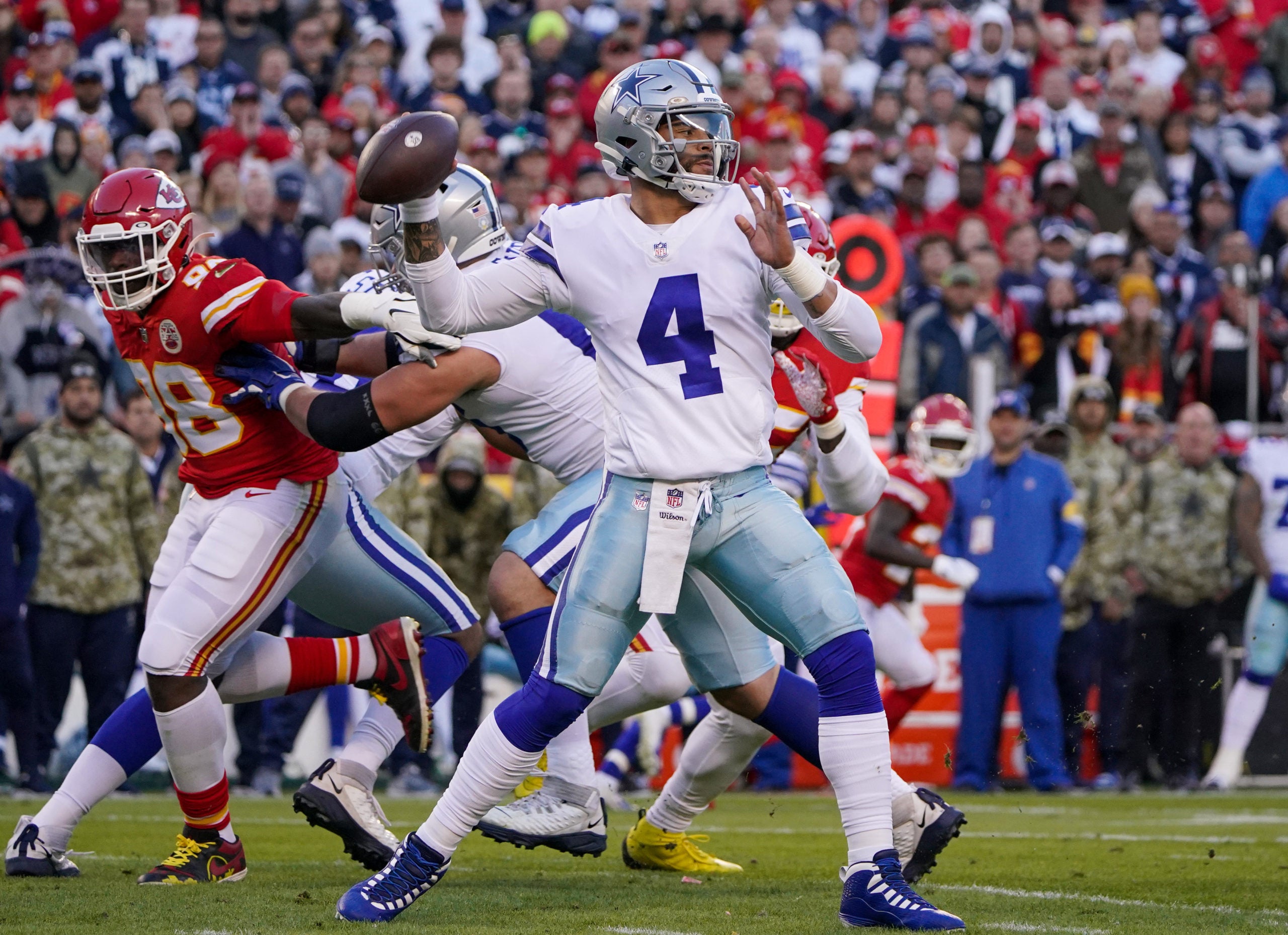
If the 2021 MVP award were based solely on cumulative statistics, Tom Brady likely would have taken home his fourth trophy. At age 44, playing for the Tampa Bay Buccaneers, Brady led the NFL in nearly every major passing category, including passing yards (5,316) and passing touchdowns (43).
Brady’s 5,316 yards were the third-most in a single season in NFL history at that time. He also led the league in completions (485) and attempts (719), showcasing a workload that was unprecedented for a player of his age. The Buccaneers finished with a 13-4 record, identical to the Packers, but lost the tiebreaker for the top seed.
The debate between Rodgers and Brady sparked significant discussion among analysts. Brady supporters argued that his volume and the fact that he led a more prolific offense (Tampa Bay ranked first in passing yards and second in points) made him more "valuable." However, Brady's 12 interceptions—three times as many as Rodgers—and a late-season shutout loss to the New Orleans Saints created the opening Rodgers needed to secure the majority of the votes.
Historical Dominance: Cooper Kupp and the Triple Crown
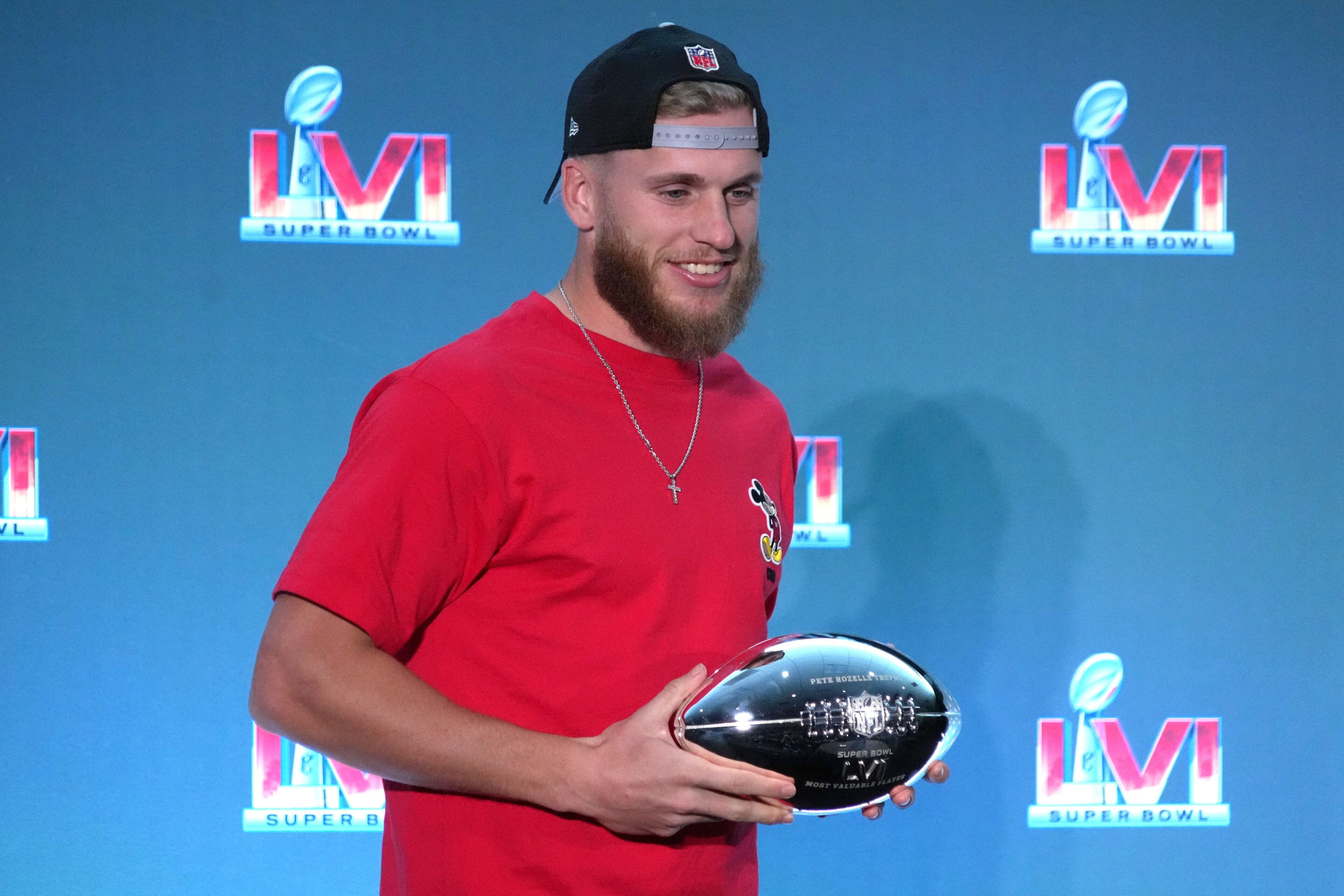
While quarterbacks usually dominate the MVP conversation, the 2021 season featured one of the greatest individual performances by a wide receiver in the history of the sport. Cooper Kupp of the Los Angeles Rams became the first player since Steve Smith in 2005 to achieve the "Triple Crown" of receiving.
Kupp led the NFL in:
- Receptions: 145
- Receiving Yards: 1,947
- Receiving Touchdowns: 16
His 1,947 yards fell just short of Calvin Johnson’s single-season record (1,964), though Kupp achieved his total in 17 games compared to Johnson’s 16. Kupp’s impact was undeniable; he was the focal point of the Rams' offense and a primary reason for their eventual Super Bowl LVI victory. Despite his historic numbers, the traditional bias toward quarterbacks in MVP voting limited him to just one first-place vote. He did, however, rightfully claim the Offensive Player of the Year (OPOY) award.
The Ground Game: Jonathan Taylor’s Breakout Year
The 2021 season also saw a resurgence of the dominant bell-cow running back in the form of Jonathan Taylor. The Indianapolis Colts’ sophomore star led the league in rushing yards (1,811) and total touchdowns (20). Taylor was the engine of the Colts' offense, often carrying the team to victory single-handedly, most notably in a mid-season demolition of the Buffalo Bills where he scored five touchdowns.
Taylor’s 1,811 rushing yards were over 500 more than the second-place finisher (Nick Chubb), highlighting his total dominance of the position that year. Like Kupp, Taylor faced the uphill battle of the "quarterback premium" in MVP voting. While he did not receive a first-place vote for MVP, he was a finalist and served as a reminder that a dominant run game can still dictate the flow of the modern NFL.
2021 NFL MVP Voting and Statistical Comparison
The following table compares the top performers of the 2021 season across the key metrics that defined the MVP race.
| Player | Team | Position | Key Stats | MVP Votes |
|---|---|---|---|---|
| Aaron Rodgers | Green Bay Packers | QB | 4,115 Yds, 37 TD, 4 INT, 111.9 Rating | 39 |
| Tom Brady | Tampa Bay Buccaneers | QB | 5,316 Yds, 43 TD, 12 INT, 102.1 Rating | 10 |
| Cooper Kupp | L.A. Rams | WR | 145 Rec, 1,947 Yds, 16 TD | 1 |
| Jonathan Taylor | Indianapolis Colts | RB | 1,811 Rush Yds, 18 Rush TD, 20 Total TD | 0 |
| Josh Allen | Buffalo Bills | QB | 4,407 Pass Yds, 36 Pass TD, 763 Rush Yds | 0 |
The Quarterback Bias in MVP Voting
The 2021 race highlighted a persistent trend in NFL honors: the "Quarterback Award" phenomenon. Since 2000, only a handful of non-quarterbacks have won the MVP (Marshall Faulk, Shaun Alexander, LaDainian Tomlinson, and Adrian Peterson).
In 2021, the fact that Cooper Kupp had a historic Triple Crown season and Jonathan Taylor led the league in rushing by a massive margin—yet they combined for only one MVP vote—underscored the league's shift toward passing-centric value. The argument made by voters is typically that a quarterback touches the ball on every offensive play and has a more direct influence on the win-loss column than any other position. In 2021, Rodgers' ability to lead the Packers to the top seed while playing nearly flawless football fit the criteria perfectly, even if other players had more "spectacular" statistical totals.
Defensive Player of the Year: T.J. Watt’s Record-Tying Season
While the MVP award is almost exclusively an offensive accolade, the 2021 defensive performance by T.J. Watt of the Pittsburgh Steelers deserves mention among the "top performers" of the year. Watt tied Michael Strahan’s single-season sack record of 22.5, doing so in only 15 games.
Watt’s dominance was the only reason a struggling Steelers team managed to sneak into the playoffs. His ability to disrupt game plans, force fumbles, and create pressure at pivotal moments made him the unanimous choice for Defensive Player of the Year. In a different era of voting, a performance of this magnitude might have garnered MVP consideration, but in 2021, he remained outside the top three in voting.
FAQs About the 2021 NFL MVP
Who won the 2021 NFL MVP?
Aaron Rodgers, the quarterback for the Green Bay Packers, won the 2021 NFL MVP. It was his fourth career MVP award, placing him second all-time behind Peyton Manning (5) in total MVP wins.
Who were the finalists for the 2021 NFL MVP?
The primary finalists and vote-getters were Aaron Rodgers, Tom Brady, and Cooper Kupp. Jonathan Taylor was also widely considered a top candidate but did not receive a first-place vote.
Why did Aaron Rodgers win over Tom Brady in 2021?
While Tom Brady had more passing yards and touchdowns, Rodgers won due to his superior efficiency and fewer turnovers. Rodgers threw only 4 interceptions compared to Brady's 12 and had a higher passer rating. Additionally, Rodgers led his team to the NFC's #1 seed.
Did any non-quarterback receive MVP votes in 2021?
Yes, Cooper Kupp, the wide receiver for the Los Angeles Rams, received one first-place vote. This was a significant achievement given how much the award has been dominated by quarterbacks in recent decades.
How many MVP awards does Aaron Rodgers have now?
As of 2026, looking back at his career, Aaron Rodgers has four NFL MVP awards (2011, 2014, 2020, and 2021). His back-to-back wins in 2020 and 2021 made him one of the few players in history to win the award in consecutive seasons.
What were Cooper Kupp’s stats in his 2021 Triple Crown season?
Cooper Kupp recorded 145 receptions for 1,947 yards and 16 touchdowns. He led the league in all three categories, becoming the first receiver to do so since 2005.
Historical Significance and Final Legacy
The 2021 NFL MVP race is remembered as the climax of the "Efficiency vs. Volume" debate. Aaron Rodgers’ win represented a period where the NFL valued mistake-free football and advanced metrics like Adjusted Net Yards Per Attempt (ANY/A) over raw counting stats. For Rodgers, it was a defiant response to critics who suggested his career was winding down. For Tom Brady, it was yet another season that defied the laws of aging, even if it didn't result in an individual trophy.
For fans and historians researching this era in 2026, the 2021 season stands as a transition point where the 17-game era began, and the dominance of the "old guard" quarterbacks—Rodgers and Brady—reached its final peak before a new generation of mobile, high-volume passers began to take over the league's top honors.