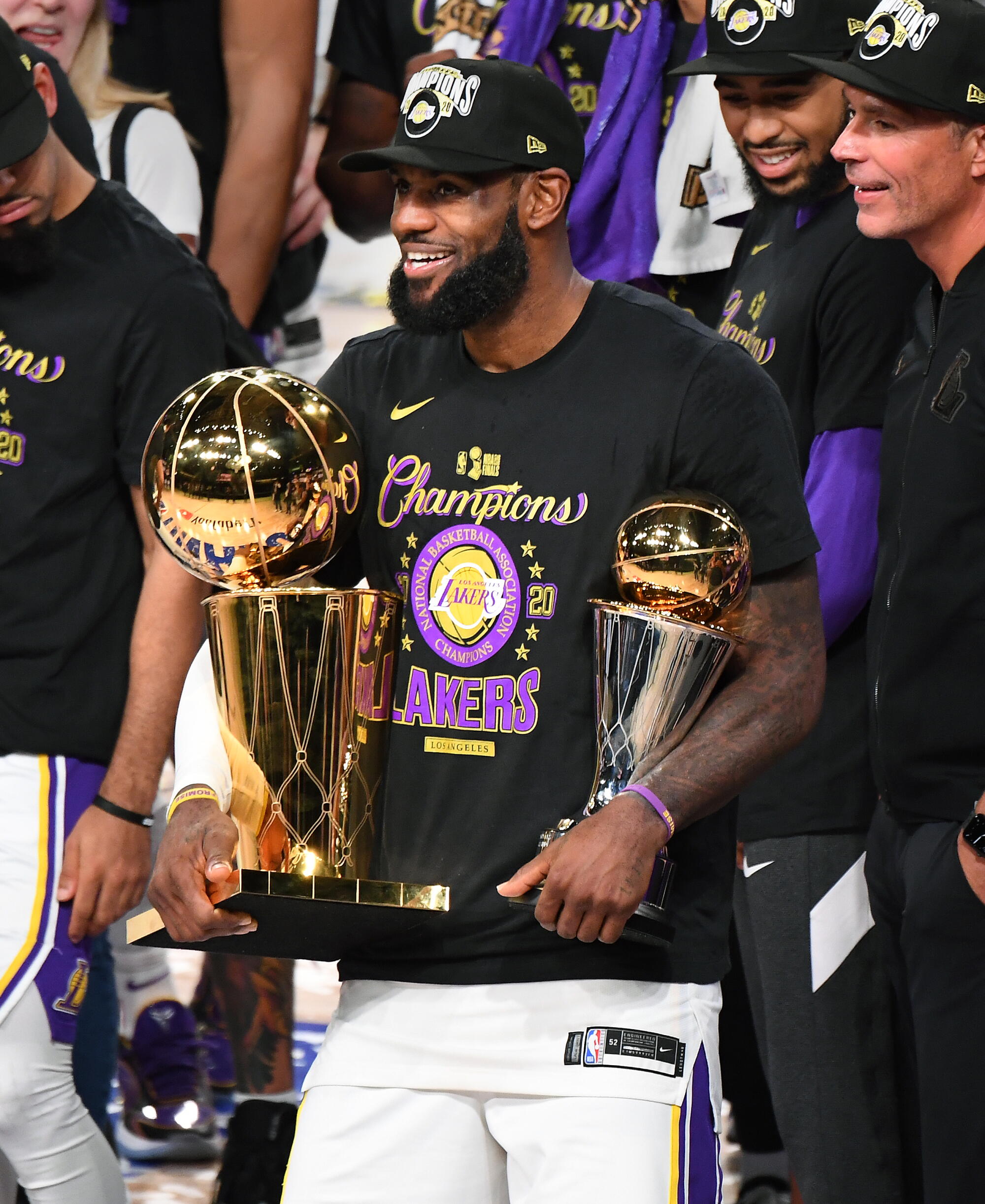
The Los Angeles Lakers secured the 2020 NBA championship by defeating the Miami Heat 4-2 in the NBA Finals. This 17th franchise title, achieved within the unprecedented isolation of the Orlando "Bubble," tied the NBA record for most championships and served as a poignant tribute to the late Kobe Bryant.
The 2019-2020 NBA season was unlike any other in professional sports history. It was defined by a global pandemic, a months-long hiatus, a social justice movement that resonated across the globe, and the tragic loss of a basketball icon. For the Los Angeles Lakers, the journey to the Larry O'Brien Trophy was not merely a test of athletic prowess but a grueling exercise in mental fortitude and organizational resilience. Looking back from 2026, the 2020 title remains one of the most statistically unique and emotionally charged achievements in the annals of the National Basketball Association.
The Emotional Catalyst: Remembering Kobe Bryant
The Lakers’ season was irrevocably altered on January 26, 2020, when franchise legend Kobe Bryant, his daughter Gianna, and seven others perished in a helicopter crash. For a team that already carried the immense pressure of championship expectations, the loss of Bryant transformed the season into a mission of remembrance.
The team adopted the "Leave a Legacy" mantra, with players like LeBron James and Anthony Davis frequently citing Bryant’s "Mamba Mentality" as their guiding principle. This emotional weight created a singular focus within the locker room. While many teams struggled with the distractions of the 2019-2020 season, the Lakers utilized their collective grief as a bonding agent. The introduction of the "Black Mamba" alternative jerseys—which the team wore during pivotal playoff moments—served as a visual reminder of their dedication to Bryant’s legacy. Strategically, this emotional alignment allowed head coach Frank Vogel to demand a high level of defensive accountability, as the players felt a personal responsibility to uphold the standard Bryant had set for the Purple and Gold.
The Technical Execution of the "NBA Bubble"
Following a suspension of play on March 11, 2020, due to the COVID-19 pandemic, the NBA resumed its season in July at the ESPN Wide World of Sports Complex in Orlando, Florida. This "Bubble" environment was a technical and logistical marvel that fundamentally changed the dynamics of the playoffs.
In the Bubble, the traditional advantages of a top-seeded team—namely home-court advantage and crowd energy—were eliminated. The Lakers, who had earned the number one seed in the Western Conference, had to find internal motivation without the raucous environment of Staples Center. The isolation also presented significant mental health challenges, as players were separated from their families for more than 100 days.
From a performance standpoint, the lack of travel benefited veteran players like LeBron James, allowing for better recovery and consistent sleep cycles. However, the "neutral court" setting also acted as a Great Equalizer, leading to high-scoring games and several statistical anomalies. The Lakers' ability to maintain their defensive identity (ranking 3rd in defensive rating during the regular season) in a high-variance environment was the primary reason they successfully navigated the post-season.
Roster Construction and the Anthony Davis Impact
The foundation of the 2020 championship was laid in the summer of 2019 with the blockbuster trade for Anthony Davis. By pairing Davis with LeBron James, the Lakers created the most formidable pick-and-roll tandem in the league.
Davis provided a defensive versatility that allowed the Lakers to switch screens or play "drop" coverage effectively. During the 2020 playoff run, Davis averaged 27.7 points and 9.7 rebounds per game, shooting an impressive 57.1% from the field. His presence allowed LeBron James to transition into a full-time playmaker role, where James led the league in assists (10.2 per game) for the first time in his career.
Beyond the superstars, the Lakers’ success relied on a "cast of specialists" designed to complement their leaders:
- Kentavious Caldwell-Pope: Provided essential floor spacing and perimeter defense.
- Rajon Rondo: Known as "Playoff Rondo," his high basketball IQ and secondary playmaking were crucial when James was off the floor.
- Dwight Howard and JaVale McGee: Offered a "twin towers" rim protection strategy that neutralized smaller, faster lineups.
- Alex Caruso: A defensive analytics darling who provided energy and intelligent rotations.
The Road to the Finals: Overcoming the Western Conference
The Lakers' path to the 2020 NBA Finals required them to dismantle three distinct styles of play, proving their tactical flexibility.
- First Round vs. Portland Trail Blazers (4-1): The Lakers faced a "hot" Portland team led by Damian Lillard. After dropping Game 1, the Lakers utilized their size to overwhelm the Blazers’ backcourt, setting a tone of defensive dominance.
- Conference Semifinals vs. Houston Rockets (4-1): This series was a clash of philosophies. Houston utilized an extreme "small ball" lineup without a traditional center. Coach Vogel adjusted by benching his traditional bigs and moving Anthony Davis to the center position, showcasing the Lakers' ability to win at any tempo.
- Conference Finals vs. Denver Nuggets (4-1): The Nuggets were coming off two consecutive 3-1 series comebacks. The Lakers prevented a third comeback through a legendary Game 2 buzzer-beater by Anthony Davis and a masterclass closing performance by LeBron James in Game 5.
The 2020 NBA Finals: Lakers vs. Miami Heat
The Finals matchup against the Miami Heat was a grueling six-game series that tested the Lakers' depth and endurance. Led by Jimmy Butler, the Heat were a resilient, well-coached unit that capitalized on every Laker mistake.
| Game | Result | Key Performer | Significance |
|---|---|---|---|
| Game 1 | LAL 116, MIA 98 | Anthony Davis (34 pts) | Lakers dominate early; Heat suffer injuries to Dragic and Adebayo. |
| Game 2 | LAL 124, MIA 114 | LeBron James (33 pts) | The Lakers' size in the paint becomes unmanageable for Miami. |
| Game 3 | MIA 115, LAL 104 | Jimmy Butler (40-pt TD) | Butler delivers one of the greatest individual Finals performances. |
| Game 4 | LAL 102, MIA 96 | Kentavious Caldwell-Pope | A gritty defensive battle where role players hit "clutch" shots. |
| Game 5 | MIA 111, LAL 108 | Jimmy Butler/LeBron James | A legendary duel; Danny Green misses a potential title-winning shot. |
| Game 6 | LAL 106, MIA 93 | LeBron James (28/14/10) | A defensive clinic; Lakers lead by 28 at halftime to clinch. |
In Game 6, the Lakers delivered one of the most dominant defensive halves in Finals history. By moving Alex Caruso into the starting lineup for Dwight Howard, Vogel opted for maximum mobility. The Lakers stifled Miami’s shooters and forced turnovers that led to easy transition points. LeBron James finished the clincher with a triple-double, earning his fourth Finals MVP award and becoming the first player to win the award with three different franchises.
Historical Significance and Legacy in 2026
From the perspective of 2026, the 2020 Lakers title is viewed with increasing respect. Critics initially labeled it a "Mickey Mouse ring" due to the lack of travel and fans, but sports scientists and historians now recognize the unique hardships of the Bubble. The 2020 post-season actually featured some of the highest-quality basketball in history because players were fully rested and focused solely on the game without external distractions.
For the Lakers organization, this championship was the culmination of a decade-long rebuild. It validated the decision to trade the "young core" for Anthony Davis and cemented LeBron James’ place in the pantheon of Lakers greats. Furthermore, tying the Boston Celtics at 17 titles (at the time) reignited the most famous rivalry in basketball.
Frequently Asked Questions
Who won the 2020 NBA Finals MVP?
LeBron James was named the 2020 NBA Finals MVP. He averaged 29.8 points, 11.8 rebounds, and 8.5 assists per game throughout the six-game series against the Miami Heat. This was his fourth Finals MVP award, placing him second all-time behind Michael Jordan.
Why was the 2020 NBA season finished in a "Bubble"?
The season was finished in a "Bubble" at Walt Disney World in Orlando to protect players and staff from the COVID-19 pandemic. By creating a strictly controlled environment with daily testing and limited entry, the NBA successfully completed the season without a single positive case inside the campus.
How did the Lakers honor Kobe Bryant during the run?
The Lakers honored Kobe Bryant by wearing "Black Mamba" jerseys, which featured a snakeskin print. They famously went undefeated in these jerseys until Game 5 of the Finals. Players also broke every huddle with the chant "1-2-3 Mamba!" and dedicated the championship trophy to his memory.
What was the Lakers' final record in the 2020 playoffs?
The Lakers finished the 2020 playoffs with a 16-5 record. They won each of their Western Conference series (against Portland, Houston, and Denver) in five games (4-1) and defeated the Miami Heat in six games (4-2).
Which players were key contributors besides LeBron and Davis?
Key contributors included Rajon Rondo, whose veteran leadership and playmaking were essential; Kentavious Caldwell-Pope, the team's most consistent outside shooter; and Alex Caruso, whose defensive versatility allowed the team to adjust to smaller lineups. Dwight Howard also played a vital role in neutralizing opposing centers like Nikola Jokic.
Practical Recommendation for Historians and Fans
To fully appreciate the technical nuances of the 2020 title run, fans and researchers should consult the official NBA Advanced Stats portal for the 2019-20 post-season. Analyzing the "Defensive Rating" and "True Shooting Percentage" of the Lakers during the Bubble provides a clearer picture of how they maintained elite performance under isolation. Additionally, viewing the documentary "Legacy: The True Story of the LA Lakers" offers behind-the-scenes context regarding the organizational decisions that led to the Anthony Davis trade and the hiring of Frank Vogel, both of which were instrumental to the 2020 success.