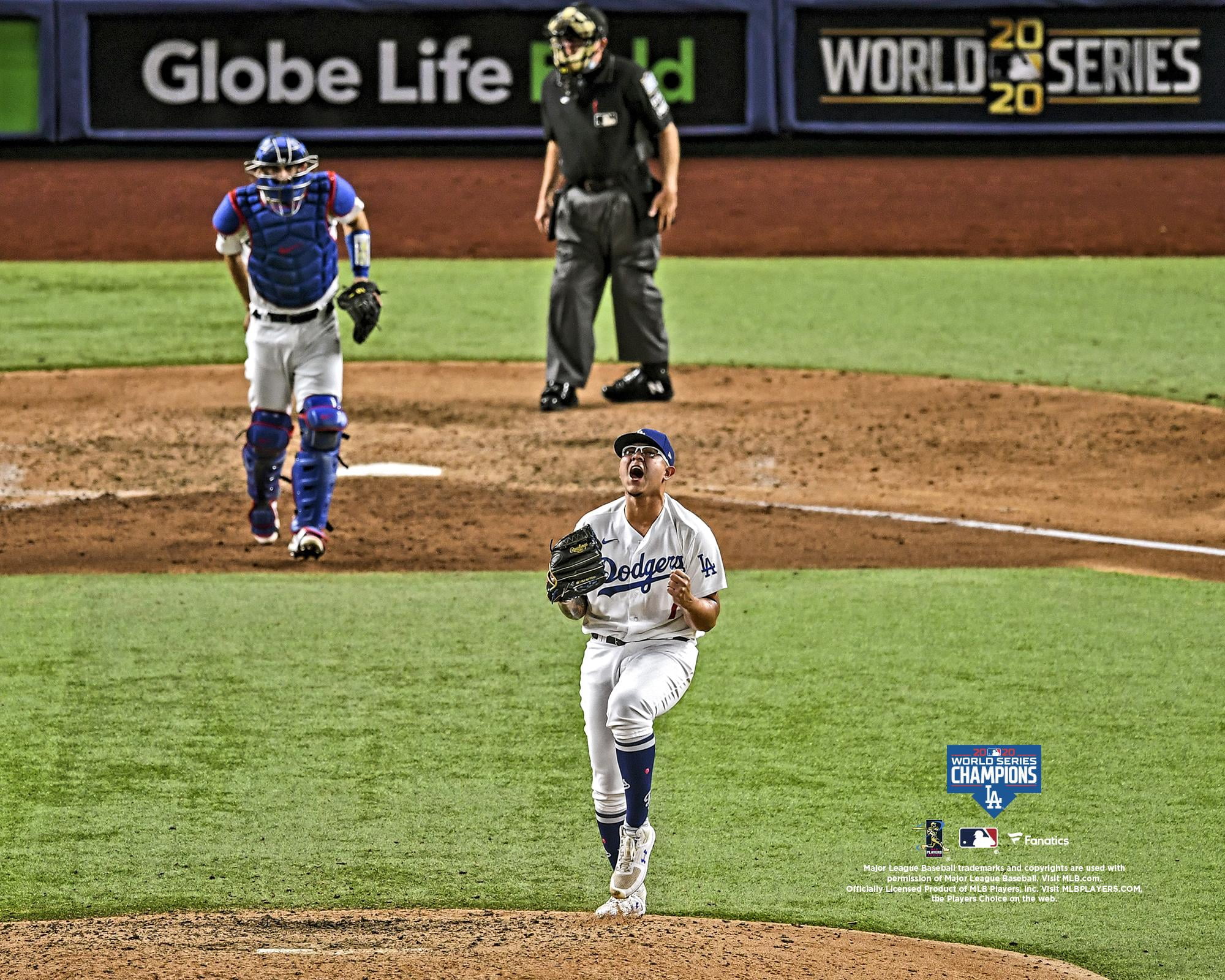
The 2020 World Series featured the Los Angeles Dodgers and the Tampa Bay Rays, concluding with the Dodgers winning the championship four games to two. Played entirely at the neutral site of Globe Life Field in Arlington, Texas, this series ended the Dodgers' 32-year title drought and marked the first neutral-site World Series in Major League Baseball history.
The Context of the 2020 MLB Season
To understand the 2020 World Series, one must look at the unprecedented circumstances surrounding the 2020 MLB season. Shortened to just 60 games due to the COVID-19 pandemic, the regular season was a sprint rather than the traditional 162-game marathon. This forced teams to prioritize immediate performance over long-term development, leading to unique roster constructions and high-leverage decision-making from the opening week.
The postseason was expanded to 16 teams, adding a best-of-three Wild Card Series before the traditional Division and Championship Series. By the time the Dodgers and Rays met in Arlington, both teams had navigated a grueling "bubble" environment designed to minimize travel and health risks. From our vantage point in 2026, the 2020 season remains a singular event in baseball history, representing a moment where the sport adapted its fundamental structures to ensure a champion could be crowned.
Team Profile: The Los Angeles Dodgers (National League Champions)
The 2020 Los Angeles Dodgers entered the World Series as the favorites, having finished the regular season with a 43-17 record, the best in baseball. This translated to a 116-win pace in a standard season. The team was built on a foundation of homegrown talent supplemented by the high-profile acquisition of Mookie Betts from the Boston Red Sox.
Offensive Powerhouse
The Dodgers led the majors in home runs (118) and runs scored (349) during the 60-game regular season. Their lineup featured depth that made it difficult for opposing pitchers to find a "breather" inning. Core players included:
- Corey Seager: The shortstop was in the midst of a historic postseason run, eventually winning both the NLCS and World Series MVP.
- Mookie Betts: His arrival shifted the team's culture, providing elite defense in right field and a dynamic presence at the top of the order.
- Justin Turner: The veteran third baseman provided consistent contact and veteran leadership.
Pitching Dominance
The Dodgers' rotation was led by veteran ace Clayton Kershaw and young phenom Walker Buehler. Kershaw, who had long faced criticism for his postseason performances, used the 2020 World Series to cement his legacy, delivering two crucial wins. The bullpen, anchored by Kenley Jansen and Julio Urías, proved versatile, with Urías transitioning into a multi-inning "closer" role that would define the final moments of the series.
Team Profile: The Tampa Bay Rays (American League Champions)
The Tampa Bay Rays entered the World Series representing the pinnacle of "small-market" efficiency. With a payroll significantly lower than that of the Dodgers, the Rays utilized advanced analytics, aggressive defensive shifting, and a "stable" of high-velocity relief pitchers to finish with the best record in the American League (40-20).
The Randy Arozarena Phenomenon
While the Rays were known for their collective approach, the 2020 postseason was defined by the individual brilliance of rookie Randy Arozarena. Arozarena set multiple MLB records during the playoffs, including most home runs (10), most hits (29), and most total bases (64) in a single postseason. His ability to punish fastballs made him the most feared hitter in the Tampa Bay lineup.
Pitching and Strategy
The Rays relied on a "win by committee" pitching staff. Their front three—Blake Snell, Charlie Morton, and Tyler Glasnow—provided elite strikeout potential, but manager Kevin Cash was famous for his quick hook. The Rays' philosophy prioritized avoiding the "third time through the order" penalty, relying on a bullpen featuring high-leverage arms like Nick Anderson, Pete Fairbanks, and Diego Castillo.
Game-by-Game Results and Analysis
The 2020 World Series was a back-and-forth affair characterized by tactical pitching changes and dramatic offensive outbursts.
Game 1: Dodgers 8, Rays 3
Clayton Kershaw set the tone with a dominant performance, striking out eight across six innings. The Dodgers' offense exploded in the middle innings, highlighted by Mookie Betts' baserunning aggressiveness and home runs from Cody Bellinger and Betts himself.
Game 2: Rays 6, Dodgers 4
The Rays responded behind Brandon Lowe, who hit two opposite-field home runs. The Tampa Bay bullpen managed to hold off a late Dodgers rally, evening the series at one game apiece.
Game 3: Dodgers 6, Rays 2
Walker Buehler delivered a masterpiece, striking out 10 in six innings of one-run ball. The Dodgers capitalized on defensive lapses and timely hitting to regain the series lead.
Game 4: Rays 8, Dodgers 7
This game is remembered as one of the wildest finishes in World Series history. With the Dodgers leading in the bottom of the 9th, the Rays had runners on. Brett Phillips, an unlikely hero, hit a single to center field. A series of fielding errors by the Dodgers allowed Randy Arozarena to score the winning run after he had originally stumbled and fallen between third and home.
Game 5: Dodgers 4, Rays 2
Kershaw returned to the mound and provided another steady performance. Despite a daring steal of home attempt by the Rays' Manuel Margot (which was thwarted by Kershaw’s calm delivery), the Dodgers secured the win to move within one game of the title.
Game 6: Dodgers 3, Rays 1
The deciding game was defined by a controversial managerial decision. Rays starter Blake Snell was dominant, allowing only two hits and striking out nine through 5.1 innings. However, after a one-out single in the 6th, Kevin Cash pulled Snell to avoid the third time through the order. The Dodgers immediately capitalized against the Rays' bullpen, scoring two runs in that inning. Julio Urías closed out the game with 2.1 perfect innings.
2020 World Series Statistical Summary
| Game | Date | Score | Winning Pitcher | Losing Pitcher | Save |
|---|---|---|---|---|---|
| Game 1 | Oct 20, 2020 | LAD 8, TB 3 | Clayton Kershaw | Tyler Glasnow | — |
| Game 2 | Oct 21, 2020 | TB 6, LAD 4 | Nick Anderson | Tony Gonsolin | Diego Castillo |
| Game 3 | Oct 23, 2020 | LAD 6, TB 2 | Walker Buehler | Charlie Morton | — |
| Game 4 | Oct 24, 2020 | TB 8, LAD 7 | John Curtiss | Kenley Jansen | — |
| Game 5 | Oct 25, 2020 | LAD 4, TB 2 | Clayton Kershaw | Tyler Glasnow | Blake Treinen |
| Game 6 | Oct 27, 2020 | LAD 3, TB 1 | Victor González | Nick Anderson | Julio Urías |
Key Facts and Historical Milestones
The 2020 World Series was more than just a championship; it was a record-breaking event that changed how the game is analyzed.
- Corey Seager’s MVP Performance: Seager became the eighth player in MLB history to win the LCS and World Series MVP in the same season. He joined the likes of Orel Hershiser (1988) and Madison Bumgarner (2014) in postseason immortality.
- The "Snell Game" Controversy: Kevin Cash’s decision to remove Blake Snell in Game 6 remains one of the most debated managerial moves in baseball history. It highlighted the friction between traditional "eye-test" scouting and the data-driven "third time through the order" analytics.
- Neutral Site Innovation: Globe Life Field in Arlington served as the host. Because there was no travel, teams did not have the traditional off-days during the LCS, though the World Series maintained the standard 2-3-2 format with scheduled breaks.
- Mookie Betts' Impact: In his first year with the Dodgers, Betts became the first player to win an MVP and a World Series with one team (Red Sox), then win a World Series with another team (Dodgers) within a three-year span.
- Randy Arozarena’s Records: Arozarena ended the postseason with 10 home runs, a mark that remains the gold standard for rookie power hitting in the playoffs.
The Legacy of the 2020 World Series
Looking back from 2026, the 2020 World Series validated the Los Angeles Dodgers' organizational philosophy of combining massive financial resources with elite player development. It also served as a validation for Clayton Kershaw, removing the "postseason choker" label that had followed him for a decade. For the Tampa Bay Rays, the series reinforced their status as the most dangerous "budget" team in the league, though it also left fans wondering "what if" regarding the Snell substitution.
The series proved that baseball could maintain its intensity and high-level play even under the most restrictive and unusual conditions. The 2020 Dodgers are now recognized as one of the most complete teams of the 21st century, serving as the launchpad for their continued dominance throughout the early 2020s.
Frequently Asked Questions
Who won the 2020 World Series MVP?
Corey Seager was named the 2020 World Series MVP. The Dodgers shortstop batted .400 with two home runs and five RBIs during the series, following an equally impressive performance in the National League Championship Series.
Why was the 2020 World Series played in Texas?
The World Series was played at Globe Life Field in Arlington, Texas, to create a "bubble" environment. This was done to minimize the risk of COVID-19 transmission by eliminating travel between cities and keeping players and staff in a controlled, quarantined setting.
How many games did it take for the Dodgers to win?
The Los Angeles Dodgers won the World Series in six games. They secured the title with a 3-1 victory in Game 6 on October 27, 2020.
What was the controversy in Game 6 of the 2020 World Series?
The controversy involved Rays manager Kevin Cash pulling starting pitcher Blake Snell in the 6th inning despite Snell having allowed only two hits and striking out nine. Immediately after Snell was removed, the Dodgers took the lead, leading to widespread criticism of over-reliance on analytics.
Did the 2020 World Series have fans in attendance?
Yes, but in a very limited capacity. Approximately 11,500 fans were allowed per game at Globe Life Field, which represented about 28% of the stadium's total capacity. This was the only round of the 2020 postseason to permit fans.
Verification and Next Actions
For those looking to dive deeper into the play-by-play data or advanced metrics of the 2020 World Series, the most reliable resources remain official league archives.
- Consult Baseball-Reference: For comprehensive "Box Scores" and "Win Probability" charts for each of the six games.
- MLB Film Room: To watch specific tactical moments, such as the Game 4 ending or every pitch of the Snell/Betts matchup in Game 6.
- Statcast Data: Review the exit velocity and launch angles of Randy Arozarena’s record-breaking home runs to see how his performance compares to modern 2026 standards.