The 2019 Met Gala theme was "Camp: Notes on Fashion," inspired by Susan Sontag’s foundational 1964 essay "Notes on 'Camp'." Held on May 6, 2019, at The Metropolitan Museum of Art, the event celebrated artifice, exaggeration, irony, theatricality, and humor in high fashion, under the leadership of co-chairs Lady Gaga, Alessandro Michele, Harry Styles, Serena Williams, and Anna Wintour.
Defining Camp: The Intellectual Foundation of the 2019 Theme
To understand the 2019 Met Gala, one must first understand its theoretical framework. Andrew Bolton, the Wendy Yu Curator in Charge of The Costume Institute at The Metropolitan Museum of Art, chose "Camp: Notes on Fashion" to explore how fashion expresses humor, irony, parody, pastiche, artifice, theatricality, and exaggeration.
The concept was directly anchored in American writer and philosopher Susan Sontag’s 1964 essay, "Notes on 'Camp'." Published in the Partisan Review, Sontag's work sought to codify a sensibility that prioritizes style over substance, aesthetic enthusiasm over moral judgment, and unnatural artifice over organic beauty. Sontag outlined 58 distinct points defining the phenomenon, famously stating that "the essence of Camp is its love of the unnatural: of artifice and exaggeration."
In setting this theme, The Costume Institute highlighted how fashion serves as a primary medium for campy expression. The aesthetic traces its origins back to the royal court of Louis XIV at Versailles, through the 19th-century dandyism of Oscar Wilde, to 20th-century queer subcultures, and into modern high-fashion runways. The 2019 theme challenged attendees to move beyond traditional elegance and embrace a visual language defined by purposeful excess, theatrical performance, and self-conscious irony.
Co-Chairs, Hosts, and Event Leadership
The annual Costume Institute Benefit is organized under the direction of Vogue Editor-in-Chief Anna Wintour. For the 2019 gala, Wintour assembled a diverse panel of co-chairs who embodied different facets of the Camp ethos across fashion, music, pop culture, and sports:
- Lady Gaga: Renowned for her career-long reliance on avant-garde performance art, boundary-pushing stage wear, and theatrical transformations.
- Alessandro Michele: The former Creative Director of Gucci (which sponsored the exhibition), whose signature design style brought maximalism, historical references, and gender-fluid aesthetics to the forefront of luxury fashion.
- Harry Styles: A musician known for dismantling traditional menswear boundaries through bold colors, fluid silhouettes, and decorative tailoring.
- Serena Williams: An iconic athlete who brought high-fashion sensibility to competitive tennis, bridging sportswear and haute couture.
- Anna Wintour: The historic chair of the Met Gala since 1995, who oversees the guest list, theme selection, and broader fundraising efforts for The Costume Institute.
Together, these co-chairs set the tone for an evening where traditional dress codes were explicitly discarded in favor of performance art and grand sartorial drama.
Standout Red Carpet Interpretations and Iconic Moments
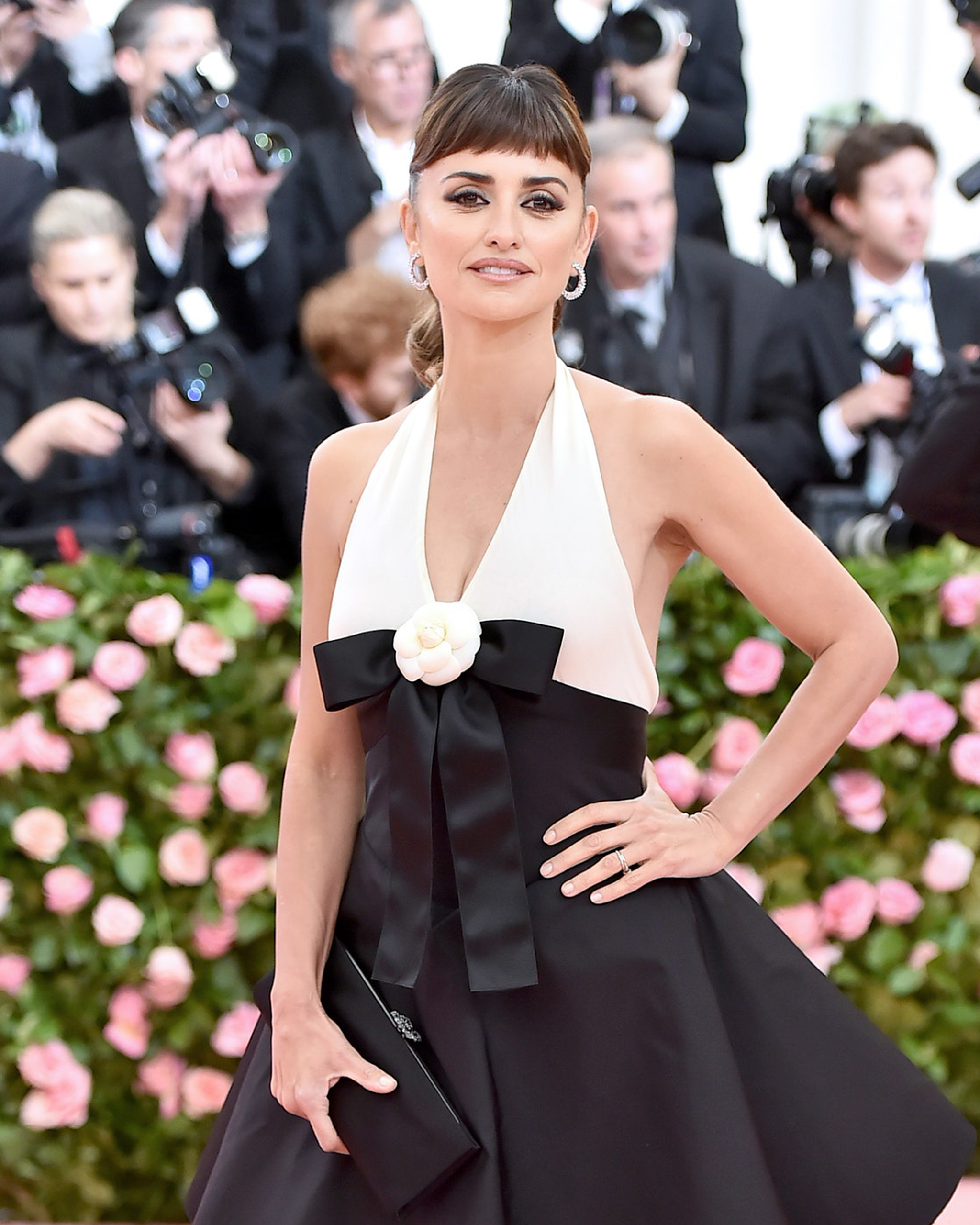
The 2019 red carpet—pink rather than the traditional red to honor the theme—produced some of the most memorable visual moments in modern pop-culture history. While some guests opted for safe glamour, those who fully grasped the theme delivered calculated spectacles of exaggerated performance.
Lady Gaga's Four-Part Striptease
Opening the red carpet, co-chair Lady Gaga performed a 15-minute live entrance designed by Brandon Maxwell. Her arrival featured four distinct outfit reveals:
- A massive, billowy fuchsia cape gown with a 25-foot train, accompanied by umbrella-bearing dancers.
- A sleek, black strapless gown with an exaggerated bustle contour.
- A hot-pink column dress paired with oversized Linda Farrow sunglasses and a vintage brick cell phone.
- A final reveal of black crystal-embellished lingerie, fishnets, and platform boots, pulling a wagon filled with Haus Laboratories makeup.
Billy Porter's Sun God Entrance
Actor Billy Porter arrived as an Egyptian Sun God, carried on a velvet-draped litter by six shirtless male attendants wearing gold trousers and headpieces. Designed by The Blonds, Porter’s custom ensemble featured a 24-karat gold-embellished catsuit, a crystal headpiece, and 10-foot golden wings that unfolded as he stepped onto the pink carpet.
Jared Leto and the Gucci Wax Head
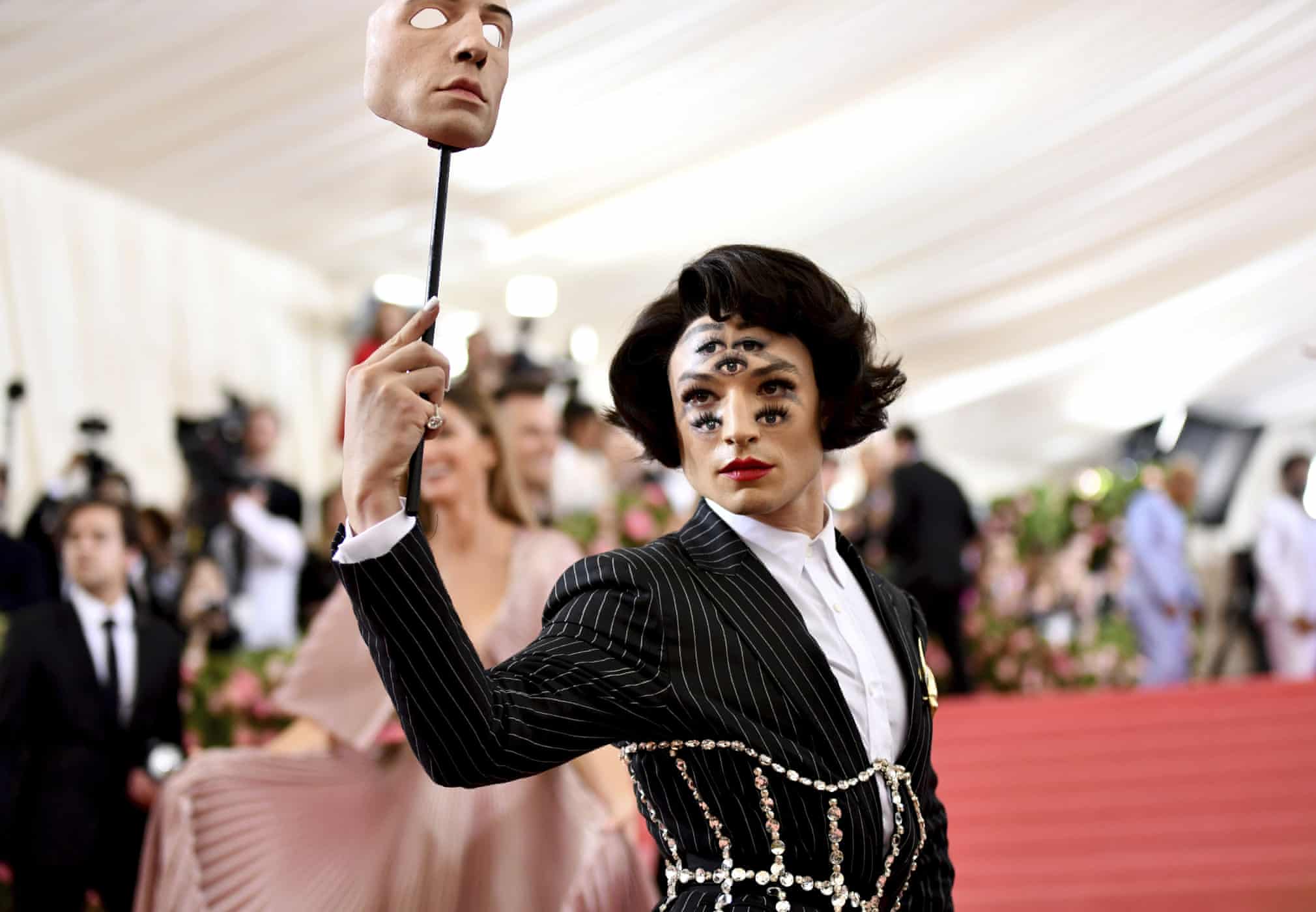
Jared Leto walked the carpet in a floor-length, silk ruby gown decorated with intricate body armor detailing, designed by Gucci. His primary accessory was a life-sized, hyper-realistic silicone replica of his own head, referencing Alessandro Michele’s autumn/winter 2018 runway show for Gucci.
Katy Perry's Chandelier and Cheeseburger
Singer Katy Perry wore a fully operational Moschino chandelier gown designed by Jeremy Scott, complete with lit lightbulbs and hanging crystal prisms. Later during the indoor dinner, Perry transformed into a giant costume replica of a classic hamburger, highlighting the pop-art, kitsch dimension of Sontag's thesis.
Zendaya’s Animatronic Cinderella Gown
Zendaya wore a custom Tommy Hilfiger ballgown modeled after Cinderella. Stylist Law Roach, dressed as a fairy godfather with a glowing wand, used an concealed animatronic mechanism to illuminate the blue gown with light-emitting diodes (LEDs) on the carpet stairs, leaving behind a glass slipper.
Cardi B’s Monumental Ruby Gown
Rapper Cardi B wore a custom Thom Browne creation that covered over 35 feet of space. Crafted from oxblood silk tulle and organza, filled with down feathers, and hand-embroidered with 30,000 feathers, the gown required a five-person handler team to navigate up the Met steps.
How Celebrities and Designers Approached the Theme
The theme challenged designers to translate abstract literary criticism into physical garments. Successful interpretations generally fell into four distinct creative strategies: hyper-theatrical performance, pastiche and pop kitsch, exaggerated silhouettes, and historic dandyism.
| Guest / Designer | Garment Strategy | Key Camp Attributes | Theme Execution Grade |
|---|---|---|---|
| Lady Gaga (Brandon Maxwell) | Multi-tier reveal performance art | Exaggeration, theatricality, self-aware pop spectacle | Exemplary |
| Billy Porter (The Blonds) | Mythological pageantry | Excess, gender-fluid drama, courtly spectacle | Exemplary |
| Katy Perry (Moschino) | Literal object pop-kitsch | Irony, humor, low-culture elevation | High |
| Harry Styles (Gucci) | Romantic dandyism | Gender bending, subtle sartorial irony, delicate artifice | High |
| Zendaya (Tommy Hilfiger) | Narrative performance | Pop-culture pastiche, tech-driven theatrical artifice | High |
| Jared Leto (Gucci) | Surrealist uncanny artifice | Macabre humor, runway self-reference | High |
| Kacey Musgraves (Moschino) | Life-sized doll cosplay | Barbie pastiche, kitsch, hyper-synthetic styling | High |
| Kim Kardashian (Mugler) | Hyper-stylized body sculpture | Extreme corsetry, "wet look" optical illusion | Moderate/High |
Common Pitfalls: Why Some Guests Missed the Mark
A persistent challenge of the Met Gala is ensuring guests adhere to the specific theme rather than defaulting to generic red-carpet glamour. The 2019 theme presented a particular trap: Camp is inherently hard to pin down, and trying too hard to be campy can sometimes undermine the organic irony required by the concept.
Confusing "Camp" with Generic Beauty
Several attendees arrived in conventional, elegant evening gowns or classic tuxedos. While aesthetically pleasing, these looks failed to engage with the prompt. Sontag noted that Camp is "disengaged, depoliticized—or at least apolitical," and fundamentally opposed to ordinary, tasteful elegance. Plain Hollywood glamour misses the deliberate exaggeration the theme demands.
Over-Simplifying to Generic Costuming
Conversely, some guests mistook Camp for generic Halloween costuming without fashion technique or conceptual depth. Authentic Camp in fashion requires high craft, precise references, or elevated irony. Simply wearing a wacky outfit without stylistic rigor or historical awareness often resulted in garments that felt cheap rather than intentionally kitsch.
The Costume Institute Exhibition Architecture
Beyond the red carpet gala, "Camp: Notes on Fashion" existed as an extensive public exhibition inside the Fifth Avenue building of The Metropolitan Museum of Art from May 9 to September 8, 2019.
Exhibition Layout: The Met Costume Institute (2019)
- Section 1: Origins & Etymology
- Versailles Court (Beau Idéal & Louis XIV)
- 19th-Century Dandyism (Oscar Wilde & Queer Subculture)
- Section 2: Sontag's 58 Propositions
- Literary & Visual Texts of 1964
- Codification of Artifice & Irony
- Section 3: Modern High-Fashion Manifestations
- Naive Camp vs. Deliberate Camp
- Runway Designs (Off-White, Moschino, Comme des Garçons, Gucci)
Curator Andrew Bolton structured the exhibition into two main parts:
Part One: Origins and History
The first section examined the historical roots of camp as a linguistic term and aesthetic concept. It opened with the French verb camper (meaning "to pose bold, provocative attitudes") used in the court of Louis XIV at Versailles. It traced the evolution through:
- The dandy figures of 19th-century London and Paris.
- The literary works and trials of Oscar Wilde.
- The underground queer subcultures of the early-to-mid 20th century in Europe and North America.
- Susan Sontag’s original manuscript pages, photos, and media context from 1964.
Part Two: The Modern Fashion Canvas
The main gallery featured approximately 250 objects dating from the 17th century to the present day. It displayed works by iconic modern fashion houses and designers, including:
- Balenciaga (historical and Cristobal-inspired exaggerated forms).
- Schiaparelli (surrealist trompe-l'œil garments).
- Moschino by Jeremy Scott (pop-art, food packaging, and consumerism dresses).
- Comme des Garçons by Rei Kawakubo (sculptural forms that distort human anatomy).
- Mugler (hyper-corseted architecture and theatrical creature couture).
- Gucci by Alessandro Michele (maximalist layered garments blending historical eras).
Cultural Impact and Legacy
The 2019 Met Gala marked a pivotal moment in contemporary fashion history, accelerating several broader cultural and industry shifts.
Mainstream Acceptance of Gender-Fluid Dressing
By placing figures like Harry Styles in lace, heels, and a single pearl earring, and Billy Porter in gold-winged couture, the 2019 gala normalized menswear that openly departs from traditional black-tie tailoring. The event helped push gender-fluid red-carpet styling into mainstream entertainment reporting and award shows over subsequent years.
The Institutionalization Paradox
The exhibition raised a critical debate among cultural critics: Can Camp remain authentic once it is sponsored by elite luxury brands and housed inside a major museum? Sontag noted that "to talk about Camp is to betray it." By bringing a sensibility rooted in subversion into the heart of high society, the 2019 gala both celebrated and institutionalized an aesthetic that originally gained power as an outsider phenomenon.
Frequently Asked Questions
What was the official title of the 2019 Met Gala theme?
The official theme for the 2019 Met Gala and the accompanying Costume Institute exhibition was "Camp: Notes on Fashion."
Who wrote the text that inspired the 2019 theme?
The theme was directly inspired by American writer and critic Susan Sontag’s 1964 landmark essay, "Notes on 'Camp'," which detailed 58 characteristics defining camp aesthetics.
Who were the co-chairs for the 2019 event?
The 2019 Met Gala co-chairs were musician and actress Lady Gaga, designer Alessandro Michele, singer and actor Harry Styles, tennis champion Serena Williams, and Vogue Editor-in-Chief Anna Wintour.
How did the red carpet differ from traditional Met Galas?
To reflect the theme's vibrant, anti-traditional nature, the event replaced the customary red carpet with a bright pink carpet and featured elaborate live performance art entrances.
What is the core definition of "Camp" in fashion?
In fashion, Camp refers to a style defined by deliberate artifice, irony, humor, theatricality, and exaggeration, prioritizing aesthetic playfulness and performance over classic elegance.
Analyzing Historical Met Gala Themes: Framework for Researchers
For fashion historians, design students, and cultural analysts studying past Met Gala themes, evaluating an exhibition's success requires assessing how theoretical concepts translate into physical design and popular culture.
To conduct a systematic analysis of any Costume Institute theme:
- Examine the Primary Literature: Read the original text or historical prompt guiding the curator (such as Sontag's 1964 essay for 2019, or historical archives for regional/period retrospectives).
- Evaluate Red Carpet Adherence: Classify attendee interpretations into specific categories (e.g., direct thematic engagement, narrative performance, historic reverence, or failure to engage).
- Review the Exhibition Layout: Analyze how the gallery architecture physically groups objects, contrasting historic antecedents alongside modern runway haute couture.
- Assess Industry Impact: Track how red carpet looks influence retail trends, menswear shifts, and celebrity styling approaches in the years following the event.