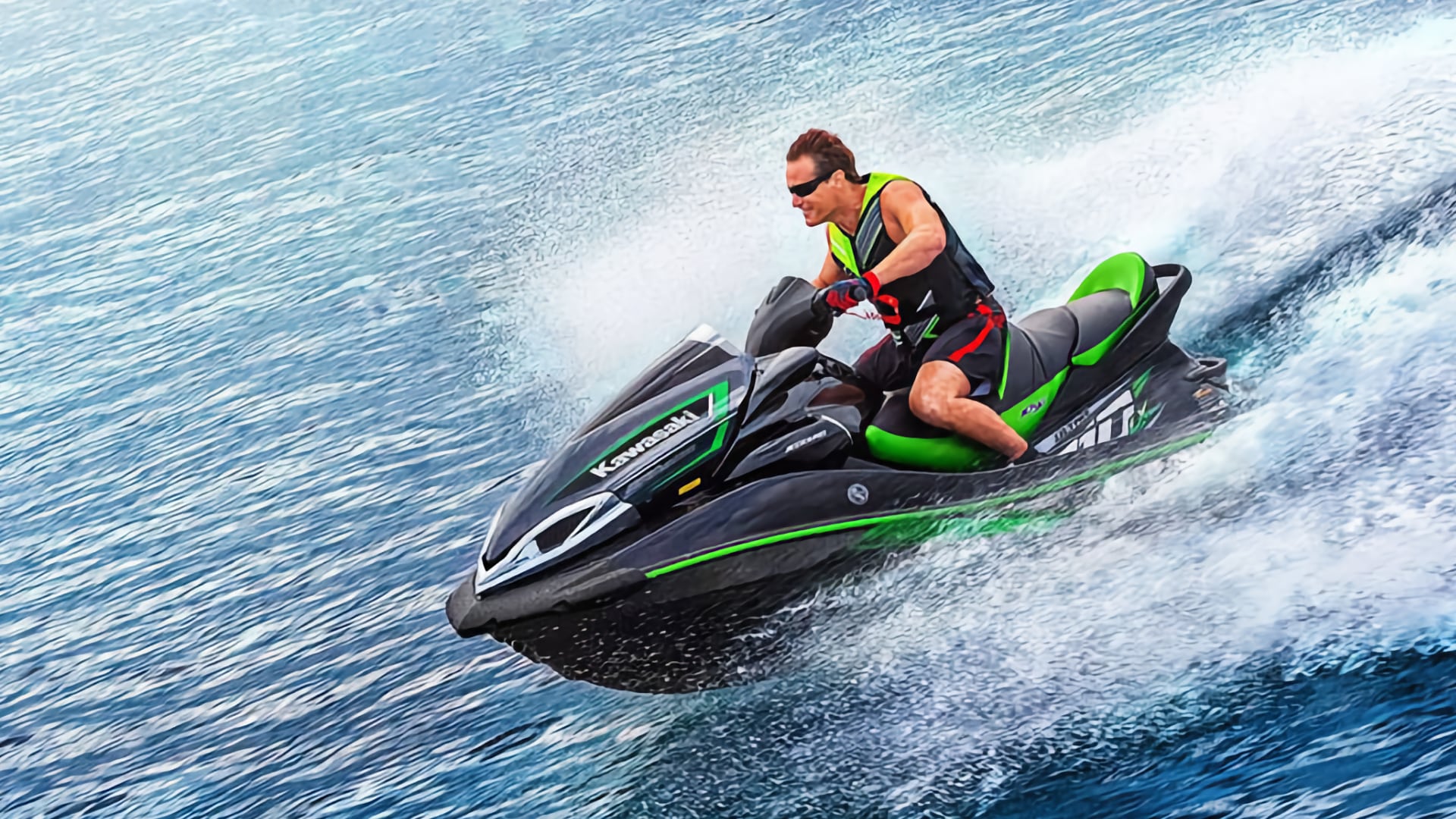
In 2019, the competition for the fastest personal watercraft (PWC) reached a fever pitch, with the "Big Three"—Sea-Doo, Yamaha, and Kawasaki—relying on supercharged powerplants to hit an industry-limited top speed of 67–70 mph. While the Kawasaki Ultra 310R claimed the horsepower crown, the Yamaha GP1800R and Sea-Doo RXP-X 300 offered superior power-to-weight ratios.
The year 2019 stands as a landmark era for personal watercraft enthusiasts. It was a time when hull technology finally began to catch up with the immense raw power of supercharged marine engines. As we look back from 2026, many of these 2019 models remain highly sought after on the pre-owned market because they represent the peak of internal combustion performance before the industry began shifting more focus toward electric propulsion and digital connectivity.
The Gentleman’s Agreement and the 67 MPH Ceiling
To understand the 2019 top speed showdown, one must first understand the regulatory environment of the time. Since the late 1990s, PWC manufacturers have adhered to a "Gentleman’s Agreement" with the U.S. Coast Guard to limit factory-stock speeds to approximately 65–67 mph. This was done to avoid strict federal regulation and to address safety concerns regarding high-speed water accidents.
However, "limited" does not mean "slow." In 2019, manufacturers utilized sophisticated Electronic Control Units (ECUs) to pull back timing or close the throttle body slightly once the craft hit the GPS-verified limit. Under perfect conditions—cool air, glass-calm water, and a low fuel load—many of these flagship models could "creep" to 68 or 69 mph on a GPS, even if the analog speedometer on the dashboard optimistically flashed 72 or 75 mph.
Kawasaki Ultra 310R: The Heavyweight Powerhouse
The Kawasaki Jet Ski Ultra 310R was widely considered the "muscle car" of the water in 2019. Powered by a 1,498cc, inline four-cylinder engine equipped with an Eaton TVS constant-displacement supercharger, it produced a staggering 310 horsepower. This made it the most powerful production PWC on the market at the time.
Kawasaki’s approach to speed was built on brute force and stability. The Ultra 310 series featured a deep-V hull design with a 22.5-degree deadrise, which allowed it to maintain high speeds in "heavy" or choppy water where lighter boats would be forced to throttle back. While the 310R was electronically limited like its peers, its acceleration from 30 to 60 mph was legendary, often described by riders as having a "relentless" pull.
The downside to the Kawasaki was its weight. Tipping the scales at over 1,000 pounds (dry weight), it required every bit of that 310 hp to compete with the lighter offerings from Yamaha and Sea-Doo. Furthermore, the supercharger design, while powerful, was known for high fuel consumption, especially when the rider stayed "in the boost" during high-speed runs.
Sea-Doo RXP-X 300 and RXT-X 300: The Acceleration Kings
Sea-Doo entered the 2019 showdown with its 1630 ACE (Advanced Combustion Efficiency) engine. This 300-horsepower powerplant was the heart of the RXP-X 300 (the two-seater) and the RXT-X 300 (the three-seater).
The RXP-X 300 was particularly notable for its T3 Hull, designed for aggressive leaning and tight cornering. In a top speed showdown, the RXP-X 300 was often the quickest to reach the 60 mph mark, thanks to its specialized "Launch Control" system. This feature automatically adjusted the pump trim to prevent the bow from rising too high, keeping the craft glued to the water for maximum traction during acceleration.
The RXT-X 300, while slightly larger, utilized the ST3 hull, which offered incredible stability at high speeds. In 2019, Sea-Doo also focused heavily on the rider's ergonomics with the Ergolock system. This allowed the rider to "lock" their legs into the seat, providing better control when the machine was dancing on its pad at 68 mph. For many, the Sea-Doo models felt the most technologically advanced, even if their top speeds were neck-and-neck with the competition.
Yamaha GP1800R: The Power-to-Weight Champion
While Kawasaki used displacement and Sea-Doo used electronic trickery, Yamaha focused on efficiency and weight reduction in 2019. The GP1800R featured the Super Vortex High Output (SVHO) engine—a 1.8-liter beast that was the largest displacement engine in the industry.
Yamaha’s secret weapon was NanoXcel2, a proprietary hull material that was significantly lighter than traditional fiberglass without sacrificing strength. Because the GP1800R was so much lighter than the Kawasaki Ultra 310R, it didn't need 310 horsepower to win races. The GP1800R was frequently the winner of closed-course races in 2019 because its agility and power-to-weight ratio allowed it to maintain higher average speeds through turns and over wake.
The 2019 GP1800R also introduced a redesigned intake grate and ride plate, specifically engineered to keep the pump fed with "clean" water. In PWC terms, cavitation is the enemy of speed; by ensuring the jet pump was always full of water, Yamaha ensured that every bit of the SVHO’s torque was converted into forward motion.
Technical Comparison of 2019 Top Speed Contenders
The following table breaks down the core specifications of the primary contenders in the 2019 top speed showdown. Note that "Top Speed" refers to factory-stock, GPS-verified figures under ideal conditions.
| Feature | Kawasaki Ultra 310R | Sea-Doo RXP-X 300 | Yamaha GP1800R |
|---|---|---|---|
| Engine | 1,498cc 4-Cylinder | 1,630cc 3-Cylinder | 1,812cc 4-Cylinder |
| Aspiration | Supercharged (Eaton TVS) | Supercharged (External) | Supercharged (SVHO) |
| Horsepower | 310 HP | 300 HP | Approx. 250-260 HP |
| Dry Weight | 1,047 lbs | 850 lbs | 769 lbs |
| Hull Material | Fiberglass | Fiberglass (CM-TEC) | NanoXcel2 |
| Fuel Capacity | 20.6 Gallons | 15.9 Gallons | 18.5 Gallons |
| GPS Top Speed | 67-69 mph | 67-68 mph | 68-70 mph |
The Role of Hull Design in Top Speed Realization
In the world of high-performance watercraft, horsepower is only half of the equation. As a craft approaches 70 mph, the hull's interaction with the water becomes the limiting factor. This is known as "hydrodynamics."
In 2019, manufacturers used different strategies to manage this:
- Stepped Hulls: Sea-Doo utilized a "stepped" design in some models to introduce air under the hull, reducing surface tension (suction) and allowing the boat to slide faster across the water.
- Sponsons: All three brands used adjustable or high-performance sponsons (fins on the side of the hull). These act like outriggers, providing lift and lateral stability at high speeds, preventing the "hunting" or "weaving" sensation that can occur at 65+ mph.
- Trim Systems: Electric trim systems were essential in 2019. By angling the jet nozzle upward, the rider could lift the bow out of the water, reducing the "wetted surface area." Less boat in the water equals less friction, which equals higher top speed.
Maintenance Considerations for 2019 High-Speed Models
Owning a 2019 performance PWC in 2026 requires a disciplined maintenance schedule. These machines operate under extreme internal pressures. The superchargers in the Sea-Doo 300-series, for instance, utilize a clutch system that requires inspection. In 2019, Sea-Doo had moved to a "maintenance-free" supercharger, but long-term reliability still depends on regular oil changes and using the correct high-octane fuel.
Yamaha's SVHO engine is known for its robustness, but the intercooler—which cools the air coming from the supercharger—must be flushed regularly, especially if used in saltwater. A clogged or corroded intercooler will result in heat soak, which significantly drops the engine's power output and, consequently, its top speed.
Kawasaki’s 310 series is built like a tank, but the sheer heat generated by the 310 hp engine means that the cooling system is under constant stress. For those looking at these models as used purchases today, verifying the service history of the supercharger and the cooling lines is paramount.
Frequently Asked Questions
Can these jet skis go faster than 70 mph?
In factory-stock form, no. They are electronically limited. However, the aftermarket performance community (companies like Riva Racing) produces ECU "reflashes" that remove the speed limiter. With a simple software update and a different impeller, most of these 2019 models can easily reach 75–80 mph, though this usually voids warranties and may decrease engine longevity.
Which 2019 model is best for rough water speed?
The Kawasaki Ultra 310R is the consensus winner for rough water. Its heavy hull and deep-V design allow it to "crush" waves rather than bouncing over them. While a Yamaha GP1800R might be faster on a flat lake, the Kawasaki will likely maintain a higher top speed in an ocean chop.
Does fuel type affect the top speed of these 2019 models?
Yes. All three manufacturers required 91 octane (premium) fuel for their supercharged models in 2019. Using lower octane fuel can trigger the knock sensor, causing the ECU to retard timing to protect the engine. This results in a noticeable drop in both acceleration and top speed.
Why did Yamaha have the highest GPS speed with the lowest horsepower?
This is due to the power-to-weight ratio. The Yamaha GP1800R was significantly lighter than the Kawasaki. On the water, weight is a major factor in how much of the hull remains submerged. The lighter Yamaha could "ride on top" of the water more effectively, allowing it to hit the speed limiter more easily and sometimes bypass it slightly through momentum and reduced drag.
Is the 2019 Sea-Doo RXP-X 300 still competitive today?
Absolutely. In terms of "hole-shot" (0–30 mph acceleration), the 2019 RXP-X 300 remains one of the fastest production watercraft ever built. While newer models have updated dashboards and audio systems, the core engine technology (the 1630 ACE) is still the foundation of Sea-Doo’s performance line in 2026.
Selecting the Right 2019 Speedster
When choosing between these three titans, the "fastest" often depends on the rider's environment. If you frequent large, choppy lakes or the open ocean, the Kawasaki Ultra 310R offers the most usable speed. Its stability at high velocity is unmatched, making it a "point-and-shoot" speed machine.
For those who prioritize acceleration and technical handling, the Sea-Doo RXP-X 300 is the surgical tool of the group. It is designed for the rider who wants to feel every bit of the G-forces in a turn and reach top speed in the shortest distance possible.
However, if pure top-end efficiency and a racing pedigree are the goals, the Yamaha GP1800R remains the enthusiast's choice. Its lightweight NanoXcel2 hull and massive 1.8L engine provide a platform that is not only fast out of the box but also the most responsive to performance modifications. In the 2019 top speed showdown, the GP1800R often edged out the others by a hair on the GPS, proving that in the world of marine performance, weight is just as important as horsepower.