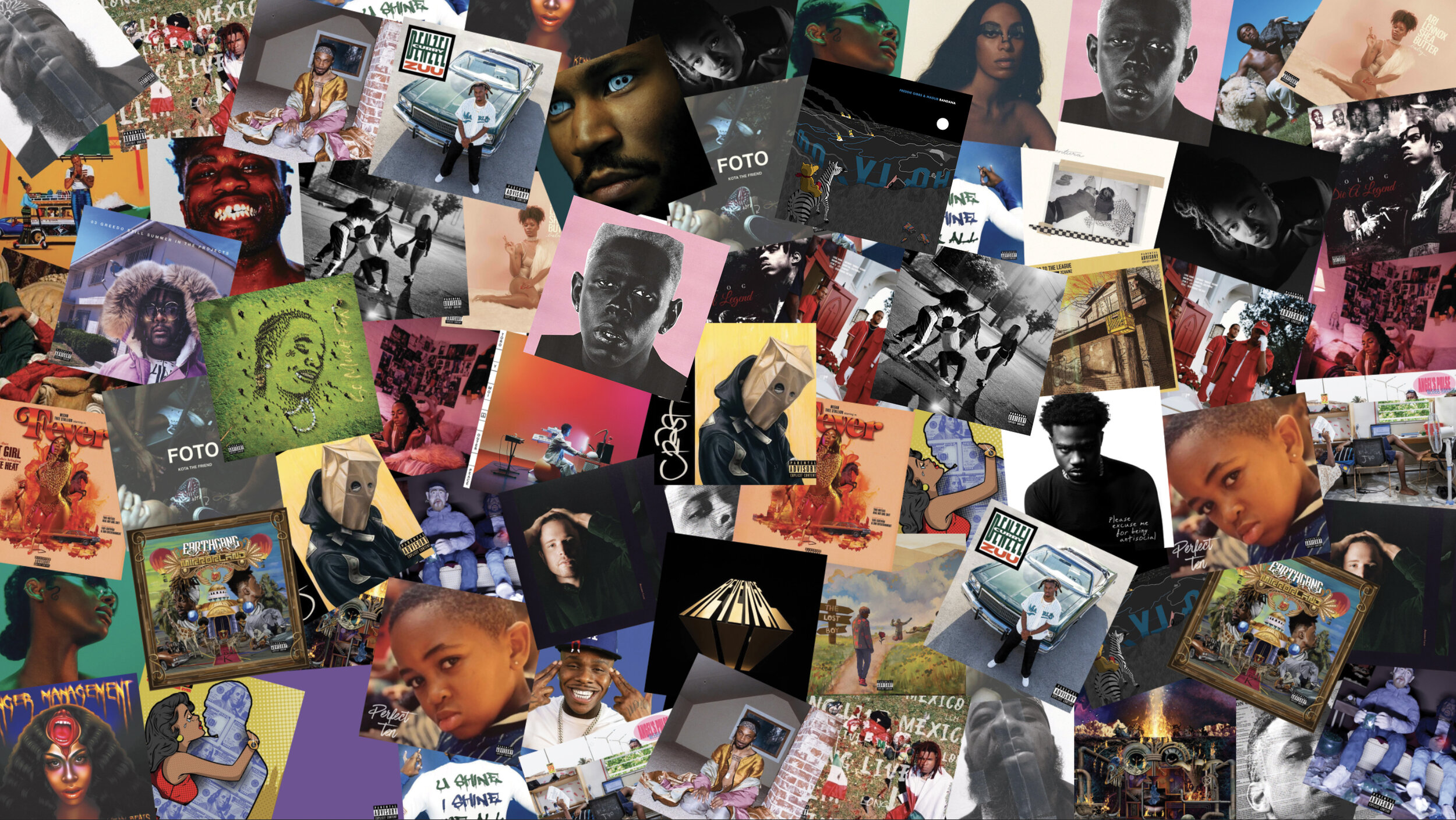
The music released throughout 2019 marked a pivotal transformation in modern sound, characterized by the explosion of bedroom pop, the blurring of traditional genre boundaries, and the dominance of short-form digital streaming strategies. Highly acclaimed projects from artists such as Billie Eilish, Tyler, The Creator, Lana Del Rey, and Taylor Swift defined the year's cultural soundscape and established production templates that remain influential.
The Sonic Landscape of 2019: Key Trends and Cultural Shifts
The year 2019 stands as a benchmark transition period in the music industry. It was the moment when streaming officially eclipsed physical and download sales across global markets as the primary revenue driver, radically altering album structuring, track lengths, and promotional rollout strategies. Musically, 2019 rejected the hyper-polished, maximalist pop of the previous decade in favor of intimate, genre-fluid, and emotionally vulnerable acoustics combined with unconventional electronic sound design.
A major catalyst for this shift was the democratization of music production. Home studios and minimalist setups proved capable of competing directly with commercial multi-million-dollar studios. Minimalist basslines, pitch-shifted vocals, whisper-style delivery, and nostalgic analog synthesis became ubiquitous across both mainstream charts and underground critical circuits.
Furthermore, 2019 dissolved traditional genre taxonomies. Hip-hop incorporated elements of psychedelic soul and jazz fusion; pop music absorbed dark electro-industrial textures and trap percussion; and alternative rock leaned heavily into folk-pop and jam-band arrangements. Artists no longer tailored their records for linear radio formats, preferring instead to curate cohesive atmospheric experiences designed for endless algorithmic streaming repeat cycles.
Key Industry Shifts in 2019:
- Production: DIY/Bedroom setups matching commercial studio output
- Distribution: Streaming platforms becoming dominant global revenue source
- Composition: Shorter track lengths tailored for higher streaming volume
- Aesthetics: Genre fluidity blending pop, trap, alt-rock, and neo-soul
Standout Pop and R&B Albums of 2019
Pop and R&B underwent an artistic Renaissance in 2019, moving away from formulaic EDM-pop drops toward deeply personal, narrative-driven songwriting.
Billie Eilish – When We All Fall Asleep, Where Do We Go?
Released in March 2019, Billie Eilish’s debut studio album, co-written and produced entirely by her brother Finneas O'Connell in their childhood home, became a global cultural phenomenon. Featuring hits like "Bad Guy," "Bury a Friend," and "When the Party's Over," the record combined minimalist sub-bass, macabre lyricism, sound effects, and delicate vocal layering. The album dominated global charts and swept the major categories at the 62nd Annual Grammy Awards, winning Album of the Year, Best Pop Vocal Album, Record of the Year, and Song of the Year. It established bedroom pop as a dominant commercial force.
Ariana Grande – Thank U, Next
Arriving less than six months after her 2018 album Sweetener, Ariana Grande released Thank U, Next in February 2019 amidst intense personal grief and media scrutiny. The record seamlessly blended R&B melodies with trap drums and slick pop sensibilities. Tracks like "7 Rings," "Break Up with Your Girlfriend, I'm Bored," and the title track "Thank U, Next" dominated the Billboard Hot 100, briefly holding the top three spots simultaneously—a feat previously achieved only by The Beatles in 1964.
Taylor Swift – Lover
Lover, released in August 2019, served as a bright, romantic response to the darker, synth-heavy aesthetic of 2017's Reputation. Spanning 18 tracks, the album explored bright synth-pop, dream pop, and acoustic balladry with songs like "Cruel Summer," "Lover," and "You Need to Calm Down." The album highlighted Swift's transition to owning her master recordings while securing her position as one of the top-selling global artists of the physical and digital era.
Lizzo – Cuz I Love You
Lizzo’s major-label debut, Cuz I Love You, delivered a high-energy mix of soul, funk, pop, and hip-hop. Backed by powerhouse vocals and themes of self-love and body positivity, the album catapulted her to superstardom. Driven by tracks like "Juice" and the retroactively added chart-topper "Truth Hurts," the project earned eight Grammy nominations and showcased the commercial viability of retro-soul revivalism.
Landmark Hip-Hop and Rap Releases
In 2019, hip-hop maintained its position as the most consumed music genre in North America, with artists pushing experimental boundaries, narrative structures, and melodic phrasing.
Tyler, The Creator – Igor
Tyler, The Creator’s fifth studio album, Igor, marked a dramatic artistic evolution. Moving away from traditional rap structures, Tyler arranged, produced, and wrote an avant-garde concept album detailing the arc of an unrequited romantic relationship. Utilizing pitch-shifted vocals, vintage synthesizers, neo-soul chord progressions, and minimal traditional rapping, Igor received widespread critical acclaim and won the Grammy Award for Best Rap Album.
Kanye West – Jesus Is King
In October 2019, Kanye West released Jesus Is King, a gospel-hip-hop project that marked a complete departure from his secular catalog. Incorporating his Sunday Service Choir, sample-heavy production, and Christian lyrics, the album debuted at number one on the Billboard 200. While polarizing among critics, it represented a major thematic shift in mainstream hip-hop production and artist branding.
Freddie Gibbs & Madlib – Bandana
For fans of underground and lyrical hip-hop, Bandana represented a high-water mark for the genre in 2019. The collaborative project combined Freddie Gibbs' intricate flow and street narratives with Madlib's soul-sampled, drumless, and eccentric beatmaking. Recorded entirely on an iPad by Madlib, the album earned universal critical praise for its uncompromised adherence to hip-hop craftsmanship.
Little Simz – Grey Area
UK rapper Little Simz delivered one of the most critically revered rap projects of the year with Grey Area. Produced by Inflo, the record featured live instrumentation, sharp sociopolitical lyricism, and aggressive vocal delivery. It solidified Simz's position as an international elite lyricist and won Best Album at the Ivor Novello Awards and NME Awards.
Critical Darlings: Alternative, Indie, and Rock Milestones
Beyond commercial pop and hip-hop charts, alternative and indie music in 2019 produced several long-form works that challenged classic genre tropes.
Lana Del Rey – Norman Fucking Rockwell!
Lana Del Rey's sixth studio album, produced largely alongside Jack Antonoff, was hailed by music critics as a songwriting masterpiece and an epitaph for the American Dream. Blending soft rock, folk ballads, and psych-pop with literate, melancholic commentary, tracks like "Venice Bitch," "Mariners Apartment Complex," and the title track established the album as the top-rated release of 2019 on Metacritic and featured prominently on end-of-decade lists.
FKA Twigs – Magdalene
Following a five-year hiatus and significant personal challenges, FKA Twigs returned with Magdalene. The avant-pop album combined electronic soundscapes, operatic vocal arrangements, classical piano, and industrial percussion. Co-produced with Nicolas Jaar, the record explored grief, heartbreak, and bodily healing, cementing Twigs' status as a premier visual and musical visionary.
Vampire Weekend – Father of the Bride
Vampire Weekend returned after a six-year break with Father of the Bride, an expansive double album that shifted from their previous chamber-pop style toward jam-band dynamics, country-folk harmonies, and bright acoustic arrangements. Featuring guest vocals from Danielle Haim and production from Rostam Batmanglij and Ariel Rechtshaid, the album won the Grammy Award for Best Alternative Music Album.
Comparative Matrix: Key 2019 Albums, Genres, and Achievements
The table below outlines a selection of landmark albums released in 2019, detailing their primary genres, lead production partners, and notable industry accolades.
| Artist | Album Title | Primary Genre | Key Producer(s) | Major Awards & Achievements |
|---|---|---|---|---|
| Billie Eilish | When We All Fall Asleep, Where Do We Go? | Dark Pop / Indie Pop | Finneas O'Connell | 5 Grammy Awards (incl. Album of the Year); 7x Platinum |
| Tyler, The Creator | Igor | Experimental Hip-Hop / Neo-Soul | Tyler, The Creator | Grammy Award for Best Rap Album; Billboard #1 Debut |
| Lana Del Rey | Norman Fucking Rockwell! | Soft Rock / Dream Pop | Jack Antonoff, Lana Del Rey | Grammy Nominee (Album of the Year); Metacritic Highest Rated |
| Ariana Grande | Thank U, Next | Pop / Trap-R&B | Tommy Brown, Max Martin | Held Billboard Hot 100 Top 3 simultaneously; Multi-Platinum |
| Taylor Swift | Lover | Synth-Pop / Pop | Jack Antonoff, Joel Little, Taylor Swift | Best-selling physical album globally in 2019 |
| FKA Twigs | Magdalene | Avant-Pop / Electronic | FKA Twigs, Nicolas Jaar | Shortlisted for Mercury Prize; Nominated for Grammy |
| Vampire Weekend | Father of the Bride | Indie Rock / Folk Pop | Ariel Rechtshaid, Ezra Koenig | Grammy Award for Best Alternative Music Album |
| Freddie Gibbs & Madlib | Bandana | Boom Bap / Hip-Hop | Madlib | Top 5 Year-End List across major publications |
| Lizzo | Cuz I Love You | R&B / Funk Pop | Ricky Reed, Oak Felder | 3 Grammy Awards; Certified Platinum |
Commercial Performance vs. Critical Acclaim in 2019
The year 2019 highlighted a growing divergence—and occasional alignment—between algorithmic commercial success and critical reception. On one end of the spectrum, streaming metrics favored short, repeatable singles engineered for quick rotation on curated playlists. This led to shorter total track runtimes across urban and pop releases.
Conversely, critical music journalists prioritized artistic cohesion, intricate album sequencing, and organic instrumentation. Albums like Lana Del Rey’s Norman Fucking Rockwell! and FKA Twigs’ Magdalene did not rely on high-tempo viral singles to achieve lasting cultural relevance. Instead, they built enduring value through long-form narrative arcs and distinct sound design.
However, projects like Billie Eilish’s When We All Fall Asleep, Where Do We Go? proved that commercial dominance and critical acclaim could fully merge. By presenting an unconventional, bass-heavy aesthetic that resisted formulaic radio structures, Eilish captured both massive streaming numbers and high critical praise.
How 2019 Releases Reshaped Music Production and Streaming Strategies
The release techniques pioneered or standardized in 2019 fundamentally transformed how record labels and independent artists approach album cycles.
- The Sudden Drop and Rapid Rollout: Ariana Grande demonstrated the power of immediate releasing with Thank U, Next, bypassing traditional six-month promo campaigns to capitalize on real-time cultural momentum.
- Minimalist Low-End Mixes: Finneas O'Connell's mixing style on Eilish's debut popularized heavy sub-bass mixed with dry, un-reverberated vocals, changing vocal processing trends across pop music.
- Cross-Platform Visual Aesthetics: Artists increasingly packaged their 2019 records with distinctive visual palettes (e.g., Tyler, The Creator's blonde wig and suit persona for Igor), creating recognizable visual brands for social media algorithms.
- Catalog Archiving and Resurgence: The release of Taylor Swift's Lover set the stage for her subsequent master recording re-releases, changing how artists negotiate ownership rights and handle legacy back catalogs.
Frequently Asked Questions About 2019 Music Albums
What was the highest-selling album of 2019?
Globally, Taylor Swift's Lover was the best-selling album of 2019 in pure album sales according to the IFPI, while Billie Eilish's When We All Fall Asleep, Where Do We Go? led in overall consumption combining pure sales and audio streaming equivalents.
Which 2019 album won the Grammy for Album of the Year?
Billie Eilish's debut album, When We All Fall Asleep, Where Do We Go?, won Album of the Year at the 62nd Annual Grammy Awards held in early 2020, making her the youngest artist in history at the time to win the award for a debut record.
Why is 2019 considered a transformative year for indie and bedroom pop?
Year 2019 proved that albums produced outside high-budget commercial recording facilities using affordable software setups could achieve both global commercial success and major award sweeps.
What album is widely considered the most critically acclaimed of 2019?
Lana Del Rey’s Norman Fucking Rockwell! achieved the highest aggregate critic score of 2019 on platforms like Metacritic, frequently ranking at number one on year-end and decade-end lists by publications such as Pitchfork and Rolling Stone.
Strategic Guidance for Revisit and Archiving 2019 Releases
For music historians, collectors, and audiophiles looking to revisit or catalog the defining albums of 2019, utilizing a methodical approach ensures a complete appreciation of the era's technical and narrative advancements:
- Evaluate Physical vs. Streaming Mixes: Many 2019 releases received distinct mastering treatments for vinyl pressing versus digital streaming. Compare high-resolution digital audio streams with original 2019 vinyl masterings to appreciate the low-end frequency dynamics of bedroom pop production.
- Explore Production Credits: Investigate the underlying production networks of 2019. Producers like Jack Antonoff, Finneas O'Connell, Tommy Brown, and Ariel Rechtshaid helped shape the acoustic landscape of the late 2010s; tracking their collaborative discographies provides deeper context into modern mixing techniques.
- Analyze Long-Term Influence: Assess how 2019 albums laid the foundation for post-2020 musical trends, particularly the move toward shorter track lengths, direct fan communication, and genre-bending production styles.