The best 2018 ski jackets for winter warmth are led by the Arc’teryx Macai, Helly Hansen Alpha 3.0, and the Patagonia Primo Down. These models utilized advanced 750-to-800 fill power down and PrimaLoft Black insulation, combined with Gore-Tex membranes, to provide elite thermal retention and moisture protection for the most demanding cold-weather environments.
The Evolution of Warmth in 2018 Ski Apparel
The 2018 winter season marked a significant turning point in ski apparel technology, where the industry moved beyond simple bulk to achieve "intelligent warmth." Manufacturers focused on body-mapped insulation—placing higher concentrations of down or synthetic fibers around the core while using thinner, more breathable materials under the arms and along the back. This approach addressed the primary challenge of resort skiing: staying warm on freezing chairlifts without overheating during aggressive downhill runs.
In this era, the integration of Gore-Tex membranes with high-loft insulation became the standard for premium "warmth" jackets. While backcountry enthusiasts often preferred layers, the 2018 market saw a massive demand for high-performance "single-piece" solutions. These jackets were designed to withstand the "Polar Vortex" conditions that hit many North American and European resorts that year. The use of Aerogel-integrated pockets—pioneered by brands like Helly Hansen to protect phone batteries from dying in the cold—also signaled a shift toward technical integration that supported the user’s overall experience in sub-zero temperatures.
Arc’teryx Macai: The Gold Standard for Frigid Resort Days
When evaluating 2018 ski jacket reviews, the Arc’teryx Macai consistently emerges as the premier choice for localized warmth. Unlike traditional puffer jackets that can feel like wearing a sleeping bag, the Macai utilized a sophisticated "Down Contour Construction" and "Down Composite Mapping." This allowed Arc’teryx to place 750-fill European goose down where it was needed most for core warmth, while utilizing Coreloft synthetic insulation in moisture-prone areas like the hem, collar, and underarms.
The Macai was specifically engineered for the lift-access skier who demands the waterproofing of a hard shell with the heat of a parka. The exterior featured a tough N40p-X Gore-Tex fabric with 3L tricot technology, ensuring that wind chill—often the biggest thief of body heat—was completely neutralized. Even by 2026 standards, the 2018 Macai remains a benchmark for how to balance a streamlined silhouette with extreme thermal efficiency. Its durability is notable; the seam sealing and high-tenacity face fabric have allowed many of these 2018 units to remain in active service for nearly a decade.
Helly Hansen Alpha 3.0: Synthetic Performance and Thermal Regulation
For those who preferred the resilience of synthetic insulation over down, the Helly Hansen Alpha 3.0 was the standout performer of 2018. This jacket utilized PrimaLoft Black insulation, which is designed to mimic the heat-trapping properties of down while maintaining its loft even if it becomes damp. Synthetic insulation was often favored in 2018 for skiers in humid climates, such as the Pacific Northwest or the coastal ranges of British Columbia, where "wet cold" can quickly compromise down’s effectiveness.
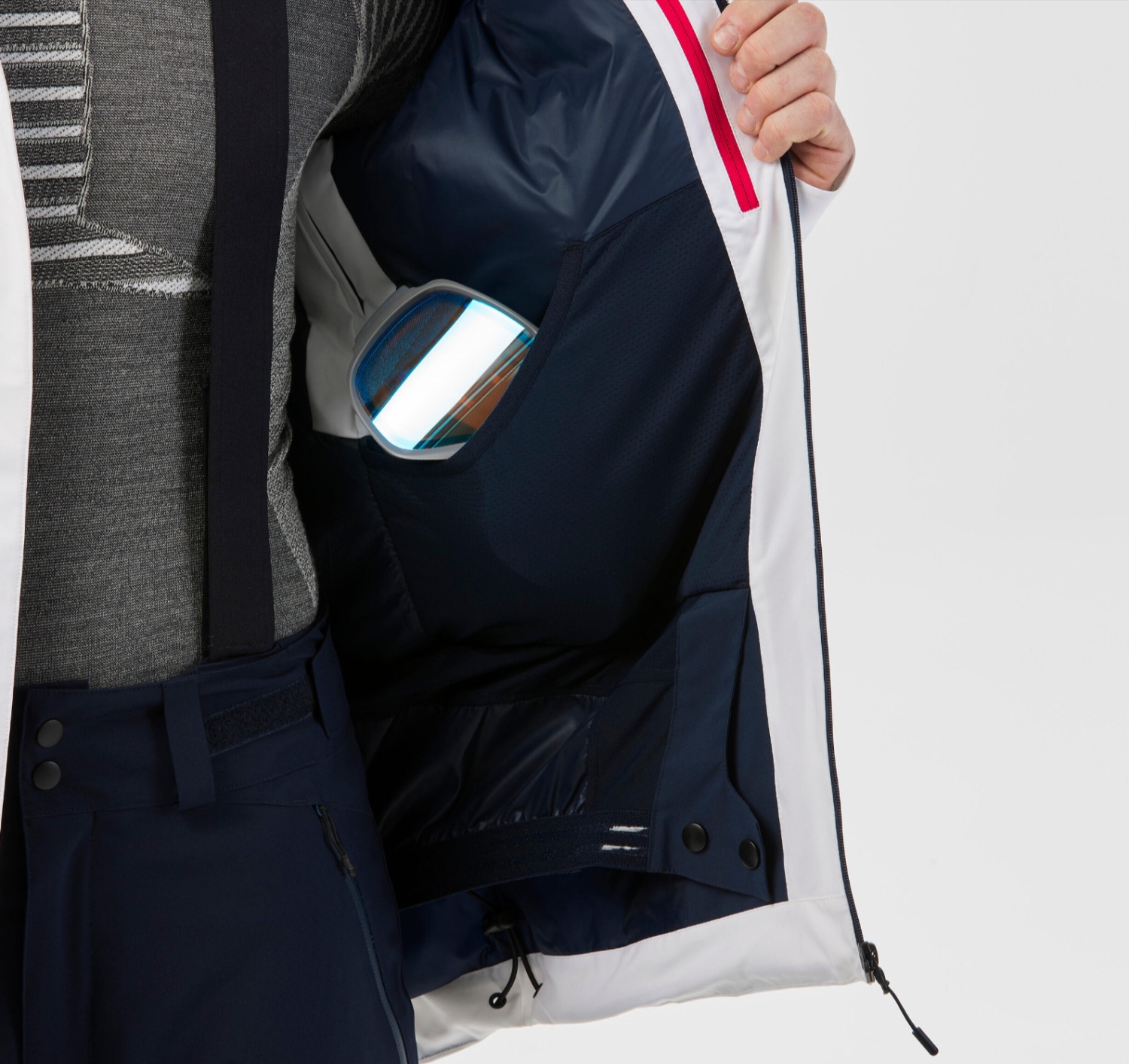
The Alpha 3.0 also featured Helly Hansen's proprietary H2Flow system. This was a mechanical venting system that allowed skiers to quickly dump heat during a run and then "lock in" the warmth once they reached the lift line. A critical feature introduced in this model was the Life Pocket. Lined with Primaloft Aerogel, this pocket kept mobile devices significantly warmer than the surrounding jacket, preventing the rapid battery drain that occurs in temperatures below 20°F (-6°C).
Patagonia Primo Down: Sustainable Heat for Big Mountain Lines
The Patagonia Primo Down jacket was 2018’s answer for the environmentally conscious skier who refused to compromise on warmth. It featured 100% Traceable Down (800-fill-power goose down traced from birds not force-fed or live-plucked) encased in a 2-layer Gore-Tex shell. The Primo Down was lighter than the Arc’teryx Macai but offered a slightly loftier feel, making it excellent for deep-powder days where mobility and heat retention were equally vital.
Patagonia’s design focused on "lofted protection." The 2018 version included a removable, adjustable powder skirt and a helmet-compatible, two-way-adjustable hood with a laminated visor. For warmth, the internal cuffs and the brushed lining on the neck were essential details that prevented "drafting"—the process where warm air escapes the jacket through the neck and sleeve openings. The 2018 Primo Down remains highly sought after in the secondary market due to Patagonia’s Ironclad Guarantee and the timelessness of its thermal engineering.
Technical Comparison of 2018 Top Picks
The following table compares the specific technical attributes that defined the warmth and protection levels of the top jackets from the 2018 season.
| Feature | Arc'teryx Macai | Helly Hansen Alpha 3.0 | Patagonia Primo Down | Outdoor Research Hemispheres |
|---|---|---|---|---|
| Insulation Type | 750-Fill Down + Coreloft | PrimaLoft Black (Synthetic) | 800-Fill Traceable Down | VerticalX (Synthetic) |
| Shell Material | Gore-Tex 3L | Helly Tech Professional | Gore-Tex 2L | Gore-Tex with Stretch |
| Warmth Rating | Extreme / Heavy | High / Mid-weight | High / Heavy | Moderate / Active |
| Primary Use | Frigid Resort / Lift | Technical Resort / Mixed | Big Mountain / Powder | Backcountry / Touring |
| Weight (Approx) | 1,020g | 985g | 935g | 610g |
| Unique Feature | Down Contour Mapping | Life Pocket (Aerogel) | Traceable Down Source | GORE-TEX Fabric Stretch |
Performance Metrics: Waterproofing and Breathability
In 2018, "warmth" was not just about insulation; it was about the jacket's ability to keep the wearer dry. If a jacket’s outer shell fails, the insulation becomes wet, and thermal conductivity increases, leading to rapid cooling. Most top-tier jackets of that year utilized membranes with a minimum of 20,000mm waterproofing and 20,000g breathability.
- Waterproofing (Hydrostatic Head): The 2018 Gore-Tex Pro and Helly Tech Professional fabrics were tested to withstand the pressure of a 20-meter column of water. This ensured that even when sitting on a wet chairlift, moisture would not penetrate the insulation.
- Breathability (MVTR): To maintain warmth, a jacket must allow sweat vapor to escape. If sweat stays trapped inside, it cools against the skin. The 2018 models excelled at this by using microporous membranes that were too small for water droplets but large enough for vapor molecules.
- Windproofing: All top 2018 picks were 100% windproof. At 30 mph on a downhill run, the wind chill factor can drop the effective temperature by 15-20 degrees. The integrity of the 2018 face fabrics was critical in maintaining the "microclimate" inside the jacket.
Evaluating Durability and Longevity in 2026
From the perspective of 2026, the 2018 crop of high-end ski jackets has proven to be remarkably resilient. However, potential buyers of these vintage models or long-term owners should be aware of how 2018 materials age.
DWR (Durable Water Repellent) Degradation: The 2018 era used C6-based DWR treatments. While effective, these coatings eventually wear off. A jacket from 2018 may "wet out" (the fabric looks dark and soaked) even if the waterproof membrane is still intact. This is easily fixed with technical washes like Nikwax or Grangers.
Seam Tape Integrity: After eight years, the adhesive used on internal seam tapes can begin to dry out or "delaminate." When inspecting a 2018 jacket, it is essential to check the shoulders and hood area for peeling tape, as this is where the most moisture stress occurs.
Down Loft: If a 2018 down jacket like the Macai or Primo Down was stored compressed, the down feathers may have lost their "loft" (their ability to trap air). A gentle tumble dry on low heat with clean tennis balls can often restore the 2018-level warmth.
Frequently Asked Questions
Is a 2018 ski jacket still warm enough for modern standards?
Yes. The physics of insulation haven't changed significantly since 2018. High-fill down (750+) and premium synthetics like PrimaLoft Black used in 2018 are virtually identical in thermal performance to many mid-to-high-end jackets produced today. The primary differences in newer models are often weight reduction and more sustainable textile manufacturing, rather than raw warmth capacity.
How does 2018 Gore-Tex compare to newer waterproof materials?
Gore-Tex technology from 2018 remains highly effective. While newer membranes like Gore-Tex ePE (expanded Polyethylene) are more environmentally friendly, the traditional ePTFE membranes used in 2018 are often considered more durable and slightly more breathable in extreme cold. As long as the membrane hasn't been punctured or delaminated, a 2018 Gore-Tex jacket provides professional-grade protection.
What should I look for when buying a used 2018 Arc’teryx Macai?
First, check the "pit zips" and the main zipper for smooth operation; Arc’teryx used high-quality YKK zippers in 2018, but they can collect salt and dirt. Second, inspect the "Down Contour" baffles inside the jacket to ensure the down hasn't migrated or clumped. Finally, look at the neck and chin guard for signs of fabric pilling or heavy wear from facial hair and breath moisture.
Are synthetic jackets from 2018 better than down for warmth?
It depends on the environment. For dry, freezing cold (like Colorado or the Alps), down jackets like the 2018 Patagonia Primo Down are superior because of their warmth-to-weight ratio. For wet, heavy snow (like the Pacific Northwest), synthetic jackets like the 2018 Helly Hansen Alpha 3.0 are better because they retain warmth even when the outer shell is saturated.
Can I wash my 2018 insulated ski jacket?
Absolutely. In fact, washing is necessary to maintain warmth. Body oils and dirt can clog the pores of the Gore-Tex membrane and cause down to clump. Use a specific technical wash (not standard detergent) and follow the manufacturer’s instructions—usually a cold, gentle cycle followed by a thorough drying process to restore loft.
Selecting the Right Jacket for Your Climate
When choosing between the top 2018 models, match the jacket's insulation type to your most frequent skiing conditions. If you primarily ski in temperatures consistently below 15°F (-9°C) and focus on resort groomers, the Arc’teryx Macai is the definitive choice for its combination of down warmth and shell-like protection. For those who ski in varied conditions and engage in high-output activity, the Helly Hansen Alpha 3.0 offers better thermal regulation through its venting systems. Regardless of the choice, these 2018 "top picks" represent a peak in ski gear engineering that continues to provide elite winter warmth nearly a decade later.