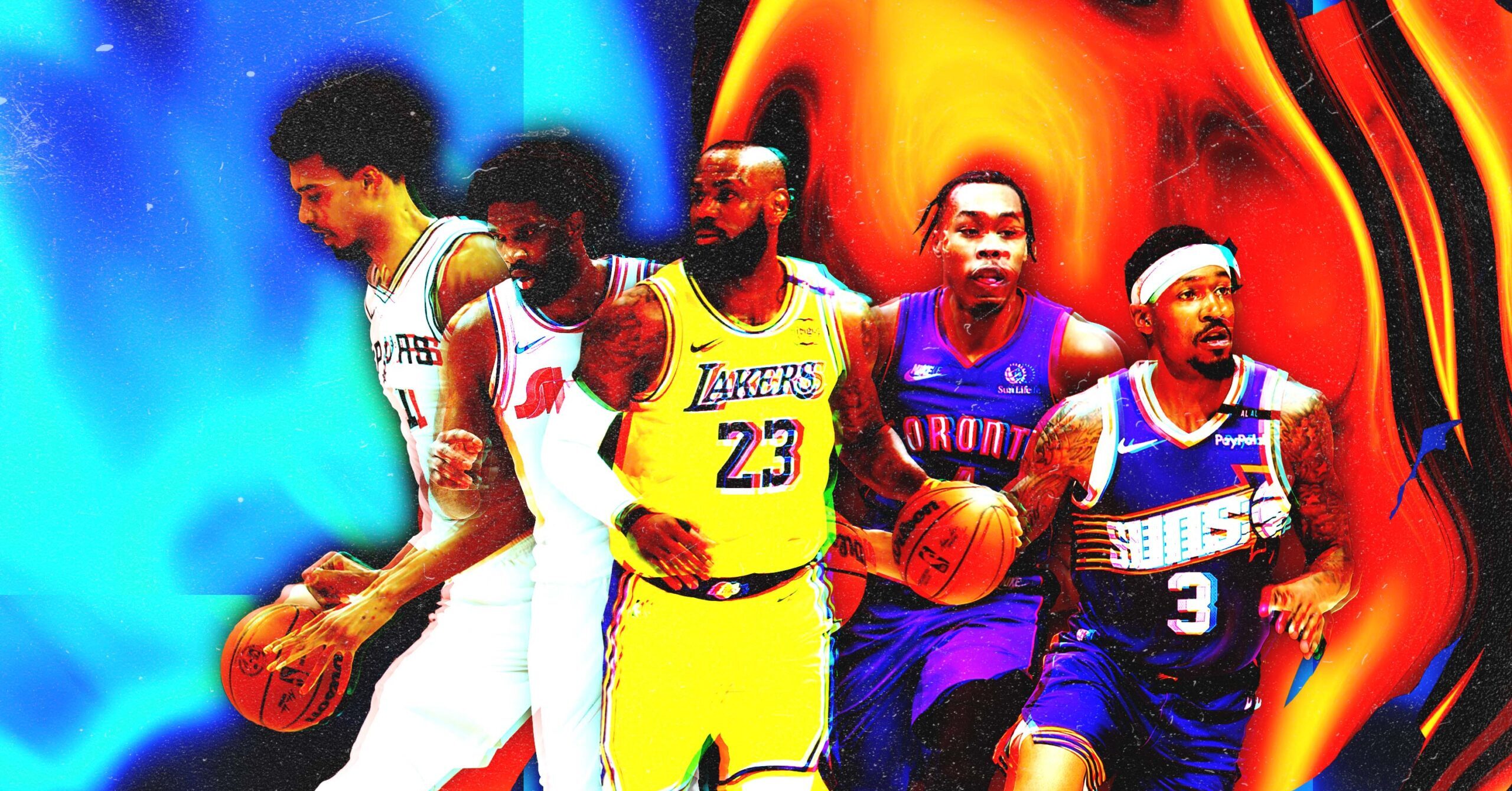
The 2018 NBA offseason served as a pivotal turning point in modern basketball history, altering team trajectories and redistributing superstar talent across both conferences. Highlighted by LeBron James signing with the Los Angeles Lakers, Kawhi Leonard’s trade to the Toronto Raptors, and a talent-rich draft class, this player movement reconfigured the league's competitive balance for years to come.
The Financial Landscape: Salary Cap Realities and Free Agency Mechanics
Entering July 2018, the NBA operating environment was dictated by a salary cap set at $101.869 million and a luxury tax threshold of $123.733 million. This represented a modest increase from the previous season, but cap space across the league was noticeably tighter than during the historic 2016 cap spike.
Many franchises found themselves constrained by multi-year contracts signed during that 2016 spending spree. As a result, only a handful of teams entered the summer of 2018 with significant cap room to pursue top-tier free agents:
- Los Angeles Lakers: Cleared maximum cap space specifically designed to target multiple elite free agents.
- Indiana Pacers & Philadelphia 76ers: Possessed ample flexibility to bolster young rosters with established veterans.
- Atlanta Hawks & Chicago Bulls: Utilized space to absorb unwanted contracts in exchange for draft assets.
For teams exceeding the salary cap, player acquisition relied primarily on exceptions. The Full Mid-Level Exception (MLE) for non-taxpayer teams stood at $8.641 million, while the Taxpayer MLE was capped at $5.337 million. These financial limits created a bifurcated market: elite superstars commanded maximum contract offers, while solid mid-tier starters often had to accept short-term deals or mid-level exceptions due to league-wide liquidity constraints.
LeBron James to the Lakers: The Seismic Shift to the Western Conference
On July 1, 2018, Klutch Sports Group announced that LeBron James had agreed to a four-year, $153.3 million contract with the Los Angeles Lakers. This decision concluded James’ second tenure with the Cleveland Cavaliers, following four consecutive Finals appearances and an NBA Championship in 2016.
LeBron James' Contract Structure (2018 Signing):
- Year 1 (2018–19): $35,654,150
- Year 2 (2019–20): $37,436,858
- Year 3 (2020–21): $39,219,566
- Year 4 (2021–22): $41,002,274 (Player Option)
Unlike his previous free agency decisions in 2010 ("The Decision") and 2014 (his return to Cleveland), James committed long-term without demanding immediate trade acquisitions of co-stars prior to signing. The Lakers management team, led by Magic Johnson and Rob Pelinka, opted not to immediately exhaust their young core of Brandon Ingram, Lonzo Ball, and Kyle Kuzma in trade packages during the summer. Instead, they surrounded James with veteran playmakers on one-year contracts, including Rajon Rondo, Lance Stephenson, JaVale McGee, and Michael Beasley.
James moving to the Western Conference altered the balance of power across the league. It ended an eight-year streak of Eastern Conference dominance by James-led teams and instantly repositioned the Lakers from a rebuilding franchise into a global focal point. This move laid the groundwork for the Lakers' subsequent acquisition of Anthony Davis in 2019 and their 2020 NBA Championship victory.
The Kawhi Leonard Trade Saga: San Antonio to Toronto
While free agency dominated early July, trade negotiations involving San Antonio Spurs forward Kawhi Leonard produced the summer's most consequential trade. Following an injury-plagued 2017–18 campaign in which Leonard played just nine games due to a quadriceps injury, relationship fractures between Leonard’s camp and the Spurs organization became public, leading to a formal trade request.
On July 18, 2018, the Spurs completed a trade with the Toronto Raptors:
- Toronto Raptors Received: Kawhi Leonard and swingman Danny Green.
- San Antonio Spurs Received: Four-time All-Star guard DeMar DeRozan, center Jakob Poeltl, and a protected 2019 first-round draft pick (top-20 protected).
Trade Structure Summary:
- Toronto Raptors: Kawhi Leonard and Danny Green
- San Antonio Spurs: DeMar DeRozan, Jakob Poeltl, and 2019 1st-Round Pick (Protected)
The transaction carried risk for Toronto. DeRozan was a fan favorite who had recently signed a long-term extension, while Leonard had one year remaining on his contract before entering unrestricted free agency in 2019. Furthermore, reports indicated Leonard preferred a trade to his hometown of Los Angeles.
However, Raptors President of Basketball Operations Masai Ujiri calculated that acquiring a top-five player was worth the rental risk. Toronto upgraded its perimeter defense and playoff isolation scoring without surrendering core young talents like Pascal Siakam, OG Anunoby, or Fred VanVleet. This decision paid off, leading directly to Toronto's 2019 NBA Championship run.
Free Agency Surprises and Extensions: George, Cousins, and Paul
Beyond LeBron James, several marquee names shaped the summer market through surprising re-signings and unexpected bargain deals.
Paul George Re-Signs with Oklahoma City
Many analysts anticipated Paul George would sign with the Los Angeles Lakers after being traded to the Oklahoma City Thunder in 2017. Instead, on July 1, 2018, George agreed to a four-year, $136.9 million maximum contract to remain in Oklahoma City alongside Russell Westbrook, without taking formal meetings with other franchises. George cited chemistry with Westbrook and trust in Thunder General Manager Sam Presti as primary factors.
DeMarcus Cousins Signs with Golden State
On July 2, 2018, the reigning champion Golden State Warriors signed center DeMarcus Cousins to a one-year, $5.3 million taxpayer mid-level exception. Cousins was recovering from a torn Achilles tendon suffered in January 2018 while playing for the New Orleans Pelicans.
Because the open market for an injured center commanding high salary was dry, Cousins approached Golden State to rehab his injury and pursue a championship. The signing meant Golden State could potentially field a starting lineup containing five 2018 All-Stars (Stephen Curry, Klay Thompson, Kevin Durant, Draymond Green, and Cousins) once he recovered.
Chris Paul's Maximum Extension
The Houston Rockets secured point guard Chris Paul to a four-year, $160 million maximum extension. Coming off a 65-win season that ended in a seven-game Western Conference Finals loss to Golden State, Houston prioritized retaining their core, even while absorbing the steep financial cost of Paul's age-34 through age-37 seasons.
The 2018 NBA Draft: A Talent-Dense Class
The 2018 NBA Draft, held on June 21 at Barclays Center in Brooklyn, stands out as one of the most talented draft classes of the modern era.
Top Picks of the 2018 NBA Draft:
- Phoenix Suns: Deandre Ayton (C, Arizona)
- Sacramento Kings: Marvin Bagley III (PF, Duke)
- Atlanta Hawks: Luka Dončić (GF, Real Madrid) (Traded to DAL)
- Memphis Grizzlies: Jaren Jackson Jr. (PF/C, Michigan State)
- Dallas Mavericks: Trae Young (PG, Oklahoma) (Traded to ATL)
The Blockbuster Trade: Dončić for Young
The defining moment of draft night was a trade between the Atlanta Hawks and Dallas Mavericks. Atlanta selected Slovenian phenom Luka Dončić with the 3rd overall pick and traded his rights to Dallas in exchange for the 5th overall pick (Trae Young) and a protected 2019 first-round pick (which became Cam Reddish).
Dončić entered the league fresh off winning EuroLeague MVP and EuroLeague Champion honors with Real Madrid at age 19. The move gave Dallas a franchise cornerstone who achieved All-NBA First Team honors by his second season. Atlanta, meanwhile, landed a high-volume offensive initiator in Young, who propelled the Hawks to the 2021 Eastern Conference Finals.
Depth Beyond the Top Five
The 2018 draft yielded elite talent throughout both rounds:
- Shai Gilgeous-Alexander (11th overall): Drafted by Charlotte and traded to the LA Clippers, later becoming an All-NBA performer and franchise cornerstone for Oklahoma City.
- Mikal Bridges (10th overall): Drafted by Philadelphia and traded to Phoenix for Zhaire Smith and a 2021 first-round pick.
- Michael Porter Jr. (14th overall): Selected by Denver after falling due to back surgery concerns, providing high-upside scoring for the Nuggets' eventual 2023 title team.
- Jalen Brunson (33rd overall): Drafted by Dallas in the second round, later evolving into an All-Star point guard.
Coaching Changes and Front Office Realignment
Superstar transactions often overshadow bench moves, but key coaching hires in the summer of 2018 directly shaped future championship outcomes.
Toronto Promotes Nick Nurse
After being swept by Cleveland in the second round of the 2018 playoffs, Toronto fired Head Coach Dwane Casey—despite Casey winning the NBA Coach of the Year award that same season. The Raptors promoted assistant coach Nick Nurse to head coach. Nurse implemented dynamic defensive schemes and an adaptable offensive system that integrated Kawhi Leonard and optimized Toronto's depth.
Mike Budenholzer Joins Milwaukee
The Milwaukee Bucks hired former Atlanta Hawks coach Mike Budenholzer to replace interim coach Joe Prunty. Budenholzer built a five-out offensive system around Giannis Antetokounmpo while establishing an elite drop-coverage defense. In his first season, Milwaukee improved from 44 wins to 60 wins, and Antetokounmpo won his first MVP award.
Overview of Key 2018 Coaching Changes
| Franchise | Departing Coach | Incoming Coach | Primary Tactical/Organizational Goal |
|---|---|---|---|
| Toronto Raptors | Dwane Casey | Nick Nurse | Transition to flexible, modern schemes; maximize playoff ceiling |
| Milwaukee Bucks | Joe Prunty (Interim) | Mike Budenholzer | Modernize offense around Giannis Antetokounmpo; fix defense |
| Phoenix Suns | Jay Triano (Interim) | Igor Kokoškov | Establish offensive structure for Devin Booker and rookie Deandre Ayton |
| New York Knicks | Jeff Hornacek | David Fizdale | Establish modern player-development culture during rebuild |
| Charlotte Hornets | Steve Clifford | James Borrego | Increase pace of play and modern 3-point volume around Kemba Walker |
Major Transactions Summary: 2018 Offseason
The table below outlines the high-impact transactions from the 2018 offseason, highlighting the contract terms and long-term implications for the involved franchises.
| Player | Transaction Type | Former Team | New/Retained Team | Contract / Trade Terms | Strategic Impact |
|---|---|---|---|---|---|
| LeBron James | Free Agency | Cleveland Cavaliers | Los Angeles Lakers | 4 years, $153.3M | Shifted league power balance; anchored Lakers' 2020 championship team |
| Kawhi Leonard | Trade | San Antonio Spurs | Toronto Raptors | 1 year remaining ($20.1M) | Led Toronto to its first NBA Championship in 2019 |
| DeMar DeRozan | Trade | Toronto Raptors | San Antonio Spurs | 3 years remaining ($83M) | Kept Spurs competitive in playoff race post-Kawhi era |
| Paul George | Free Agency | Oklahoma City Thunder | Oklahoma City Thunder | 4 years, $136.9M | Retained All-NBA wing; created future trade asset for massive pick haul in 2019 |
| DeMarcus Cousins | Free Agency | New Orleans Pelicans | Golden State Warriors | 1 year, $5.3M (Taxpayer MLE) | Provided low-risk, high-reward frontcourt depth for Golden State |
| Chris Paul | Free Agency | Houston Rockets | Houston Rockets | 4 years, $160M | Preserved contender core alongside James Harden |
| Luka Dončić | Draft Night Trade | Real Madrid (Drafted by ATL) | Dallas Mavericks | Rookie Scale (Traded for #5 pick + 2019 1st) | Secured generational franchise playmaker for Dallas |
| Trae Young | Draft Night Trade | Oklahoma (Drafted by DAL) | Atlanta Hawks | Rookie Scale (Traded for #3 pick) | Established dynamic scoring guard and cornerstone for Atlanta |
Frequently Asked Questions
Why did LeBron James choose the Los Angeles Lakers in 2018?
LeBron James chose the Lakers due to a combination of basketball opportunity, lifestyle factors, and long-term business goals. Los Angeles possessed maximum cap flexibility and valuable young assets that could be flipped for an additional superstar (which materialized as Anthony Davis in 2019). Additionally, establishing his primary residency and entertainment production company (SpringHill Company) in Los Angeles aligned with his post-career plans.
How did the Kawhi Leonard trade impact the Spurs and Raptors long-term?
For Toronto, the trade was an undeniable success; Leonard led the franchise to the 2019 NBA Championship before departing for the LA Clippers in 2019 free agency. For San Antonio, DeMar DeRozan provided three productive seasons and multiple playoff appearances, but the Spurs ultimately shifted toward a full rebuild by 2021 when DeRozan was sign-and-traded to Chicago.
Who won the Luka Dončić for Trae Young draft-night trade?
Both teams achieved positive outcomes, though Dallas gained the higher-rated individual talent. Dončić rapidly earned multiple All-NBA First Team selections and led Dallas to the Western Conference Finals in 2022 and NBA Finals in 2024. Young became an All-Star and led Atlanta to the Eastern Conference Finals in 2021. However, Dončić's perennial MVP-level ceiling makes Dallas the widely recognized winner of the trade value exchange.
How did DeMarcus Cousins join Golden State despite being an All-Star?
Cousins suffered a torn Achilles tendon in January 2018, which made teams hesitant to offer long-term maximum contracts during a summer with limited cap space. With no acceptable long-term offers available, Cousins initiated contact with Golden State, accepting their $5.3 million Taxpayer Mid-Level Exception. This allowed him to recover without rush on a championship team.
Evaluating the Legacy of the 2018 Offseason
Analyzing the 2018 NBA offseason highlights how strategic risk-taking and salary cap management shape championship trajectories:
- Aggressive Talent Acquisition: Toronto's trade for Kawhi Leonard proved that acquiring an elite player on a short-term contract can be a price worth paying if it delivers a championship.
- Long-Term Roster Flexibility: The Lakers' deliberate preservation of cap space and young assets demonstrated the value of planning years in advance to attract top-tier free agents.
- Draft Value Maximization: Franchise-altering talent is frequently available outside the top two draft picks. Identifying players like Luka Dončić, Shai Gilgeous-Alexander, and Jalen Brunson requires deep evaluation over strict consensus ranking.
Studying the 2018 offseason provides a blueprint for roster building: short-term cap flexibility, strategic risk management, and smart draft evaluation remain the foundational tools for building a sustainable contender in the modern NBA.