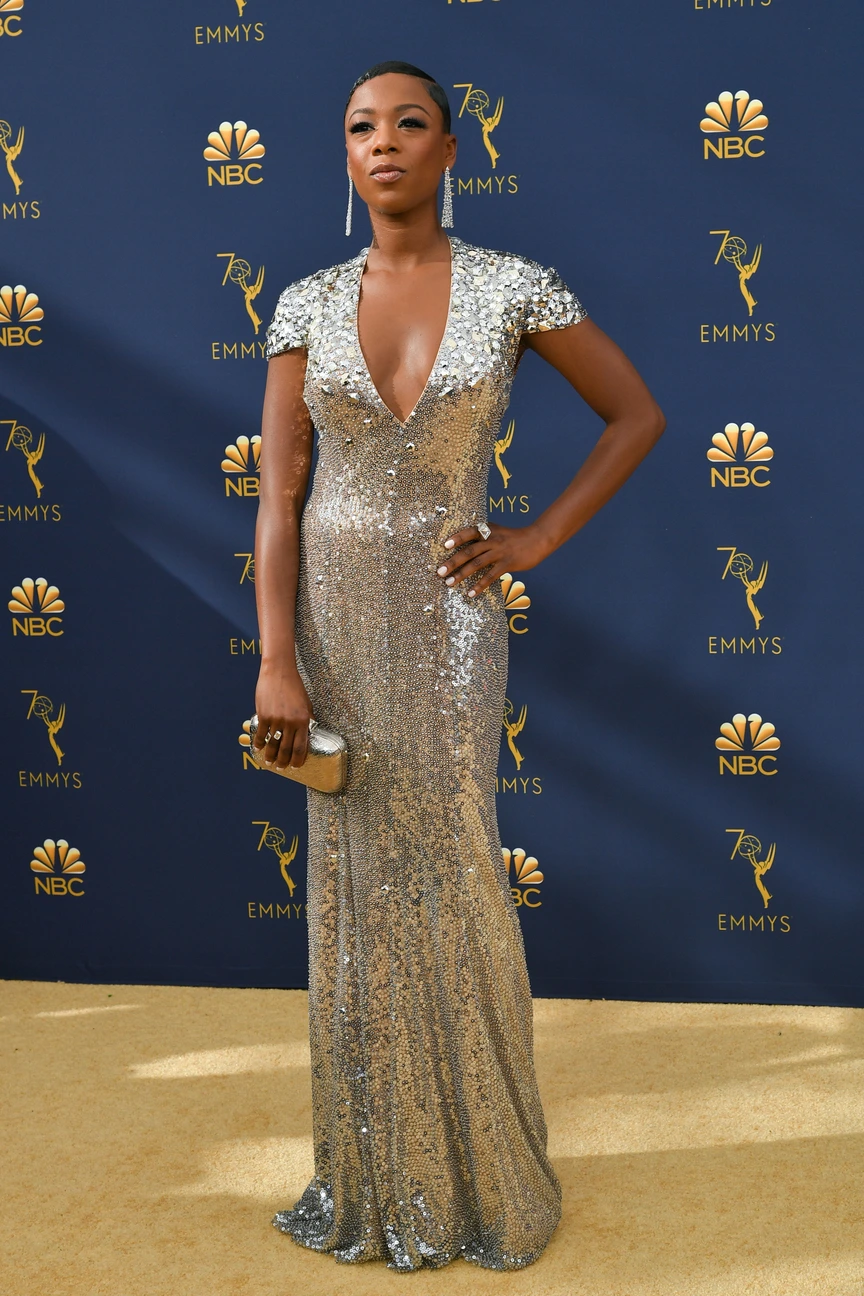
The 2018 Emmy nominees represented a pivotal moment in television history, marking the first time a streaming service surpassed traditional cable giant HBO in total nominations. Led by massive hits like Game of Thrones, The Marvelous Mrs. Maisel, and The Handmaid’s Tale, the 70th Primetime Emmy Awards showcased the peak of the "Platinum Age" of television.
The 2018 Emmy nominations were announced on July 12, 2018, by Samira Wiley and Ryan Eggold. This cycle was defined by Netflix earning 112 nominations, ending HBO’s 17-year streak as the most-nominated network. Key winners included Game of Thrones for Outstanding Drama Series and The Marvelous Mrs. Maisel for Outstanding Comedy Series.
The Shift in Television Power: HBO vs. Netflix
The 2018 Emmy season is often cited by industry analysts as the "great disruption." For nearly two decades, HBO had been the undisputed king of the Primetime Emmys, consistently leading in both nominations and wins thanks to prestige hits like The Sopranos, The Wire, and Game of Thrones. However, 2018 marked the year that Netflix's massive content spend finally translated into dominant awards-season recognition.
Netflix's 112 nominations were spread across a wide variety of genres, from the period drama of The Crown to the high-concept sci-fi of Stranger Things and the revived comedy Queer Eye. This surge reflected a shift in viewing habits and academy preferences toward on-demand, serialized storytelling. HBO, while losing the nomination count, still managed to secure 108 nominations, proving that the quality of "prestige cable" remained high even as the volume of streaming content increased.
This competition wasn't just about bragging rights; it signaled to the entire industry that the barrier to entry for high-end television production had been permanently lowered for digital-first companies. Other platforms like Hulu (27 nominations) and Amazon (22 nominations) also saw significant gains, further squeezing traditional broadcast networks like NBC, ABC, and CBS.
Outstanding Drama Series: The Return of the Titans
The Drama categories in 2018 were particularly competitive because Game of Thrones returned to eligibility after a one-year hiatus. The show had previously dominated the awards, and its return put immense pressure on the 2017 winner, The Handmaid’s Tale.
Major Nominees in Drama
- Game of Thrones (HBO): The eventual winner, which reclaimed its throne despite a polarizing seventh season.
- The Handmaid’s Tale (Hulu): A critical darling that continued to resonate due to its timely social themes.
- The Americans (FX): Nominated for its final season, many critics felt this was a "legacy nomination" for a show that had been historically overlooked.
- The Crown (Netflix): Continued its streak of nominations for its lavish production values and strong performances.
- Stranger Things (Netflix): Remained a fan and academy favorite for its nostalgic 80s aesthetic.
- This Is Us (NBC): The lone broadcast representative in a field increasingly dominated by cable and streaming.
- Westworld (HBO): Recognized for its technical complexity and ambitious narrative structure.
The win for Game of Thrones was seen as a validation of the show’s massive scale and cultural impact. However, the acting awards in the drama category were more spread out. Claire Foy won Outstanding Lead Actress in a Drama Series for The Crown, a well-deserved parting gift for her portrayal of Queen Elizabeth II before the role was recast for subsequent seasons. Matthew Rhys won Outstanding Lead Actor for The Americans, providing a satisfying conclusion to the show’s acclaimed run.
The Comedy Revolution: The Rise of Mrs. Maisel
In the comedy categories, 2018 belonged almost entirely to The Marvelous Mrs. Maisel. Created by Amy Sherman-Palladino, the Amazon series was a juggernaut, winning five of the major televised comedy awards, including Outstanding Comedy Series. This was a significant achievement for Amazon Studios, establishing it as a major player in the awards space alongside Netflix.
Evolution of Comedy Styles
The 2018 comedy nominees reflected a trend toward "dramedies"—shows that blended humor with dark, serious, or surreal themes.
- Barry (HBO): A dark comedy about a hitman trying to become an actor, which earned Bill Hader the Lead Actor win.
- Atlanta (FX): Donald Glover’s surrealist take on the rap scene in Georgia, which continued to push the boundaries of the sitcom format.
- GLOW (Netflix): A colorful, character-driven look at the 1980s women’s wrestling circuit.
- Silicon Valley (HBO): A perennial nominee that continued to satirize the tech industry.
The dominance of Mrs. Maisel marked a shift away from the political satire that had dominated previous years (such as Veep, which was not eligible in 2018). The academy leaned toward the vibrant, theatrical energy and rapid-fire dialogue of Sherman-Palladino’s writing. Rachel Brosnahan’s win for Lead Actress solidified her status as a breakout star.
Limited Series and Television Movies: A Golden Age for Anthologies
The Limited Series category in 2018 was arguably as prestigious as the Drama and Comedy categories. The trend of "A-list" movie stars moving to television was most evident here.
The Assassination of Gianni Versace: American Crime Story was the big winner of the night. Following the success of the first American Crime Story (The People v. O.J. Simpson), Ryan Murphy’s second installment focused on the dark, psychological motivations of Andrew Cunanan. Darren Criss won Lead Actor for his chilling portrayal of the killer, a performance that transitioned him from a musical-theatre star to a heavyweight dramatic actor.
Other notable nominees in this category included:
- Godless (Netflix): A feminist Western that showcased Merritt Wever’s incredible acting range.
- Patrick Melrose (Showtime): Featured a powerhouse performance by Benedict Cumberbatch.
- The Alienist (TNT): A high-budget period procedural.
- Genius: Picasso (National Geographic): Starring Antonio Banderas as the legendary artist.
This category demonstrated the industry's ability to produce self-contained stories with cinematic quality, often attracting talent that would not commit to a multi-year series contract.
Key 2018 Emmy Nominations and Winners Table
The following table highlights the primary winners and their respective competitors in the most prominent categories of the 70th Primetime Emmy Awards.
| Category | Winner | Notable Nominees |
|---|---|---|
| Outstanding Drama Series | Game of Thrones (HBO) | The Handmaid's Tale, The Crown, Stranger Things, The Americans, This Is Us, Westworld |
| Outstanding Comedy Series | The Marvelous Mrs. Maisel (Amazon) | Atlanta, Barry, Black-ish, Curb Your Enthusiasm, GLOW, Silicon Valley, Unbreakable Kimmy Schmidt |
| Outstanding Limited Series | The Assassination of Gianni Versace (FX) | The Alienist, Genius: Picasso, Godless, Patrick Melrose |
| Lead Actor, Drama | Matthew Rhys (The Americans) | Jason Bateman, Sterling K. Brown, Ed Harris, Milo Ventimiglia, Jeffrey Wright |
| Lead Actress, Drama | Claire Foy (The Crown) | Elisabeth Moss, Sandra Oh, Keri Russell, Evan Rachel Wood, Tatiana Maslany |
| Lead Actor, Comedy | Bill Hader (Barry) | Anthony Anderson, Ted Danson, Donald Glover, William H. Macy, Larry David |
| Lead Actress, Comedy | Rachel Brosnahan (The Marvelous Mrs. Maisel) | Pamela Adlon, Allison Janney, Issa Rae, Tracee Ellis Ross, Lily Tomlin |
| Supporting Actor, Drama | Peter Dinklage (Game of Thrones) | Nikolaj Coster-Waldau, Joseph Fiennes, David Harbour, Mandy Patinkin, Matt Smith |
| Supporting Actress, Drama | Thandie Newton (Westworld) | Alexis Bledel, Millie Bobby Brown, Ann Dowd, Lena Headey, Vanessa Kirby, Yvonne Strahovski |
Historic Milestones and Cultural Impact
Beyond the competition between networks, the 2018 Emmy nominees represented several significant milestones for diversity and representation in the media.
Sandra Oh made history as the first person of Asian descent to be nominated for Outstanding Lead Actress in a Drama Series for her role in Killing Eve. While she did not win that year (losing to Claire Foy), her nomination was a watershed moment that highlighted the changing landscape of television casting.
Additionally, the 2018 awards saw a record number of nominations for people of color across all major categories. This was part of a larger, ongoing effort by the Television Academy to expand its voting membership and reflect a more global audience. The diversity of the 2018 nominees—from the predominantly Black cast of Atlanta to the female-driven narratives of GLOW and The Handmaid’s Tale—showed a medium that was becoming more inclusive than the traditional film industry at the time.
The ceremony itself, hosted by Michael Che and Colin Jost of Saturday Night Live, leaned heavily into these themes. While the ratings for the broadcast continued a downward trend seen across all award shows in the late 2010s, the social media engagement remained high, particularly surrounding the "surprise" on-stage marriage proposal by director Glenn Weiss.
Snubs and Surprises of the 70th Primetime Emmys
No Emmy season is complete without a discussion of who was left out. In 2018, the most talked-about "snub" was the lack of nominations for Twin Peaks: The Return. Despite being hailed by many critics as a masterpiece of television art, the Television Academy largely ignored David Lynch’s experimental revival in the major categories.
Another surprise was the shut-out of The Handmaid’s Tale in the major televised categories. After winning the top prize in 2017, many expected the show to maintain its momentum. However, the return of Game of Thrones and the surge of The Crown relegated the Hulu series to technical awards during the Creative Arts ceremony.
Conversely, the win for Thandie Newton in Westworld was a major surprise for many. She beat out favorites like Lena Headey and Ann Dowd in a category that was considered one of the most difficult to predict. Newton’s win was a testament to the Academy's appreciation for high-concept, demanding performances in the sci-fi genre.
FAQ: Common Questions About the 2018 Emmy Nominees
Who had the most Emmy nominations in 2018?
Netflix led all networks and platforms with 112 nominations, marking the first time in 17 years that HBO (with 108) was not the most-nominated entity. This was a landmark moment for streaming services.
Which show won the most Emmys in 2018?
The Marvelous Mrs. Maisel was the most decorated show in the major categories during the Primetime broadcast, winning 5 awards. Including the Creative Arts Emmys, Game of Thrones led the overall count with 9 total wins.
Why was Veep not nominated in 2018?
Veep took a hiatus in 2018 because star Julia Louis-Dreyfus was undergoing treatment for breast cancer. The show returned to the Emmys in 2019 for its final season.
Did Sandra Oh win an Emmy in 2018?
No, Sandra Oh did not win in 2018, though she made history as the first Asian woman nominated for Lead Actress in a Drama Series. She lost the award to Claire Foy of The Crown.
Who hosted the 2018 Emmy Awards?
The 70th Primetime Emmy Awards were hosted by Saturday Night Live "Weekend Update" anchors Michael Che and Colin Jost. The ceremony was held at the Microsoft Theater in Los Angeles.
Looking Back from 2026: The Legacy of 2018
From our vantage point in 2026, the 2018 Emmy nominees look like the blueprint for the modern television landscape. The shows that dominated that year—Game of Thrones, The Crown, and Atlanta—set the standard for the high-budget, "cinematic TV" that now defines most streaming platforms.
The 2018 awards were the last time we saw a traditional cable network (HBO) and a "disruptor" (Netflix) on such equal footing before the explosion of Disney+, Apple TV+, and others further fragmented the market. If you are looking to catch up on the best of that era, most of these winners remain available on their original platforms, serving as a reminder of a year when television felt more ambitious and competitive than ever before. For viewers today, starting with the 2018 winners list is an excellent way to experience the high-water mark of serialized drama and comedy.