In 2018, aviation safety experienced a significant regression in terms of total fatalities compared to the record-breaking lows of 2017. While the industry remained statistically safe, 15 fatal accidents resulted in 556 deaths, a stark increase driven largely by the tragic loss of Lion Air Flight 610. This year became a critical turning point for global aviation, fundamentally altering how automated flight systems are certified and how pilot training is managed in the modern era.
Statistical Overview of 2018 Aviation Safety
When analyzing 2018, safety experts often use 2017 as a benchmark. In 2017, the commercial aviation industry recorded zero passenger jet fatalities, making it the safest year in history. However, 2018 saw a return to levels more consistent with the five-year average. According to data from the Aviation Safety Network, there were 15 fatal accidents involving passenger aircraft, leading to 556 fatalities.
While the raw number of deaths increased, the context of global flight volume is essential. In 2018, airlines carried approximately 4.3 billion passengers on nearly 38 million flights. The accident rate was roughly one fatal accident for every 2.5 million flights. Despite the tragic loss of life, flying remained one of the safest modes of transportation, significantly safer than road travel or maritime transport.
The International Air Transport Association (IATA) reported that the "all-accident" rate in 2018 was 1.35 per million flights. This was an improvement compared to the five-year average (2013–2017) of 1.79, but the increase in "hull loss" accidents—where the aircraft is destroyed—and fatalities meant that the industry’s safety reputation faced intense scrutiny throughout the year.
Major Accidents and Case Studies
Several high-profile accidents defined the safety landscape in 2018. Each incident provided unique insights into the systemic vulnerabilities of the global aviation network, from mechanical failures to human factors.
Lion Air Flight 610 (Indonesia)
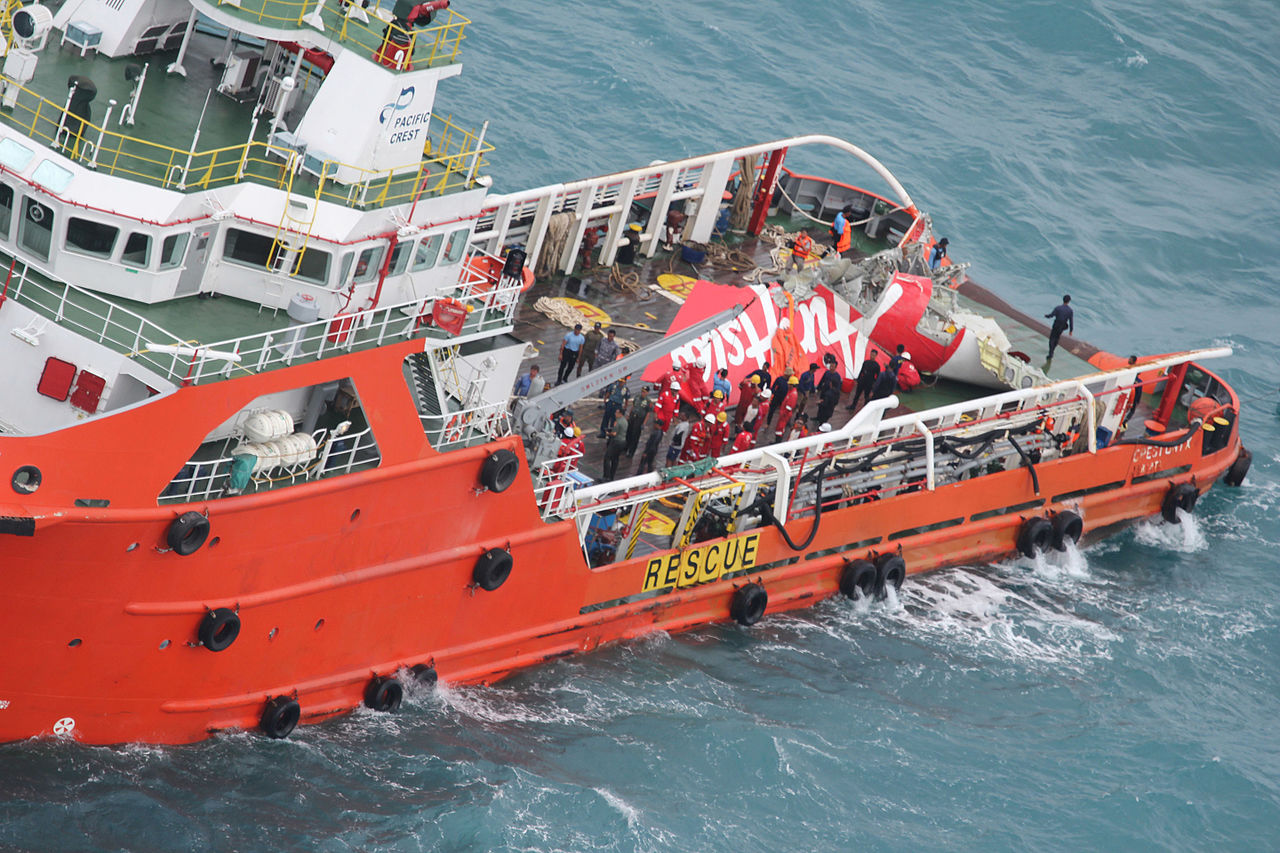
On October 29, 2018, a Boeing 737 MAX 8 crashed into the Java Sea shortly after takeoff from Jakarta, killing all 189 people on board. This was the most consequential accident of the year. Investigation revealed that a new automated flight control system, the Maneuvering Characteristics Augmentation System (MCAS), repeatedly pushed the aircraft’s nose down due to faulty sensor data. Pilots struggled to counteract the system, which they had not been adequately trained on. This event triggered the largest crisis in Boeing's history and initiated a global discussion on the "man-machine interface."
Cubana de Aviación Flight 972 (Cuba)
On May 18, 2018, a Boeing 737-200 crashed shortly after takeoff from Havana, resulting in 112 deaths. The aircraft was wet-leased from a Mexican company, Global Air. The investigation pointed to human error, specifically incorrect weight and balance calculations and an excessive climb angle that caused an aerodynamic stall. This accident highlighted the risks associated with aging fleets and the oversight requirements for wet-lease arrangements in developing markets.
Saratov Airlines Flight 703 (Russia)
In February 2018, an Antonov An-148 crashed near Moscow, killing 71 people. Investigators determined that the pilots failed to turn on the heating elements for the aircraft's pitot tubes (speed sensors). This led to icing, which resulted in incorrect airspeed readings. Confused by the conflicting data, the crew took actions that caused a nose-dive, underscoring the ongoing danger of icing and the critical importance of standard operating procedures (SOPs).
Southwest Airlines Flight 1380 (United States)
While only one fatality occurred, the Southwest 1380 incident on April 17, 2018, was highly significant. A fan blade on the CFM56-7B engine failed due to metal fatigue, causing an uncontained engine failure. Debris struck the fuselage, shattering a window and causing a rapid decompression. This was the first fatality on a US-certified airline in nine years, leading to immediate mandates for ultrasonic inspections of engine fan blades across the global fleet.
Comparative Analysis of Major 2018 Aviation Accidents
The following table summarizes the primary fatal accidents of 2018, illustrating the diversity of causes and regional distribution.
| Date | Flight / Airline | Aircraft Type | Fatalities | Primary Contributing Factor |
|---|---|---|---|---|
| Feb 11, 2018 | Saratov Airlines 703 | Antonov An-148 | 71 | Pitot tube icing/Pilot error |
| Feb 18, 2018 | Iran Aseman 3704 | ATR 72-212 | 66 | CFIT (Mountainous terrain) |
| Mar 12, 2018 | US-Bangla 211 | Dash 8 Q400 | 51 | Pilot disorientation/Stress |
| Apr 17, 2018 | Southwest 1380 | Boeing 737-700 | 1 | Uncontained engine failure |
| May 18, 2018 | Cubana 972 | Boeing 737-200 | 112 | Aerodynamic stall/Weight & Balance |
| Oct 29, 2018 | Lion Air 610 | Boeing 737 MAX 8 | 189 | Automated system (MCAS) failure |
| Dec 20, 2018 | Air Kasai (Congo) | Antonov An-26 | 6 | Bad weather/Landing approach |
The Genesis of the Boeing 737 MAX Crisis
The 2018 safety record cannot be discussed without focusing on the Boeing 737 MAX. The Lion Air crash in October was the first sign of a systemic failure in how modern aircraft are certified. Investigators found that Boeing had designed the MCAS system to prevent stalls by automatically adjusting the horizontal stabilizer. However, the system relied on a single Angle of Attack (AOA) sensor, creating a single point of failure.
Furthermore, Boeing had successfully petitioned the Federal Aviation Administration (FAA) to exclude mention of MCAS from the pilot flight manuals to reduce training costs for airlines. This lack of transparency meant that when the system malfunctioned on Flight 610, the crew did not have the specific knowledge required to diagnose the problem quickly. Looking back from 2026, we see this as the moment the industry moved toward "Human-Centric Automation," requiring that pilots always have a clear path to override automated commands.
The fallout from 2018 led to a 20-month global grounding of the MAX fleet following a second crash in early 2019. It also forced the FAA to reform the Organization Designation Authorization (ODA) program, which had allowed manufacturers to perform much of their own safety certification.
Analyzing Causes: Loss of Control and Engine Failures
In 2018, Loss of Control In-flight (LOC-I) remained the deadliest category of accident. Both the Cubana and Saratov crashes fall into this category. LOC-I occurs when an aircraft deviates from its intended flight path and the pilots are unable to recover. These incidents are often the result of a chain of events starting with a mechanical issue (like icing) but culminating in a breakdown of Crew Resource Management (CRM).
Engine safety also took center stage due to the Southwest Flight 1380 incident. While uncontained engine failures are rare, they are high-risk events because they can damage flight controls or the pressure vessel of the cabin. The 2018 incidents prompted the NTSB and international regulators to re-evaluate how engine cowlings are designed to contain debris and how fatigue in high-bypass fan blades is detected before catastrophic failure occurs.
Additionally, Controlled Flight Into Terrain (CFIT) continued to be a problem in regions with less advanced radar infrastructure. The Iran Aseman Airlines crash in the Zagros Mountains was a classic CFIT incident, where an airworthy aircraft was flown into an obstacle under pilot control, often due to poor visibility or navigation errors.
Regional Safety Performance and Infrastructure
Safety in 2018 was not evenly distributed across the globe. Some regions saw marked improvements, while others faced persistent challenges.
- Africa: Historically the region with the highest accident rates, Africa continued to see improvements in 2018. While accidents still occurred, the implementation of the IATA Operational Safety Audit (IOSA) helped African carriers align with international standards. In 2018, IATA-member airlines in sub-Saharan Africa had zero jet hull losses.
- CIS (Commonwealth of Independent States): This region, including Russia, faced significant challenges in 2018. The Saratov Airlines crash highlighted issues with maintenance standards and pilot training consistency in smaller regional carriers.
- Southeast Asia: The Lion Air crash placed Indonesia’s aviation oversight back under the spotlight. After years of progress that had seen Indonesian airlines removed from the EU’s "blacklist," the 2018 disaster raised questions about whether regulatory oversight was keeping pace with the rapid growth of low-cost carriers in the region.
The Long-term Impact of 2018 Safety Reforms
The lessons learned from 2018 catalyzed several major safety initiatives that define the industry today in 2026. One of the most significant is the enhancement of the Global Aeronautical Distress and Safety System (GADSS). Following the difficulties in locating aircraft in previous years, 2018 saw increased pressure for real-time tracking of commercial flights every 15 minutes, and every one minute when an aircraft is in distress.
Furthermore, the "human factor" in automation has been redefined. Training programs now place a much higher emphasis on manual handling skills. Pilots are encouraged to spend more time hand-flying aircraft in simulators to ensure they can maintain control when automated systems—like those seen in the 2018 accidents—malfunction.
Data sharing has also become more transparent. The International Civil Aviation Organization (ICAO) has expanded its safety platforms to allow member states to share real-time data on emerging safety risks, such as specific engine component failures or regional weather anomalies.
FAQ
How many people died in plane crashes in 2018?
There were 556 fatalities resulting from 15 fatal accidents involving passenger aircraft in 2018. This was a significant increase from 2017, which saw zero passenger jet fatalities, but it was roughly in line with the five-year average of the time.
Was the Boeing 737 MAX the only aircraft with safety issues in 2018?
No, 2018 saw accidents involving a wide range of aircraft, including the Antonov An-148, ATR 72, and older Boeing 737 models. While the 737 MAX gained the most media attention due to the Lion Air crash, other accidents were caused by icing, pilot disorientation, and improper weight distribution.
Why did the 2018 Southwest engine failure cause a fatality?
The failure of Southwest Flight 1380 was an "uncontained" engine failure. A fan blade broke off and struck the engine housing in a way that debris was ejected at high speed. A piece of the housing struck a cabin window, causing it to shatter. The resulting rapid decompression caused a passenger to be partially pulled through the window, leading to fatal injuries.
Did aviation safety improve after 2018?
Yes, the 2018 accidents led to major reforms in aircraft certification, engine inspection protocols, and pilot training. Regulators like the FAA and EASA tightened their oversight of manufacturers, and airlines increased their focus on Crew Resource Management (CRM) and upset recovery training.
What is "Loss of Control In-flight" (LOC-I)?
LOC-I is a category of aircraft accident where the aircraft enters a flight regime outside its normal envelope, and the crew is unable to recover. In 2018, this was the leading cause of fatalities, often triggered by a combination of technical failure (like sensor icing) and subsequent pilot error.
Next Actions for Aviation Safety Professionals
For those working in aviation safety or regulatory compliance, the 2018 data serves as a permanent case study in the dangers of "automation surprise." Organizations should prioritize the following actions to mitigate similar risks:
- Implement Robust SMS: Safety Management Systems (SMS) should be audited to ensure that "hidden" risks—such as the introduction of new software without comprehensive pilot briefings—are identified during the change management process.
- Focus on Manual Skills: Training departments should integrate more manual flight maneuvers into recurrent training, specifically focusing on high-altitude stalls and air-data failures.
- Enhance Maintenance Oversight: As seen in the 2018 engine and aging fleet issues, maintenance programs must move toward predictive analytics, using data from flight recorders to identify mechanical trends before they lead to failure.