The cinema of 2017 marked a pivotal turning point in modern movie history, defined by record-breaking global box office hits, a mainstream resurgence in low-budget original horror, and seismic shifts in film distribution and industry oversight. From Star Wars: The Last Jedi and Wonder Woman to landmark original works like Get Out and The Shape of Water, 2017 reshaped theatrical strategy and critical award narratives.
Global Box Office Dominance and Franchise Milestones
The 2017 theatrical landscape delivered substantial commercial yields, generating over $40 billion in global box office revenue for the first time in industry history. Franchise cinema continued to dominate global revenue metrics, led by Walt Disney Studios and Universal Pictures. The year’s top-earning film, Star Wars: Episode VIII – The Last Jedi, grossed more than $1.33 billion worldwide, serving as the commercial capstone of the winter holiday season. Close behind was Disney's live-action reimagining of Beauty and the Beast, which grossed over $1.26 billion, demonstrating the immense market appetite for nostalgic musical remakes.
Action and superhero franchises underwent critical recalibrations during this twelve-month period. Warner Bros. and DC Films achieved a major critical and commercial breakthrough with Patty Jenkins’ Wonder Woman, which earned $822 million globally and broke records for the highest-grossing film directed by a solo female filmmaker at that time. Concurrently, Marvel Studios refined its stylistic range by releasing Thor: Ragnarok, directed by Taika Waititi, and Guardians of the Galaxy Vol. 2, directed by James Gunn. Both titles injected distinct comedic authorial voices into the Marvel Cinematic Universe (MCU), while Sony and Marvel successfully integrated Spider-Man into the MCU with Spider-Man: Homecoming.
2017 Worldwide Box Office Revenue Highlights: - Star Wars: The Last Jedi ($1.33B) - Beauty and the Beast ($1.26B) - The Fate of the Furious ($1.23B) - Despicable Me 3 ($1.03B) - Jumanji: Welcome to the Jungle ($962M)
A notable feature of the 2017 commercial landscape was the international market expansion, specifically in China. Wu Jing’s action spectacle Wolf Warrior 2 grossed over $870 million globally, with the vast majority of its earnings coming from Chinese cinemas. This single-market performance rivaled Western studio tentpoles, establishing that non-Hollywood productions could generate top-tier international revenue without relying primarily on North American theatrical runs.
The Horror Renaissance: Low Budgets, Massive Returns
While big-budget blockbusters carried high production overheads, 2017 emerged as a golden benchmark for high-margin, low-budget horror and thriller cinema. Independent and specialized studios, most notably Blumhouse Productions, demonstrated that original storytelling coupled with disciplined fiscal management could generate extraordinary return on investment (ROI).
Jordan Peele’s directorial debut, Get Out, became the defining cultural text of 2017 horror. Produced for approximately $4.5 million, the film earned over $255 million worldwide while earning widespread acclaim for its sharp social commentary on contemporary American racism. Get Out transcended genre boundaries, securing four major Academy Award nominations, including Best Picture, Best Director, and Best Actor, ultimately winning the Oscar for Best Original Screenplay.
Key Metrics of 2017 Horror Breakthroughs: - Get Out: $4.5M Budget | $255M Global Box Office | Oscar Winner (Best Original Screenplay) - It: $35M Budget | $704M Global Box Office | Highest-Grossing Horror Film in History - Split: $9M Budget | $278M Global Box Office | M. Night Shyamalan Franchise Resurgence
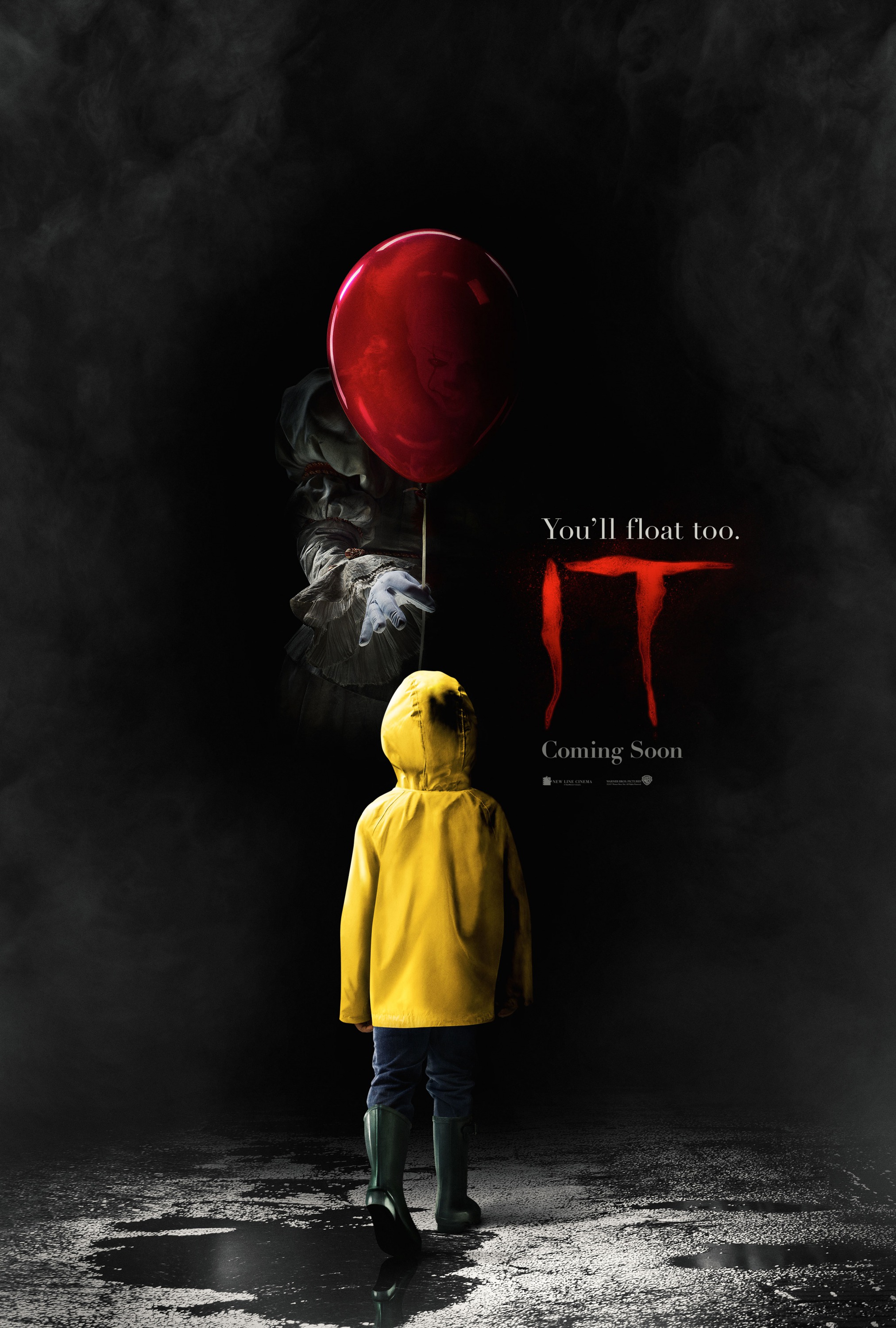
Simultaneously, Warner Bros. and New Line Cinema released Andy Muschietti’s adaptation of Stephen King’s It. Budgeted at an estimated $35 million, the film went on to gross $704 million worldwide, establishing itself as the highest-grossing R-rated horror film of all time. Alongside M. Night Shyamalan’s surprise hit Split, 2017 proved that mid-tier horror films possessed unparalleled theatrical durability in an era increasingly dominated by visual-effects tentpoles.
Critical Darlings and the 90th Academy Awards Landscape
The awards season culminating in the 90th Academy Awards (held in early 2018 to honor 2017 releases) highlighted a rich mix of auteur-driven filmmaking and technical craft. Guillermo del Toro’s dark romantic fantasy The Shape of Water led the Oscar nominations field with 13 nods, ultimately winning four awards, including Best Picture and Best Director. The film’s victory celebrated classical monster cinema aesthetics infused with nuanced sociopolitical subtext.
Christopher Nolan’s immersive historical drama Dunkirk stood as the primary technical titan of the year. Shot largely on IMAX 65mm and 70mm large-format film, Dunkirk grossed over $526 million while garnering eight Oscar nominations and winning three technical awards in Editing, Sound Editing, and Sound Mixing. Nolan’s non-linear narrative structure across air, land, and sea established new benchmarks for historical war filmmaking.
90th Academy Awards Major Category Winners (2017 Releases): - Best Picture: The Shape of Water - Best Director: Guillermo del Toro (The Shape of Water) - Best Actress: Frances McDormand (Three Billboards Outside Ebbing, Missouri) - Best Actor: Gary Oldman (Darkest Hour) - Best Supporting Actress: Allison Janney (I, Tonya) - Best Supporting Actor: Sam Rockwell (Three Billboards Outside Ebbing, Missouri) - Best Original Screenplay: Jordan Peele (Get Out) - Best Adapted Screenplay: James Ivory (Call Me by Your Name)
Other critical highlights included Martin McDonagh’s aggressive drama Three Billboards Outside Ebbing, Missouri, which earned acting accolades for Frances McDormand and Sam Rockwell; Greta Gerwig’s solo directorial debut Lady Bird, which earned critical acclaim for its authentic coming-of-age narrative; and Luca Guadagnino’s Call Me by Your Name, which earned veteran screenwriter James Ivory an Oscar at age 89. Additionally, Paul Thomas Anderson’s Phantom Thread provided a masterclass in period costume design and performance, marking the final film role for three-time Oscar winner Daniel Day-Lewis prior to his retirement announcement.
Comparative Breakdown of 2017’s Defining Cinematic Releases
The table below outlines key metadata across the most impactful releases of 2017, illustrating the diversity of budgets, genres, box office yields, and critical achievements.
| Film Title | Primary Genre | Lead Director | Estimated Production Budget | Worldwide Gross | Key Award / Legacy Recognition |
|---|---|---|---|---|---|
| Star Wars: The Last Jedi | Sci-Fi / Fantasy | Rian Johnson | $200–$300 Million | $1.332 Billion | Highest-grossing film of 2017 |
| Beauty and the Beast | Musical / Fantasy | Bill Condon | $160 Million | $1.266 Billion | Academy Award nominee (Production / Costume Design) |
| The Shape of Water | Romantic Fantasy | Guillermo del Toro | $19.5 Million | $195.2 Million | Winner of 4 Academy Awards, including Best Picture |
| Get Out | Social Horror | Jordan Peele | $4.5 Million | $255.4 Million | Academy Award Winner for Best Original Screenplay |
| It | Supernatural Horror | Andy Muschietti | $35 Million | $704 Million | Highest-grossing R-rated horror film of all time |
| Dunkirk | Historical War | Christopher Nolan | $100 Million | $527 Million | Winner of 3 Academy Awards (Technical Categories) |
| Wonder Woman | Superhero / Action | Patty Jenkins | $149 Million | $822.8 Million | Critical breakthrough for female-led superhero cinema |
| Wolf Warrior 2 | Action Spectacle | Wu Jing | $30 Million | $870.3 Million | Highest-grossing non-English single-market release |
| Lady Bird | Coming-of-Age Drama | Greta Gerwig | $10 Million | $79 Million | Nominated for 5 Academy Awards, including Best Director |
| Logan | Neo-Western / Action | James Mangold | $97 Million | $619 Million | First live-action superhero film nominated for Best Adapted Screenplay |
Streaming Platforms and Industry Distribution Shifts
The year 2017 represented a watershed moment for the relationship between legacy theatrical exhibitors and subscription video-on-demand (SVOD) platforms. Netflix accelerated its original feature film strategy, releasing high-profile titles that challenged conventional theatrical windowing models.
Two films showcased at the 2017 Cannes Film Festival brought this friction to the forefront: Bong Joon-ho’s Okja and Noah Baumbach’s The Meyerowitz Stories. French theatre operators protested their inclusion in competition due to Netflix’s refusal to honor France’s strict theatrical windowing laws. The resulting controversy prompted Cannes to modify its rules for subsequent years, requiring competing films to commit to French theatrical distribution.
Key Distribution Shifts in 2017: 1. Cannes Film Festival SVOD Debate: Tension over Okja and theatrical window enforcement. 2. Specialty Studio Emergence: A24 solidifies prestige branding following Moonlight's early 2017 Oscar win. 3. Streaming Prestige Acceptance: Netflix's Mudbound earns 4 Oscar nominations, breaking SVOD barrier.
Despite festival friction, streaming platforms secured historic prestige recognition. Dee Rees’ historical drama Mudbound, acquired by Netflix at the Sundance Film Festival, earned four Academy Award nominations. Rachel Morrison made Oscar history with Mudbound by becoming the first woman ever nominated for Best Cinematography. Meanwhile, indie distributor A24 consolidated its position as a cinematic powerhouse in 2017, leveraging stylized marketing and auteur freedom to distribute Lady Bird, The Florida Project, The Disaster Artist, and Good Time.
Cultural Turning Points and Genre Evolution
Beyond box office numbers and awards, 2017 introduced structural changes to the film industry's cultural and operational norms. The autumn of 2017 saw the emergence of the #MeToo movement, sparked by investigative journalism revealing decades of systemic sexual misconduct and abuse by prominent industry figures, starting with producer Harvey Weinstein. This watershed moment dismantled executive power structures, instituted revised workplace safety protocols, and initiated a permanent industry-wide reckoning regarding equity, oversight, and representation.
On screen, 2017 pushed traditional genres into new artistic territories:
- R-Rated Superhero Cinema: Following the success of 2016's Deadpool, James Mangold's Logan stripped away bright costumes and visual-effects clutter in favor of a gritty, character-driven neo-Western. It became the first live-action superhero feature to earn an Academy Award nomination for Best Adapted Screenplay.
- Animation Diversity: Pixar’s Coco, directed by Lee Unkrich and Adrian Molina, earned critical acclaim for its authentic portrayal of Mexican culture surrounding Día de los Muertos. Grossing over $807 million, it won Oscars for Best Animated Feature and Best Original Song (Remember Me).
- Sci-Fi Worldbuilding: Denis Villeneuve’s Blade Runner 2049 served as a critical benchmark for modern science fiction art direction and cinematography. Guided by cinematographer Roger Deakins—who won his first Academy Award for the film after 13 previous nominations—the sequel expanded upon Ridley Scott's 1982 original while exploring profound themes of artificial consciousness and human identity.
Essential Viewing Checklist for Film Historians
To gain a complete understanding of 2017’s defining cinematic developments, film scholars and audience members should prioritize viewing these pivotal works across distinct categories:
- The Social & Genre Benchmark: Get Out (Dir. Jordan Peele) — Essential for examining horror as political satire and low-budget studio mechanics.
- The Technical Large-Format Achievement: Dunkirk (Dir. Christopher Nolan) — Essential for observing non-linear visual storytelling and large-format celluloid presentation.
- The Auteur Fantasy: The Shape of Water (Dir. Guillermo del Toro) — The definitive Best Picture winner that bridged creature-feature history with contemporary social allegories.
- The Neo-Western Blockbuster: Logan (Dir. James Mangold) — A study in how maturity and genre blend can elevate comic-book properties into classic drama.
- The International Box Office Turning Point: Wolf Warrior 2 (Dir. Wu Jing) — Crucial for understanding the globalization of non-Western theatrical markets.
- The Modern Coming-of-Age Archetype: Lady Bird (Dir. Greta Gerwig) — A key text for modern character writing, pacing, and independent film direction.
Frequently Asked Questions
What film won Best Picture at the Academy Awards for 2017 releases?
Guillermo del Toro’s The Shape of Water won Best Picture at the 90th Academy Awards held on March 4, 2018. The film also won awards for Best Director, Best Original Score, and Best Production Design.
Which movie was the highest-grossing film released in 2017?
Star Wars: Episode VIII – The Last Jedi, written and directed by Rian Johnson, was the highest-grossing film of 2017, generating over $1.332 billion at the worldwide box office.
Why is 2017 considered a historic year for the horror film genre?
The year 2017 saw unprecedented commercial and critical success for horror. Andy Muschietti’s It became the highest-grossing R-rated horror film in history ($704 million), while Jordan Peele’s Get Out achieved immense ROI ($255 million on a $4.5 million budget) and won the Academy Award for Best Original Screenplay.
How did 2017 impact female directors in Hollywood?
Patty Jenkins’ Wonder Woman grossed $822.8 million, setting a record at the time for the highest-grossing film directed by a solo female filmmaker. Additionally, Greta Gerwig became only the fifth woman ever nominated for the Academy Award for Best Director for her solo directorial debut, Lady Bird.
Which film marked Roger Deakins' first Academy Award win?
Cinematographer Roger Deakins won his first Academy Award for Best Cinematography for Denis Villeneuve’s Blade Runner 2049. Prior to this victory, Deakins had been nominated 13 times without a win.