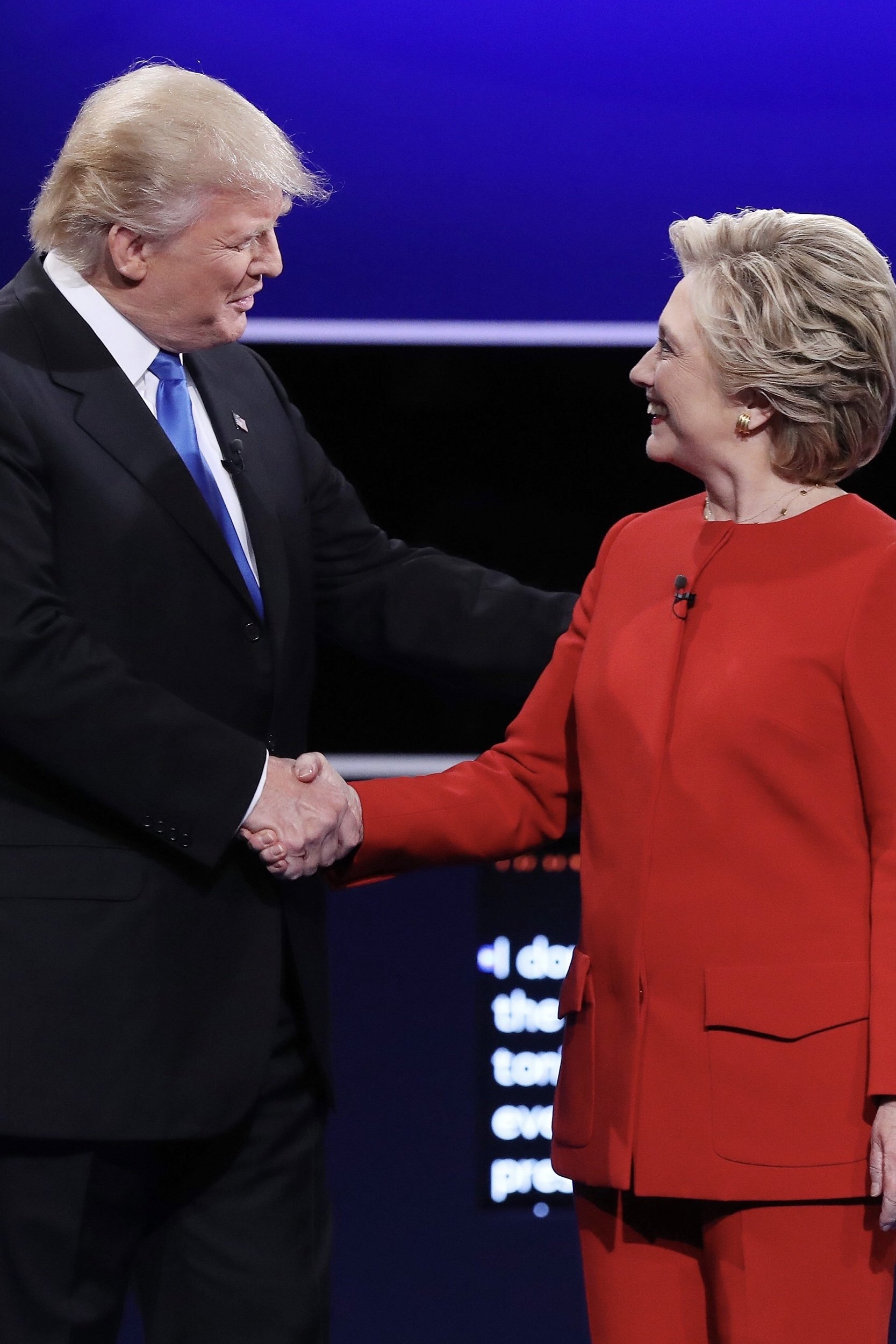
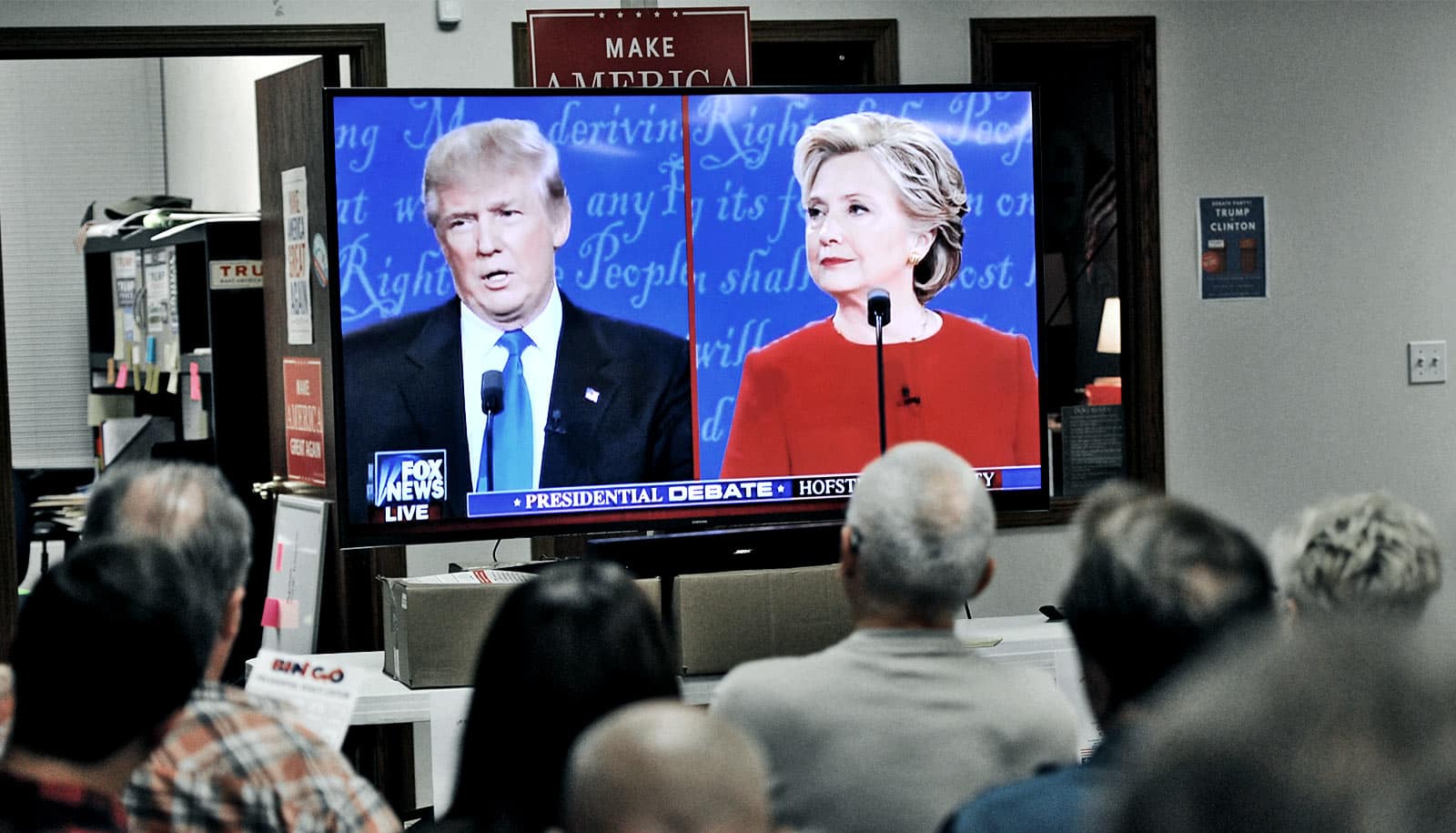
The 2016 presidential debates between Hillary Clinton and Donald Trump represent a transformative moment in American political history, characterized by record-breaking viewership and a fundamental shift in rhetorical style. These encounters defined the 2016 election cycle, highlighting deep-seated national divisions and introducing a confrontational debate format that continues to influence political discourse a decade later in 2026.
The Context and Stakes of the 2016 Debate Season
The 2016 election cycle was marked by a stark contrast between two polarizing figures: Hillary Clinton, a former Secretary of State and First Lady representing the Democratic establishment, and Donald Trump, a real estate mogul and reality television star who ran as a populist Republican outsider. The debates were not merely a platform for policy discussion but a clash of worldviews and temperaments.
Prior to the first debate, the American electorate was highly engaged. The primary season had already shattered engagement records, and the Commission on Presidential Debates (CPD) faced the challenge of managing a cycle that felt more volatile than those of previous decades. For Clinton, the goal was to demonstrate steady leadership, detailed policy knowledge, and the "presidential" temperament she claimed Trump lacked. For Trump, the debates provided an opportunity to bypass traditional media filters, challenge the status quo, and speak directly to a base that felt abandoned by the political elite.
By the time the candidates met on stage, the polls showed a narrowing race. The debates were seen as the most critical "unfiltered" moments where voters could judge the candidates side-by-side. This tension led to the first debate becoming the most-watched television event in the history of American political campaigning.
The First Presidential Debate: A Study in Contrast
Held on September 26, 2016, at Hofstra University in Hempstead, New York, the first presidential debate was moderated by Lester Holt of NBC News. It focused on three primary themes: "Achieving Prosperity," "America's Direction," and "Securing America."
The debate began with a relatively civil exchange regarding trade and the economy. Trump attacked Clinton on her past support for the Trans-Pacific Partnership (TPP) and the North American Free Trade Agreement (NAFTA), framing her as a career politician responsible for the "hollowing out" of the American manufacturing sector. Clinton, in turn, criticized Trump’s tax plans, labeling them "Trumped-up trickle-down" economics.
As the 90-minute session progressed, the tone shifted from policy to personality. Clinton frequently referenced Trump’s business record, his refusal to release tax returns, and his history of promoting the "birther" movement against President Barack Obama. Trump focused on Clinton’s private email server and her decades in public life, questioning why she had not achieved the changes she was now promising.
This first encounter set a record with approximately 84 million viewers across various networks. Media analysts and instant polls generally suggested that Clinton’s preparation and composure allowed her to win the night on points, though Trump’s supporters felt his aggressive stance accurately reflected their frustration with the Washington establishment.
The Second Presidential Debate: Crisis and Confrontation
The second debate, held on October 9, 2016, at Washington University in St. Louis, Missouri, took place under extraordinary circumstances. Just days before the event, the "Access Hollywood" tape was released, featuring lewd comments made by Donald Trump in 2005. This event plunged the Republican campaign into a weekend of crisis, with some party members calling for Trump to step down.
Moderated by Anderson Cooper of CNN and Martha Raddatz of ABC News, the format was a town hall, where half of the questions were posed by uncommitted voters. The atmosphere was palpably hostile; notably, the candidates did not shake hands upon entering the stage. Trump attempted to redirect the conversation away from the tape by bringing three women who had accused Bill Clinton of sexual misconduct to the debate as his guests, holding a press conference with them shortly before the debate began.
Inside the hall, the exchanges were arguably the most aggressive in modern history. Trump threatened that, if elected, he would appoint a special prosecutor to investigate Clinton’s email use, stating she would "be in jail" under his administration. Clinton argued that the tape revealed exactly who Trump was and that he was unfit for the presidency. Despite the personal attacks, the debate did cover issues such as the Affordable Care Act (ACA), the crisis in Syria, and energy policy.
The Third Presidential Debate: Policy and the "Rigged" Narrative
The final debate occurred on October 19, 2016, at the University of Nevada, Las Vegas (UNLV), with Chris Wallace of Fox News acting as moderator. This debate was widely regarded as the most substantive regarding policy, covering the Supreme Court, immigration, the economy, and foreign policy "hot spots."
During this session, Clinton argued for a Supreme Court that would uphold abortion rights and marriage equality, while Trump pledged to appoint conservative justices who would overturn Roe v. Wade. On immigration, Trump defended his plan to build a wall on the U.S.-Mexico border, while Clinton advocated for comprehensive reform and a path to citizenship.
However, the most significant moment of the night came when Wallace asked Trump if he would commit to accepting the results of the election. Trump replied, "I will look at it at the time," and later added, "I will keep you in suspense." This was a historic break from American democratic norms, as presidential candidates had traditionally committed to the peaceful transfer of power regardless of the outcome. Clinton called the response "horrifying" and accused Trump of "downplaying" and "denigrating" American democracy.
The Vice Presidential Debate: Kaine vs. Pence
While the main stage was dominated by the top of the ticket, the Vice Presidential debate on October 4, 2016, at Longwood University in Farmville, Virginia, provided a different dynamic. Moderated by Elaine Quijano of CBS News, the encounter pitted Democratic Senator Tim Kaine against Republican Governor Mike Pence.
Kaine adopted an aggressive "attack dog" role, repeatedly interrupting Pence and demanding that he defend Trump's most controversial statements. Pence, by contrast, remained calm and stoic, often shaking his head or offering a soft-spoken dismissal of Kaine's claims. While Kaine focused on Trump’s rhetoric, Pence focused on the record of the Obama-Clinton administration, particularly on foreign policy and the economy.
Post-debate analysis often credited Pence with a "win" based on his steady demeanor, which many Republicans felt helped stabilize the ticket during a turbulent period. However, Democrats argued that Pence had failed to actually defend Trump’s specific positions, instead creating a polished version of the platform that didn't align with the actual nominee’s words.
Key Data and Metrics of the 2016 Debates
The 2016 debates were not only culturally significant but also statistically anomalous in terms of reach and engagement. The following table summarizes the key logistics and viewership numbers for the four major events.
| Event | Date | Location | Moderator(s) | Format | Est. Viewership |
|---|---|---|---|---|---|
| First Presidential Debate | Sept 26, 2016 | Hofstra University, NY | Lester Holt | Podium / Six 15-min segments | 84.0 Million |
| Vice Presidential Debate | Oct 4, 2016 | Longwood University, VA | Elaine Quijano | Table / Nine 10-min segments | 37.0 Million |
| Second Presidential Debate | Oct 9, 2016 | Washington Univ., MO | Cooper & Raddatz | Town Hall / Audience Q&A | 66.5 Million |
| Third Presidential Debate | Oct 19, 2016 | UNLV, Las Vegas, NV | Chris Wallace | Podium / Six 15-min segments | 71.6 Million |
Source: Nielsen Media Research (traditional TV viewership only).
The Lasting Legacy of the 2016 Debates
As we look back from 2026, the 2016 debates are viewed as the "Big Bang" of modern political communication. They signaled the end of the traditional, polite debate era and the beginning of a more visceral, media-centric approach to campaigning.
- Normalization of Confrontation: The 2016 debates broke the "unwritten rules" of decorum. The refusal to shake hands, the use of "theatrical" guests in the audience, and direct threats of prosecution became part of the political playbook.
- Moderator Scrutiny: The role of the moderator was forever changed. Debates over whether moderators should "fact-check" in real-time or simply facilitate time became a central theme of media criticism, leading to the more structured (and sometimes muted-mic) formats seen in later cycles.
- Digital Fragmentation: While TV viewership was high, 2016 was the first year where social media "clips" and viral moments began to outweigh the impact of the full 90-minute broadcast for younger voters.
- Erosion of Consensus: The debates highlighted that the candidates were not just disagreeing on solutions, but on the basic facts of the American condition. This divergence has only deepened in the decade since.
FAQ
Who won the 2016 presidential debates?
Public opinion was divided along partisan lines, though scientific snap polls generally favored Hillary Clinton in the first and third debates. In the first debate, a CNN/ORC poll found that 62% of voters thought Clinton won, compared to 27% for Trump. However, Donald Trump was widely seen as having achieved his goal of appearing as a credible, disruptive force who could hold his own against a seasoned politician. Ultimately, the debates did not prevent Trump from winning the Electoral College, leading many to debate whether "winning" a debate in the traditional sense still correlates with winning an election.
What was the "nasty woman" comment?
The "nasty woman" comment occurred during the third presidential debate in Las Vegas. While Hillary Clinton was discussing her plan to raise social security taxes on the wealthy—noting that her own payroll contribution would go up, as would Trump's "assuming he can't find a way to get out of it"—Trump leaned into his microphone and interjected, "Such a nasty woman." The phrase immediately went viral, becoming a rallying cry for Clinton supporters and a symbol of the gender dynamics at play throughout the campaign.
How many people watched the 2016 debates?
The first debate between Clinton and Trump holds the record for the most-watched presidential debate in U.S. history, with 84 million viewers across the major broadcast and cable networks. This figure does not include the millions who watched via digital streaming services like YouTube, Twitter, and Facebook, which were becoming major players in political broadcasting at the time. The subsequent debates saw a slight decline but remained significantly higher than the 2012 or 2020 averages.
What were the major policy issues discussed?
Despite the heavy focus on personality and scandals, several key policy areas were covered in depth. These included the future of the Supreme Court (following the death of Justice Antonin Scalia), the merits of the Affordable Care Act (Obamacare), the threat of ISIS, the nuclear deal with Iran, and the impact of international trade agreements like NAFTA and the TPP on American jobs. Immigration was also a central theme, specifically the "border wall" and "extreme vetting."
How did the Access Hollywood tape affect the second debate?
The tape's release occurred just 48 hours before the second debate, turning the event into a high-stakes moment for the Trump campaign. It forced the moderators to lead with questions about sexual assault and character. Trump countered by bringing former Bill Clinton accusers to the event, creating a highly charged atmosphere that many analysts described as the "darkest" or "most vitriolic" debate in American history. It solidified the debate as a forum for character judgment rather than just policy.
Guidance for Researching Historical Political Events
For students, historians, or citizens looking to understand the 2016 debates from a 2026 perspective, it is essential to view the full, unedited broadcasts rather than relying on curated highlights or social media "super-cuts." Primary sources provide the necessary context for how a particular exchange started and the nuance of the candidates' responses.
To conduct a thorough analysis, one should:
- Consult the CPD Archives: The Commission on Presidential Debates maintains transcripts and video records of every sanctioned debate.
- Cross-Reference Polls: Look at "instant" post-debate polls versus "long-term" polling shifts to see if the debates actually moved the needle or simply solidified existing preferences.
- Study the Media Environment: Research the headlines from the morning after each debate to understand how different media outlets framed the "victories" and "losses."
Understanding 2016 is vital for understanding the current political landscape of 2026, as the strategies and rhetorical styles introduced then have become the standard for modern political engagement.