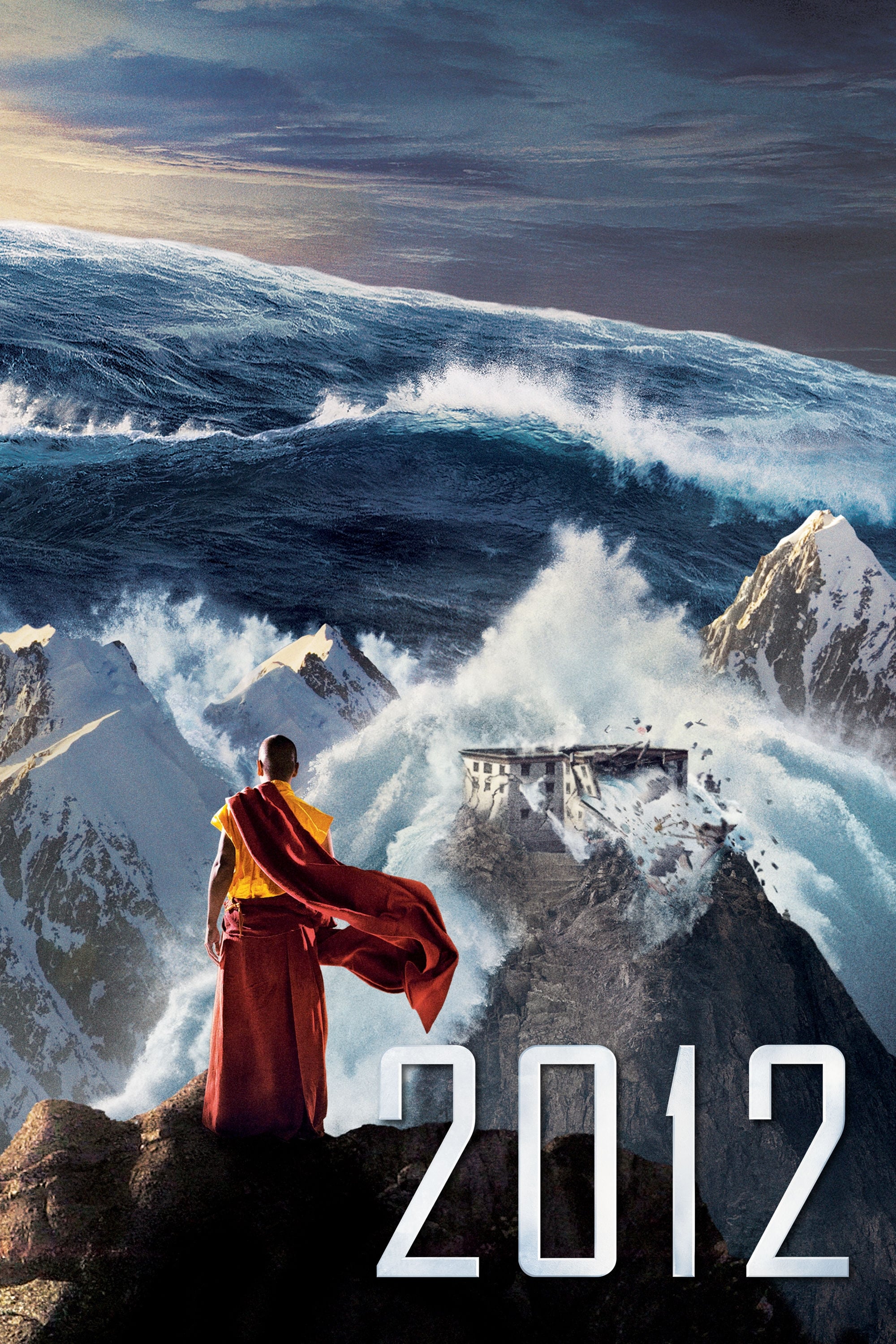
The 2012 film, directed by Roland Emmerich and released in 2009, is a quintessential epic disaster movie centered on a global cataclysm triggered by solar flares. It follows a struggling novelist, Jackson Curtis, as he attempts to lead his family to safety across a disintegrating landscape while world governments secretively construct massive "Arks" to preserve humanity.
Plot Synopsis and Narrative Structure
The narrative of the 2012 film is built upon the (then-timely) cultural anxiety regarding the Mayan Long Count calendar, which supposedly predicted the end of the world on December 21, 2012. The story begins in 2009 when American geologist Adrian Helmsley (Chiwetel Ejiofor) discovers that a massive solar flare is causing neutrinos to heat the Earth's core at an unprecedented rate. This discovery sets a ticking clock for the planet, as the heating will eventually lead to the destabilization of the Earth’s crust.
By 2010, world leaders, led by the United States, begin a clandestine project to ensure the survival of the human race. This "Project Artemis" involves the construction of nine massive ships, or Arks, in the Himalayas. Funding for these vessels is partially secured by selling "tickets" to the world’s ultra-wealthy for one billion euros per person, a plot point that serves as the film’s primary ethical conflict.
The protagonist, Jackson Curtis (John Cusack), is an Everyman figure—a limousine driver and aspiring writer in Los Angeles. During a camping trip to Yellowstone, he encounters Charlie Frost (Woody Harrelson), a conspiracy theorist who broadcasts warnings about the impending apocalypse and the secret government escape plan. When the crustal displacement begins, Jackson narrowly rescues his ex-wife Kate (Amanda Peet) and their children. The second act is a relentless "race against time" as Jackson pilots various aircraft and vehicles across a crumbling California and eventually toward China, hoping to board the secret Arks before the global tsunamis arrive.
Cast and Character Dynamics
The casting of 2012 was a departure from traditional action-hero tropes. Roland Emmerich intentionally chose John Cusack to play the lead because he projected a relatable, non-heroic persona. This choice grounded the spectacular visual effects in a human struggle, making Jackson Curtis’s desperation feel more authentic than a typical action star’s bravado.
- John Cusack (Jackson Curtis): Represents the common man’s ingenuity and parental instinct. His character arc is focused on reconciliation with his estranged family through the crucible of survival.
- Chiwetel Ejiofor (Dr. Adrian Helmsley): Functions as the moral compass of the film. Unlike the politicians, Helmsley advocates for the inclusion of common people on the Arks, emphasizing that "the moment we stop fighting for each other, that’s the moment we lose our humanity."
- Oliver Platt (Carl Anheuser): The White House Chief of Staff who serves as a pragmatic, if cold-blooded, antagonist. He represents the "utilitarian" view—that the preservation of the species outweighs individual lives.
- Thandiwe Newton (Laura Wilson): As the First Daughter, she provides a bridge between the scientific community and the political elite, supporting Helmsley’s humanitarian efforts.
- Woody Harrelson (Charlie Frost): A scene-stealing role that provides both comic relief and essential exposition regarding the Mayan prophecy and the government cover-up.
Production Design and Visual Effects
At the time of its release, 2012 was one of the most expensive films ever produced, with a budget of approximately $200 million. The film is widely regarded as the pinnacle of Roland Emmerich's "Destruction Trilogy," following Independence Day (1996) and The Day After Tomorrow (2004).
The production utilized extensive CGI to depict the destruction of major landmarks on a scale never before seen. Notable sequences include the "limo escape" through a collapsing Los Angeles, where skyscrapers fall in the rearview mirror, and the destruction of the Vatican and the White House. The visual effects team at Digital Domain and other studios used advanced physics-based rendering to simulate the crumbling of concrete and the fluid dynamics of massive tsunamis.
The decision to film in British Columbia, Canada, allowed for massive sets that could be integrated with digital environments. The Ark interiors, in particular, were designed to feel like high-tech cruise ships combined with industrial cargo holds, emphasizing the contrast between the luxury of the wealthy passengers and the stark reality of the "chosen" survivors.
Scientific Accuracy vs. Cinematic License
The 2012 film is notorious for its "junk science," a fact that even NASA felt compelled to address during the film’s promotional cycle. The central premise—that neutrinos from a solar flare could "mutate" into a new type of nuclear particle that heats the Earth's core—has no basis in physics. Neutrinos are subatomic particles that rarely interact with matter; billions pass through the human body every second without effect.
The film also utilizes the "Earth Crustal Displacement" theory, popularized by Charles Hapgood. While Albert Einstein once wrote a foreword for Hapgood’s book in the 1950s, the theory has been entirely superseded by modern plate tectonics. In the film, the entire crust moves thousands of miles in a matter of days, which in reality would generate enough heat to vaporize the oceans and extinguish all life, regardless of whether they were on Arks or not.
Despite these inaccuracies, the film’s "pseudo-science" served a specific narrative purpose: it provided a plausible-sounding catalyst for global destruction that allowed for the cinematic "set pieces" Emmerich desired. As of 2026, the film is often used in film schools as a primary example of "high-concept" writing, where the internal logic of the science is less important than the emotional and visual stakes it creates.
Box Office Performance and Global Reception
Upon its release in November 2009, 2012 was a massive commercial success, grossing over $791 million worldwide. It was particularly successful in international markets, which accounted for more than 75% of its total revenue.
| Market Segment | Approximate Revenue | Significance |
|---|---|---|
| Domestic (North America) | $166 Million | Solid performance for a disaster film. |
| China | $68 Million | One of the highest-grossing foreign films in China at the time. |
| Europe | $250+ Million | Strong performance in Germany, UK, and France. |
| Total Worldwide | $791.2 Million | Rank at the time: Top 50 highest-grossing films. |
The film's success in China was notably significant. The plot's inclusion of the Chinese military and engineers as the only force capable of building the Arks in time was seen as a move to appeal to the burgeoning Chinese box office. This trend of "pandering" to global audiences became a standard practice in Hollywood blockbuster production in the decade that followed.
The Cultural Phenomenon of the 2012 Apocalypse
The 2012 film did not exist in a vacuum; it was the focal point of a massive cultural obsession with the "Mayan Apocalypse." Throughout the late 2000s, dozens of documentaries, books, and survivalist guides were released, all speculating on what would happen on December 21, 2012.
Sony Pictures utilized this anxiety in its marketing campaign, which included a viral website for the fictional "Institute for Human Continuity." The site allowed users to register for a lottery to be saved, further blurring the lines between the film’s fiction and real-world fringe theories. This campaign was so effective that NASA's "Ask an Astrobiologist" section received thousands of letters from people concerned that the world was actually ending, eventually leading the agency to release a formal statement titled "2012: Beginning of the End or Why the World Won't End?"
As we look back from 2026, the "2012 phenomenon" is viewed as an early example of how internet-driven misinformation can create global hysteria, a precursor to the "infodemics" of the 2020s.
Comparison with Other Disaster Films
To understand 2012’s place in cinema, it is helpful to compare it to other entries in the disaster genre. While Independence Day focused on an external threat (aliens) and The Day After Tomorrow on a localized climatic shift, 2012 was a "total" disaster movie, leaving no corner of the Earth untouched.
| Feature | The Day After Tomorrow (2004) | 2012 (2009) | San Andreas (2015) |
|---|---|---|---|
| Disaster Catalyst | Rapid Climate Change | Solar Flares / Crustal Shift | Tectonic Earthquake |
| Primary Theme | Environmental Warning | Human Survival / Class Conflict | Family Rescue |
| Scale of Destruction | Northern Hemisphere | Global | California Coast |
| Tone | Solemn / Warning | Epic / Spectacle | Action / Thriller |
| Visual Style | Ice and Storms | Earthquakes and Tsunamis | Structural Collapse |
The 2012 film remains the "maximalist" version of the genre. Since its release, disaster films have generally shifted toward more contained or "grounded" stories, such as Greenland (2020), which focuses more on the societal breakdown than the visual spectacle of destruction.
FAQ
Why was the year 2012 chosen for the film?
The year 2012 was chosen because it coincided with the end of a 5,125-year cycle in the Mayan Long Count calendar. New Age theories and fringe historians suggested this date marked a global transformation or the end of the world, providing a ready-made "brand" for a disaster movie.
Is the 2012 film based on a book?
No, the film is an original screenplay by Roland Emmerich and Harald Kloser. However, it draws heavy inspiration from the theories of Charles Hapgood regarding crustal displacement and the 1995 book Fingerprints of the Gods by Graham Hancock, which explores the idea of a lost global civilization.
Where can I watch the 2012 film in 2026?
As of 2026, the 2012 film is available on most major streaming platforms, including Netflix and Amazon Prime Video, depending on regional licensing. It is also available in 4K Ultra HD Blu-ray, which is the recommended format to experience the film's complex visual effects.
Did any of the events in the movie actually happen in 2012?
No. December 21, 2012, passed without any unusual geologic or astronomical events. Solar activity in 2012 was within normal parameters, and there was no evidence of core heating or crustal instability. The Mayan people themselves viewed the date as a time for celebration and the beginning of a new cycle, not an apocalypse.
How did the movie affect the reputation of Roland Emmerich?
The film solidified Emmerich's reputation as the "Master of Disaster." While critics often panned his films for thin characterization and scientific inaccuracies, his ability to deliver massive box office returns and state-of-the-art spectacle made him one of the most powerful directors in Hollywood for over two decades.
Viewing Recommendations for Fans of the Genre
If you are revisiting the 2012 film in 2026, it is best viewed as a "time capsule" of late-2000s blockbuster filmmaking. To get the most out of the experience, focus on the sheer technical audacity of the destruction sequences rather than the logistical or scientific plausibility.
For those looking for a deeper dive into the genre, consider a "Disaster Marathon" that traces the evolution of special effects:
- The Poseidon Adventure (1972): To see the roots of the "ensemble cast in peril" trope.
- Independence Day (1996): To see the transition from practical models to early CGI.
- 2012 (2009): For the absolute peak of digital global destruction.
- Greenland (2020): For a modern, more character-driven take on the end of the world.
By following this progression, viewers can appreciate how the 2012 film pushed the boundaries of what was possible in visual storytelling, even if the "science" it relied on remained firmly in the realm of science fiction.