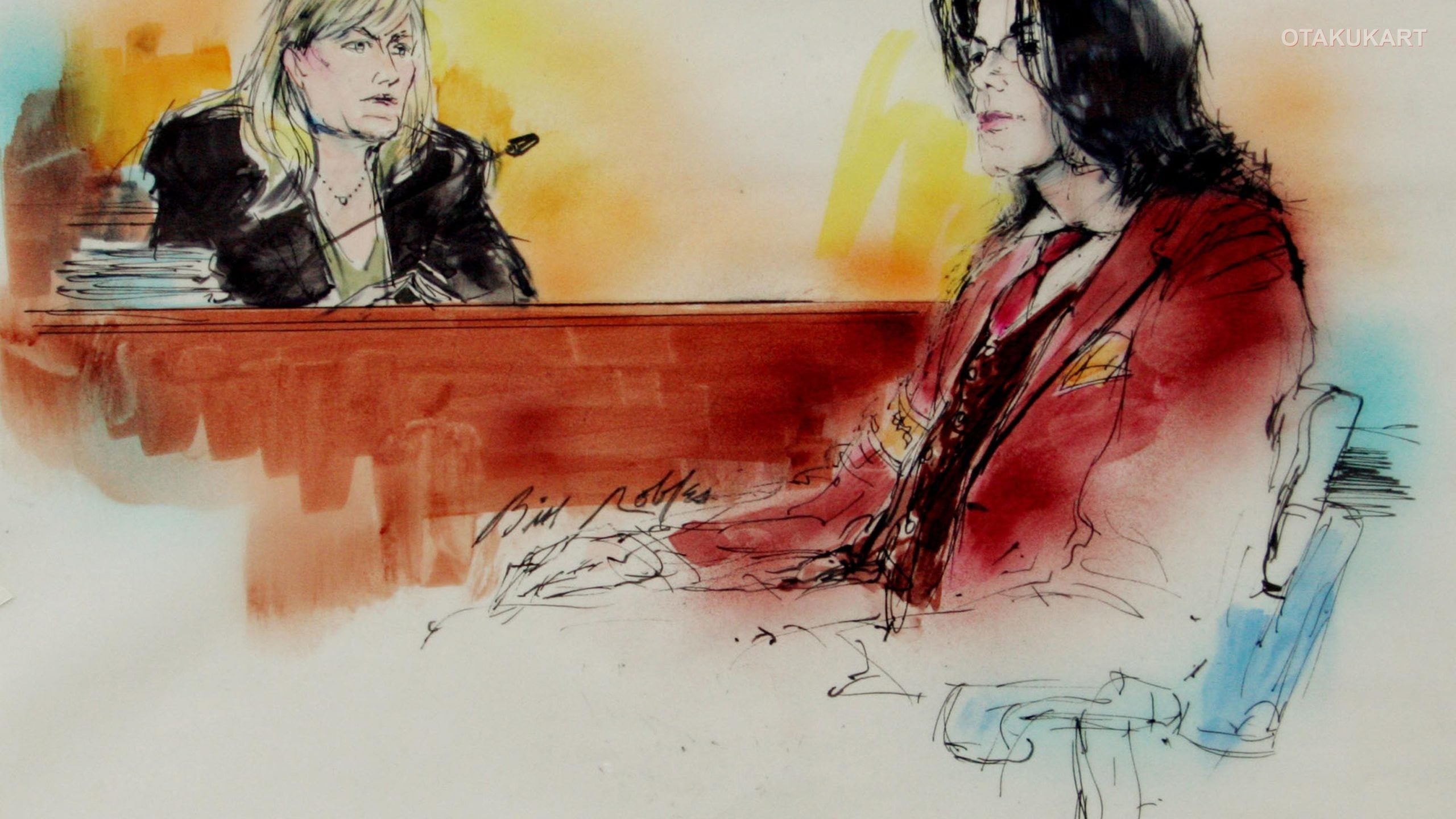
In 2005, the global legal landscape was shaped by high-profile cases ranging from the acquittal of pop icon Michael Jackson to the start of the historic trial of former Iraqi President Saddam Hussein. These proceedings fundamentally altered public perception of celebrity justice, international human rights law, and corporate accountability in the early 21st century.
The year 2005 stands as a watershed moment in legal history. It was a year where the "trial of the century" label was applied multiple times, often for very different reasons. While the American public was transfixed by the spectacle of celebrity trials in Santa Maria, California, the international community was watching a makeshift courtroom in Baghdad attempt to hold a former dictator accountable for crimes against humanity. Simultaneously, the fallout from the early 2000s corporate scandals reached its peak with the sentencing of high-level executives. As we look back from the vantage point of 2026, these cases continue to serve as the primary case studies for jury selection, witness impeachment, and the complexities of international jurisdiction.
The People v. Jackson: A Landmark in Celebrity Jurisprudence
The Michael Jackson child molestation trial, officially titled The People of the State of California v. Michael Joseph Jackson, was perhaps the most publicized legal event of 2005. The trial began in January 2005 in Santa Maria, California, following a 2003 indictment that alleged Jackson had molested a young boy, Gavin Arvizo, at his Neverland Ranch.
Background and the Prosecution's Case
The case was spearheaded by Santa Barbara County District Attorney Tom Sneddon, who had been investigating Jackson for over a decade. The prosecution's strategy relied heavily on the testimony of the Arvizo family and several "prior bad acts" witnesses permitted under California law. They sought to portray Jackson as a predator who used his wealth and fame to groom vulnerable children and their families. However, the prosecution faced significant hurdles, including the credibility of the complaining mother, whose history of previous legal claims and inconsistent statements became a central theme for the defense.
The Defense Strategy and Impeachment
Led by high-profile defense attorney Thomas Mesereau, the defense team executed a masterful strategy of "impeaching" the prosecution's witnesses. Mesereau focused on the financial motivations of the Arvizo family, presenting evidence that they had sought money from various celebrities in the past. The defense also highlighted the lack of forensic evidence and the inconsistencies in the timeline provided by the prosecution. By the time the case went to the jury in June 2005, the defense had successfully shifted the narrative from Jackson’s alleged actions to the credibility of those accusing him.
The Verdict and Long-term Impact
On June 13, 2005, the jury acquitted Michael Jackson on all counts, including child molestation and conspiracy. The verdict was met with worldwide media coverage and remains a subject of intense debate. From a legal standpoint, the trial demonstrated the difficulty of prosecuting high-profile individuals when the case relies almost exclusively on testimonial evidence without physical or digital corroboration. In 2026, legal scholars still point to the Jackson trial as a definitive example of how a skilled defense can dismantle a prosecution by attacking the character and motives of the accusers.
International Justice: The Trial of Saddam Hussein
While the Jackson trial dominated entertainment news, the legal world was focused on the Supreme Iraqi Criminal Tribunal. On October 19, 2005, the trial of Saddam Hussein began in Baghdad. This was a unique legal experiment: a domestic court, supported by international advisors, trying a former head of state for crimes against humanity.
The Al-Dujail Charges
The first case brought against Hussein concerned the 1982 massacre in Dujail, where 148 Shia Muslims were killed following an assassination attempt on the president. The prosecution chose this case first because the documentary evidence—specifically execution orders signed by Hussein and his deputies—was considered the most robust. Unlike many international tribunals held in The Hague, this trial took place in the country where the crimes were committed, adding a layer of volatility and direct political pressure to the proceedings.
Jurisdictional and Security Challenges
The trial was plagued by security concerns and questions regarding its legitimacy. Several defense lawyers were assassinated during the proceedings, and the first presiding judge resigned, citing government interference. Hussein himself used the courtroom as a platform for political defiance, often shouting at the judges and refusing to recognize the court's authority. These disruptions forced the court to balance the requirements of a fair trial with the need to maintain order in a war-torn environment.
Establishing Precedents for Transitional Justice
The trial eventually led to Hussein’s conviction and execution in late 2006, but the groundwork laid in 2005 remains a significant point of study. It highlighted the challenges of "transitional justice"—the attempt to provide legal closure in a society moving from dictatorship to democracy. The 2005 proceedings demonstrated that while domestic trials for international crimes can provide a sense of local justice, they often struggle with perceptions of "victor's justice" and procedural irregularities that wouldn't occur in a purely international forum.
Corporate Accountability: The Conviction of Bernard Ebbers
The year 2005 also saw a massive victory for the U.S. Department of Justice in the realm of white-collar crime. Bernard Ebbers, the former CEO of WorldCom, was convicted in March 2005 for his role in an $11 billion accounting fraud—the largest in U.S. history at the time.
The WorldCom Scandal
WorldCom's collapse in 2002 had sent shockwaves through the global financial markets. The fraud involved inflating assets and hiding expenses to maintain the company's stock price. Ebbers, who had built WorldCom from a small long-distance company into a telecommunications giant, maintained he had no knowledge of the accounting irregularities, famously using the "I didn't know" defense.
The Jury's Rejection of the "Ostrich Defense"
Federal prosecutors successfully argued that it was inconceivable for a hands-on CEO like Ebbers to be unaware of such massive financial discrepancies. The testimony of Scott Sullivan, WorldCom's former CFO, was instrumental. Sullivan testified that Ebbers had directed him to "hit the numbers" through fraudulent means. In July 2005, Ebbers was sentenced to 25 years in prison, a sentence that sent a clear message to corporate boards across America: willful ignorance of fraud is not a legal defense.
Summary Comparison of Major 2005 Trials
The following table compares the key elements of the most significant legal proceedings that concluded or began in 2005.
| Trial Subject | Primary Charges | Jurisdiction | Outcome/Status in 2005 | Key Legal Significance |
|---|---|---|---|---|
| Michael Jackson | Child Molestation | California State Court | Acquitted on all counts | Focus on witness impeachment and celebrity status. |
| Saddam Hussein | Crimes Against Humanity | Iraqi High Tribunal | Trial commenced Oct 2005 | Hybrid domestic/international justice in a conflict zone. |
| Bernard Ebbers | Securities Fraud/Conspiracy | U.S. Federal Court | Convicted; 25-year sentence | Pierced the "ignorant CEO" defense in corporate fraud. |
| Dennis Rader (BTK) | 10 Counts of First-Degree Murder | Kansas State Court | Pleaded Guilty; Life Sentence | Cold case resolution through digital forensics. |
| Scott Peterson | First/Second-Degree Murder | California State Court | Sentenced to Death (March 2005) | High-profile use of circumstantial evidence. |
The BTK Killer and the Role of Digital Forensics
In August 2005, the sentencing of Dennis Rader, known as the BTK (Bind, Torture, Kill) killer, marked the end of a 30-year reign of terror in Wichita, Kansas. While Rader's crimes spanned decades, his 2005 trial and subsequent sentencing were a milestone for forensic science.
Rader was caught after he resumed communication with the media and police in 2004. He sent a purple floppy disk to a local TV station, believing that the deleted metadata could not be traced. However, forensic technicians recovered a deleted Microsoft Word document that contained the name "Dennis" and a link to "Christ Lutheran Church." This digital "smoking gun" led directly to Rader’s arrest.
His 2005 court appearance was notable for his cold, clinical confession. Rader detailed each of his ten murders without emotion, providing a chilling look into the mind of a serial killer. For the legal community, the BTK case became the gold standard for how digital forensics can solve cold cases, reinforcing the importance of metadata in criminal investigations—a field that has only grown in complexity by 2026.
Civil Liberties and the Kitzmiller v. Dover Trial
In late 2005, a different kind of trial took place in a federal courtroom in Pennsylvania. Kitzmiller v. Dover Area School District was the first direct challenge to a public school district policy requiring the teaching of "intelligent design" as an alternative to evolution.
The Establishment Clause
The plaintiffs, a group of parents, argued that intelligent design was a form of creationism and that its inclusion in the science curriculum violated the Establishment Clause of the First Amendment. The trial involved extensive testimony from biologists, philosophers, and theologians.
The Ruling
In December 2005, Judge John E. Jones III issued a scathing 139-page ruling, stating that intelligent design is "not science" and is "essentially religious." The judge found that school board members had lied about their religious motivations. This case remains a landmark for science education and the separation of church and state, effectively ending the push to include intelligent design in American public school science standards for the next two decades.
Frequently Asked Questions
Who defended Michael Jackson in his 2005 trial?
Michael Jackson was defended by Thomas Mesereau, Susan Yu, and Robert Sanger. Mesereau is widely credited with the acquittal due to his aggressive cross-examination of prosecution witnesses and his ability to humanize Jackson to the jury.
Why was Saddam Hussein tried in Iraq instead of The Hague?
The United States and the interim Iraqi government wanted the trial to be held in Iraq to provide a sense of local ownership and justice for the Iraqi people. While the International Criminal Court (ICC) exists for such crimes, Iraq was not a signatory to the Rome Statute at the time, and there was a strong political desire for a domestic proceeding.
What was the sentence for Bernard Ebbers?
Bernard Ebbers was sentenced to 25 years in federal prison. He began his sentence in 2006 and was released early on compassionate grounds in late 2019 due to failing health, shortly before his death in February 2020.
How did the BTK killer get caught in 2005?
Dennis Rader was caught through a deleted metadata fragment on a floppy disk he sent to a TV station. The metadata identified him via his church's computer, leading police to his identity. This is considered one of the most famous examples of a criminal being caught by their own technological ignorance.
What was the result of the Scott Peterson case in 2005?
While Scott Peterson was convicted in late 2004, his formal sentencing occurred in March 2005. The judge followed the jury's recommendation and sentenced him to death. (Note: His death sentence was later overturned in 2020, though his conviction remains).
Evaluating the Legacy of 2005 Legal Actions
The trials of 2005 collectively demonstrated the evolving relationship between the courtroom and the public. Whether through the lens of celebrity obsession, the pursuit of international accountability, or the enforcement of corporate ethics, these cases provided a rigorous test of the legal systems involved.
For legal professionals, the primary takeaway from 2005 is the critical importance of witness credibility and the rising power of digital evidence. In the Jackson case, the lack of credibility destroyed a prosecution; in the BTK case, a single digital file ended a decades-long mystery. As we navigate the legal challenges of 2026, the precedents set during that tumultuous year—concerning everything from how we treat high-profile defendants to how we secure digital footprints—continue to guide the hands of prosecutors and defense attorneys alike. To understand modern law, one must first understand the triumphs and failures of the 2005 courtroom.