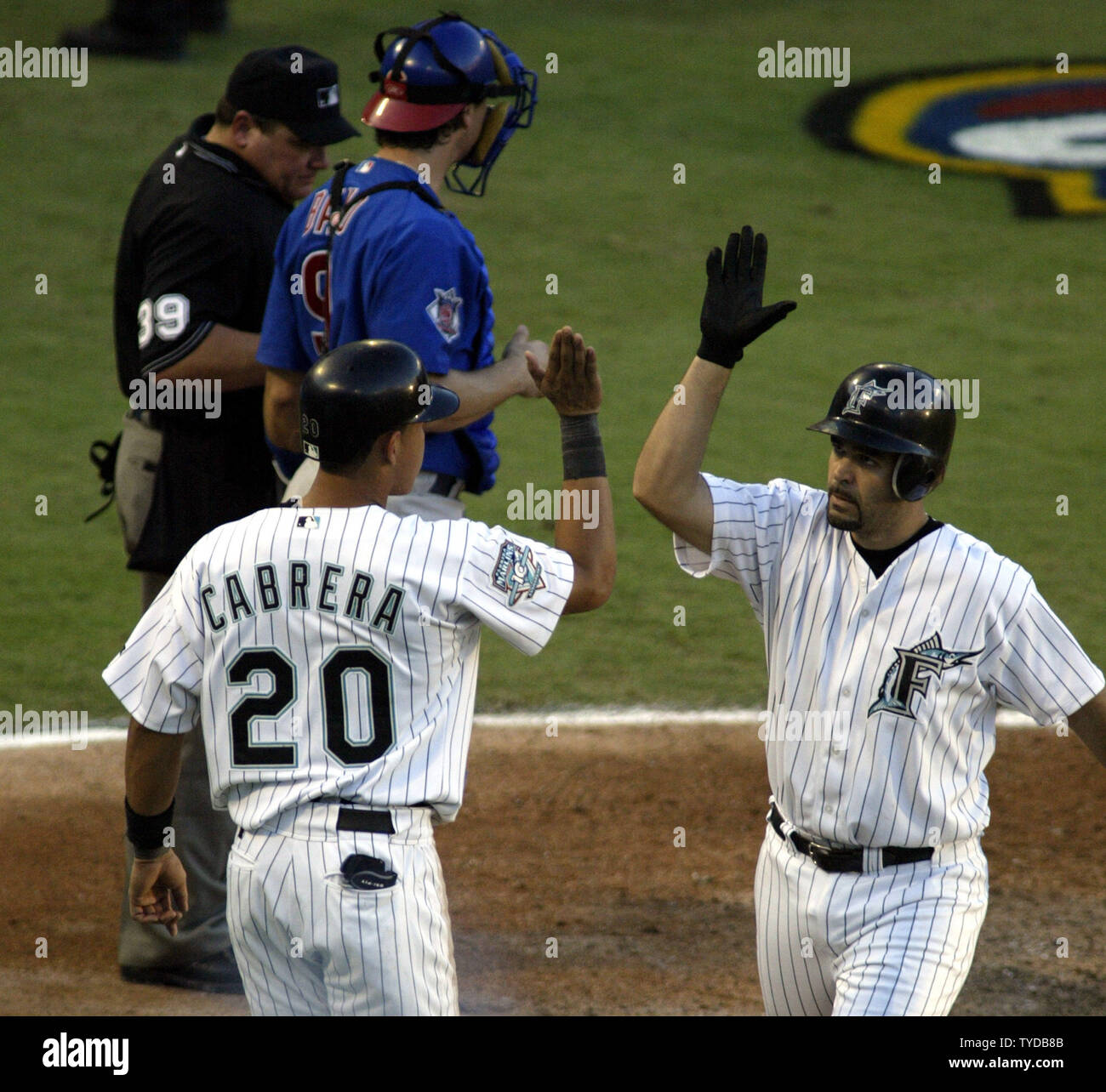
The 2003 National League Championship Series (NLCS) was a seven-game postseason battle between the Chicago Cubs and the Florida Marlins. The Marlins won the series 4-3, advancing to the World Series where they eventually defeated the New York Yankees. This series is historically significant for the Cubs' dramatic collapse in Game 6, including the infamous Steve Bartman incident.
Historical Context and Pre-Series Expectations
Entering the 2003 postseason, the Chicago Cubs were the focal point of the baseball world. The franchise had not won a World Series since 1908 and had not appeared in one since 1945. Under first-year manager Dusty Baker, the Cubs captured the National League Central title with an 88-74 record, powered by a dominant young starting rotation featuring Mark Prior and Kerry Wood. After defeating the favored Atlanta Braves in the National League Division Series (NLDS), the Cubs seemed destined to break "The Curse of the Billy Goat."
The Florida Marlins, conversely, were the quintessential "underdog" story. They began the 2003 season poorly, leading to the mid-season hiring of 72-year-old manager Jack McKeon. Under McKeon’s relaxed but disciplined leadership, the Marlins surged to claim the National League Wild Card spot. They upset the defending NL champion San Francisco Giants in the NLDS to set up the showdown with Chicago.
As of 2026, the 2003 NLCS remains a case study in how momentum and psychological pressure can dictate the outcome of high-stakes sports. While the Cubs were the favorites due to their elite pitching, the Marlins possessed a dangerous mix of veteran leadership, exemplified by catcher Ivan "Pudge" Rodriguez, and emerging superstar talent like 20-year-old Miguel Cabrera.
Team Rosters and Key Performance Profiles
To understand the series outcome, one must look at the construction of both rosters. The 2003 Cubs relied heavily on their "power pitchers," while the Marlins utilized a high-contact offense and aggressive baserunning.
The Chicago Cubs
The Cubs' identity was built around Prior and Wood, who combined for over 500 strikeouts during the regular season. Their lineup featured the legendary Sammy Sosa, though he was beginning to show signs of decline, and mid-season acquisition Aramis Ramirez, who provided much-needed power at third base. Moises Alou served as the veteran anchor in the outfield.
The Florida Marlins
The Marlins were a more balanced unit. Josh Beckett was their budding ace, backed by the crafty Brad Penny and the eccentric rookie Dontrelle Willis. Their lineup was deep: Luis Castillo and Juan Pierre were elite table-setters, while Pudge Rodriguez and Derrek Lee provided middle-of-the-order stability. Miguel Cabrera, though a rookie, was already displaying the Hall of Fame-caliber hitting that would define his career.
| Feature | Chicago Cubs | Florida Marlins |
|---|---|---|
| Regular Season Record | 88-74 | 91-71 |
| Primary Starting Pitchers | Mark Prior, Kerry Wood | Josh Beckett, Brad Penny |
| Leading Power Hitter | Sammy Sosa (40 HR) | Mike Lowell (32 HR) |
| Key Acquisition | Aramis Ramirez (Trade) | Ivan Rodriguez (Free Agency) |
| Manager | Dusty Baker | Jack McKeon |
Game-by-Game Breakdown: The Road to Game 6
The series was a back-and-forth affair that saw both teams dominate at different intervals.
- Game 1: Played at Wrigley Field, this was an offensive shootout. The Marlins took an early lead, but the Cubs rallied. However, Florida prevailed in 11 innings with a 9-8 victory, punctuated by a Pudge Rodriguez home run.
- Game 2: Mark Prior took the mound and silenced the Marlins' bats. The Cubs won 12-3, evening the series and restoring confidence in the Chicago faithful.
- Game 3: In a classic pitchers' duel that shifted to Florida, the Cubs won 5-4 in 11 innings. This win gave the Cubs the series lead and home-field advantage.
- Game 4: Behind a stellar performance from Aramis Ramirez, who hit a first-inning grand slam, the Cubs won 8-3. This put Chicago just one win away from their first World Series appearance in nearly six decades.
- Game 5: With their backs against the wall, the Marlins turned to Josh Beckett. He delivered a complete-game shutout, allowing only two hits and striking out 11. The 4-0 Marlins victory sent the series back to Chicago for Game 6.
The Turning Point: Game 6 and the Steve Bartman Incident
October 14, 2003, remains one of the most infamous dates in Major League Baseball history. The Cubs led the series 3-2 and held a 3-0 lead in the eighth inning of Game 6. Mark Prior was cruising, having allowed only three hits through seven innings.
With one out in the eighth, Florida's Luis Castillo hit a high foul ball toward the left-field stands. Cubs outfielder Moises Alou reached for the ball at the wall, but a fan, Steve Bartman, also reached for it, causing the ball to deflect off his hands and into the stands. Alou reacted with visible frustration, and the umpire ruled there was no fan interference because the ball was over the stands, not the field of play.
What followed was a historic collapse that transcended the individual actions of one fan:
- Walk and Single: Castillo eventually walked on that same at-bat. Ivan Rodriguez then hit an RBI single.
- The Error: Miguel Cabrera hit a routine double-play ball to shortstop Alex Gonzalez, who uncharacteristically booted the ball. Instead of the inning being over, the bases remained loaded with only one out.
- The Deluge: The Marlins capitalized on the Cubs' sudden loss of composure. Derrek Lee tied the game with a two-run double. By the time the eighth inning ended, the Marlins had scored eight runs.
The Marlins won Game 6 by a score of 8-3. While Bartman became the scapegoat, baseball analysts often point to Gonzalez's error and Dusty Baker’s decision to leave a tiring Mark Prior in the game as the primary technical reasons for the loss.
Game 7: The Marlins' Clincher
Despite the trauma of Game 6, the Cubs still had Game 7 at home with Kerry Wood on the mound. In the early innings, it appeared the Cubs might recover. Wood himself hit a two-run home run to give Chicago a 3-2 lead in the second inning.
However, the Marlins' resilience was on full display. Miguel Cabrera hit a three-run homer in the fifth inning to put Florida ahead. The Cubs fought back to tie it, but the Marlins scored three more in the top of the seventh. Florida's bullpen, led by Ugueth Urbina, shut the door on the Cubs' season. The final score was 9-6.
The Marlins became the first team since the 1986 New York Mets to overcome a three-games-to-one deficit in the LCS. For Chicago, the loss extended their championship drought and solidified the 2003 NLCS as one of the most painful chapters in their history.
Statistical Analysis and Series Legacy
The 2003 NLCS was a series defined by "high leverage" moments. Statistically, the Marlins' ability to hit with runners in scoring position (RISP) during the final two games was the deciding factor.
Josh Beckett's performance was the individual standout of the series. Across his appearances, he maintained an ERA of 1.93 and demonstrated the "big game" temperament that would define his career. Conversely, the Cubs' bullpen struggled immensely, posting a collective ERA significantly higher than the starters, which left the team vulnerable once Prior and Wood were removed or fatigued.
The legacy of the 2003 NLCS changed the way MLB handled fan interference and stadium security. It also heightened the national discourse surrounding "curses" in sports, a narrative that didn't conclude for the Cubs until their 2016 World Series victory. For Steve Bartman, the series resulted in years of unwanted notoriety, leading to a public apology from the Cubs organization and a championship ring gifted to him in 2017 as a gesture of closure.
Frequently Asked Questions
Who won the MVP of the 2003 NLCS?
Ivan "Pudge" Rodriguez was named the NLCS MVP. He hit .321 with 10 RBIs during the series and provided exceptional defensive leadership behind the plate, which was crucial in managing the Marlins' young pitching staff against a potent Cubs lineup.
Did Steve Bartman ever return to Wrigley Field?
Steve Bartman has largely remained out of the public eye since 2003. Despite numerous invitations from the Cubs organization and media outlets, especially after the 2016 World Series win, he has consistently declined public appearances, preferring to maintain his privacy.
What happened to Mark Prior after the 2003 NLCS?
Mark Prior, once considered one of the greatest pitching prospects in history, saw his career hampered by significant injuries following the 2003 season. While he remained with the Cubs for several more years, he was never able to replicate the workload or dominance of his 2003 campaign. He eventually transitioned into coaching, becoming a highly respected pitching coach in the major leagues.
How many World Series have the Marlins won?
As of 2026, the Marlins franchise has won two World Series titles: 1997 and 2003. Remarkably, both titles were won as a Wild Card team, making them one of the most successful "underdog" franchises in postseason history.
Was fan interference actually called on the Bartman play?
No, the umpires did not call fan interference. According to MLB rules at the time (and currently), if a fan reaches over the railing into the stands to touch a ball, it is not interference. Interference can only be called if a fan reaches onto the field of play to prevent a player from making a catch.
Further Research and Viewing
For those looking to revisit this historic series, MLB.com maintains an archive of "Classic Games" where the full broadcasts of Games 6 and 7 are often available for streaming. Additionally, the documentary Catching Hell, produced as part of the ESPN "30 for 30" series, provides an in-depth psychological and technical analysis of the Bartman incident and the subsequent fallout for both the fan and the Chicago Cubs organization. Statistics and box scores for every game can be verified through Baseball-Reference, which provides play-by-play data for the entire 2003 postseason.