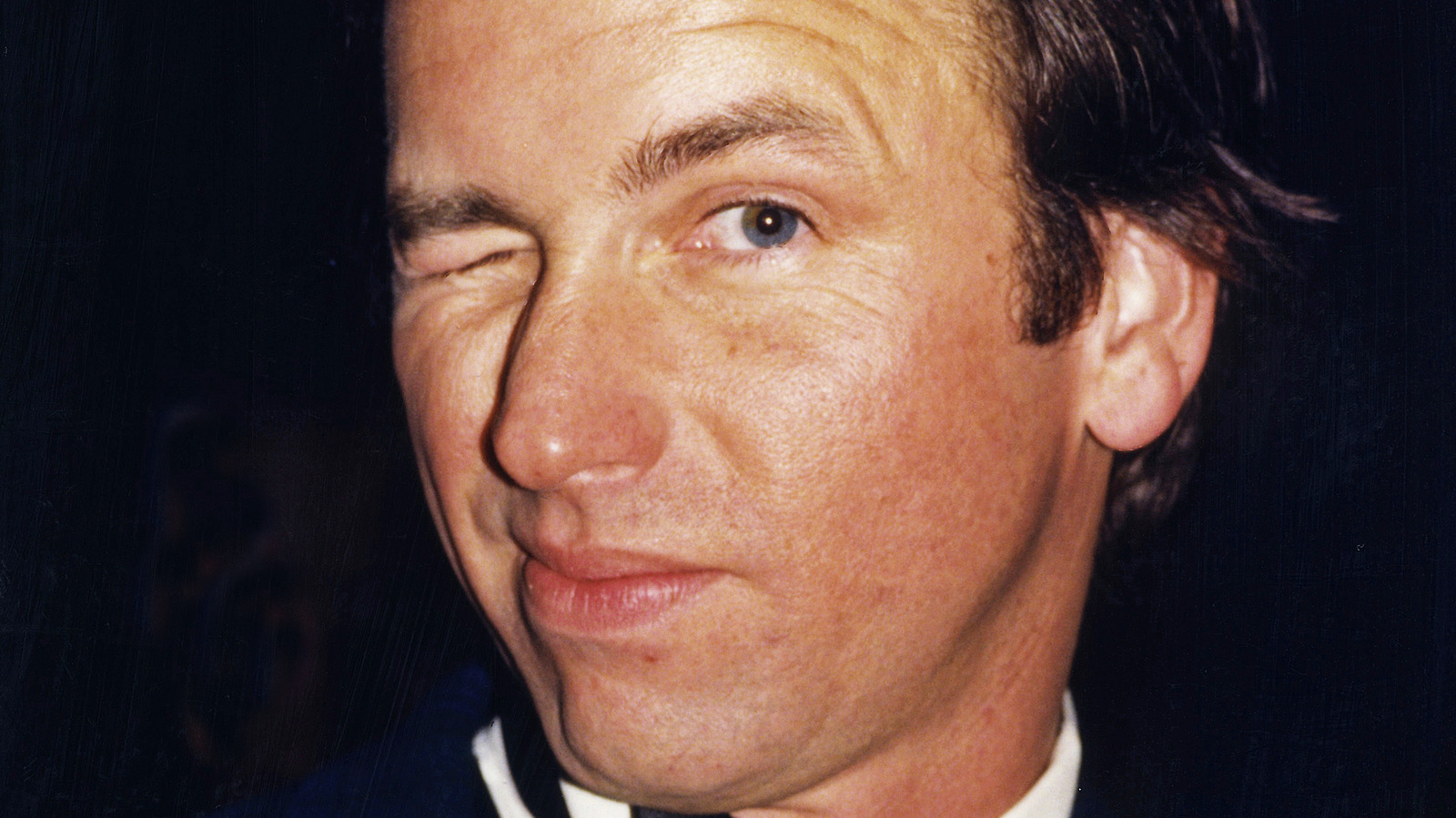
The year 2003 recorded the deaths of era-defining figures across science, entertainment, and politics. Major losses included the seven-member crew of the Space Shuttle Columbia, music legends Johnny Cash and June Carter Cash, and Hollywood titans like Katharine Hepburn, Gregory Peck, and Bob Hope, marking a profound generational shift.
The Space Shuttle Columbia Disaster (STS-107)
The most significant collective loss of 2003 occurred on February 1, when the Space Shuttle Columbia disintegrated during re-entry into Earth's atmosphere. This tragedy resulted in the deaths of all seven crew members and led to a multi-year suspension of the U.S. Space Shuttle program. The investigation later revealed that a piece of foam insulation had broken off the external tank during launch, damaging the left wing's thermal protection system.
The crew represented a diverse cross-section of scientific expertise and international cooperation. Commander Rick Husband and Pilot William McCool led the mission, which included Payload Commander Michael Anderson, Mission Specialists David Brown and Laurel Clark, and Kalpana Chawla, the first Indian-born woman in space. The mission also carried Ilan Ramon, the first Israeli astronaut. Their deaths prompted a massive overhaul of NASA’s safety protocols and eventually influenced the decision to retire the shuttle fleet in 2011. As of 2026, the lessons learned from the Columbia disaster continue to inform the safety standards of both governmental and private space exploration missions, such as Artemis and commercial crew programs.
The Twilight of Hollywood’s Golden Age
In 2003, the film industry bid farewell to several icons whose careers spanned the transition from the "Studio System" to modern cinema. These actors were not merely performers but cultural pillars who defined the American cinematic identity for decades.
Katharine Hepburn and Gregory Peck
Katharine Hepburn, who passed away on June 29 at age 96, remains the only person to win four Academy Awards for Best Actress. Her career, characterized by her fierce independence and refusal to conform to traditional Hollywood starlet expectations, paved the way for generations of women in film. Just weeks earlier, on June 12, Gregory Peck died at age 87. Best known for his portrayal of Atticus Finch in To Kill a Mockingbird, Peck was viewed as the embodiment of integrity and moral courage on screen. His death marked the loss of one of the last true "gentleman" actors of his era.
Bob Hope and Charles Bronson
On July 27, the world lost Bob Hope, who died shortly after his 100th birthday. Hope’s legacy was dual-faceted: he was a pioneer of the "Road to..." comedies and a tireless supporter of the U.S. military through his USO tours. His career spanned vaudeville, radio, television, and film, making him one of the most versatile entertainers in history. Conversely, the passing of Charles Bronson on August 30 removed one of cinema’s most enduring "tough guys." Known for his stoic demeanor in films like The Great Escape and the Death Wish series, Bronson represented a specific archetype of mid-century masculinity that has largely faded from contemporary scripts.
A Somber Year for Music History
The music world suffered several high-profile losses in 2003, spanning genres from country and soul to pop and punk. The most poignant of these were the deaths of Johnny Cash and his wife, June Carter Cash.
June Carter Cash passed away in May following complications from heart surgery. Her husband, the legendary "Man in Black," died less than four months later on September 12. Johnny Cash’s final years were marked by a late-career resurgence through his American Recordings series, which introduced his music to a younger generation. His death at age 71 was attributed to complications from diabetes. The simultaneous loss of the couple was seen by many fans as the end of a legendary American love story.
Other major musical losses included:
- Maurice Gibb: A founding member of the Bee Gees, Maurice died unexpectedly in January due to complications from a twisted intestine. His death effectively ended the Bee Gees as a performing trio.
- Barry White: The "Maestro" of soul and disco, known for his deep bass voice and romantic ballads, passed away in July at age 58.
- Nina Simone: The "High Priestess of Soul" died in France in April. Simone was as famous for her civil rights activism as she was for her unique fusion of classical, jazz, and blues music.
- Robert Palmer: The British singer known for "Addicted to Love" died of a sudden heart attack in Paris in September.
- Joe Strummer: While he technically passed away in the very final days of December 2002, his memorials and the full impact of his loss dominated the music press throughout early 2003.
Political and Global Figures
The geopolitical landscape of 2003 was heavily influenced by the aftermath of the Iraq invasion and lingering Cold War histories. Several figures who shaped the 20th century passed away during this period.
Madame Chiang Kai-shek (Soong Mei-ling) died in New York at the age of 105. As the wife of Generalissimo Chiang Kai-shek, she was one of the most powerful women of the 20th century, playing a pivotal role in Chinese-American relations during World War II and the subsequent Chinese Civil War. Her death marked the final closing of a chapter on the Republic of China’s early history.
In Africa, the death of Idi Amin in August brought a quiet end to one of the continent's most brutal dictators. Amin, who had lived in exile in Saudi Arabia since being ousted in 1979, was responsible for the deaths of hundreds of thousands of Ugandans during the 1970s.
On a more tragic note for international diplomacy, Sergio Vieira de Mello, the United Nations High Commissioner for Human Rights, was killed in the Canal Hotel bombing in Baghdad on August 19. De Mello was considered a likely future candidate for UN Secretary-General. His assassination fundamentally changed how the UN operates in conflict zones, leading to increased security for humanitarian workers.
Science, Literature, and Media
The intellectual and cultural contributions of several other individuals who died in 2003 continue to resonate in 2026.
- Fred Rogers: Known to millions as "Mr. Rogers," he died in February. For over 30 years, he hosted Mister Rogers' Neighborhood, providing children with a calm, educational environment that addressed complex emotional issues.
- Edward Teller: Often called the "father of the hydrogen bomb," Teller was a controversial figure in nuclear physics. His passing in September at age 95 sparked renewed debate over the ethics of scientific discovery and the Cold War arms race.
- George Plimpton: The writer and founder of The Paris Review died in September. Plimpton was famous for "participatory journalism," in which he competed in professional sports (such as playing for the Detroit Lions) to document the experience from the amateur's perspective.
- John Ritter: The beloved television actor died suddenly on September 11 while filming his sitcom 8 Simple Rules. His death, caused by an undiagnosed aortic dissection, led to increased public awareness of the condition.
| Notable Figure | Field/Industry | Date of Death | Primary Legacy |
|---|---|---|---|
| Maurice Gibb | Music (Bee Gees) | Jan 12, 2003 | Harmony vocals and multi-instrumentalist for disco/pop era. |
| Columbia Crew | Aerospace | Feb 1, 2003 | Seven astronauts lost; led to major NASA safety reforms. |
| Fred Rogers | Television | Feb 27, 2003 | Pioneer of educational and emotional development in children's TV. |
| Nina Simone | Music/Activism | April 21, 2003 | Renowned jazz/soul singer and prominent Civil Rights activist. |
| June Carter Cash | Country Music | May 15, 2003 | Grammy-winning performer and member of the Carter Family. |
| Gregory Peck | Film | June 12, 2003 | Represented moral integrity in Hollywood; won Oscar for To Kill a Mockingbird. |
| Katharine Hepburn | Film | June 29, 2003 | Record-holder for most Best Actress Oscars (4). |
| Barry White | Soul/R&B | July 4, 2003 | Iconic baritone voice and producer of "The Love Unlimited Orchestra." |
| Bob Hope | Entertainment | July 27, 2003 | Centenarian comedian and legendary host of the Academy Awards. |
| Idi Amin | Politics | Aug 16, 2003 | Former dictator of Uganda known for human rights abuses. |
| John Ritter | Television | Sept 11, 2003 | Comedic actor known for Three's Company and 8 Simple Rules. |
| Johnny Cash | Music | Sept 12, 2003 | "The Man in Black"; pioneer of outlaw country and gospel. |
| Madame Chiang | Politics | Oct 23, 2003 | Key figure in 20th-century Chinese history and international relations. |
Frequently Asked Questions
Why was 2003 considered a "year of the icons" in Hollywood?
The year 2003 saw the passing of several actors who weren't just stars, but the last living links to the "Golden Age" of the 1930s and 40s. With the deaths of Katharine Hepburn, Gregory Peck, and Bob Hope within months of each other, the industry lost performers who had defined the standards of acting and public persona for over half a century.
What was the cause of the Columbia Space Shuttle disaster?
The physical cause was a breach in the Thermal Protection System (TPS) on the leading edge of the left wing, caused by a piece of insulating foam that struck the wing during launch. This breach allowed superheated gases to enter the wing during re-entry, leading to structural failure. This event remains a case study in engineering safety and organizational culture.
How did the deaths of Johnny and June Carter Cash impact country music?
The deaths of the Cashes marked the end of an era for traditional and outlaw country music. Johnny Cash, in particular, had recently bridged the gap between old-school country and alternative rock through his collaborations with producer Rick Rubin. Their passing catalyzed a renewed interest in roots music and the preservation of the Carter Family musical legacy.
Who was the oldest notable person to die in 2003?
Madame Chiang Kai-shek was one of the oldest notable figures, passing away at the age of 105. Her life spanned three different centuries (the 19th, 20th, and 21st), providing a unique perspective on the evolution of modern China and the global political order.
How did John Ritter’s death change medical awareness?
John Ritter died from an aortic dissection, which was initially misdiagnosed as a heart attack. His family, particularly his widow Amy Yasbeck, created the John Ritter Foundation for Aortic Health. This foundation has been instrumental in educating both the public and medical professionals on how to recognize and treat thoracic aortic aneurysms and dissections, potentially saving thousands of lives since 2003.
What was the significance of Sergio Vieira de Mello’s death?
Sergio Vieira de Mello was the UN's top envoy in Iraq. His death in a targeted bombing signaled a new level of risk for international diplomats and humanitarian workers. It led to the "Ahtisaari Report," which recommended sweeping changes to UN security operations, fundamentally altering how the organization engages with high-risk conflict zones.
Further Research and Historical Context
To understand the full scope of 2003 deaths, researchers should consult the official archives of the organizations these individuals belonged to, such as the NASA History Office for the STS-107 crew or the Academy of Motion Picture Arts and Sciences for film icons. The year 2003 remains a pivotal point in cultural history, serving as a bridge between the analog legacies of the 20th century and the digital, globalized reality of the 21st. For those interested in the medical or scientific impacts of these deaths, the John Ritter Foundation and NASA’s Columbia Accident Investigation Board (CAIB) reports provide deep technical insights into the events of that year.