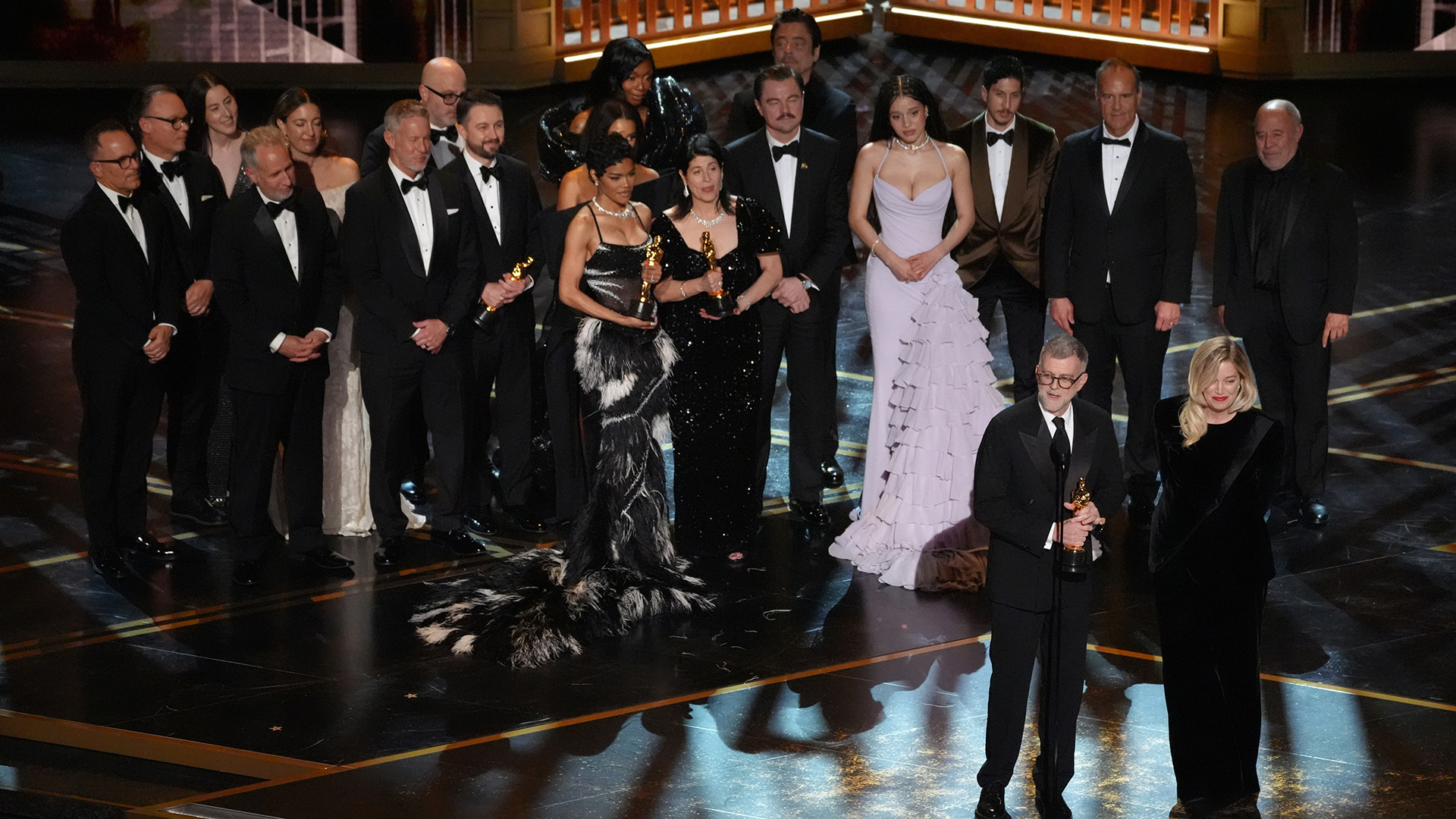
At the 75th Academy Awards, held on March 23, 2003, Nicole Kidman won the Oscar for Best Actress for her performance as Virginia Woolf in The Hours. She triumphed over fellow nominees Salma Hayek (Frida), Diane Lane (Unfaithful), Julianne Moore (Far from Heaven), and Renée Zellweger (Chicago).
The 2003 Oscars, which honored the films of 2002, remain a landmark event in cinematic history. As we look back from 2026, the 75th Academy Awards are remembered not only for their competitive categories but also for the somber atmosphere surrounding the ceremony, which took place just days after the start of the Iraq War. Despite the global tension, the evening celebrated a diverse array of talent, with the Best Actress category serving as the night’s most anticipated showdown.
The 2003 Best Actress Nominees: A Deep Dive
The Best Actress category in 2003 featured five women delivering what are now considered career-defining performances. Each nominee brought a unique style to the screen, ranging from biographical drama to musical comedy and psychological thriller.
Nicole Kidman — The Hours (Winner)
Nicole Kidman’s win for The Hours was a culmination of a meteoric rise in the early 2000s. Portraying the troubled author Virginia Woolf, Kidman underwent a physical transformation that became a major talking point of the awards season—most notably the prosthetic nose that rendered her nearly unrecognizable. However, it was her internal performance, capturing Woolf’s battle with mental illness and the daunting task of writing Mrs. Dalloway, that secured her the statue. Kidman became the first Australian actress to win the Academy Award for Best Actress, a milestone that remains significant in 2026.
Salma Hayek — Frida
Salma Hayek’s nomination for Frida was a historic moment, as she became one of the first Mexican actresses to be nominated in this category. Hayek spent years championing the biopic of surrealist painter Frida Kahlo, serving as both the lead actress and a producer. Her performance was praised for its raw emotionality and physical dedication, capturing Kahlo’s lifelong struggle with chronic pain and her tumultuous relationship with Diego Rivera.
Diane Lane — Unfaithful
In Adrian Lyne’s Unfaithful, Diane Lane played Connie Sumner, a suburban housewife whose life is upended by an extramarital affair. Lane’s performance was hailed for its subtlety, particularly in a celebrated sequence on a train where her face navigates a complex journey of guilt, excitement, and fear. While the film received mixed reviews, Lane’s work was universally acclaimed, earning her the first Oscar nomination of her career and cementing her status as a top-tier dramatic actress.
Julianne Moore — Far from Heaven
Julianne Moore achieved a rare feat in 2003: she was a double nominee. In addition to her Best Actress nod for Far from Heaven, she was also nominated for Best Supporting Actress for The Hours. In Far from Heaven, Moore played Cathy Whitaker, a 1950s housewife dealing with her husband’s homosexuality and her own feelings for an African American gardener. The film was a stylistic homage to the technicolor melodramas of Douglas Sirk, and Moore’s restrained, heartbreaking performance was the emotional anchor of the story.
Renée Zellweger — Chicago
Coming off a nomination the previous year for Bridget Jones’s Diary, Renée Zellweger showcased her versatility as Roxie Hart in the movie-musical Chicago. Zellweger performed her own singing and dancing, capturing the ambitious, fame-hungry spirit of a woman who uses a murder trial to become a vaudeville star. While she did not win the Best Actress award that year, Chicago went on to win Best Picture, and Zellweger would eventually win her own Best Actress Oscar for Judy (2019).
Full List of Major Winners at the 75th Academy Awards
The 2003 ceremony was a significant night for several films, with Chicago leading the pack in terms of total wins. Below is a comprehensive list of the winners in the primary categories.
| Category | Winner | Film |
|---|---|---|
| Best Picture | Martin Richards (Producer) | Chicago |
| Best Actress | Nicole Kidman | The Hours |
| Best Actor | Adrien Brody | The Pianist |
| Best Supporting Actress | Catherine Zeta-Jones | Chicago |
| Best Supporting Actor | Chris Cooper | Adaptation |
| Best Director | Roman Polanski | The Pianist |
| Best Original Screenplay | Pedro Almodóvar | Talk to Her |
| Best Adapted Screenplay | Ronald Harwood | The Pianist |
| Best Animated Feature | Hayao Miyazaki | Spirited Away |
| Best Original Score | Elliot Goldenthal | Frida |
Analysis of the 2003 Awards Season
The 2003 awards season was characterized by a "split" in momentum among the leading contenders. While Chicago was the juggernaut of the year, winning the Screen Actors Guild (SAG) Award for Outstanding Performance by a Cast and several Golden Globes, the acting categories were highly competitive.
Adrien Brody’s win for Best Actor was one of the biggest upsets in Oscar history, as he beat out veterans like Daniel Day-Lewis and Jack Nicholson. In the Best Actress race, the competition was primarily between Nicole Kidman and Renée Zellweger. Kidman had won the Golden Globe (Drama) and the BAFTA, while Zellweger had taken home the Golden Globe (Musical/Comedy) and the SAG Award. Ultimately, the Academy favored the transformative dramatic weight of Kidman’s role in The Hours.
The 75th Oscars also marked a significant moment for international cinema. Spirited Away became the first (and, for a long time, the only) hand-drawn non-English language film to win Best Animated Feature. Additionally, Pedro Almodóvar’s win for Best Original Screenplay for the Spanish film Talk to Her signaled the Academy's growing appreciation for global storytelling, a trend that has expanded significantly by 2026.
Contextualizing the 75th Academy Awards
The ceremony took place on March 23, 2003, at the Kodak Theatre in Hollywood. Steve Martin served as the host, providing a much-needed light touch to an evening that felt unusually tense. Due to the outbreak of the Iraq War just days prior, the usual "red carpet" festivities were significantly scaled back. There was no bleacher seating for fans, and many celebrities chose to dress in more somber, understated attire.
Several winners used their acceptance speeches to address the political climate. Most famously, Michael Moore, upon winning Best Documentary Feature for Bowling for Columbine, delivered a highly controversial and politically charged speech that was met with a mix of cheers and boos. This contrast between the glitz of Hollywood and the reality of global conflict defined the legacy of the 2003 ceremony.
Long-Term Impact on the Nominees’ Careers
The 2003 Best Actress race served as a springboard for its nominees to reach even greater heights in the ensuing decades.
- Nicole Kidman: Her win solidified her as the premiere dramatic actress of the 2000s. She continued to receive nominations for films like Rabbit Hole (2010) and Being the Ricardos (2021).
- Salma Hayek: Frida proved Hayek was a formidable producer and dramatic force. She transitioned into a successful career that balances major blockbusters with high-profile production work through her company, Ventanarosa.
- Julianne Moore: Though she didn't win in 2003, Moore's double nomination cemented her "legend" status. She finally won the Best Actress Oscar in 2015 for Still Alice.
- Renée Zellweger: Zellweger won the Supporting Actress Oscar the very next year (2004) for Cold Mountain, demonstrating the Academy's continued affinity for her work.
- Diane Lane: While Lane remained more selective with her roles following 2003, her nomination for Unfaithful is still cited as a high-water mark for adult-oriented psychological dramas.
Frequently Asked Questions
Who won Best Actress at the 2003 Oscars?
Nicole Kidman won the Best Actress Oscar in 2003 for her role as Virginia Woolf in The Hours. She was the first Australian woman to win in this category.
Which movie won Best Picture in 2003?
Chicago, directed by Rob Marshall, won the Academy Award for Best Picture. It was the first musical to win the top prize since Oliver! in 1968.
How many Oscars was The Hours nominated for?
The Hours received nine nominations at the 75th Academy Awards, including Best Picture, Best Director (Stephen Daldry), and Best Supporting Actor (Ed Harris). Nicole Kidman’s win was the film's only victory of the night.
Was the 2003 Oscar ceremony postponed because of the war?
The ceremony was not postponed, but it was significantly modified. The red carpet pre-show was cancelled, and the atmosphere was notably more subdued than in previous years due to the start of the Iraq War.
Who hosted the 75th Academy Awards?
The 75th Academy Awards were hosted by comedian Steve Martin. This was his second time hosting the ceremony, having previously hosted the 73rd Oscars in 2001.
Recommended Viewing for Film Historians
For those looking to understand the evolution of the Best Actress category, the 2003 lineup is essential viewing. To fully appreciate the diversity of these performances, one should start with The Hours for its technical and emotional transformation, followed by Chicago to see the pinnacle of the early-2000s musical revival. Comparing Julianne Moore’s work in Far from Heaven with the 1950s films that inspired it also offers a fascinating look at how modern acting interprets classical cinematic styles. These films are widely available on major streaming platforms and remain vital benchmarks of 21st-century acting excellence.