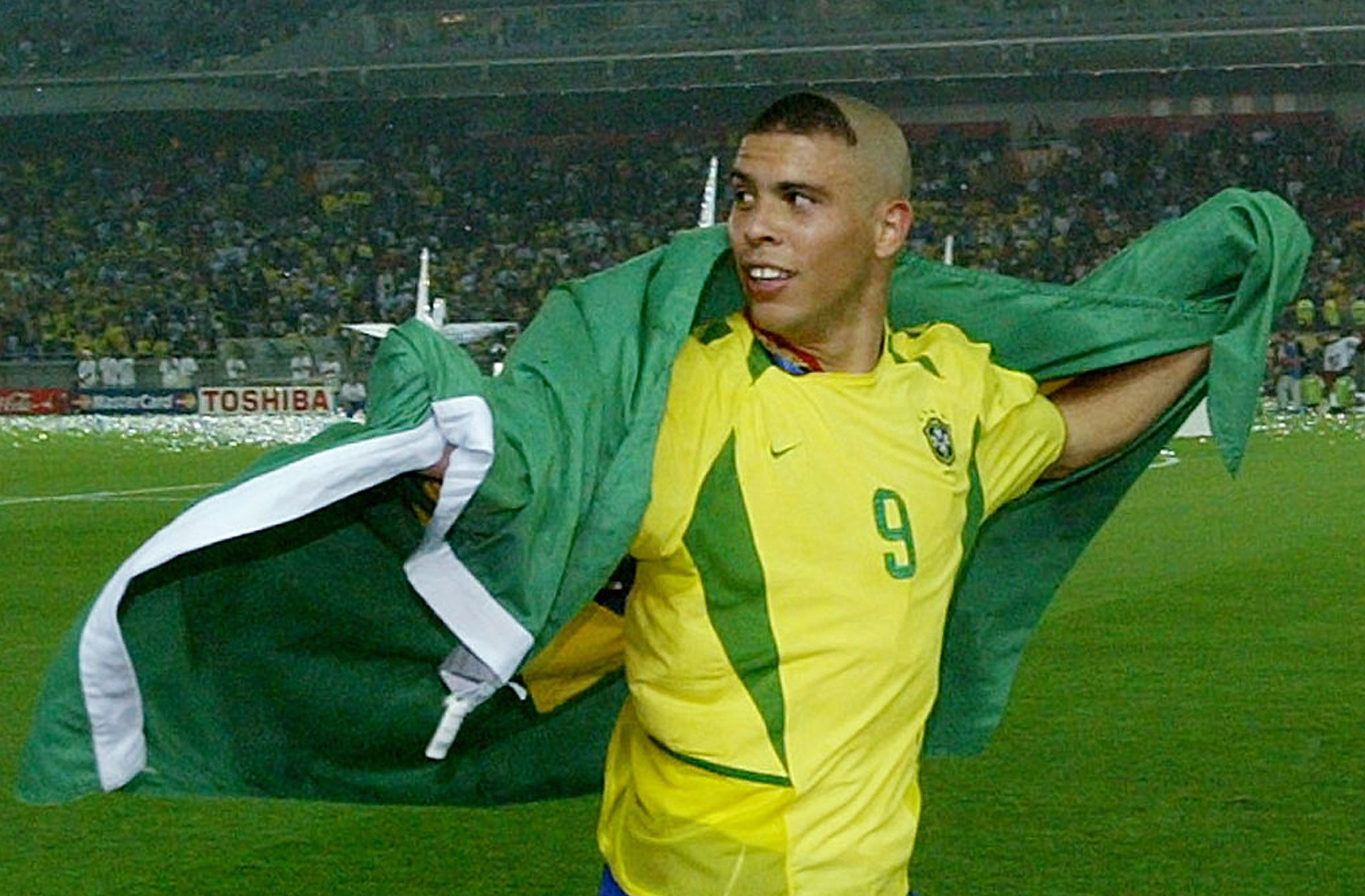
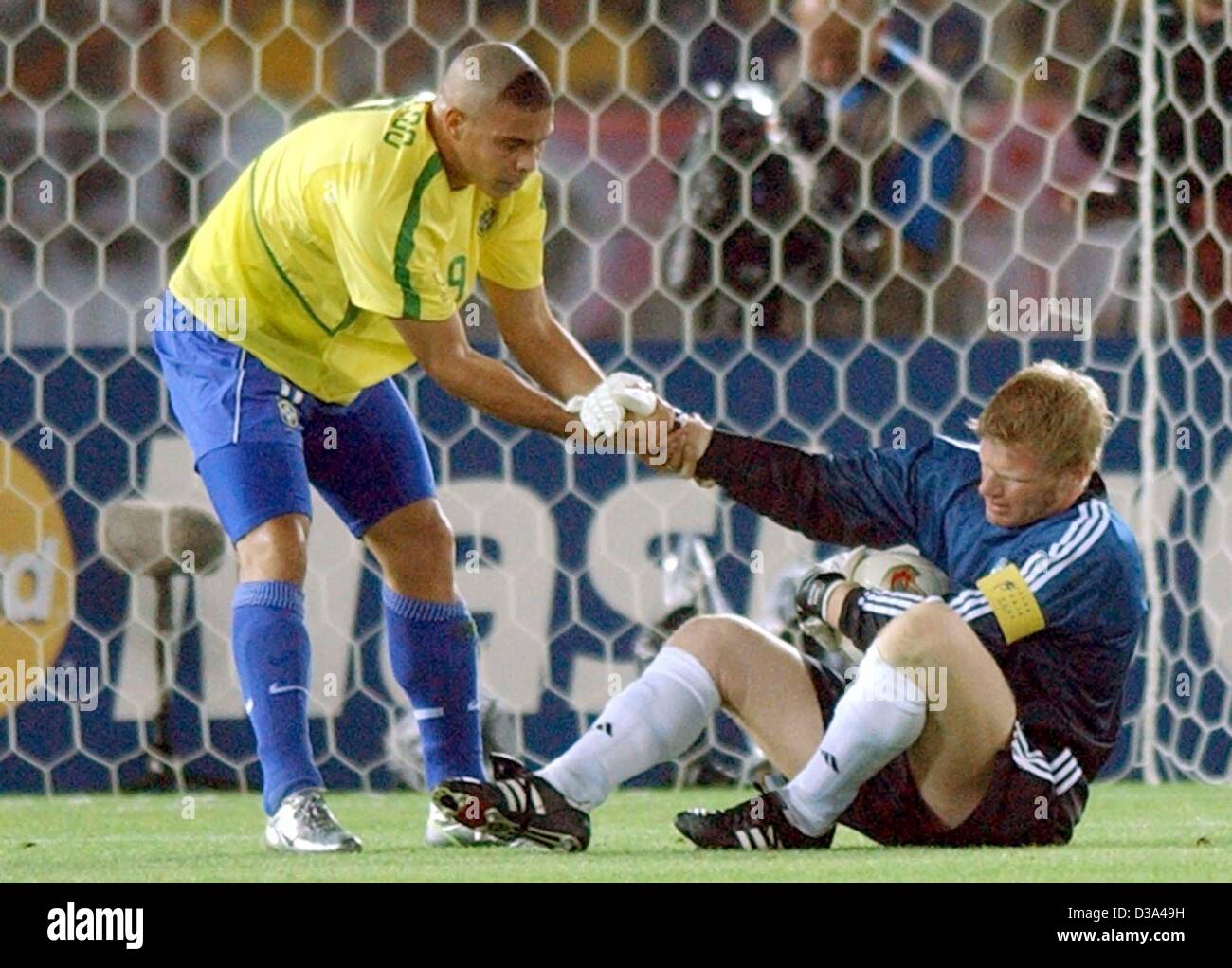
The 2002 FIFA World Cup Final saw Brazil defeat Germany 2-0 on June 30, 2002, at the International Stadium in Yokohama, Japan. Led by Ronaldo’s two second-half goals, Brazil secured their record-breaking fifth title, capping a tournament defined by Ronaldo's personal redemption and Germany’s unexpected resilience despite missing key playmaker Michael Ballack.
The Historical Context of the 2002 Showdown
The 2002 FIFA World Cup was a tournament of firsts and monumental upsets. It was the first time the competition was hosted in Asia, with South Korea and Japan sharing hosting duties. By the time the final arrived in Yokohama, the footballing world had witnessed the early exits of defending champions France and favorites Argentina. Amidst this chaos, two of the sport’s most decorated nations, Brazil and Germany, navigated their way to the final. Remarkably, despite their shared history of dominance, this was the first time the two teams had ever faced each other in a World Cup match.
Brazil entered the tournament under the heavy shadow of their 1998 final loss to France. The "Seleção" had struggled during the CONMEBOL qualifiers, only securing their spot late in the campaign. However, under the rigorous leadership of Luiz Felipe Scolari, they found a rhythm that combined defensive solidity with the attacking flair of the "Three R's": Ronaldo, Rivaldo, and Ronaldinho.
Germany, conversely, arrived with low expectations. Following a disastrous Euro 2000, German football was in a state of rebuilding. They were viewed as a functional, disciplined unit rather than a creative powerhouse. However, anchored by the nearly impenetrable Oliver Kahn in goal and the midfield engine of Michael Ballack, the "Nationalelf" ground out results, proving that German efficiency remained a formidable force in knockout football.
The Redemption of Ronaldo Nazário
No narrative surrounding the 2002 World Cup Final is more compelling than the personal journey of Ronaldo Luís Nazário de Lima. In 1998, Ronaldo was the best player in the world, but a mysterious seizure on the day of the final against France left him a shadow of himself during the match. In the four years that followed, he suffered two catastrophic knee injuries that threatened to end his career entirely.
By 2002, many pundits questioned if "O Fenômeno" could ever return to his peak. Scolari’s decision to build the team around him was seen as a significant gamble. Throughout the tournament, Ronaldo silenced critics by scoring in almost every match, but the final was his ultimate test. It was a chance to erase the trauma of Paris and cement his legacy.
Ronaldo famously sported a bizarre haircut—a shaved head with a small semi-circle of hair at the front—during the latter stages of the tournament. He later revealed this was a tactical move to shift the media's focus away from his minor leg injuries and onto his appearance. By the time he stepped onto the pitch in Yokohama, the focus was squarely on his feet. His two goals in the final were not just a contribution to a victory; they represented the most significant comeback in the history of individual sports.
Tactical Analysis: Scolari’s 3-4-3 vs. Völler’s Disciplined Unit
The tactical battle between Luiz Felipe Scolari and Germany’s Rudi Völler was a study in contrasting philosophies. Scolari utilized a 3-4-1-2 formation that offered a perfect balance between South American individual brilliance and modern tactical discipline.
Brazil's Tactical Setup
Brazil's defense was anchored by a back three of Lúcio, Edmílson, and Roque Júnior. This allowed the legendary wing-backs, Cafu and Roberto Carlos, to push high up the pitch, effectively acting as auxiliary attackers. The midfield was stabilized by Gilberto Silva, who provided the "water-carrier" role, allowing the creative trio ahead of him to roam freely. Rivaldo operated as the primary playmaker, while Ronaldinho provided unpredictable flair, and Ronaldo occupied the central defenders.
Germany's Tactical Setup
Germany played a more traditional, disciplined 4-4-2 or 3-5-2 variation depending on the phase of play. However, they suffered a massive blow heading into the final: Michael Ballack, who had scored the winners in both the quarter-final and semi-final, was suspended due to a yellow card accumulation. This forced Völler to rely on Jens Jeremies and Dietmar Hamann to stifle the Brazilian midfield.
While Germany lacked the creative spark Ballack provided, they utilized their physical superiority and set-piece prowess. For the first hour of the match, Germany actually controlled significant portions of possession, forcing Brazil into a cautious, counter-attacking stance. Oliver Kahn, who had only conceded one goal in the entire tournament prior to the final, appeared to be an insurmountable obstacle.
Key Match Moments: The Fateful Second Half
The first half ended 0-0, though not for a lack of chances. Ronaldo had three clear opportunities, all denied by Kahn or narrow misses. Germany hit the post early in the second half through an Oliver Neuville free-kick, a moment that could have fundamentally altered football history.
The Breakthrough (67th Minute)
The deadlock was broken due to a rare error from the man who had been the player of the tournament. Ronaldo dispossessed Dietmar Hamann in the German half and fed the ball to Rivaldo. Rivaldo unleashed a powerful, dipping left-footed shot from outside the area. Oliver Kahn, usually sure-handed, failed to catch the ball, spilling it directly into the path of the oncoming Ronaldo. The striker made no mistake, tapping the ball into the net to give Brazil a 1-0 lead.
The Clincher (79th Minute)
As Germany pushed forward for an equalizer, Brazil exploited the gaps on the counter-attack. Kleberson surged down the right wing and played a low cross toward the edge of the box. Rivaldo performed one of the most famous "dummies" in history, letting the ball run through his legs. This deceived the German defense and left Ronaldo with time to take one touch and curl the ball precisely into the bottom right corner of the net.
| Statistical Category | Brazil (Finals Stats) | Germany (Finals Stats) |
|---|---|---|
| Goals Scored | 2 | 0 |
| Total Shots | 9 | 12 |
| Shots on Target | 7 | 4 |
| Possession | 44% | 56% |
| Corner Kicks | 3 | 13 |
| Yellow Cards | 1 (Roque Júnior) | 1 (Miroslav Klose) |
Oliver Kahn: The Hero’s Only Flaw
It is impossible to discuss the 2002 final without focusing on Oliver Kahn. Before the match, Kahn was awarded the Golden Ball as the tournament's best player—the first time a goalkeeper had ever received the honor. His performances against the USA and South Korea were legendary, keeping Germany in games they had no right to win.
However, the final was a cruel twist of fate. Kahn had played the match with a torn ligament in his right ring finger, an injury sustained early in the game. While he refused to use it as an excuse, the fumble that led to the first goal became the defining image of his tournament. After the final whistle, as the Brazilians celebrated, Kahn sat motionless against his goalpost, a solitary figure of grief. Despite the error, his 2002 campaign remains one of the greatest individual goalkeeping displays in the history of the FIFA World Cup.
The Legacy of Yokohama in 2026
As we look back from the perspective of 2026, the 2002 final remains a watershed moment for international football. For Brazil, it was the "Pentacampeão"—the fifth star. It remains their last World Cup title to date. In the two decades since, the "Seleção" has struggled to replicate the perfect blend of tactical discipline and "Joga Bonito" that Scolari mastered in 2002.
For Germany, the loss was the catalyst for a total revolution in their footballing infrastructure. The disappointment of 2002 (and Euro 2004) led to the implementation of the "Das Reboot" program, focusing on youth development and technical proficiency, which eventually culminated in their 2014 World Cup victory.
The 2002 final also marked the end of an era for individual-led triumphs. In the years that followed, the rise of highly structured, system-based football (like Spain’s Tiki-Taka or Germany’s Gegenpressing) made it harder for a single player like Ronaldo to dominate a tournament through sheer force of will and talent.
Official Records and Verifications
- Match Date: June 30, 2002.
- Venue: International Stadium Yokohama (Attendance: 69,029).
- Referee: Pierluigi Collina (Italy).
- Official Match Report: Available via the FIFA Archive.
Frequently Asked Questions
Why was Michael Ballack missing from the 2002 final?
Michael Ballack was suspended for the final after receiving a yellow card in the semi-final against South Korea. Under the rules at the time, yellow cards were not wiped after the quarter-finals. Ballack’s tactical foul was necessary to stop a counter-attack, sacrificing his place in the final to ensure his team got there.
How many goals did Ronaldo score in the 2002 World Cup?
Ronaldo scored 8 goals in total during the 2002 tournament. This earned him the Golden Shoe. His tally included goals against Turkey (twice, in different games), China, Costa Rica (twice), Belgium, and the two goals in the final against Germany.
Who was the referee for the 2002 World Cup Final?
The match was officiated by Pierluigi Collina of Italy. Widely regarded as one of the greatest referees of all time, Collina was praised for his control of the match and his ability to let the game flow without unnecessary interruptions.
What was the significance of Cafu’s appearance in this final?
Cafu became the first player in history to play in three consecutive World Cup finals (1994, 1998, and 2002). As the captain in 2002, he was the one to lift the trophy, famously standing on top of the podium with "100% Jardim Jardim" written on his shirt, a tribute to the favela where he grew up.
Where did the 2002 World Cup take place?
The 2002 World Cup was co-hosted by South Korea and Japan. It was the first time the tournament was held in Asia and the first time it had two host nations. The final itself was held in Yokohama, Japan.
How to Relive the 2002 Final Today
For fans and researchers looking to analyze the match in 2026, the full match broadcast and high-definition highlights are preserved in the FIFA+ digital archives. Many sports networks also air retrospective documentaries on the 20th and 25th anniversaries of the event.
To understand the tactical depth of the match, viewers should look beyond the goals and focus on the positioning of Gilberto Silva and the defensive work of Jens Jeremies. Analyzing the "off-the-ball" movement of Rivaldo during the second goal provides a masterclass in attacking intelligence. For those interested in the psychological aspect of the game, the documentary "Ronaldo: The Phenomenon" provides an in-depth look at the striker's mental state leading up to the legendary showdown in Yokohama.