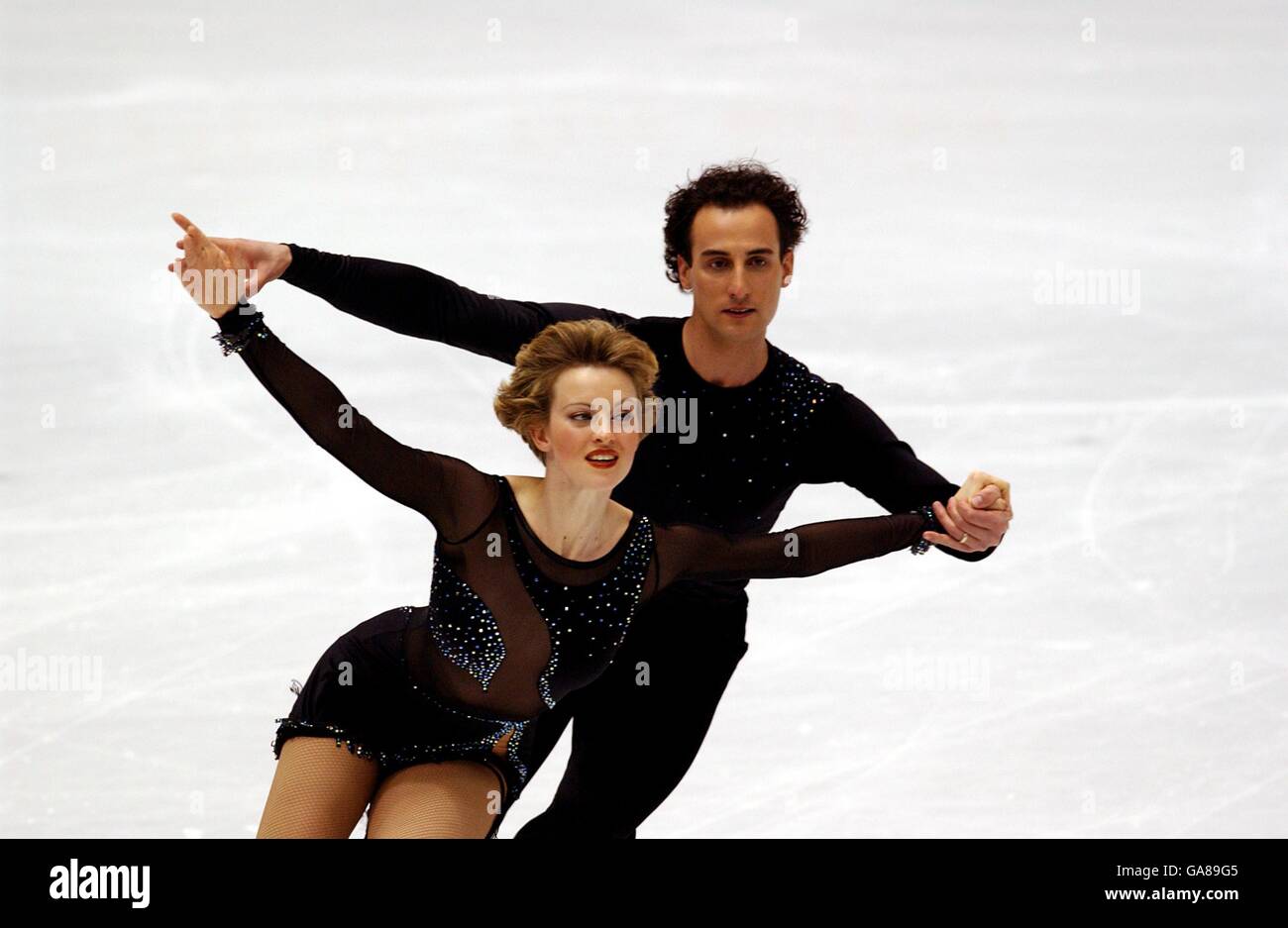
The 2002 Winter Olympics figure skating events, held in Salt Lake City, Utah, represent a watershed moment in the history of the sport. The competition featured four primary disciplines—Men’s Singles, Ladies’ Singles, Pairs, and Ice Dance—and is most famous for the judging controversy that led to a dual gold medal award and a total overhaul of the international scoring system.
The Competitive Landscape of Salt Lake City 2002
The figure skating competitions took place at the Salt Lake Ice Center, known commercially at the time as the Delta Center. Between February 8 and February 21, 2002, the world witnessed some of the highest technical achievements of the 6.0 judging era. The 2002 Games were characterized by intense rivalries, particularly between Russian powerhouses and North American challengers.
As of 2026, these results remain the definitive historical record, serving as the primary catalyst for the creation of the International Judging System (IJS). The 2002 Olympics were the final Winter Games to rely entirely on the traditional 6.0 "ordinal" system, where judges ranked skaters against one another rather than awarding points for specific technical elements. This transition marks the division between "old school" figure skating and the data-driven technical sport seen today.
Men’s Singles: The Yagudin-Plushenko Duel
The Men’s Singles event was a high-stakes battle between two Russian training mates, Alexei Yagudin and Evgeni Plushenko. Both skaters were coached by legendary figures—Yagudin by Tatiana Tarasova and Plushenko by Alexei Mishin—making the rivalry both personal and professional.
Alexei Yagudin’s performance in Salt Lake City is often cited as one of the greatest in Olympic history. His short program, "Winter," featured a stunning quadruple toe loop-triple toe loop combination and intricate footwork that earned him high marks across the board. In the free skate, performing to "The Man in the Iron Mask," Yagudin landed two quadruple jumps and became the first skater in 50 years to receive first-place ordinals from every single judge in both segments of the competition. He also earned four 6.0s for presentation, a rare feat under the old system.
Evgeni Plushenko, while technically gifted, suffered a fall in his short program on his quadruple-triple combination. Although he rebounded with a strong free skate that included a quadruple-triple-double combination, he could not overcome the deficit created by Yagudin’s flawless execution. Timothy Goebel of the United States secured the bronze medal, making history as the first person to land three quadruple jumps in a single Olympic program.
Ladies’ Singles: The Sarah Hughes Upset
The Ladies' event provided one of the most shocking upsets in Olympic history. Heading into the free skate, the podium seemed destined to be a battle between the veteran Michelle Kwan, who was seeking her first Olympic gold, and the powerful Irina Slutskaya of Russia.
Michelle Kwan led after the short program, but a fall on a triple toe loop and a stepped-out triple flip in her long program opened the door for her competitors. Sarah Hughes, who was in fourth place after the short program, delivered the performance of a lifetime. Hughes landed seven triple jumps, including two rare triple-triple combinations: a triple Salchow-triple loop and a triple toe loop-triple loop.
Under the 2002 ordinal system, for Hughes to win gold from fourth place, she needed a specific alignment of judges' rankings. When Hughes won the free skate and Slutskaya placed second in that segment (ahead of Kwan), the mathematical distribution of ordinals shifted the overall gold to Hughes. This result remains a prime example of the complexities and "math games" inherent in the 6.0 system, where a skater could win the overall title without winning the short program, provided the rankings of other skaters shifted appropriately.
The Pairs Scandal and the Double Gold Decision
The Pairs competition in 2002 is perhaps the most scrutinized event in the history of winter sports. The top two teams were the Russians Elena Berezhnaya and Anton Sikharulidze, and the Canadians Jamie Salé and David Pelletier.
The Russians performed a technically demanding but slightly flawed program (Sikharulidze stepped out of a double Axel), while the Canadians delivered a clean, emotionally resonant performance to "Love Story." When the judges’ scores were announced, the Russians won the gold in a 5-4 split decision. The North American audience and media reacted with immediate outrage, alleging that the judging was biased.
The ensuing investigation by the International Skating Union (ISU) revealed that French judge Marie-Reine Le Gougne had been pressured by the head of the French skating federation to vote for the Russian pair in exchange for a reciprocal vote for the French ice dance team. In an unprecedented move, the International Olympic Committee (IOC) and the ISU decided to award a second set of gold medals to Salé and Pelletier while allowing Berezhnaya and Sikharulidze to keep theirs. No silver medal was awarded for the event.
Ice Dance: Artistry and Innovation
Compared to the drama of the Pairs and Ladies' events, the Ice Dance competition was relatively straightforward, though not without its own technical intrigue. The French duo of Marina Anissina and Gwendal Peizerat took the gold medal, characterized by their signature move where Anissina lifted Peizerat.
Their primary rivals, Irina Lobacheva and Ilia Averbukh of Russia, took the silver. The bronze went to the Italian team of Barbara Fusar-Poli and Maurizio Margaglio. The 2002 Ice Dance event highlighted the shift toward more athletic and innovative lifts, moving away from the traditional ballroom styles that had dominated the discipline for decades. It also underscored the French school’s dominance in the theatrical aspects of the sport.
Verified Results: 2002 Winter Olympics Figure Skating
The following table summarizes the official medalists across all four disciplines as verified by the International Olympic Committee.
| Discipline | Gold Medalist(s) | Silver Medalist(s) | Bronze Medalist(s) |
|---|---|---|---|
| Men's Singles | Alexei Yagudin (RUS) | Evgeni Plushenko (RUS) | Timothy Goebel (USA) |
| Ladies' Singles | Sarah Hughes (USA) | Irina Slutskaya (RUS) | Michelle Kwan (USA) |
| Pairs | Berezhnaya/Sikharulidze (RUS) & Salé/Pelletier (CAN) | None Awarded | Shen Xue / Zhao Hongbo (CHN) |
| Ice Dance | Anissina / Peizerat (FRA) | Lobacheva / Averbukh (RUS) | Fusar-Poli / Margaglio (ITA) |
The Lasting Impact on Judging and Governance
The legacy of the 2002 Winter Olympics was the total abandonment of the 6.0 system. The scandal in the Pairs event proved that the "ordinal" system was too vulnerable to collusion and lacked the transparency necessary for a modern Olympic sport.
By 2004, the ISU began testing the New Judging System (NJS), now known as the IJS. This system assigns specific point values to every element (Base Value) and allows judges to grade the quality of execution (GOE). It also introduced a technical panel to identify jumps and spins, theoretically removing the burden of technical identification from the judges themselves. While the 2002 Games are often remembered for the controversy, they were the essential catalyst that forced figure skating to become more objective and quantifiable.
Frequently Asked Questions
Why were there two gold medals in the Pairs event?
The dual gold medals were awarded following an investigation into "vote-swapping" or judging collusion. The ISU found evidence that a French judge was pressured to rank the Russian pair first. To rectify the unfairness without stripping the Russians of a medal they earned on the ice, the IOC awarded a second gold to the Canadian pair.
How did Sarah Hughes win gold from 4th place?
Under the 6.0 system, the final ranking was determined by the sum of ordinals. Because Hughes won the free skate and the two leaders (Kwan and Slutskaya) fell to 3rd and 2nd respectively in that segment, the mathematical weight of the free skate (which was worth 2/3 of the total score) allowed Hughes to leapfrog the competition.
Did any skater land a quadruple jump in 2002?
Yes, the 2002 Games saw a significant increase in quadruple jumps. Alexei Yagudin and Evgeni Plushenko both landed quads in their programs. Most notably, Timothy Goebel of the USA became the "Quad King" of the era, landing three quadruple jumps in his free skate to secure the bronze medal.
What was the official venue for figure skating in 2002?
The events were held at the Salt Lake Ice Center in Salt Lake City. During the Olympics, the venue's commercial name (Delta Center) was suspended due to IOC regulations regarding corporate sponsorship at Olympic sites.
Who was the favorite to win the Ladies' event?
Michelle Kwan was the heavy favorite entering the 2002 Olympics. She was a four-time World Champion at the time and the reigning silver medalist from the 1998 Nagano Games. Her bronze medal finish was considered a major upset.
Recommended Actions for Researchers and Fans
To gain a deeper understanding of the 2002 Winter Olympics figure skating results, it is highly recommended to view the archived "Judges' Detail Sheets" if available through the ISU archives. While the 6.0 system did not provide the granular data of modern protocols, the "OBO" (One-By-One) judging reports show how each judge ranked the skaters. Furthermore, watching the broadcast of the Pairs "Love Story" program alongside the Russian "Meditation from Thais" provides the necessary artistic context to understand why the technical-vs-artistic debate reached such a fever pitch in Salt Lake City.