The 2002 Olympic hockey tournaments in Salt Lake City marked a definitive turning point in international ice hockey, characterized by Canada’s historic "double gold" in both the men’s and women’s divisions. Canada’s men’s team ended a 50-year championship drought by defeating the United States 5-2 in the final, while the Canadian women overcame a string of losses to defeat the Americans 3-2.
The XIX Olympic Winter Games featured a high-stakes environment where the National Hockey League (NHL) suspended its season for the second time in history to allow the world’s best players to compete. As we look back from the perspective of 2026, the Salt Lake City games remain the gold standard for high-level international competition, tactical evolution, and one of the most significant upsets in sporting history.
The Context and Format of the 2002 Olympic Hockey Tournament
In 2002, international hockey was in the midst of a transition. The 1998 Nagano Games had introduced NHL participation, but the "Dream Team" concept was still relatively new. The Salt Lake City games were hosted at two primary venues: the E Center in West Valley City and the Peaks Ice Arena in Provo, Utah.
The men’s tournament utilized a "two-tiered" format. The "Big Six" teams—Canada, the United States, Russia, Czech Republic, Finland, and Sweden—received automatic berths into the final group stage (the "first round" for them). Eight other nations (including Belarus, Germany, and Slovakia) competed in a preliminary round to fill the remaining two spots in the final eight. This format ensured that the highest-revenue and highest-skill matchups occurred later in the tournament, though it drew some criticism for being elitist.
For the women’s tournament, the field consisted of eight teams divided into two groups. Unlike the men’s side, where parity was beginning to grow, the women’s side was dominated by the North American rivalry between Canada and the United States, a narrative that reached its fever pitch during the gold medal game.
The Men’s Tournament: Canada’s Path to Redemption
The Canadian men's team entered the 2002 Olympics under immense pressure. Having not won gold since 1952, the "Great White North" was desperate for a victory on North American ice. Executive Director Wayne Gretzky assembled a roster of future Hall of Famers, including Mario Lemieux, Joe Sakic, Steve Yzerman, and Jarome Iginla.
The Preliminary Struggles
Canada’s start was anything but dominant. They suffered a humbling 5-2 loss to Sweden in their opening game and struggled to a 3-2 win over Germany. Critics and Canadian media were relentless, leading to Gretzky’s famous "world against us" press conference, which served as a rallying cry for the team.
The Knockout Stage
The quarterfinals saw the defending 1998 champions, the Czech Republic, led by Dominik Hašek, face off against Russia. In a goaltending duel for the ages, Nikolai Khabibulin stopped all 41 shots to lead Russia to a 1-0 victory, eliminating the reigning gold medalists. Canada, meanwhile, began to find their rhythm, defeating Finland 2-1 in a disciplined defensive performance.
The "Miracle" in Reverse: Belarus vs. Sweden
The most shocking moment of the tournament occurred in the quarterfinals when Belarus faced undefeated Sweden. Sweden was the heavy favorite, having cruised through the group stage. However, with the game tied 3-3 late in the third period, Belarusian defenseman Vladimir Kopat fired a speculative shot from center ice. The puck struck Swedish goaltender Tommy Salo on the helmet and bounced into the net. Belarus held on for a 4-3 win, an upset often cited as one of the greatest in hockey history.
The Men’s Gold Medal Game: Canada vs. USA
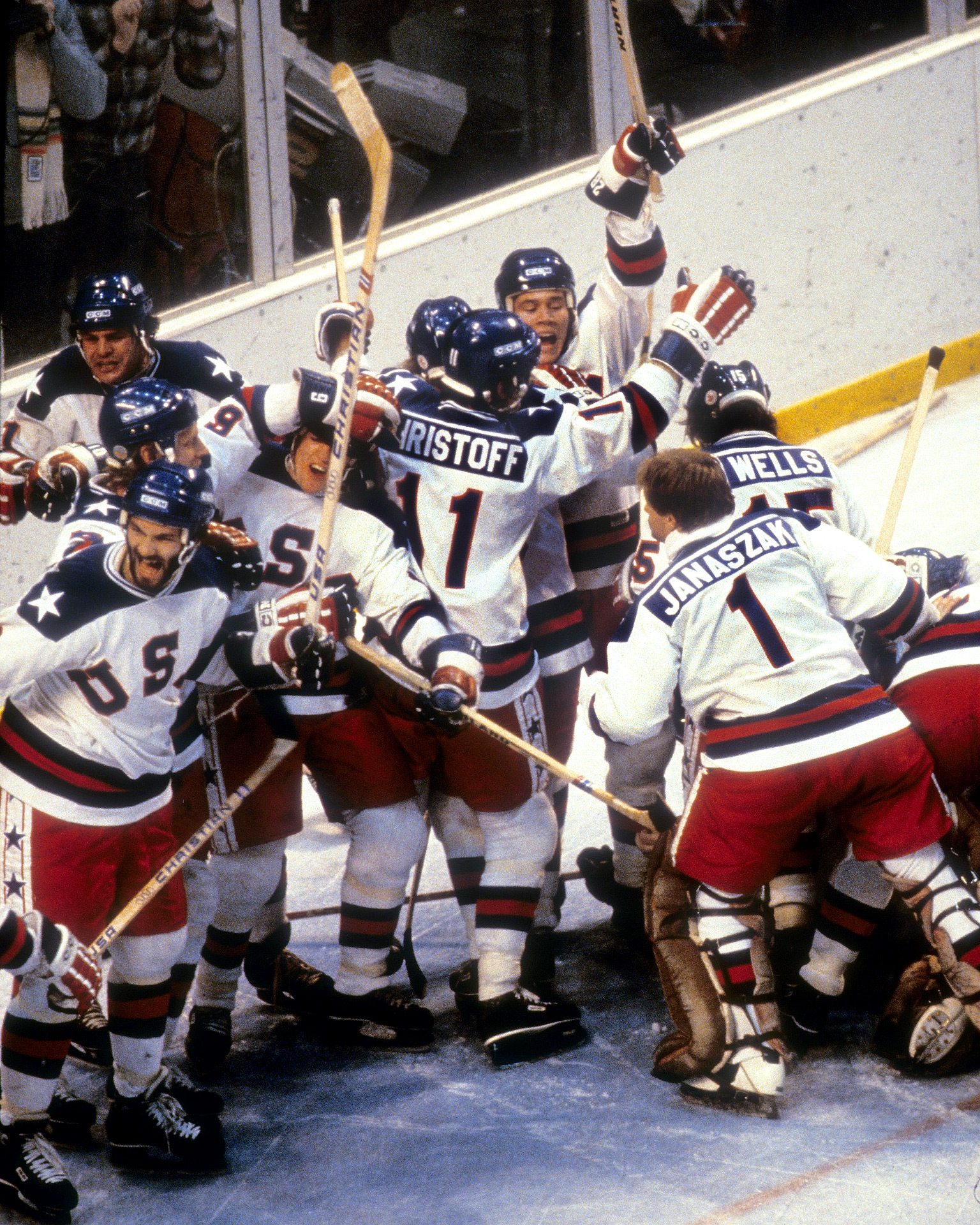
On February 24, 2002, exactly 22 years to the day after the Americans' "Miracle on Ice" in 1980, the United States and Canada met for the gold. The U.S. team, coached by 1980 legend Herb Brooks, featured a veteran lineup including Mike Modano, Brett Hull, and Chris Chelios.
The game was a tactical masterclass. One of the most famous sequences occurred early on when Mario Lemieux, sensing Paul Kariya trailing him, let a pass from Chris Pronger slide between his legs without touching it. This "dummy" play completely fooled the American defense, allowing Kariya to score.
The game remained tight until the third period. With the score at 3-2 for Canada, Joe Sakic and Jarome Iginla both scored their second goals of the game to secure a 5-2 victory. The win was punctuated by the legend of the "Lucky Loonie"—a Canadian one-dollar coin buried at center ice by icemaker Trent Evans, which many Canadians credited with changing their luck.
| Category | Men's Tournament Result | Women's Tournament Result |
|---|---|---|
| Gold Medal | Canada | Canada |
| Silver Medal | United States | United States |
| Bronze Medal | Russia | Sweden |
| Leading Scorer | Mats Sundin (9 points) | Hayley Wickenheiser (10 points) |
| Best Goaltender | Nikolai Khabibulin (RUS) | Kim St-Pierre (CAN) |
| Tournament MVP | Joe Sakic (CAN) | Hayley Wickenheiser (CAN) |
The Women’s Tournament: Breaking the Streak
The 2002 women's tournament was defined by the escalating tensions between Canada and the United States. Leading up to the Olympics, the Americans had defeated Canada in eight consecutive exhibition games. The psychological advantage seemed firmly in the U.S. camp.
Tactical Shifts in the Final
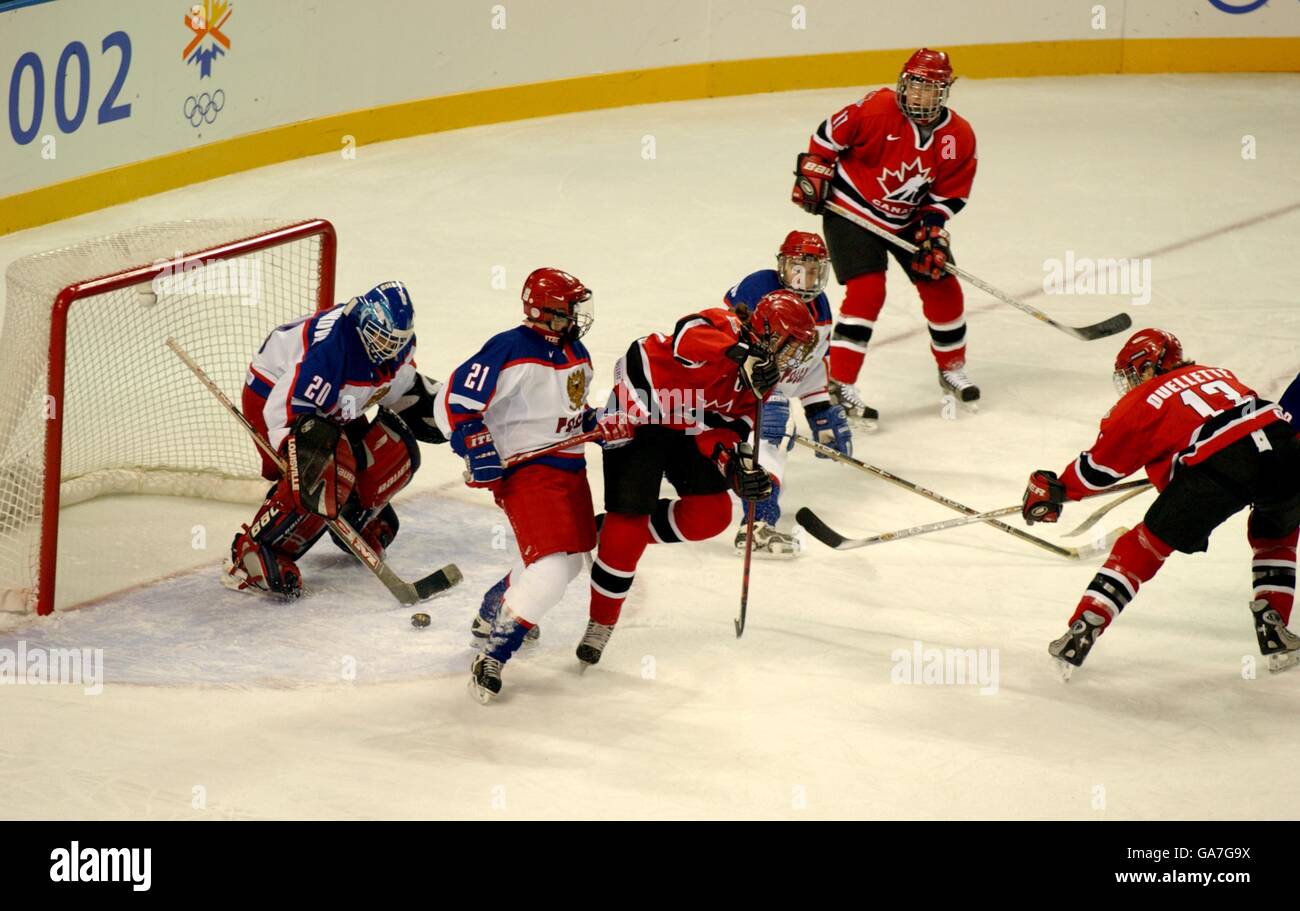
The gold medal game was notable for its officiating. American referee Stacey Livingston whistled 13 penalties against Canada, including eight consecutive infractions. Despite playing much of the game short-handed, the Canadian team, led by Hayley Wickenheiser and captain Cassie Campbell, displayed an elite penalty kill.
The Outcome
Canada secured a 3-2 victory, with goals from Caroline Ouellette, Danielle Goyette, and Jayna Hefford. The win established Canada as the premier power in women’s hockey, a status they would defend fiercely for decades. For the Americans, the loss was a bitter disappointment on home ice, but it solidified the rivalry as one of the most intense in all of international sports.
Performance Analysis and Statistical Leaders
The 2002 games highlighted the peak of several legendary careers. On the men's side, Joe Sakic was named the tournament MVP after recording 4 goals and 3 assists. His performance in the final remains one of the most clutch displays in Olympic history.
Sweden’s Mats Sundin led the tournament in scoring with 9 points in just 4 games, demonstrating the offensive prowess of the Swedish squad despite their early exit. In goal, Russia’s Nikolai Khabibulin posted a .930 save percentage, proving that the Russian defensive system could still compete at the highest level without the offensive firepower of the Soviet era.
In the women's division, Hayley Wickenheiser emerged as a global superstar. She tied for the scoring lead with 10 points and was instrumental in the physical style of play that Canada used to disrupt the faster American skaters. This tournament also marked the Olympic debut of several European nations' programs that would later become competitive, such as Sweden, who won their first-ever women's hockey medal (bronze).
The Legacy of Salt Lake City Hockey
The 2002 Olympics fundamentally changed how national programs were managed. For Canada, the success of the "Management Group" led by Gretzky and Kevin Lowe became a blueprint for future Olympic cycles. For the United States, the silver medal proved that their 1996 World Cup of Hockey victory was not a fluke and that they were a perennial powerhouse.
The games also highlighted the volatility of the single-elimination format. The Sweden-Belarus game remains a cautionary tale for powerhouse nations, emphasizing that on a wider international ice surface, a single mistake can derail a four-year cycle of preparation.
Finally, the 2002 games were a massive commercial success for the NHL. The ratings for the gold medal game were some of the highest in the history of the sport in North America, justifying the league’s decision to pause its season and confirming the "Olympic window" as a vital marketing tool for ice hockey.
Frequently Asked Questions
Who scored the winning goal in the 2002 Olympic men's hockey final?
Jarome Iginla is credited with the goal that made it 4-2 late in the third period, which effectively stood as the insurance marker that broke the U.S. momentum. However, Joe Sakic’s goal to make it 3-2 is technically the game-winning goal as the U.S. never tied the game again. Sakic finished the game with two goals and two assists.
What was the "Lucky Loonie" in the 2002 Olympics?
The "Lucky Loonie" was a Canadian one-dollar coin buried under the ice at center ice in the E Center. It was placed there by ice technician Trent Evans during the ice-making process. After both the Canadian men and women won gold, the coin was unearthed and donated to the Hockey Hall of Fame. It became a symbol of national pride and superstition in Canadian sports.
Why was the Belarus upset over Sweden so significant?
It is considered one of the greatest upsets in hockey history because Sweden had been the most dominant team in the round-robin, defeating Canada 5-2. Belarus had a roster with almost no NHL experience at the time. The winning goal, a long-range shot from center ice that hit goaltender Tommy Salo's head, made it a viral moment of heartbreak for Sweden and a miracle for Belarus.
Did the NHL stop its season for the 2002 Olympics?
Yes, the NHL took a 12-day break in February 2002 to allow its players to represent their respective countries. This was the second time the league had done so, following the 1998 Nagano Games. The success of the 2002 tournament helped solidify the relationship between the NHL, the IIHF, and the IOC for several subsequent Olympic cycles.
Which team won the bronze medal in the men's tournament?
Russia won the bronze medal by defeating Belarus 7-2. After their emotional upset of Sweden, the Belarusian team was unable to overcome the depth of the Russian squad, which was led by captain Igor Larionov and superstar Alexei Kovalev.
Final Recommendations for Hockey Historians
To fully appreciate the tactical nuances of the 2002 games, researchers should focus on the transition from the "clutch and grab" era of the late 90s to the more fluid, speed-based game that emerged in the early 2000s. Analyzing the game film from the Canada-USA final reveals a shift toward mobile defensemen—like Chris Pronger and Brian Rafalski—who became the prototypes for the modern blueliner seen in the league through 2026. Reviewing the IIHF official game reports provides the most accurate data regarding time-on-ice and specialized team statistics.