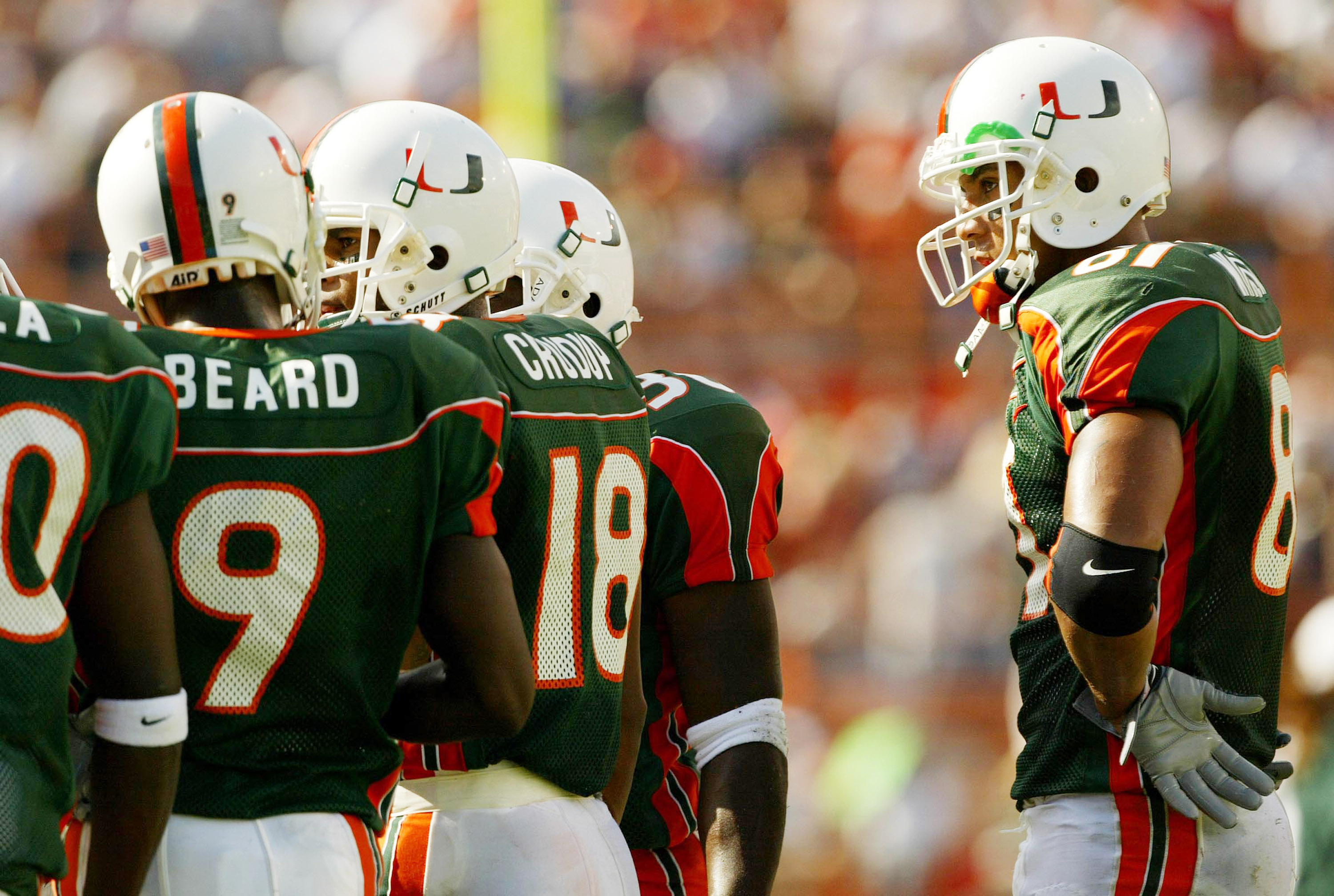
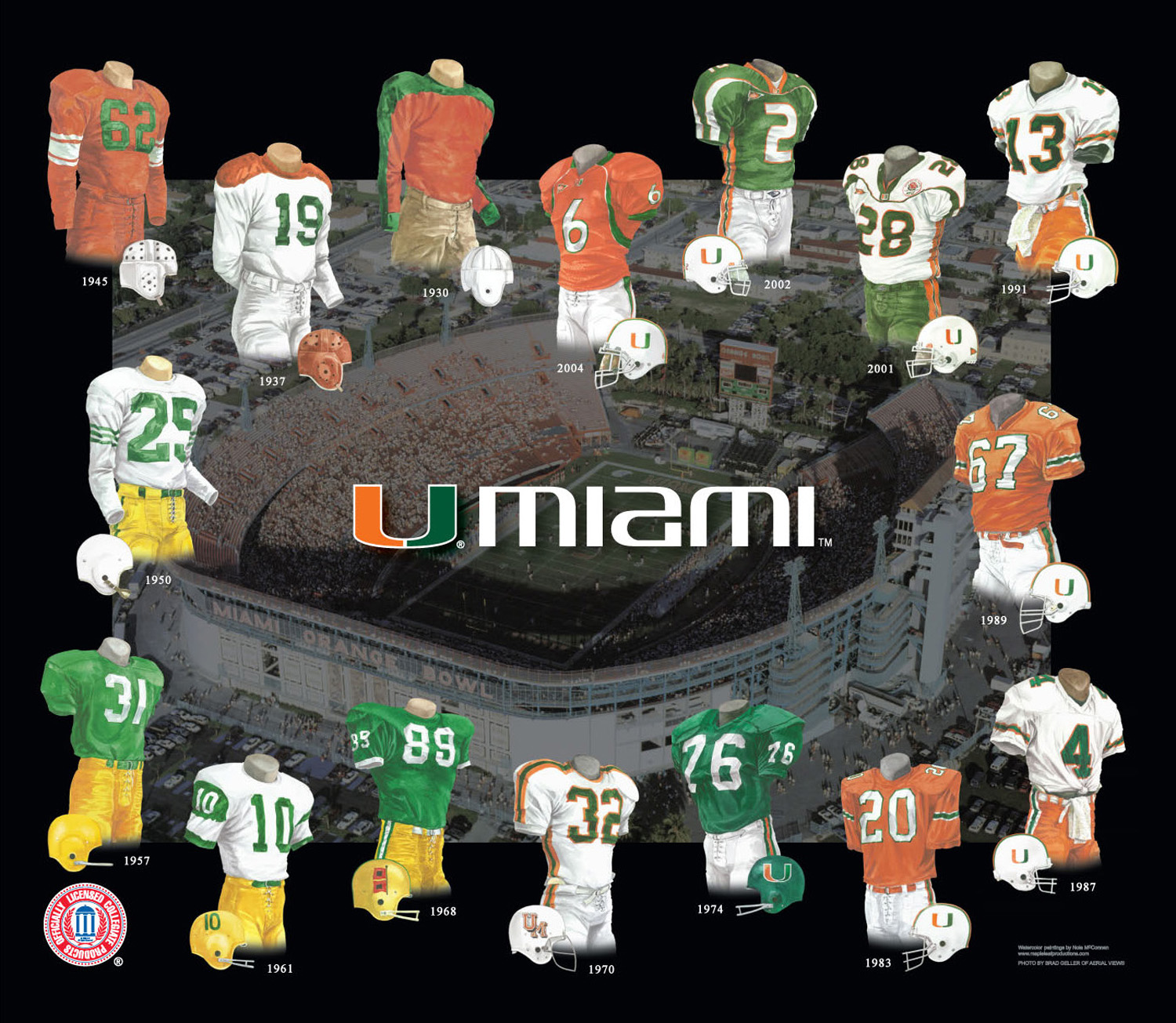
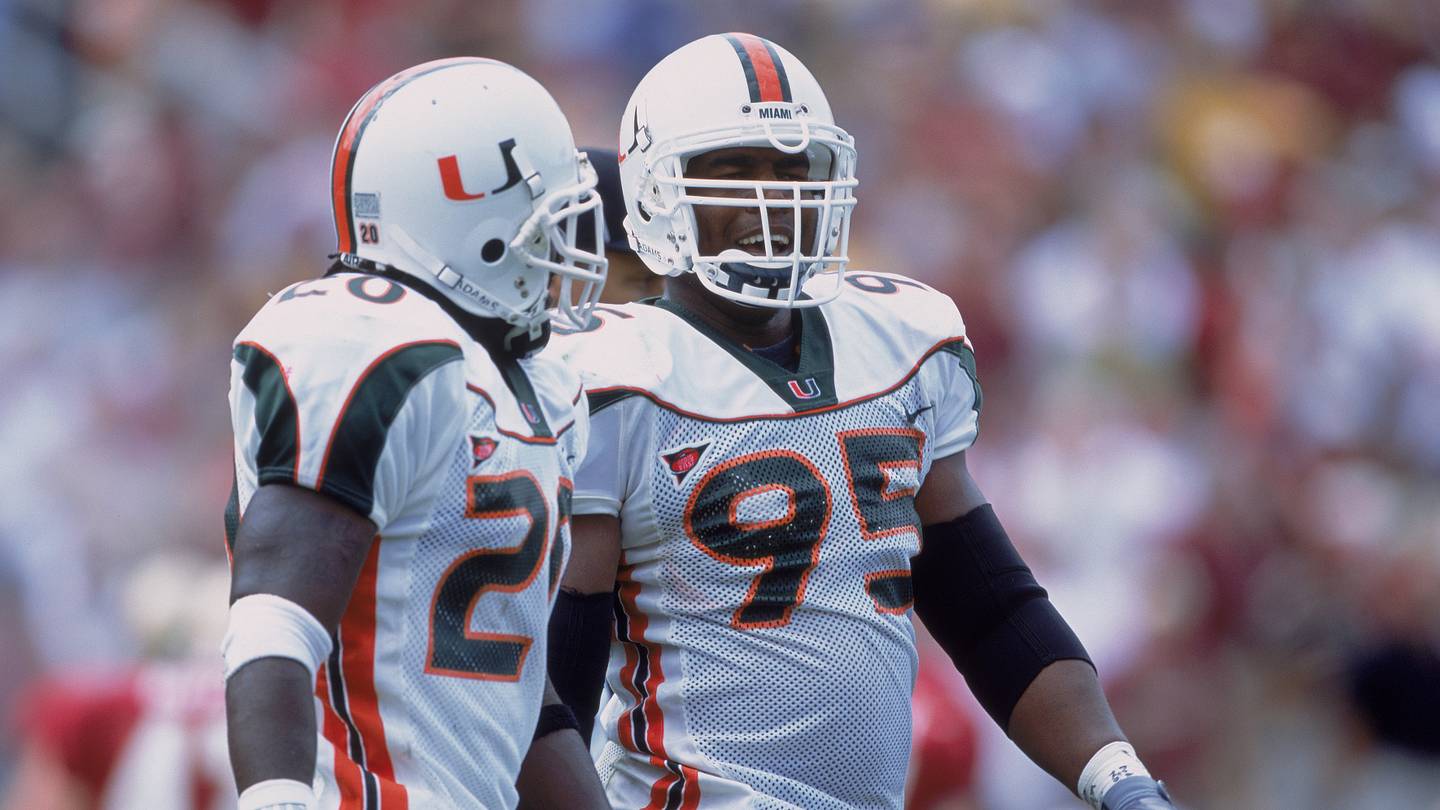
The 2001 Miami Hurricanes football roster is widely regarded as the most talented assembly of players in college football history. Led by quarterback Ken Dorsey and featuring future NFL Hall of Famers like Ed Reed and Andre Johnson, the team went 12-0, secured the BCS National Championship, and eventually saw 38 players drafted into the NFL, including a record 17 first-round picks.
The Architectural Blueprint of the 2001 Hurricanes
As we look back from the vantage point of 2026, the 2001 Miami Hurricanes remain the gold standard for roster construction. The team was not merely a collection of stars; it was a deeply disciplined unit that dominated opponents with an average margin of victory of 32.9 points per game. This dominance was rooted in a recruiting philosophy that prioritized elite speed and physical aggression, traits that would later define the "Modern Era" of the NFL.
Under head coach Larry Coker, the Hurricanes utilized a Pro-Style offense and a 4-3 "Miami 4-2-5" hybrid defensive scheme that emphasized secondary speed. This allowed them to neutralize the high-flying passing attacks of the Big East and Pac-10 alike. The roster was so deep that future NFL superstars like Frank Gore, Willis McGahee, and Kellen Winslow II spent the 2001 season primarily as backups or rotational players.
The 2001 season culminated in a 37-14 demolition of Nebraska in the Rose Bowl. However, the true legacy of this roster lies in the "U" culture—a competitive environment where practice was often more intense than the games themselves. As linebacker Jonathan Vilma often noted in later retrospectives, the second-string defense at Miami in 2001 could have likely finished in the Top 10 of the AP Poll on its own.
The Offensive Roster: Power, Protection, and Playmaking
The Miami offense in 2001 was a masterclass in balance. While many teams of that era relied on a single star, the Hurricanes boasted elite talent at every position group, protected by an offensive line that is arguably the greatest in collegiate history.
The Backfield: Ken Dorsey and a Stable of NFL Stars
Quarterback Ken Dorsey was the cerebral leader of the unit. While he lacked the elite arm strength of some of his peers, his decision-making and accuracy were peerless. Dorsey finished the 2001 season with 2,652 passing yards and 23 touchdowns, earning the Maxwell Award.
Behind him was a backfield that remains legendary. Clinton Portis led the team in rushing with 1,200 yards and 10 touchdowns. However, the depth was staggering:
- Frank Gore: A freshman who averaged 9.1 yards per carry.
- Willis McGahee: A physical specimen who would become a Heisman finalist the following year.
- Najeh Davenport: A versatile power back who provided a bruising change of pace.
The Receiving Corps and Tight Ends
Andre Johnson was the primary vertical threat, combining Olympic-level speed with a massive 6'3" frame. He recorded 682 yards and 10 touchdowns in 2001. Opposite him was Kevin Beard, a reliable route-runner who kept the chains moving.
The tight end position revolutionized how the game was played. Jeremy Shockey was the emotional heart of the offense, a mismatch nightmare who caught 40 passes for 519 yards and 7 touchdowns. Waiting in the wings was freshman Kellen Winslow II, who would eventually become one of the most prolific tight ends in NFL history.
The Great Wall: The Offensive Line
The most underrated component of the 2001 squad was the offensive line. Left tackle Bryant McKinnie is a name that still resonates in 2026 as one of the most dominant blockers to ever play. During his entire collegiate career, McKinnie famously did not allow a single sack. Alongside him were center Brett Romberg (a Rimington Trophy winner) and tackle Joaquin Gonzalez, ensuring Dorsey was rarely pressured.
The Defensive Roster: The Juggernaut of Coral Gables
If the offense was efficient, the defense was terrifying. The 2001 Hurricanes defense allowed only 9.75 points per game and forced 45 turnovers. The unit was defined by its "speed-at-every-level" philosophy.
The Secondary: "The Soul of the Team"
Safety Ed Reed was the undisputed leader. A future first-ballot NFL Hall of Famer, Reed's 2001 season was a highlight reel of interceptions (9) and blocked punts. He was joined in the secondary by three future NFL first-round picks:
- Phillip Buchanon: A shutdown corner and explosive return specialist.
- Mike Rumph: A physical corner who excelled in press-man coverage.
- James Lewis: A hard-hitting safety who complemented Reed's ball-hawking style.
- Sean Taylor (Freshman): Though a backup in 2001, Taylor’s impact on special teams and late-game rotations foreshadowed his legendary (though tragically short) professional career.
Linebackers and the Defensive Front
The linebacker corps was anchored by Jonathan Vilma, whose sideline-to-sideline speed allowed Miami to play nickel packages without losing run support. He was flanked by D.J. Williams, a freakish athlete who transitioned from fullback to linebacker, and Rocky McIntosh.
Up front, the defensive line utilized a deep rotation to stay fresh. Jerome McDougle and William Joseph provided the interior push, while a young Vince Wilfork began to show the world the nose tackle dominance that would later define his career with the New England Patriots.
2001 Miami Hurricanes Starters and Key Contributors
The following table highlights the primary starters and the elite depth that defined the 2001 National Championship team.
| Position | Starter (2001) | Notable Backup/Rotation | Future NFL Draft Status |
|---|---|---|---|
| QB | Ken Dorsey | Todd Sievers (K/P) | 7th Round (Dorsey) |
| RB | Clinton Portis | Frank Gore / Willis McGahee | 3 Future Pro Bowlers |
| WR | Andre Johnson | Roscoe Parrish | 1st Round (Johnson) |
| WR | Kevin Beard | Ethenic Sands | UDFA / Coaching |
| TE | Jeremy Shockey | Kellen Winslow II | 1st Round (Both) |
| LT | Bryant McKinnie | Carlos Joseph | 1st Round (McKinnie) |
| C | Brett Romberg | Joel Rodriguez | Rimington Trophy Winner |
| DE | Jerome McDougle | Andrew Williams | 1st Round (McDougle) |
| DT | William Joseph | Vince Wilfork | 1st Round (Both) |
| LB | Jonathan Vilma | Rocky McIntosh | 1st Round (Vilma) |
| LB | D.J. Williams | Howard Clark | 1st Round (Williams) |
| CB | Phillip Buchanon | Antrel Rolle | 1st Round (Both) |
| S | Ed Reed | Sean Taylor | 1st Round (Both) |
The Legacy of the 17 First-Round Picks
One of the most frequent points of discussion regarding the 2001 roster is the sheer volume of NFL talent it produced. To understand the magnitude of this team, one must look at the NFL drafts from 2002 through 2005. A total of 17 players from the 2001 roster were selected in the first round of the NFL Draft.
This is a record that has stood for decades. Even the dominant Alabama and Georgia teams of the 2020s have struggled to match this specific concentration of top-tier professional talent. The players drafted in the first round included:
- 2002 Draft: Bryant McKinnie, Jeremy Shockey, Phillip Buchanon, Ed Reed, Mike Rumph.
- 2003 Draft: Andre Johnson, Jerome McDougle, Willis McGahee, William Joseph.
- 2004 Draft: Sean Taylor, Kellen Winslow II, Jonathan Vilma, D.J. Williams, Vernon Carey, Vince Wilfork.
- 2005 Draft: Antrel Rolle, Roscoe Parrish (2nd), Frank Gore (3rd—due to injury).
This professional success validates the "practice field" theory. Because these players faced NFL-caliber opposition every single day in Coral Gables, their transition to the professional ranks was often seamless.
Coaching Philosophy and the "The U" Culture
While the talent was immense, the coaching staff deserves credit for managing the massive egos and competitive drives within the locker room. Larry Coker, in his first year as head coach after Butch Davis departed for the Cleveland Browns, maintained the continuity of the program.
The defensive coordinator, Randy Shannon, implemented a scheme that prioritized "closing speed." This philosophy was designed to eliminate big plays; even if a receiver caught a ball, four Hurricanes would be there to make the tackle instantly. Offensively, the staff allowed Ken Dorsey to operate as a "coach on the field," giving him the freedom to check into different plays based on defensive alignments—a level of trust rarely seen in college football at the time.
Statistical Dominance of the 2001 Season
To truly grasp the roster's efficacy, one must look at the statistical outliers of their 12-0 run. The Hurricanes didn't just win; they humiliated opponents.
- The Washington Game: A 65-7 victory over a ranked Huskies team.
- The Syracuse Game: A 59-0 shutout against a Syracuse team that was 9-3 that year.
- Points For vs. Points Against: Miami scored 512 points while allowing only 117.
According to the NCAA's historical records, this point differential remains one of the highest in the modern era of the sport. The team led the nation in turnover margin, pass defense, and scoring defense.
How to Research and Watch the 2001 Hurricanes Today
For fans and analysts in 2026 looking to study the mechanics of this legendary team, several resources remain vital. Most of the 2001 games are archived through the University of Miami Athletics digital library.
- Game Film: Focus on the "Rose Bowl" (National Championship) to see the starters at their peak.
- Documentaries: The ESPN "30 for 30" series, specifically "The U" and "The U Part 2," provides behind-the-scenes context on the roster's development and internal competition.
- Draft Archives: Reviewing the NFL Draft history from 2002–2005 shows the incredible longevity these players had in the professional league.
Frequently Asked Questions
Who was the best player on the 2001 Miami Hurricanes?
While Ken Dorsey was the leader and Ed Reed was the defensive heart, many scouts consider Ed Reed the "best" player due to his transformative impact on the safety position. Reed's ability to diagnose plays and his legendary ball skills led to him becoming a first-ballot NFL Hall of Famer.
How many players from the 2001 Miami roster made the NFL?
A total of 38 players from that specific roster were drafted into the NFL. This includes players who were seniors in 2001 and freshmen who were drafted as late as 2005 and 2006.
Was Frank Gore a starter on the 2001 team?
No, Frank Gore was a true freshman in 2001. He played behind Clinton Portis but still managed to rush for 562 yards and five touchdowns, showcasing the incredible depth of the Hurricanes' backfield.
Did the 2001 Miami Hurricanes play in the Rose Bowl?
Yes. The 2001 season concluded with the 2002 Rose Bowl, which served as the BCS National Championship Game. Miami defeated the Nebraska Cornhuskers 37-14, a game in which Miami led 34-0 at halftime.
Who coached the 2001 Miami Hurricanes?
Larry Coker was the head coach. He was promoted from offensive coordinator after Butch Davis left for the NFL. Coker became the first first-year head coach to win a national title since 1948.
Furthering Your Knowledge of "The U"
To truly understand why the 2001 roster is the "Greatest of All Time," compare their statistics and NFL longevity against other legendary squads like the 1995 Nebraska Cornhuskers or the 2019 LSU Tigers. You will find that while other teams had comparable offenses, none possessed the defensive depth and special teams' dominance of the 2001 Miami Hurricanes.