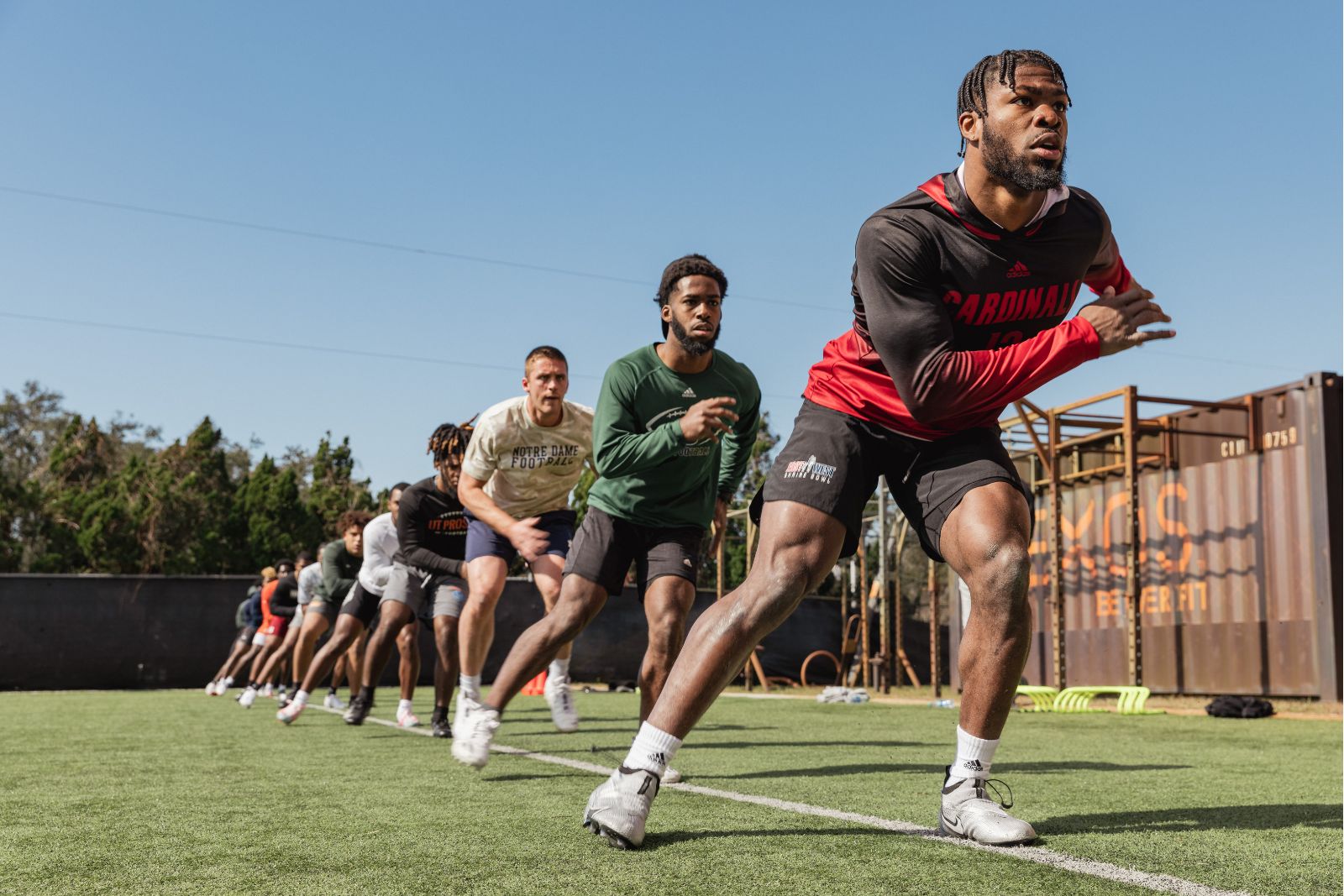
Professional athletes who dominate in two distinct sports achieve a level of "dual athletic excellence" by leveraging elite neuromuscular efficiency, specialized periodization training, and extraordinary psychological adaptability. While modern specialization has made this feat increasingly rare in 2026, the historical and physiological blueprint for the multi-sport professional remains the pinnacle of human performance.
The phenomenon of the two-sport professional athlete represents the ultimate expression of physical versatility. In the history of organized athletics, very few individuals have possessed the rare combination of explosive power, sport-specific skill sets, and the metabolic flexibility required to compete at the highest level in two different professional leagues. This "unleashed" excellence is not merely a product of raw talent but is the result of a complex interplay between genetic predispositions and highly disciplined lifestyle management.
The Biological Foundation of Multi-Sport Mastery
To understand how an athlete can be unleashed across two professional domains, one must examine the physiological demands of different sports. Most two-sport athletes typically bridge the gap between sports with complementary movement patterns, such as American football and baseball, or track and field and football. The core of this ability lies in the athlete’s neuromuscular system.
High-level dual-sport athletes often possess a disproportionately high percentage of Type IIx (fast-twitch) muscle fibers. These fibers are responsible for the explosive bursts of speed and power necessary for both stealing a base in Major League Baseball (MLB) and sprinting past a defender in the National Football League (NFL). However, the challenge arises in the specific "programming" of these fibers. A baseball swing requires rotational power and precise hand-eye coordination, whereas a football tackle requires linear force production and high-impact absorption.
Furthermore, the cognitive load of mastering two distinct playbooks and technical skill sets cannot be overstated. Neuroplasticity plays a vital role here; the brain must maintain "muscle memory" for a golf swing or a jump shot while simultaneously perfecting the mechanics of a different sport. In 2026, sports scientists utilize advanced neuro-mapping to help these rare athletes switch between "modes" of play, ensuring that the technical requirements of one sport do not interfere with the biomechanical efficiency of the other.
Defining the Icons of Dual-Sport Excellence
When discussing athletes who have truly unleashed their potential across multiple platforms, several names serve as the gold standard. These individuals did not merely participate in two sports; they reached elite status in both, often during the same calendar year.
Bo Jackson: The Ultimate Physical Specimen
Bo Jackson remains arguably the greatest two-sport athlete in history. As the only person to be named an All-Star in both the MLB and a Pro Bowler in the NFL, Jackson’s career was a testament to raw, unbridled power. His ability to transition from the Oakland Raiders’ backfield to the Kansas City Royals’ outfield was a feat of "unleashed" excellence that defied the logic of specialization. Jackson’s career also serves as a cautionary tale; the extreme physical toll of competing in two high-impact sports eventually contributed to a career-ending hip injury, highlighting the physiological limits of the human frame.
Deion Sanders: The Prime Time Hybrid
Deion "Prime Time" Sanders took dual-sport excellence to a level of cultural dominance. Sanders is the only athlete to ever play in both a Super Bowl and a World Series. Unlike Jackson, who relied on pure power, Sanders relied on world-class speed and agility. His ability to play cornerback—a position requiring intense backpedaling and reactive agility—and then transition to the baseball diamond as a lead-off hitter and center fielder demonstrated a unique "kinetic versatility." Sanders often famously played for the Atlanta Falcons and the Atlanta Braves during the same season, sometimes even traveling between games on the same day.
Jim Thorpe: The Multi-Sport Pioneer
One cannot discuss this topic without mentioning Jim Thorpe. In the early 20th century, Thorpe set the precedent for the modern professional. He won Olympic gold medals in the pentathlon and decathlon, played professional football, and played professional baseball. Thorpe’s excellence was "unleashed" in an era before modern recovery science, making his durability and across-the-board dominance even more remarkable.
Comparative Analysis of Multi-Sport Success Metrics
The following table compares the career highlights of notable two-sport athletes, illustrating the breadth of their "unleashed" achievements across different professional landscapes.
| Athlete | Primary Sports | Professional Leagues | Peak Achievement | Key Attribute |
|---|---|---|---|---|
| Bo Jackson | Football / Baseball | NFL (Raiders) / MLB (Royals) | Pro Bowl & MLB All-Star | Explosive Power |
| Deion Sanders | Football / Baseball | NFL (Multiple) / MLB (Multiple) | Super Bowl & World Series | Top-End Speed |
| Jim Thorpe | Football / Baseball / T&F | NFL / MLB / Olympics | 2x Olympic Gold Medals | All-Around Utility |
| Danny Ainge | Basketball / Baseball | NBA (Celtics) / MLB (Blue Jays) | 2x NBA Champion | High Sport IQ |
| Brian Jordan | Football / Baseball | NFL (Falcons) / MLB (Multiple) | MLB All-Star / NFL Pro Bowl Alt | Durability |
The Economic and Contractual Barriers in 2026
In the current landscape of 2026, the "unleashed" two-sport pro is a disappearing breed, primarily due to economic and contractual constraints. Professional franchises now invest hundreds of millions of dollars in single-player contracts. From a risk management perspective, an NFL team is rarely willing to allow their star quarterback to risk a thumb injury or a sliding mishap during an MLB season.
Insurance premiums for multi-sport athletes have skyrocketed. In 2026, most standard professional contracts include "hazardous activity" clauses that specifically forbid participation in other professional sports without express written consent, which is rarely granted. This has shifted the trend toward "consecutive" excellence rather than "simultaneous" excellence. We see more athletes playing one sport professionally, retiring early, and then attempting a career in a second sport (e.g., transition from football to professional golf or combat sports).
Moreover, the sheer length of modern seasons—with extended playoffs and mandatory off-season programs—leaves virtually no window for a second professional pursuit. The "dual athletic excellence" of the past was facilitated by shorter schedules and a less rigorous year-round training demand.
Training Methodologies: Balancing Divergent Skill Sets
For the few athletes who still attempt to balance two sports at a high level (such as those in the minor leagues or developmental circuits), training is a delicate act of periodization. The primary goal is to prevent interference effects, where the training for one sport actively diminishes the performance in another.
- Macrocycle Planning: Athletes must align their peak strength phases with the start of their primary season while maintaining "maintenance" loads for the secondary sport.
- Skill Priming: Using "shadow drills" or VR simulations to keep cognitive pathways for Sport B active while physically competing in Sport A.
- Regenerative Focus: Modern two-sport athletes in 2026 utilize hyperbaric chambers, cryotherapy, and blood-flow restriction (BFR) training to accelerate recovery between games that may be occurring in overlapping seasons.
- Nutrition and Metabolic Loading: Managing the caloric demands of two different metabolic profiles—for example, the high anaerobic demand of basketball versus the endurance/patience required for baseball.
The Psychological Toll of Constant Competition
To unleash excellence in two arenas, an athlete must possess a specific psychological profile characterized by "high-speed switching." Most professional athletes find success through a hyper-fixation on a single set of variables. The two-sport athlete, however, must be able to flush the frustrations of a batting slump immediately when they step onto the football field.
This mental fatigue is often what ends two-sport careers before physical injuries do. The lack of an "off-season" means the central nervous system (CNS) is under constant stress. Research into athlete burnout in 2026 suggests that the lack of psychological "down-time" can lead to decreased reaction times and an increased cortisol response, which eventually degrades physical performance. The successful dual-sport athlete is one who views the change of sport as a "mental break" rather than additional work.
FAQ: Understanding Dual-Sport Excellence
Can an athlete play in the NBA and NFL at the same time?
While theoretically possible, it is functionally impossible in the modern era due to schedule overlaps. The NBA season runs from October to June, while the NFL runs from September to February. An athlete would miss half of each season, and no modern franchise would agree to such a split-time arrangement given the salary caps and roster spot limitations.
Who was the last true two-sport professional star?
While many athletes are drafted in two sports (like Kyler Murray in NFL/MLB), very few actually play both at the professional level simultaneously in the 21st century. Deion Sanders and Brian Jordan were the last to sustain high-level production in both the NFL and MLB during the same years in the 1990s and early 2000s.
Why do most two-sport athletes choose football and baseball?
The primary reason is the seasonal alignment and the complementary nature of the skill sets. Baseball is a summer sport, and football is a fall/winter sport. Biomechanically, the explosive sprinting and throwing motions in both sports share similar "power corridors" in the body, making the transition slightly more natural than, for example, transitioning between hockey and basketball.
Does playing two sports increase the risk of injury?
Yes, significantly. The primary risk is not just contact injuries but "overuse" injuries. Because the athlete never has a true recovery period for their joints and tendons, micro-trauma accumulates. This was a significant factor in the career trajectories of past greats like Bo Jackson.
Are there any female two-sport professional athletes?
Historically, athletes like Babe Didrikson Zaharias excelled in many sports, including golf, basketball, and track. In the modern era, many female athletes have excelled in dual sports at the collegiate level, but the professionalization of women’s sports (WNBA, NWSL) has led to the same specialization pressures seen in men’s sports.
Strategic Recommendation for Aspiring Multi-Sport Athletes
For athletes looking to unleash dual athletic excellence in the current climate, the most viable path is strategic sequence rather than simultaneous play. Focus on achieving elite status in the most "age-sensitive" sport first (typically those requiring peak explosiveness like football or track) before transitioning to a second career in a "skill-dominant" sport (like baseball or golf) later in life. By leveraging the base athleticism built in youth, an athlete can extend their professional relevance while minimizing the catastrophic burnout associated with trying to play two professional seasons at once.