Dr. Martin Luther King Jr. was born Michael King Jr. before his father changed both their names following an inspiring trip to Germany. Additionally, King is a posthumous Grammy Award winner, recognized in 1971 for his "Why I Oppose the War in Vietnam" recording, highlighting his status as a master of American rhetoric and intellectual thought.
As we look back from the perspective of 2026, the legacy of Dr. Martin Luther King Jr. remains a cornerstone of global civil rights discourse. While many are familiar with the broad strokes of his activism—the Montgomery Bus Boycott, the "I Have a Dream" speech, and his 1964 Nobel Peace Prize—specific details of his life often reveal a more complex and human portrait of the leader. These "interesting facts" are not merely trivia; they represent the intellectual and personal transformations that shaped the man who would eventually redefine American democracy.
The Transformation of Michael King Jr. to Martin Luther
One of the most significant yet frequently overlooked facts about Dr. King is that he was not born "Martin." He was born Michael King Jr. on January 15, 1929. The transition to the name we know today was the result of a profound spiritual and historical journey undertaken by his father, Michael King Sr.
In 1934, Michael King Sr., a prominent pastor at Ebenezer Baptist Church, traveled to Berlin, Germany, to attend the Baptist World Alliance congress. This trip occurred during the rise of the Nazi party, a period of intense social and political upheaval. During his travels, King Sr. became deeply inspired by the history of the Protestant Reformation and the courage of the 16th-century monk Martin Luther, who famously challenged the Catholic Church.
Upon returning to the United States, King Sr. decided to change his own name and his five-year-old son’s name to Martin Luther King Sr. and Jr., respectively. This change was more than a cosmetic update; it was a symbolic alignment with a tradition of dissent, reform, and moral courage. For the younger King, carrying the name of the Great Reformer served as a lifelong mantle, linking his modern struggle for racial justice to a centuries-old heritage of challenging institutional authority.
The Significance of the Name Change in History
The decision to adopt the name Martin Luther placed the King family in direct conversation with European theological history. The elder King saw parallels between the German reformer's defiance of the religious status quo and the Black American struggle against Jim Crow laws. By 2026, historians continue to point to this name change as a pivotal moment that foreshadowed Dr. King's future as a global figure who would use moral and religious arguments to dismantle legal segregation.
A Legacy in Sound: The Grammy Award Winner
While Dr. King is celebrated as a visionary leader, he is also recognized as one of the greatest orators in the English language. This rhetorical brilliance earned him a Grammy Award, a fact that surprises many who view him solely through a political or historical lens. In 1971, three years after his assassination, Dr. King was posthumously awarded the Grammy for Best Spoken Word Album.
The award was given for his speech titled "Why I Oppose the War in Vietnam," which he delivered at Riverside Church in New York City on April 4, 1967. This speech was one of the most controversial of his career. In it, he broke with President Lyndon B. Johnson and many of his own advisors to argue that the Vietnam War was a moral disaster that drained resources from the poor at home and inflicted violence on the poor abroad.
The Power of the Riverside Speech
The "Why I Oppose the War in Vietnam" address demonstrated Dr. King’s ability to synthesize domestic civil rights with international human rights. The Recording Academy recognized the technical and emotional power of his delivery. His voice, characterized by rhythmic cadences, profound vocabulary, and a deep, resonant tone, was deemed a work of art in its own right.
Winning a Grammy elevated King’s speeches from historical documents to cultural masterpieces. It acknowledged that his words were not just meant to be read in textbooks but to be heard and felt as living performances. In the decades leading up to 2026, audio archives of King’s speeches have become essential tools for educators, reminding the world that the "I Have a Dream" speech was only one facet of a vast and sophisticated oral legacy.
Academic Brilliance: The 15-Year-Old College Student
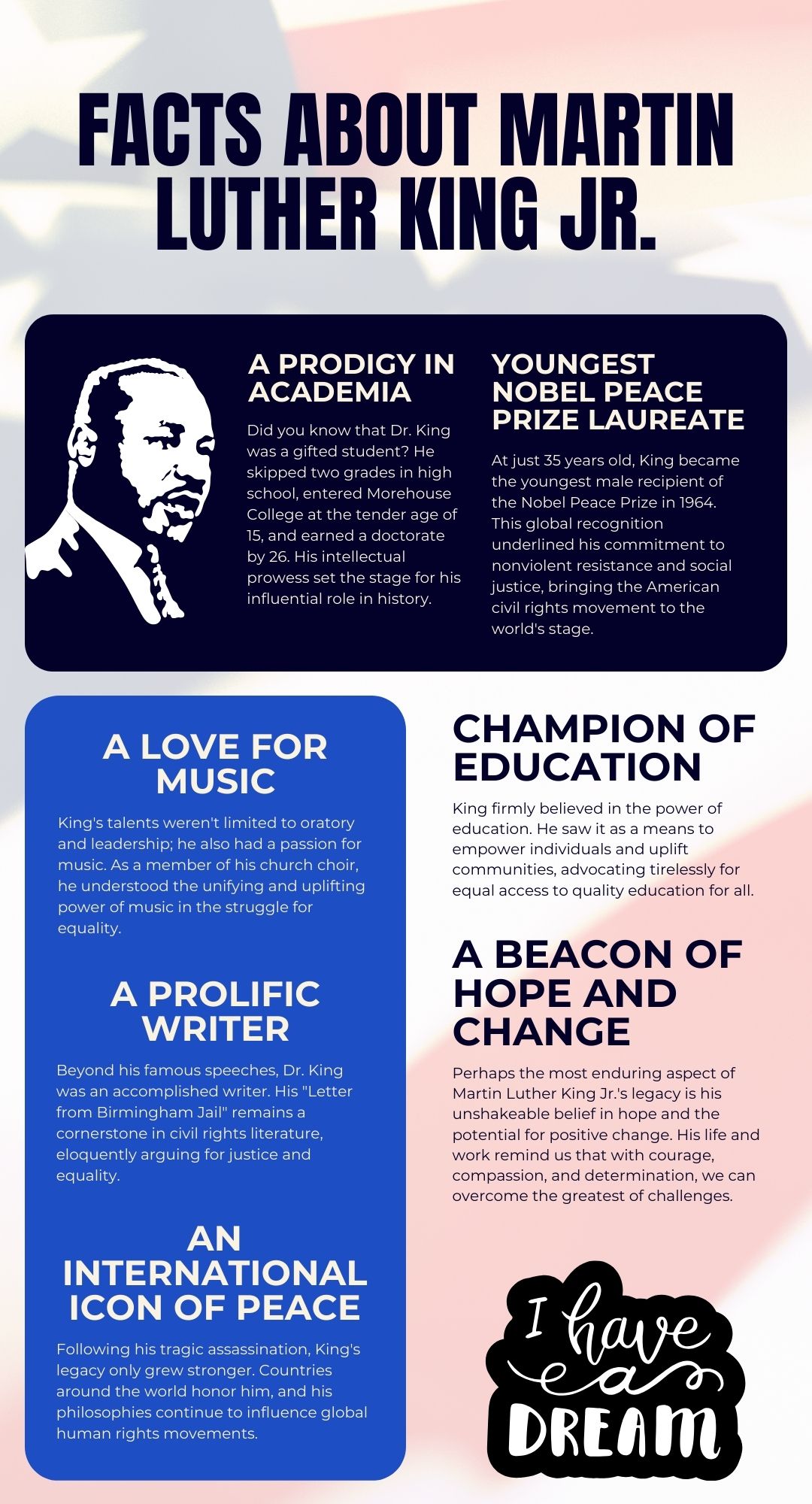
Beyond his names and awards, the speed of Dr. King's intellectual development is a testament to his focused ambition. King was a gifted student who skipped the ninth and twelfth grades. He entered Morehouse College, a prestigious historically Black college in Atlanta, at the age of 15 in 1944.
At Morehouse, King was not initially set on the ministry. He considered careers in medicine and law, reflecting a broader interest in social utility and professional excellence. It was the mentorship of Morehouse President Benjamin E. Mays, a staunch advocate for social justice through the lens of Christianity, that eventually guided King toward the pulpit.
By the time he was 19, King had earned his Bachelor of Arts in Sociology. He continued his studies at Crozer Theological Seminary and later at Boston University, where he earned his Ph.D. in Systematic Theology at the age of 26. This rapid academic progression provided him with the philosophical tools—such as the teachings of Henry David Thoreau on civil disobedience and Mahatma Gandhi on non-violence—that would become the bedrock of the Southern Christian Leadership Conference (SCLC).
The Near-Fatal 1958 Assassination Attempt
A decade before his death in Memphis, Dr. King came incredibly close to losing his life in a much earlier assassination attempt. This event is a critical but often secondary fact in the broader narrative of his life. On September 20, 1958, while signing copies of his book Stride Toward Freedom in a Harlem department store, King was approached by a woman named Izola Ware Curry.
Curry stabbed King in the chest with a seven-inch ivory-handled steel letter opener. The blade was so close to his aorta that his doctors told him if he had so much as sneezed, he would have died. King spent weeks in the hospital recovering from the surgery required to remove the blade.
The "I Didn't Sneeze" Reflection
Dr. King famously referenced this event in his final speech, "I’ve Been to the Mountaintop," delivered the night before he was killed in 1968. He mentioned the letters he received from people around the world, including a young girl who wrote that she was "so glad he didn't sneeze." King used this near-death experience to reinforce his commitment to the movement, noting that if he had died in 1958, he would have missed the landmark moments of the 1960s. This event underscores the constant, physical danger King faced for the entirety of his public life.
Comparison of Key Historical Milestones
The following table outlines the timeline and significance of these specific facts in the context of Dr. King’s overall journey.
| Milestone | Year | Historical Significance |
|---|---|---|
| Birth Name | 1929 | Born Michael King Jr. in Atlanta, Georgia. |
| Name Change | 1934 | Changed to Martin Luther King Jr., honoring the German Reformer. |
| Morehouse Entry | 1944 | Started college at age 15, skipping two grades of high school. |
| Harlem Stabbing | 1958 | Survives an assassination attempt by Izola Ware Curry. |
| Nobel Peace Prize | 1964 | Becomes the youngest male recipient of the prize at the time. |
| Grammy Award | 1971 | Posthumously awarded for "Why I Oppose the War in Vietnam." |
FAQ: Deepening the Understanding of MLK Jr.
Did Martin Luther King Jr. ever win a Nobel Prize?
Yes, Dr. King won the Nobel Peace Prize in 1964. At age 35, he was the youngest man to have received the honor at that time. He turned over the prize money of $54,123 to the Civil Rights Movement, emphasizing that the award belonged to the thousands of "unknown" participants in the struggle for equality rather than to himself alone.
What was the cause of Dr. King's name change?
The name change was initiated by his father, Martin Luther King Sr. after he attended the Baptist World Alliance congress in Berlin in 1934. Inspired by the legacy of Martin Luther, the monk who started the Protestant Reformation, King Sr. renamed himself and his son to reflect a spirit of religious and social reform.
How many times was Dr. King arrested?
Dr. King was arrested 29 times during his career as a civil rights leader. His arrests were often for "crimes" such as civil disobedience, loitering, and organizing "illegal" protests. His 1963 incarceration in Alabama led to the writing of the "Letter from Birmingham Jail," which remains one of the most important documents in American political history.
What is the "I Have a Dream" speech's connection to his Grammy?
While the "I Have a Dream" speech is his most famous work, his Grammy was actually awarded for a different speech: "Why I Oppose the War in Vietnam." This highlights that his rhetorical excellence was not limited to one event but was a consistent feature of his intellectual output across multiple topics, including international policy and economic justice.
At what age did Dr. King graduate from college?
Dr. King graduated from Morehouse College with a degree in Sociology at the age of 19. Because he skipped two grades in his primary education, he was significantly younger than most of his peers, which allowed him to complete his Ph.D. and begin his leadership of the Montgomery Bus Boycott by the time he was only 26 years old.
Engaging with Dr. King's Legacy in 2026
To truly understand Dr. King beyond these two interesting facts, it is essential to engage with his primary texts. In 2026, digital archives from the King Center and the Library of Congress provide unprecedented access to his personal letters, sermon notes, and lesser-known speeches.
Rather than focusing solely on the holiday or the famous quotes, modern readers should investigate his later work, particularly his focus on the "Poor People's Campaign" and economic restructuring. Understanding that he was a man who changed his name, excelled academically at a young age, and was recognized by the music industry provides a more rounded view of a leader whose life was cut short, but whose intellectual footprint only grows larger with time.