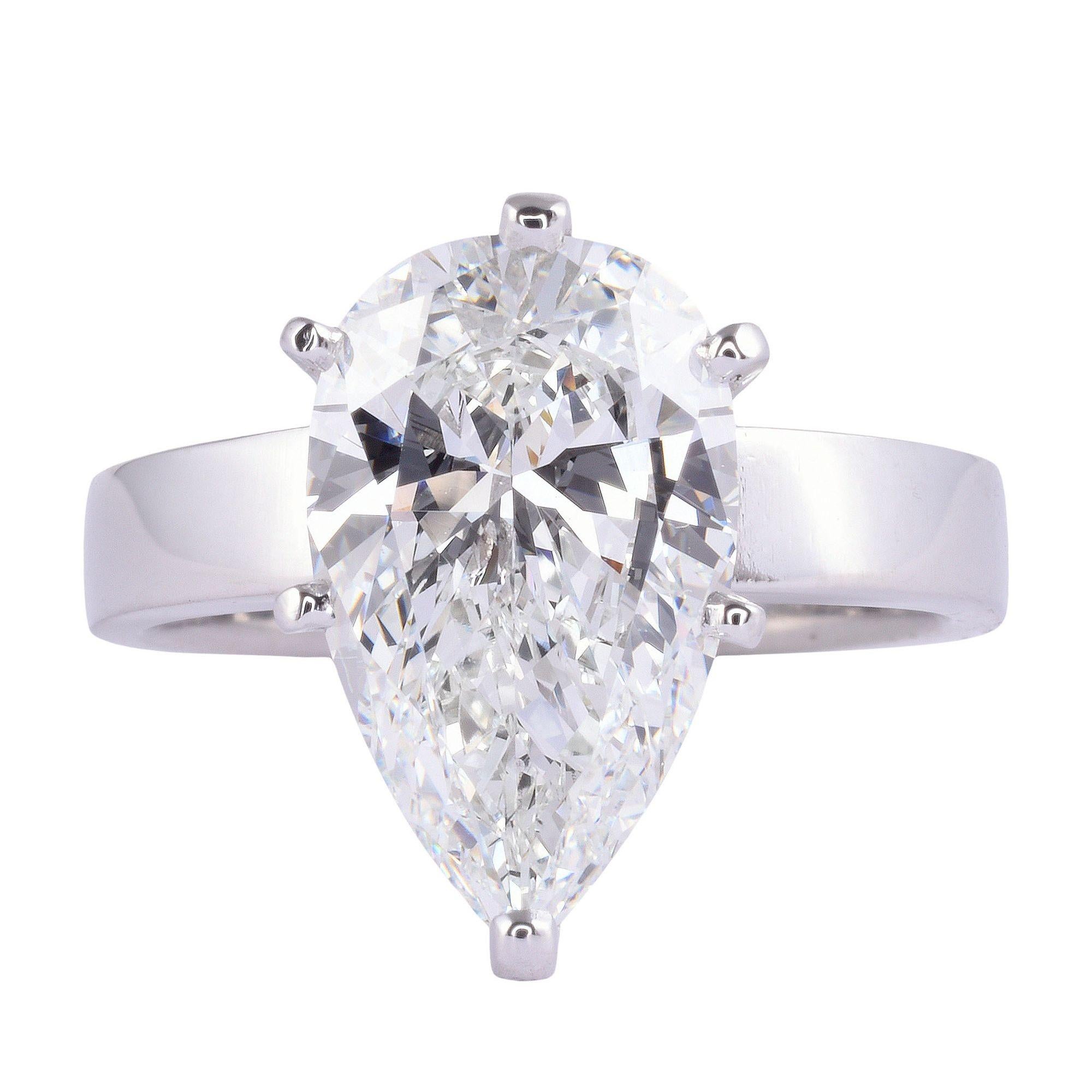
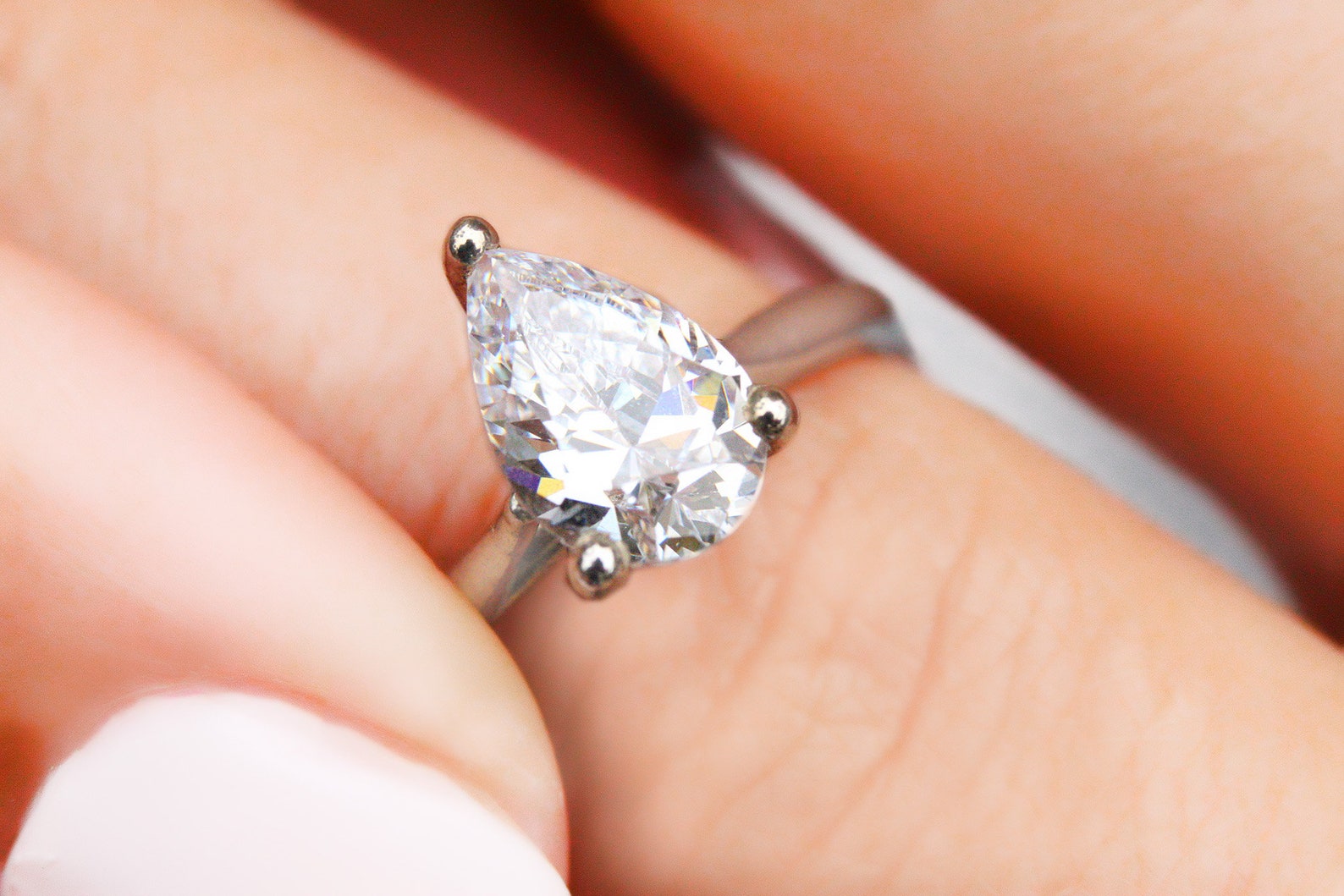
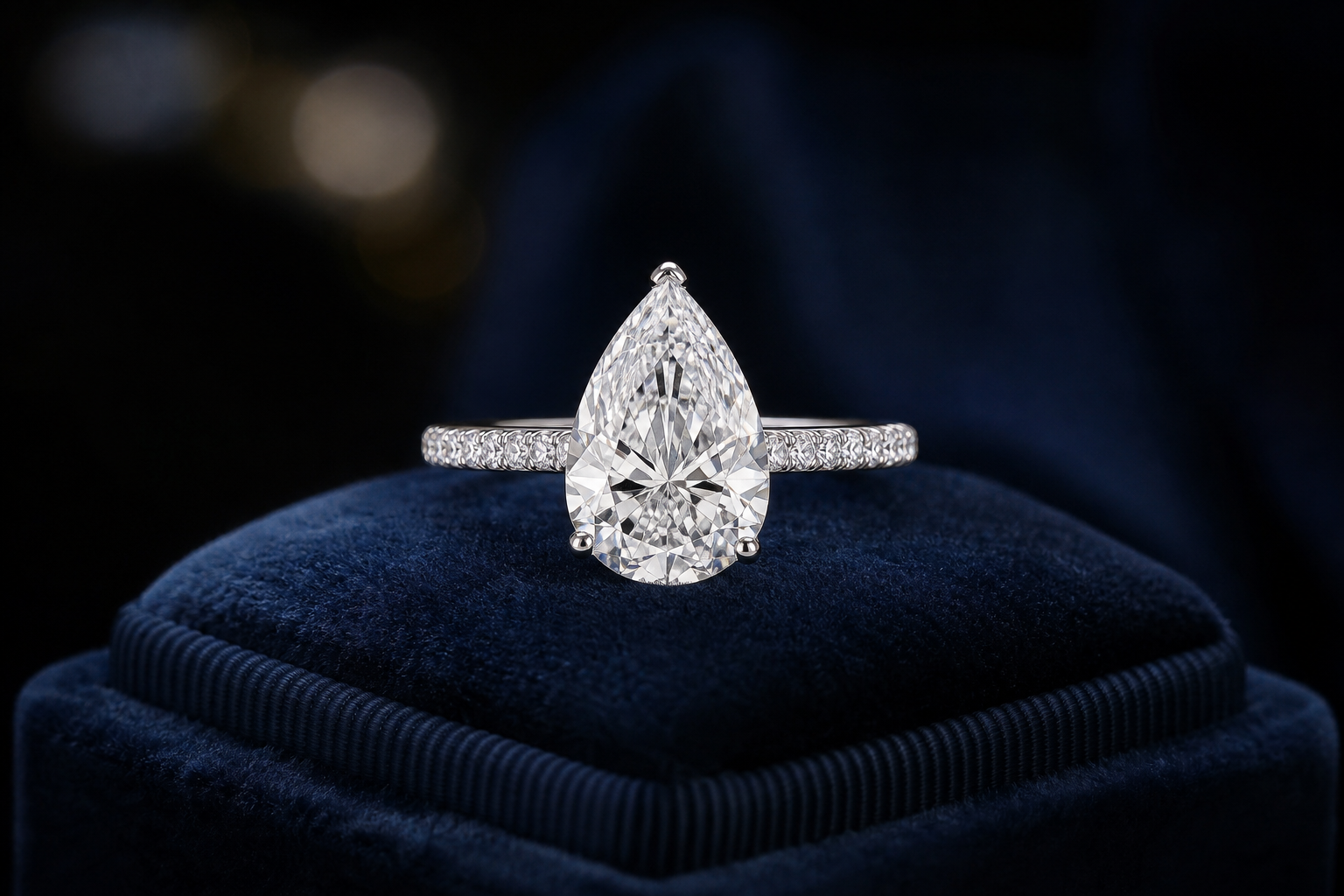
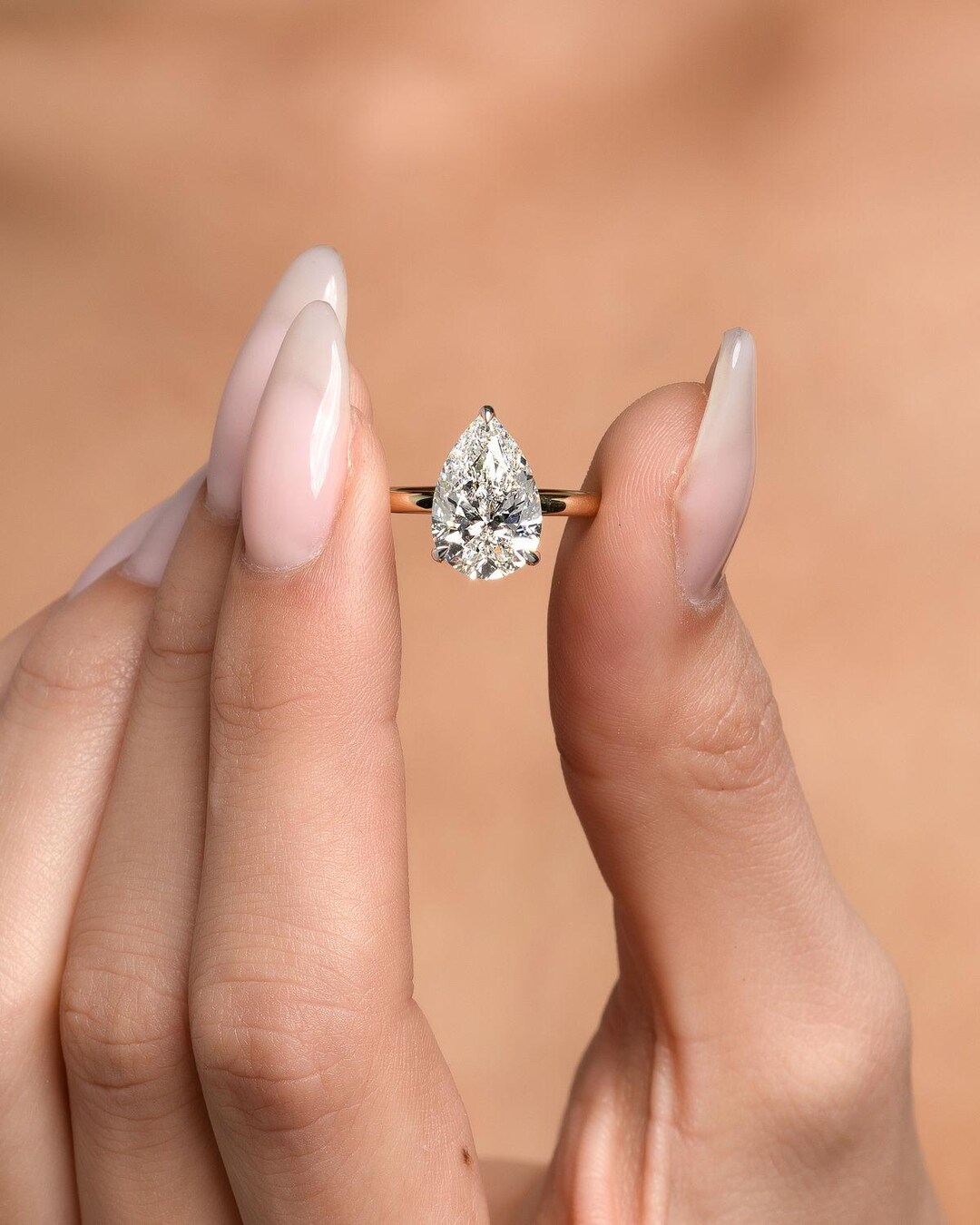
Purchasing a 2 carat pear shaped diamond engagement ring requires a careful balance of geometric precision, structural understanding, and visual assessment. This hybrid cut—combining the rounded edge of a round brilliant with the elongated point of a marquise—offers striking finger coverage and a brilliant sparkle, but its distinct silhouette introduces unique grading and setting considerations that differ significantly from standard round or square stones.
Understanding the Pear Shaped Diamond Anatomy
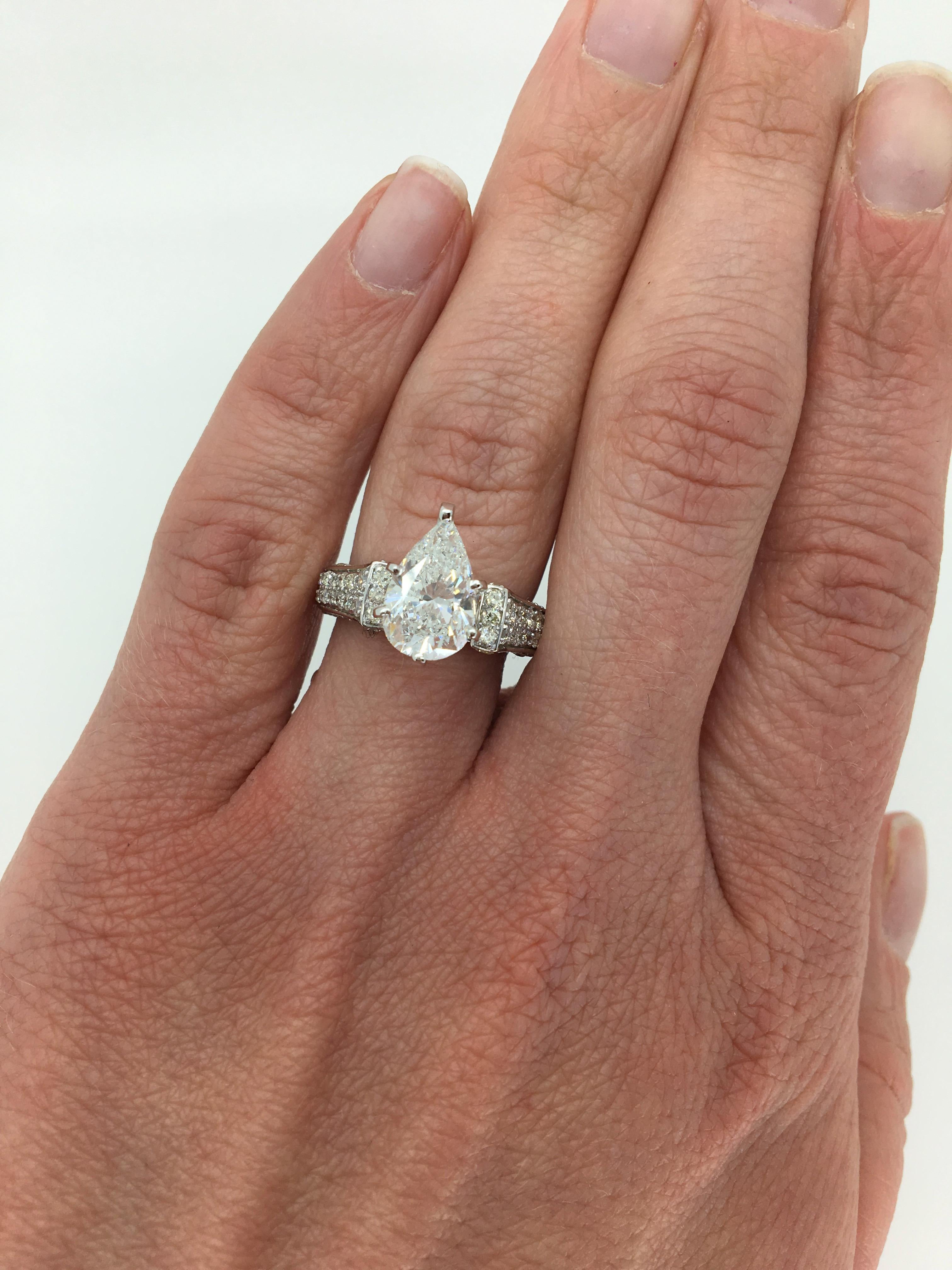
The pear shaped diamond, frequently referred to as the teardrop cut, is a modified brilliant-cut stone featuring 58 facets designed to maximize light return. Because it is asymmetrical, mastering its terminology is essential before evaluating individual stones. The structure comprises a rounded end known as the head, tapering curved sides known as the shoulders, and a sharp termination at the bottom called the point.
When evaluating a 2 carat pear diamond, carat weight measures mass rather than physical dimensions. Due to variations in cutting depth and table percentages, two 2 carat stones can occupy different surface areas. A well-cut 2 carat pear diamond typically provides an exceptional presence on the hand, making it a popular choice for buyers seeking substantial visual impact without scaling up to a 3 or 4 carat weight. However, the elongated shape also distributes weight differently, meaning a shallow cut can make the stone face up larger while sacrificing brilliance, whereas a deep cut can trap light and cause the center to appear dark.
Mastering the 4Cs for Pear Shaped Diamonds
Evaluating the traditional 4Cs—Cut, Color, Clarity, and Carat—demands a specialized approach when dealing with pear shaped stones. The unique geometry of the cut alters how light interacts with the diamond and how inclusions or color tints manifest to the naked eye.
Cut and Symmetry
Cut is the single most critical factor determining a pear diamond's brilliance. Unlike grading reports from the Gemological Institute of America (GIA) that assign a specific cut grade to round brilliants, GIA reports for pear shapes provide polish and symmetry grades but omit an overall cut grade. Consequently, buyers must evaluate symmetry manually. The point of the pear must align perfectly with the apex of the rounded head, bisecting the stone into two identical halves. Any deviation creates a skewed appearance, known as a "lopsided" cut. Additionally, the shoulders must curve smoothly toward the point without flattening or bulging.
Length-to-Width Ratio
The silhouette of a pear diamond is defined by its length-to-width ratio (LWR). The classic, traditional ratio ranges between 1.55 and 1.75, offering a balanced, elongated teardrop look. Buyers preferring a wider, chunkier appearance often target ratios between 1.40 and 1.50, while those desiring a slender, dramatic, marquise-like aesthetic look for ratios of 1.75 to 1.85 and above. Personal preference dictates the ideal ratio, but consistency along the chosen proportion is vital for aesthetic harmony.
Color and the Bow-Tie Effect
Pear shaped diamonds, like marquise and oval cuts, are susceptible to the "bow-tie effect"—a dark, bow-tie-shaped shadow stretching across the center facets. This phenomenon occurs when light fails to reflect into the center due to facet alignment angles. While a faint bow-tie is normal in elongated fancy shapes, an excessive or intensely black bow-tie diminishes the stone's brilliance and should be avoided. Regarding color, pear shapes tend to trap color at their pointed tips. While a colorless (D-F) stone guarantees icy whiteness, near-colorless grades (G-I) frequently appear completely white when set in yellow or rose gold, offering significant cost savings.
Clarity and Inclusion Placement
Because pear shaped stones feature large, open table facets at the head, inclusions near the center are more visible than in round brilliant cuts. However, the brilliant facet pattern toward the rounded end helps mask minor imperfections. Eye-clean clarity grades typically fall within the VS1 to SI1 range, though some high-quality SI2 stones can be eye-clean depending on the nature and location of the inclusions. Avoid stones with dark or feather inclusions located near the vulnerable pointed tip, as structural stress can compromise durability.
| Diamond Characteristic | Recommended Spec for 2 Carat Pear | What to Watch Out For |
|---|---|---|
| Length-to-Width Ratio | 1.55 – 1.75 (Classic Elongated) | Extreme ratios causing overly fat or skinny silhouettes |
| Color Grade | G – H (White metals), I – J (Warm metals) | Noticeable yellow tint concentrated at the pointed tip |
| Clarity Grade | VS1 – SI1 (Eye-Clean Verified) | Black crystals or feather fractures located near the point |
| Symmetry | Excellent or Very Good | Misaligned point, uneven shoulders, or asymmetrical curves |
Selecting the Right Setting for Structural Protection
Protecting the delicate point of a pear shaped diamond is the primary engineering challenge for any engagement ring setting. Because impact to the tip can cause chipping or fracturing, prong placement and mounting design require careful forethought.
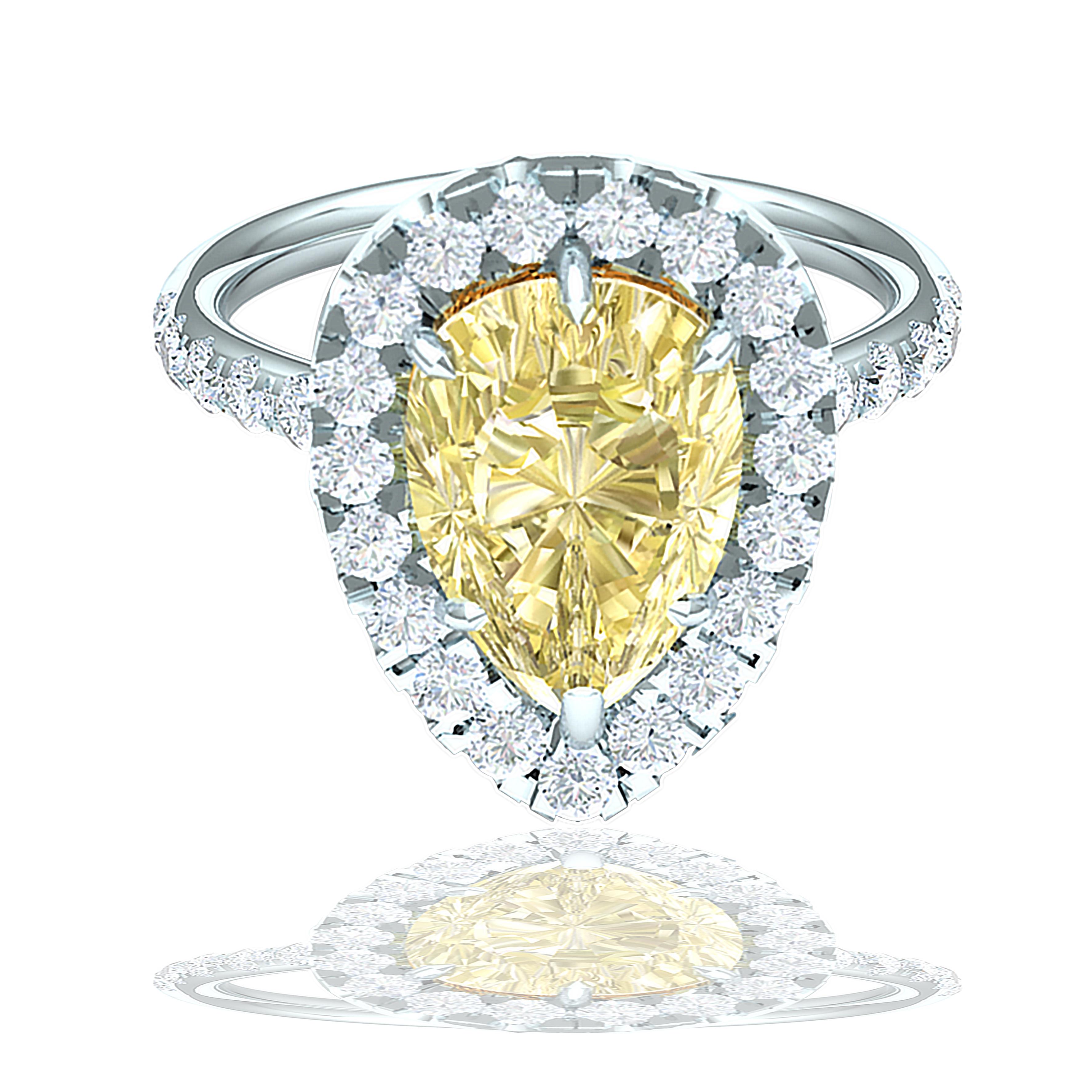
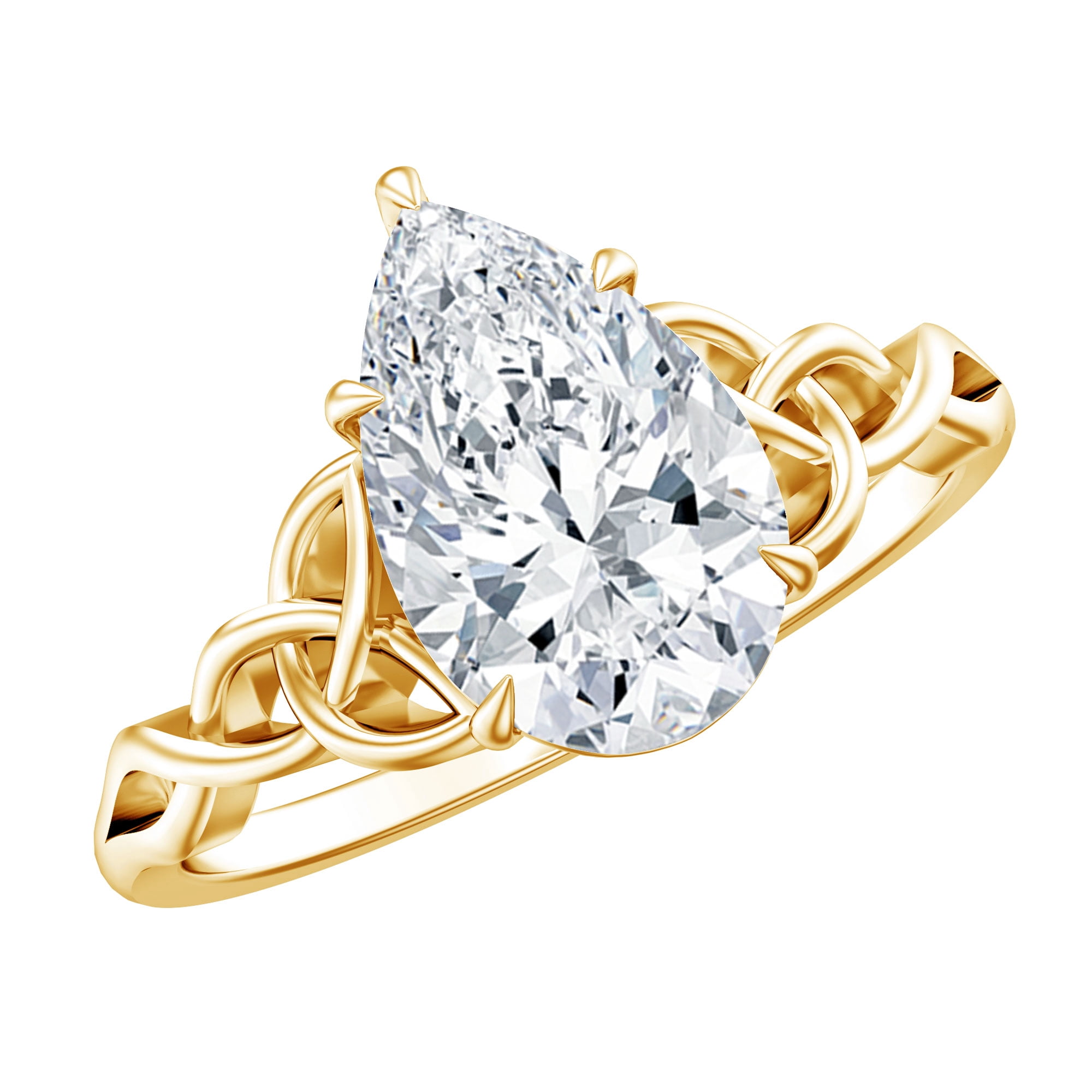
A standard V-prong or chevron prong is the industry gold standard for securing the point of a pear shaped diamond. This specialized metal cap cradles the tip, absorbing accidental impacts and anchoring the stone securely. At the rounded head, traditional single or double prongs maintain the smooth, curved contour.
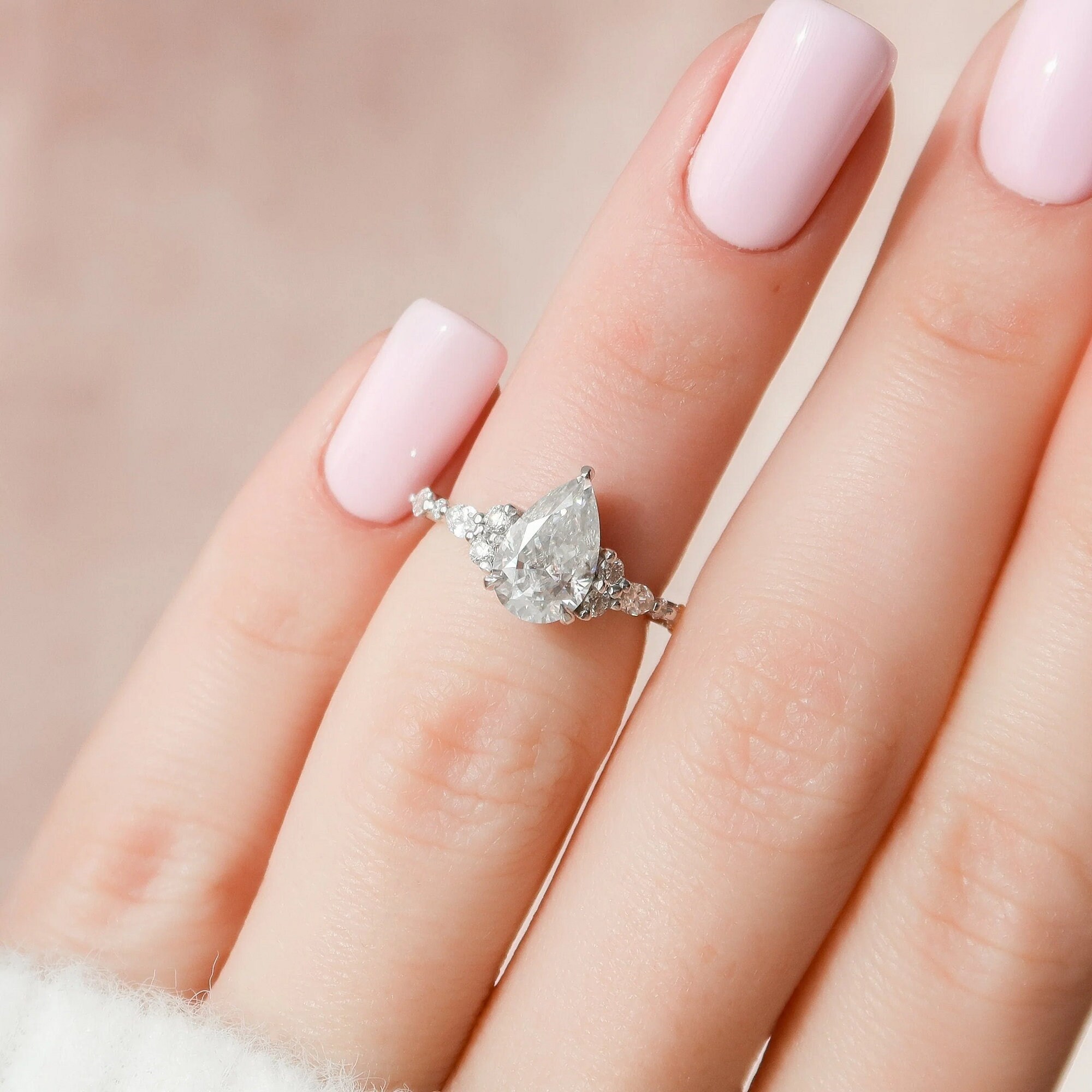
Alternative settings include bezel settings, which completely encircle the diamond in a thin rim of metal. While bezels offer maximum security and a sleek, modern aesthetic, they can slightly diminish light entry from the sides. Three-stone settings, halo configurations, and vintage-inspired milgrain designs also pair exceptionally well with 2 carat pear diamonds, provided the jeweler reinforces the vulnerable terminal point.
Comparing Diamond Types: Natural vs. Lab-Grown
When planning a purchase, buyers must choose between natural mined diamonds and lab-grown diamonds. Both options share identical physical, chemical, and optical properties, meaning a 2 carat lab-grown pear diamond sparkles with the exact same fire and brilliance as a mined counterpart.
The primary divergence lies in origin, market resale value, and initial acquisition cost. Lab-grown diamonds are synthesized in controlled laboratory environments using High Pressure-High Temperature (HPHT) or Chemical Vapor Deposition (CVD) methods. Because supply chains are streamlined, lab-grown 2 carat pear diamonds generally cost significantly less than natural mined stones of equivalent grading. Buyers prioritizing maximum physical size and top-tier color and clarity grades within a fixed budget frequently lean toward lab-grown options, while those valuing traditional rarity and long-term asset persistence often choose natural diamonds.
Determining Your Budget and Pricing Factors
Pricing for a 2 carat pear shaped diamond engagement ring varies widely based on the interplay of the 4Cs, origin, and the complexity of the mounting. A natural 2 carat diamond with GIA certification, solid G color, and VS2 clarity commands a substantially higher investment than a lab-grown alternative with identical specifications.
Beyond the center stone, metal choice (14k or 18k gold versus platinum) and accent stones influence the final total. Platinum offers superior durability and a naturally white finish that never requires replating, whereas yellow and rose gold impart a classic warmth that complements lower color grades. When establishing a budget, factor in independent appraisal fees and specialized jewelry insurance to protect the finished piece against loss, theft, or damage.
Frequently Asked Questions
Do 2 carat pear shaped diamonds look larger than round diamonds?
Yes, pear shaped diamonds generally face up larger than standard round brilliant diamonds of the exact same carat weight. Because the weight of a pear shape is distributed across an elongated silhouette, the stone occupies more surface area along the finger, creating the illusion of a larger diamond.
What is the ideal length-to-width ratio for a pear shaped diamond?
The traditional and most popular length-to-width ratio for a pear shaped diamond is between 1.55 and 1.75. This range delivers a balanced, graceful teardrop shape that is neither too stubby nor excessively narrow. However, personal preference ultimately dictates the ideal proportion.
How do I protect the pointed tip of a pear shaped diamond?
The best way to protect the pointed tip is to select a setting that utilizes a specialized V-prong or chevron prong. This metal cap shields the vulnerable point from direct impacts. Additionally, routine semi-annual inspections by a professional jeweler ensure that prongs remain tight and secure.
Can a bow-tie effect be completely eliminated in pear shaped diamonds?
No, a mild bow-tie effect is a natural optical characteristic of most elongated fancy-cut diamonds, including pear, oval, and marquise shapes. While it cannot always be entirely eliminated, careful diamond selection under professional guidance ensures the bow-tie is faint and does not detract from the stone's overall brilliance.
Are lab-grown pear shaped diamonds physically identical to natural diamonds?
Yes, lab-grown diamonds are chemically, physically, and optically identical to natural mined diamonds. They possess the same refractive index, hardness on the Mohs scale, and crystal structure, differing only in their origin and market valuation.
Finalizing Your Purchase and Next Actions
Begin your acquisition process by identifying certified stones accompanied by reputable grading reports from recognized institutions such as the GIA or International Gemological Institute (IGI). Request high-definition 360-degree video footage and ideal-scope imagery to inspect for symmetry flaws and intrusive bow-tie effects before committing funds. Partner with a reputable jeweler who specializes in custom mountings to ensure the final ring design provides robust structural protection for the pointed tip while showcasing the distinctive elegance of your 2 carat pear shaped center stone.