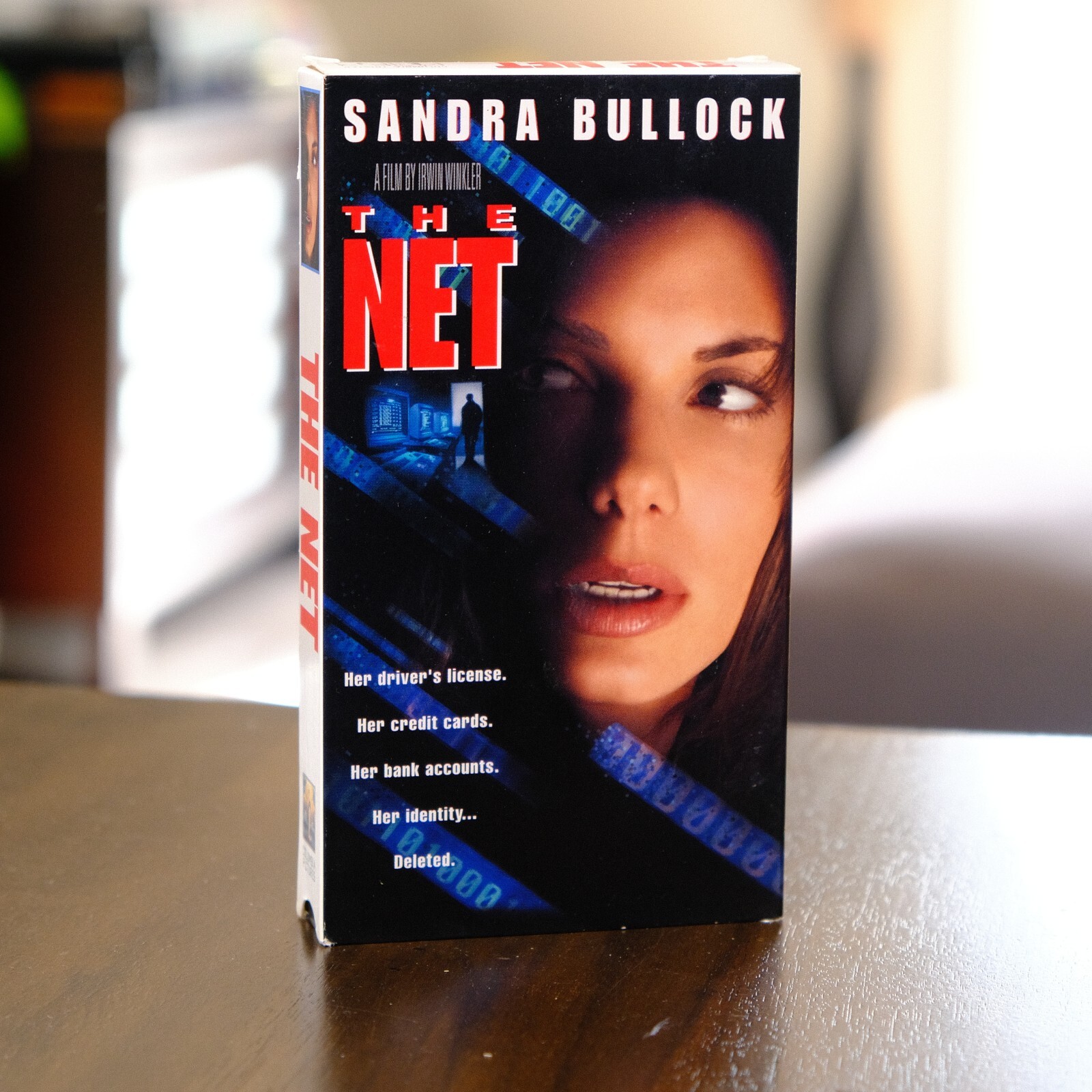
Released at the dawn of widespread consumer internet adoption, the 1995 technothriller The Net starring Sandra Bullock remains a landmark artifact of mid-decade cyber paranoia. The film captures a pivotal transitional era when personal computing was shifting from an esoteric hobby for specialists into a ubiquitous domestic utility, while simultaneously introducing mainstream audiences to the hidden vulnerabilities of digital infrastructure. Directed by Irwin Winkler and co-starring Jeremy Northam and Dennis Miller, the feature follows software analyst Angela Bennett as her quiet life is systematically dismantled by a ruthless cabal of cyber terrorists known as the Pretorians. By erasing her identity, altering her digital footprint, and substituting her existence with a fabricated criminal record, the film tapped into a distinct brand of existential dread that resonates differently from the perspective of the modern digital landscape.
Deconstructing the Cyber-Paranoia of 1995 Cinema
In the mid-1990s, Hollywood studios recognized that the rapid expansion of the World Wide Web and digital databases provided a fresh canvas for narrative tension. Before The Net, cinematic suspense relied heavily on physical isolation, mechanical failure, or traditional espionage tropes. The Net modernized this framework by shifting the battlefield from physical terrain to ethereal electronic networks. Angela Bennett works remotely from her Venice Beach home, diagnosing software bugs for a fictional company called Cathedral Software. Her primary human contact is mediated through screens, modems, and early instant messaging interfaces, establishing a lifestyle of hyper-connectivity combined with profound physical isolation.
This technological baseline shapes the entire architecture of the suspense. When Angela receives a floppy disk containing a back door into a high-level security system called "Gatekeeper," she unwittingly stumbles upon a conspiracy involving corporate malfeasance and international cyber warfare. The terror in the narrative does not stem from a masked killer breaking through a window, but from keystrokes executed miles away that can flag an innocent citizen as a fugitive, freeze bank accounts, and rewrite medical records. For audiences in 1995, this represented a terrifying leap into the unknown, dramatizing the fear that invisible electronic ledgers could dictate human survival.
Narrative Architecture and Character Dynamics
The storytelling mechanics of The Net rely heavily on stripping away the protagonist's security blankets one by one. Angela Bennett is introduced as an introverted homebody who prefers the company of her computer terminal and her ailing mother to social interaction. This characterization serves a dual narrative purpose: it makes her sudden vulnerability more acute and isolates her from institutional support systems when her life begins to unravel. When she takes a rare vacation to Mexico, her identity is stolen by an operative named Jack Devlin, played with chilling calm by Jeremy Northam.
The ensuing cat-and-mouse game forces Angela to adapt rapidly from a passive desk-bound programmer into an active survivor. The film utilizes classic Hitchcockian tropes—the wrongly accused individual running against the clock—and reframes them through the lens of early information technology. Every interaction, from booking a motel room to ordering pizza, becomes a potential trap because the antagonists control the network nodes through which modern life is conducted. The dynamic between Angela and her ex-boyfriend, Dr. Alan Champion, further emphasizes her isolation, as those who try to help her are systematically eliminated or discredited by the digital puppet masters.
Technical Realism Versus Cinematic License
Evaluating The Net requires separating historical cinematic tropes from the actual state of computer technology in 1995. While contemporary viewers often point out the film's humorous anachronisms—such as ordering a pizza via a graphical user interface or using command-line prompts that instantly bypass encrypted military firewalls—the film actually captured certain genuine anxieties of the era. The vulnerability of early relational databases and the ease with which social engineering could compromise password security were valid concerns for system administrators of the period.
At the same time, screenwriters John Brancato and Michael Ferris took significant creative liberties to maintain narrative momentum. Real-world cryptography in 1995 was robust, and erasing a human identity across multiple sovereign databases without leaving a paper trail was far more complex than simply typing a few commands into a green-screen terminal.
| Feature / Element | Cinematic Portrayal in 1995 | Technological Reality in 1995 |
|---|---|---|
| Identity Erasure | Complete removal and replacement via a single keystroke. | Fragmented records required manual intervention across isolated municipal and federal systems. |
| Pizza Ordering | Graphical interface allowing remote order placement without human speech. | Early web commerce was in its infancy; telephone orders remained standard practice. |
| System Security Back Doors | Hidden access codes granting immediate global surveillance control. | Security flaws existed, but centralized master controls of this scale were largely fictionalized. |
| Hardware Interfaces | Oversized CRT monitors, 3.5-inch floppy disks, and acoustic modems. | Accurate to the workstation environments of high-end software developers at the time. |
Sandra Bullock’s Career Turning Point
For Sandra Bullock, The Net arrived at a crucial moment of professional consolidation. Having broken out globally earlier in 1994 with the blockbuster action film Speed, Bullock needed to demonstrate her viability as a dramatic lead carrying a picture entirely on her own shoulders. While Speed was an ensemble-driven action vehicle where she shared the screen with Keanu Reeves, The Net positioned her as a solitary investigator holding the emotional and narrative center of the story.
Her performance grounds the far-fetched technological elements in relatable human panic. Bullock portrays Angela not as an invincible action hero, but as an ordinary professional forced into extraordinary circumstances through resourcefulness and intellectual agility. This casting choice humanized the thriller, ensuring that audiences remained invested in her survival rather than just the spectacle of the digital conspiracy. The success of the film proved that Bullock could anchor a mid-budget psychological thriller, paving the way for a diverse career spanning romantic comedies, dramas, and independent features.
Cultural Legacy and Retrospective Appeal
Decades after its theatrical release, The Net occupies a unique space in pop culture history. It serves as a time capsule for mid-1990s aesthetic sensibilities—featuring chunky desktop hardware, dial-up internet connection sounds, early graphical user interfaces, and fashion trends distinct to the era. More importantly, it anticipated contemporary conversations surrounding digital privacy, corporate data harvesting, identity theft, and algorithmic surveillance.
While modern audiences might chuckle at the chunky hardware and the primitive depiction of hacking, the core premise of the film has only grown more relevant. In an era defined by data breaches, sophisticated ransomware attacks, and pervasive digital monitoring, Angela Bennett’s nightmare feels less like a far-fetched sci-fi fantasy and more like an early cautionary tale. Re-examining the film today reveals how accurately popular culture sensed the coming friction between human autonomy and digital dependency, making The Net an essential watch for enthusiasts of 1990s cinema and genre history alike.
Frequently Asked Questions
What is the plot of the 1995 thriller The Net?
The film follows Angela Bennett, a software analyst who accidentally intercepts a digital back door into a high-security system. A shadowy cyber-terrorist organization then erases her identity, replaces it with a criminal record, and hunts her down across California while she attempts to expose the conspiracy.
Is The Net based on a true story?
No, The Net is a fictional work written by John Brancato and Michael Ferris. However, it was inspired by growing public awareness of computer networking, early database systems, and emerging concerns regarding digital privacy and identity theft during the mid-1990s.
Who directed The Net and who starred in it alongside Sandra Bullock?
The film was directed by Irwin Winkler. Sandra Bullock starred as Angela Bennett, supported by Jeremy Northam as the primary antagonist Jack Devlin, and Dennis Miller as Dr. Alan Champion.
How accurate is the computer technology shown in the 1995 film?
The film takes significant cinematic liberties, particularly regarding the speed and ease of hacking systems and erasing human identities. However, it accurately captured the aesthetic of mid-1990s computing environments, including CRT monitors, dial-up sounds, and command-line interfaces.
Where was The Net filmed?
Production took place primarily in various locations across California, including San Francisco, the Moscone Center, and the coastal areas of Southern California such as Venice Beach and the Santa Monica pier.